Un portal on escoltar i gaudir de l'art musical dels segles XVI, XVII, XVIII i XIX. Compartir la bellesa de la música és l'objectiu d'aquest espai i fer-ho donant a conèixer obres de compositors molt o poc coneguts és el mètode.
Luxembourgish trombonist, composer and music educator. He studied music at the Luxembourg Conservatory, covering harmony, counterpoint, musical analysis, history of music, trumpet, trombone, piano, double bass and conducting. He continued his studies at the Royal Conservatory in Brussels, where he obtained a first prize in both harmony and transposition as well as a higher certificate for trombone playing. Concurrently, his professional career includes directing various wind and brass ensembles and serving as a professor of trombone and harmony at the Luxembourg City Conservatory, both since 1963. Active as a composer since 1965, his output comprises over fifty compositions, primarily written for wind and brass ensembles, in addition to works for chamber groups, choral ensembles, and pedagogical purposes. A selection of his catalogue has been published by Musica Mundana.
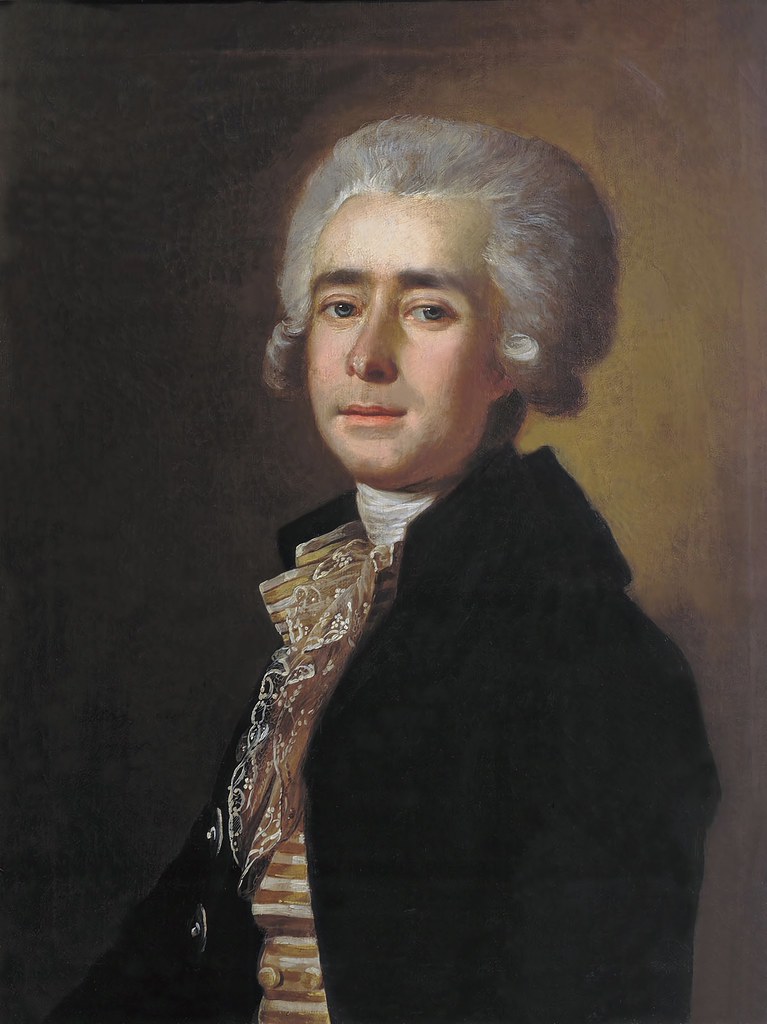
Russian composer. He was born into an Ukrainian Cossack's family in the city of Glukhov which at that time used to be the capital of Malorussia famous by its choir schools. Having studied in one of them for a year or two the seven-year-old boy endowed with the fine treble together with nine other best pupils had been sent to St-Petersburg and admitted to the Court Choirs as a chorister yet during the time of Elizabeth, Peter the Great's daughter. The brilliant talents of the choir-boy haven't been left unnoticed. Eleven-year-old Dmitry was entrusted with the part of Alzesta in the opera of the same name written by the court composer Hermann Raupach. Two years later when the production was renewed he performed the main men's tenor part of Admet. The boy was appointed to the Shlyahetsky Corps to be taught dramatic arts and foreign languages. But what is the most important his successes were noticed by Baldassare Galuppi himself. The eminent maestro highly appreciated Bortnyansky's talents and was teaching him vocal, clavicembalo playing and composition for over three years. Leaving Russia in summer, 1768, Galuppi urgently recommended to send the gifted young man to Italy to continue his education. In 1776 Bortnyansky makes his debut as an opera composer. The first performance of his 'Creont' took place in the Venetian theater 'San Benedetto'. The next opera 'Alkid' (1778) was also staged in Venice, in 'San Samuel' theater presumably under Galuppi's protection. The new composition testified to the indisputable maturity of the twenty-seven-year-old composer and his outstanding artistic talent. In April, 1779, he received from Russia the order signed by the Director of the Court Theaters I. P. Yelagin 'without a moment's delay... to come back to the Motherland...'. Settled in Sant Petersburg for the rest of his life, he wrote music for the Russian Orthodox Church, as well as operas for the court of Catherine II. By 1796, her successor, Paul III, made him director of the Imperial Choir and recognized him as a national musical figure. As a composer, he wrote over 100 sacred works, including 45 sacred concertos, seven Orthodox liturgical settings, an Ave Maria and a Salve Regina, and numerous other pieces in Russian. In addition, he wrote seven operas, a large ode, several part songs, a quintet and a symphony (titled Symphonie concertante), two harp sonatas, and a march for wind band. Bortnjanskij’s style follows the harmony and lyricism of his Italian teacher, but the Russian works include paraphrases of Old Slavonic chant, as well as occasional folk elements, particularly in the instrumental compositions.
Croatian violinist and composer. Son of Ivan Marija Jarnović and Marija de Marchi, he was born on board a ship bound for Italy from Dubrovnik [now Croatia], and baptized two days later in Palermo. At an early age he may have been sent to study with Antonio Lolli, and in 1773 he made his debut at the Concerts spirituels in Paris after having arrived there in 1770. His performance was successful enough to launch a career as a traveling virtuoso throughout Europe. This success was soon followed by stories about his scandalous and quarrelsome behaviour. He gave frequent public performances until 1777, when he probably became leader of the orchestra for Prince Rohan-Guémémee. In 1779 he suddenly left Paris, reportedly under questionable circumstances. After appearing in Frankfurt he went to Berlin where he was appointed leader of the orchestra to the Crown Prince of Prussia late in 1779. Less than three years later he left because of quarrels with the cellist Jean-Pierre Duport. He played in Warsaw in September 1782 and early the next year went to St Petersburg where he entered the service of Catherine II. In 1786 he went to Vienna and made an excellent impression on such discerning artists as Joannes Carolus Diters von Dittersdorf, Leopold Mozart and Vojtech Matyáš Jírovec. Early in 1791 he began to play regularly in London. He was repeatedly successful at Salomon’s Hanover Square series and took part in Joseph Haydn’s first benefit concert. Once again his personality created difficulties. William Thomas Parke reported that he behaved arrogantly to royalty at the Duke of York’s house, and Ernst Ludwig Gerber that he nearly provoked a duel with Johann Baptist Cramer. Towards the end of 1796 he left London. For the next six years he reportedly lived in Hamburg, more active as a billiard player than as a violinist. In 1802 he played in St Petersburg, where he was once again given a place in the court orchestra, probably as leader. He held the position until he died of a stroke apparently suffered during a game of billiards. Ivan Mane Jarnović was known as a facile and progressive violinist, a rival of Giovanni Battista Viotti, with whom he was close friends, he helped to create the French school of violin playing. His own works largely reflect this focus and include 22 violin concertos, seven symphonies, six string quartets, 10 duos, and seven sonatas. His most important compositions are his violin concertos, which evidently reflect his performing style. Simple in texture and harmony, clear in structure, and charming but limited in expression, they epitomize the later stages of the galant style.
French composer. Nothing is known of his youth and music formation. He was documented in Soissons in 1648 serving as a priest and as a 'maître de musique'. In 1653 he was appointed by decree chaplain of one of the 12 chapels in the cathedral. Three years later he described himself as 'simphoneta simphoniarca', that is, music master to the children in the choir school, and later he became a canon. Helfer is known to have composed only Latin sacred music, particularly a cappella masses, four of which are his only surviving works. He wrote them in sparingly ornamented counterpoint whose melodic lines are remarkable for their fluid elegance. He did not adhere at all strictly to the traditional modal system but made much use of major-minor tonality. His masses were esteemed by connoisseurs and long remained in the repertory of the best choirs; some of them were in print as late as 1729. Moreover, Sébastien de Brossard, reported in his manuscript Catalogue of 1724 that the Missa Deliciae regum "still delights people with good taste". In particular the Missa pro defunctis (1656) had a surprisingly long history. It was sung for the obsequies of Michel-Richard Delalande in 1726.
French violinist and composer. The son of an oboist, he received his early training from his father before being sent to Italy to study under Giuseppe Tartini. Returning to Bonn in 1753 he served as a violinist at the court and later, in 1760, was appointed Kapellmeister. He left only a year later, however, to take up a position as violinist at the Thurn und Taxis court in Regensburg, where he spent the rest of his career. His music contains a similar style to the Mannheim composers. His surviving works include an opera, a Mass, a Requiem, six symphonies, 13 concertos (violin and flute), a string quartet, a divertimento, four violin sonatas, numerous Lieder, and a host of smaller chamber works. Of his three children, two are known to have been musicians, his daughter Anna Catharina Touchemoulin (1757-1844), who was singer and pianist, and his son Egidius or Ludwig Touchemoulin (1759-1830), who by about 1777 was a violinist in his father's orchestra and in 1787 became its leader.
French composer, violinist and dancer. His father was the master lacemaker and cellist Antoine Leclair. He studied violin, dancing, and lacemaking in his youth, excelling in all three. He then began his career as a dancer at the Lyons Opera, where he met Marie-Rose Casthagnie; they were married in 1716. About 1722 he went to Turin, where he was active as a ballet master. During a visit to Paris in 1723 to arrange for the publication of his op.1, a distinguished set of sonatas, he acquired a wealthy patron in Joseph Bonnier. Returning to Turin, he wrote ballets for the Teatro Regio Ducale and also received instruction from Giovanni Battista Somis. He then made a series of appearances at the Concert Spirituel in Paris in 1728. He also visited London, and then made a great impression when he played at the Kassel court with Pietro Locatelli. He subsequently received additional instruction from Andre Cheron in Paris. After the death of his first wife, he married Louise Roussel (1700-c.1774) in 1730; she engraved all of his works from op.2 forward. From 1733 to 1737 he served as 'ordinaire de la musique du roi' to Louis XV. He then entered the service of Princess Anne at the Orange court in the Netherlands in 1738, and was honored with the Croix Neerlandaise du Lion. He was active three months of the year at the court, and, from 1740, spent the remaining months as maestro di cappella to the commoner François du Liz at The Hague. He returned to Paris in 1743. With the exception of a brief period of service with the Spanish Prince Don Philippe in Chamhery in 1744, he remained in Paris for the rest of his life. From 1748 until his death, he was music director and composer to his former student, the Duke of Gramont, who maintained a private theater in the Parisian suburb of Puteaux. He separated from his wife about 1758. He was murdered as he was entering his home. The Paris police report listed three suspects: His gardener (who discovered his body), his estranged wife, and his nephew, the violinist Guillaume-François Vial, with whom he was on poor terms. The evidence clearly pointed to the nephew, but he was never charged with the deed. As a violinist, he was the founder of the French violin school. He was also a distinguished composer who successfully combined the finest elements of the Italian and French styles of his day. His brothers Jean-Marie Leclair [le cadet] (1703-1777), Pierre Leclair (1709-1784) and Jean-Benoît Leclair (1714-c.1759) were also violinists and composers.
Bohemian composer and horn player. He received his earliest musical training as a chorister in Prague before mastering the horn, an instrument on which he gained distinction as a virtuoso performer. Prior to establishing himself in Paris in 1784, he served as court music director to Prince Lobkowitz in Bílina, Bohemia. During his Parisian period, he published three collection of 'Quatuors concertants pour cor, violon, alto et basse' (Opus 1, 2, and 3; c.1781-1802).
Austrian organist, composer and teacher. Brother of Franz Schubert (1797-1828), he received his first music lessons from his father Franz Theodor Florian Schubert (1763-1830), and after training in the Normalhauptschule in Vienna (1807-8) he became a teacher in his father’s school. He was an assistant teacher (1810-16) and a teacher (1816-24) at the Alsergrund orphanage, then headmaster (1824-51) and director (1851-59) of the Normalhauptschule. He was twice married, first to Anna Schüler (1816) and, after her death, to Therese Spazierer (1832). He frequently drew on his brother’s music for help in his daily work, passing it off as his own. The most famous instance of this appropriation is the Deutsches Requiem, which he submitted to the examiners of the Alt-Lerchenfeld school; on its strength he was appointed organist and choirmaster (1820). As a composer, he wrote vocal music almost exclusively, including two Singspiels, four masses and a requiem. As a custodian of his brother’s manuscripts his record is mixed; he continued to appropriate the lesser, earlier works for school music books and choral test pieces (so that a list of his compositions must be suspect). But he also did all in his power to obtain the publication of Schubert’s larger works, and in this task he was more or less successful.
Bohemian composer. He was the son of an organist and it is most probable that he received his early music training from his father. About 1710 he went to Prague, where he attended the Jesuit Clementinum. He also learned to play the double bass and was a member of the orchestra of Count Hartog. Upon Hartog's recommendation in 1710, he was accepted as a member of the Dresden court orchestra. In 1715 he went to Venice to study with Lotti and, between 1716 and 1719, he spent considerable time in Vienna studying with Johann Joseph Fux. With his training completed, he remained at the Dresden court for the rest of his life. In 1721 he became vice-Kapellmeister there, but was passed over as Kapellmeister in 1731 when Hasse accepted the court's appointment. In 1735 he was named Kirchen-compositeur to the court. Zelenka was particularly known during his lifetime as a composer of sacred music, winning the admiration of Bach and Telemann. His extensive output of such music included the oratorios 'Il serpente di bronzo' (1730), 'Gesu al Calvario' (1735), and 'I Penitenti al sepolchro del Redentore' (1736), about 20 masses, 2 Magnificats, over 35 cantatas, and various motets, Psalms, antiphons, hymns, and other pieces. For the coronation of the Holy Roman Emperor Karl VI as King of Bohemia, he composed the Melodrama de Sancto Wenceslao ("Sub olea pacis et palma virtutis conspicua orbi Regia Bohemiae Corona"), which was first performed in Frankfurt am Main on 12 November 1723. Almost all of the manuscripts of Zelenka's sacred music were lost in 1945. Since several of his instrumental works were published in his lifetime, copies have survived and today Zelenka is known as a distinguished and refreshing composer of instrumental music. Among his extant works for orchestra are 5 capriccios (1-4, 1717-18; 5, 1729), a Simphonie a 8 Concertante (1723), a Concerto a 8 Concertante (1723), and the Hipocondrie a 7 Concercante (1723). Also extant are 6 Trio or Quadro Sonatas for 2 Oboes, Bassoon, and Basso Continuo (c.1720).
Italian oboist and composer. Son of Antonio Besozzi (1714-1781), he received music lessons from his father. He must have displayed phenomenal ability for in 1755 he became a regular member of the Dresden court orchestra, a position which he retained throughout his life. His tours of Europe with his father included visits to Paris (1757) and Stuttgart (1758-59). He was judged favourably by Burney and by Leopold Mozart, who heard him play in Salzburg in 1778. Joseph Schubert heard Carlo in Augsburg and referred to him as the monarch of oboists and a great, ‘but somewhat unusual’, theorist. Even though none of Carlo’s music was printed during his lifetime, 23 concertos, 26 sonatas and a divertimento have survived. The concertos were clearly written for Carlo to play himself, and while conceived to display his skill, they rarely indulge in virtuoso display per se. The final movements are more serious than was common at that time and often introduce Sturm und Drang characteristics. There is an emphasis on novelty, frequently of an unexpectedly chromatic nature. The works for wind ensemble are, with one exception, in major keys and each of the four movements is usually in the tonic key. Carlo’s son Francesco Besozzi (1766-c.1816) succeeded him as oboist in the Dresden royal chapel in 1792. Francesco was one of the best-known oboists of his time but no compositions by him are known to have survived.
'Speelstukken samengestelt door David Petersen, dese stukken werden gespeelt met en viool en bas continuo, waar by gevoegt kan werden een theorbe, of viool dagamba' (1683)
Performers: Manfredo Kraemer (violin); The Rare Fruits Council
Dutch composer and violinist. He went to Lund (Sweden) with Gregor Zuber, possibly his tutor and almost certainly his mentor; both were employed as university musicians there during the early 1670s. From shortly before 1680 onwards he was active in Amsterdam; it is not clear whether he worked as a professional musician. Considering his 'Speelstukken' of 1683 and a possible connection between Johann Jacob Walther and Amsterdam (as expressed in Walther’s 'Hortulus chelicus'), it is possible that Walther taught Petersen. Petersen dedicated the 'Speelstukken' to an Amsterdam burgomaster and subsequently received a few small city appointments, which he held until his death. The 'Speelstukken' mentioned was his most important composition. The sonatas included are in a virtuoso style with many polyphonic passages, rapid scales and other figures, and the use of high positions. He also wrote numerous continuo songs to Dutch poems mostly by Abraham Alewijn, a close friend. David Petersen belongs to the generation of Dutch composers that includes Johannes Schenk, Carolus Hacquart, Servaas de Konink and Hendrik Anders, all of whom were influenced by German, French and Italian music.
Italian organist and composer. He began his musical education in his home town, where his father, Giuseppe Gherardeschi, was organist at the churches of SS Trinità and Santa Maria dell’Umiltà, and his uncle, Atto Gherardeschi, was cantor in the chapel of Pistoia Cathedral. He continued his studies in Bologna with Giovanni Battista Martini from 1756 to about 1761, when he was admitted to the Accademia Filarmonica. In 1763 he was appointed as maestro di cappella in Volterra, at the same time as he functioned as organist in Pisa. There he soon attained notable fame, being invited to play the harpsichord at court, for the patrician families of Pisa, and at the town theatre of the Accademia dei Costanti. In 1770 he obtained the post of director at the Pistoia cathedral. In 1771 he resigned from the cathedral, and the post was taken up by his brother Domenico Gherardeschi (1733-1800), who was already organist there. In 1783 Pietro Leopoldo, Grand Duke of Tuscany, appointed him 'maestro di musica' to his children and director of concerts (when the court was resident in Pisa), and in 1785 appointed him organist and maestro di cappella at the Chiesa Conventuale dei Cavalieri di San Stefano at Pisa, a post he retained until his death. Despite he spent his whole life in Tuscany, he corresponded with Padre Martini until the latter’s death in 1784 (39 letters). As a composer, his music is little known, but includes seven operas, 10 sonatas, a concerto, and numerous sacred works, as well as a treatise, 'Elementi per suonare il cembalo'.
German monastic composer and organist. The son of an instrument maker, he went to the Benedictine abbey of Prüfening as a choirboy. Although he was the son of a music instrument maker, he intended to enter the priesthood as a teacher of theology. In 1734 he entered the Benedictine monastery at Prüfening, becoming regens chori and eventually Kapellmeister. His main musical focus was on the development of suitable church music for smaller churches in Bavaria, and he partnered with the firm of Lotter in Augsburg to publish sets of works that could be performed with limited musical forces. His music thus gained tremendous popularity throughout the region. His works include a number of sacred Singspiels (now lost), 59 Masses, five Requiems, 33 sacred odes, six Stabat maters, over 30 offertories, 12 litanies, numerous Marian antiphons, several Te Deums, and other sacred music, almost all of which was published.
Italian composer. Son of Angelo Maria Fiorè (1660-1723), he was a child prodigy: in the dedication of his 'Sinfonie da chiesa' (1699) he explained that the pieces 'are the last squalls of my infancy, and the first expressions of my boyhood, I having just turned 13'. The title-page of this collection of 12 trio sonatas indicates that he was 'musico di camera' of the dedicatee, Vittorio Amedeo II, Duke of Savoy, a member of the Bolognese Accademia Filarmonica (which he joined with his father in 1697), and Milanese by birth. The royal account books in the Turin State Archive show that the duke sent Andrea Stefano with Giovanni Battista Somis, to study in Rome. An opera composed for Carnival 1707, 'La casta Penelope', was well received, and the Duke of Savoy soon thereafter appointed Fiorè his maestro di cappella on 13 June 1707. Until his death in 1732 he was in charge of the 30 to 36 musicians at the Turin court and the singers at the cathedral. 16 scores of sacred music in the cathedral chapter archive testify to his direction of the choir there. Johann Joachim Quantz, who visited Turin in June 1726 and praised Fiorè’s orchestra and its leader Somis, wrote that he regarded Fiorè one of the best Italian composers of church sonatas. Until more scores of his operas come to light, modern judgment of Fiorè’s music must be based chiefly on his published trios, a handful of solo cantatas and his surviving choral music.
German composer and violinist. He received his initial musical training from Michael Kirsten, the organist at the St. Mary Magdalene Church in Breslau. His early patron, the music-loving Count Zierotin of Falkenberg, appointed him as a page and funded his advanced education, enabling him to study the violin under Johann Otto Rosetter and composition in Vienna under the renowned composer and theorist Johann Joseph Fux. Orschler spent the late 1720s in Prague before serving as a violinist to the Archdeacon of Olomouc, Count von Thurn und Valsassina, around 1730. Between 1731 and 1736, he served as Hofmeister at Holešov Castle for Count Franz Anton von Rottal, a position later held by Ignaz Holzbauer, after which he worked as Kapellmeister to Prince Liechtenstein until roughly 1750. In his later years, he was a respected member of the Imperial Court Chapel (Wiener Hofmusikkapelle) in Vienna, where he spent his last years. As a composer, he left few works, among them, symphonies, divertimentos, chamber pieces as well as a Salve Regina in D and the motet 'Psallite pueri jubilate'.
Moravian singer and composer, active primarily during the 1820s and 1830s. In January 1822, he married Anna Fingermann, also from Moravia, in Nitra, with whom he had a daughter named Maria Anna Hubler (1822-1831) and a son named Carl Johann Hubler (1825-?). Hubler's musical career in Nitra is documented by historic records: he sang bass in a cathedral ensemble on 3 October 1826, during the tuning of the organ at the Cathedral of St. Emmeram, and in July 1829 'Regens Chori' Joseph Vavrovits documented three of Hubler's new works. Tragic loss struck him in 1831 when a devastating cholera epidemic in Nitra claimed the lives of his wife and daughter, after which his documented activities in the city ceased. Nevertheless, his compositions, mainly sacred, with manuscripts bearing dates such as 1824, 1825, 1826, 1829, and 1832, spread widely across the region, surviving in the Diocesan Archive in Nitra, the Roman Catholic Parish Church in Nové Mesto nad Váhom, and the Music Museum of the Slovak National Museum from localities including Bratislava, Dubnica nad Váhom, Spišské Podhradie, Švedlár, and Trenčín.
Bohemian composer. He received his first musical training from his father, organist at Kostelec, and probably studied in Prague, at the Jesuit seminary. He likely sang as a tenor chorister under Bohuslav Matěj Černohorský at the Minorite Church of St. James the Great, and he is believed to have received musical instruction from him. He then went to Vienna, where he was active as a church musician; according to Marpurg he became a vice-Kapellmeister at Vienna in 1722. Tůma's name first appears in Viennese records in April 1727, when he got married. In 1731 he became 'Compositor und Capellen-Meister' to Count Franz Ferdinand Kinsky, who was the High Chancellor of Bohemia. Kinsky's patronage made it possible for him to study counterpoint with Johann Fux in Vienna. He participated in the premiere of Fux's opera Constanza e Fortezza along with Georg Benda and Sylvius Leopold Weiss. In 1734, Kinsky recommended him for the post of the Kapellmeister to Prague Cathedral, but his recommendation arrived too late and he may have remained in Kinsky's service until the latter's death in 1741. In that year he was appointed Kapellmeister to the dowager empress, the widow of Emperor Charles VI. On her death in 1750, Tůma received a pension. For the next 18 years he remained in Vienna and was active as a composer and as a player on the bass viol and the theorbo; he was esteemed by the court and the nobility, and at least one work may have been commissioned from him by the Empress Maria Theresa. After the death of his wife in about 1768, Tůma lived at the Premonstratensian monastery of Geras, but in his last illness he returned to Vienna and died in the hospital of the Merciful Brethren in the Leopoldstadt.