Es mostren els missatges amb l'etiqueta de comentaris Perti G.A.. Mostrar tots els missatges

divendres, 6 de juny del 2025

PERTI, Giacomo Antonio (1661-1756) - Gaude felix, parens Hispania (1712)


Giacomo Antonio Perti (1661-1756) - Gaude felix, parens Hispania (1712)
Performers: Arіon Choir; Collegio Ghіslіeri; Gіulio Prаndі (conductor)

---


Italian teacher and composer. At the age of nine he began to study music in Bologna with his uncle Lorenzo Perti and with Rocco Laurenti, from whom he learnt the rudiments of organ playing. As early as 1678 he had a Mass performed at the church of San Tomaso al Mercato. In 1679 he collaborated on the opera 'Atide', to which he contributed the score for the third act. In 1681 he was elected a member of the Accademia Filarmonica, of which he was five times the principe (in 1719 was named censor). He then went to Parma, where he continued his studies with Giuseppe Corso. In 1689 he had his opera 'Dionisio Siracusano' performed in Parma, and another opera, 'La Rosaura', in Venice. In 1690 he succeeded his uncle as maestro di cappella at the Cathedral of San Pietro in Bologna. In 1696 he became maestro di cappella of San Petronio, a position he held until his death. He also held similar positions at San Domenico (1704-55; deputized for Giuseppe Matteo Alberti from 1734) and at Sancta Maria in Galliera (1706-50). Emperor Charles VI made him a royal councillor in 1740. His correspondence reveals a long-standing rapport with the Duchess Aurora Sanseverino of Piedimonte d’Alife, who was a member of a Bolognese family; he regularly sent compositions to her for use at her court. His correspondence also indicates that he was held in high regard by Johann Joseph Fux, Antonio Caldara, Bernardo Pasquini, Arcangelo Corelli and other influential musicians. Padre Martini held him in the highest esteem and included six examples of his contrapuntal music in his 'Esemplare ossia Saggio fondamentale pratico di contrappunto' (1774-75). As a composer, he wrote several operas and oratorios as well as 120 Psalms, 54 motets, 28 masses, and about 150 secular cantatas.

diumenge, 18 de juliol del 2021

PERTI, Giacomo Antonio (1661-1756) - Messa detta 'La Lambertina' (1736)

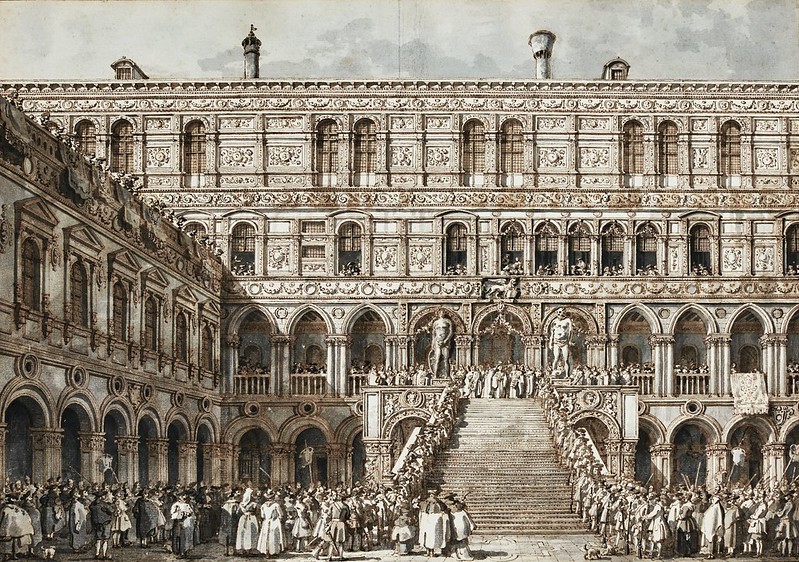
Giovanni Antonio Canal 'Canaletto' (1697-1768) - Coronation of the Doge on the Scala dei Giganti


Giacomo Antonio Perti (1661-1756) - Messa detta 'La Lambertina' (1736)
Performers: Arion Choir; CoIIegio GhisIieri; GiuIio Prandi (conductor)

---


Italian composer. At the age of nine he began to study music in Bologna with his uncle Lorenzo Perti and with Rocco Laurenti, from whom he learnt the rudiments of organ playing. He started to study singing in 1670 and the year after he took up humanistic studies with the Jesuits at S Lucia. In 1675 he began the study of counterpoint with his uncle and he later studied with Petronio Franceschini. In 1678 his first music to be performed, a mass, was given in S Tomaso al Mercato; two other works, a motet and a Magnificat (both for eight voices), date from that year. In 1679 he wrote his first operatic music – the third act of Atide – and the oratorio S Serafia. In 1680 he wrote a Mass in D with two trumpets (claimed by Martini to be the first of its kind), which was performed in S Sigismondo. In 1681 he was admitted as composer to the Accademia Filarmonica, where he was principe in 1687, 1693, 1697, 1705 and 1719, when he was made ‘diffinitore perpetuo’. Several months later he went to Parma for further contrapuntal studies with Giuseppe Corso (called Celano). Here, as is clear from a six-year correspondence with Celano, he decisively formed his church music style, especially that of the concerted masses and psalms of the 1680s and 90s. In 1688 he published his first opus, Cantate morali e spirituali, dedicating it to the Emperor Leopold I, who eventually rewarded him with a precious chain of gold. In the following year he was in Venice, probably for the production of his opera La Rosaura, and from there he applied for the vacant position of vicemaestro di cappella of S Petronio. He was unsuccessful, possibly because of the influence of G.P. Colonna, the maestro di cappella (during the famous dispute over the consecutive 5ths of Corelli, Perti had sided with Corelli against Colonna). 

Perti was chosen to succeed his uncle Lorenzo as maestro di cappella of the cathedral of S Pietro in 1690. In 1696 he was called from there to be maestro di cappella of S Petronio, where he spent the rest of his life, except for a few short journeys to Florence, Rome (1703 and 1747) and Naples (1703). Simultaneously he held similar posts at S Domenico (1704-55, G.M. Alberti deputizing for him from 1734) and the Madonna di Galliera (1706-50). According to Martini he was offered a position at the court of the Emperor Leopold I in 1697 in succession to Antonio Draghi, but there is no other record of this. Because of financial difficulties at S Petronio, Perti began his career there without a fixed group of musicians. Until February 1701 musicians were hired only for the required festive occasions. With the restoration of the cappella musicale, however, the group was re-established with 24 regular musicians. It was enlarged for festive occasions to as many as 153 in 1718 and 1719. In 1723 the regular group numbered 36, the highest number during Perti’s term. Perti enjoyed considerable fame and favour with several important personages, including Ferdinando III de’ Medici, for whom he wrote church music and operas, which were staged at Pratolino, and the Emperor Charles VI, to whom he dedicated his op.2. In 1740 the emperor made him a royal councillor. His correspondence reveals a long-standing rapport with the Duchess Aurora Sanseverino of Piedimonte d’Alife, who was a member of a Bolognese family; he regularly sent compositions to her for use at her court. His correspondence also indicates that he was held in high regard by Fux, Caldara, Pasquini, Corelli and other influential musicians. Padre Martini held him in the highest esteem and included six examples of his contrapuntal music in his Esemplare ossia Saggio fondamentale pratico di contrappunto (1774–5). Among Perti’s students were Torelli, Gabrielli, Pistocchi, Aldrovandini, P.P. Laurenti, G.B. Martini and F.O. Manfredini.

diumenge, 10 d’abril del 2016

PERTI, Giacomo Antonio (1661-1756) - Messa a 12 (1687)

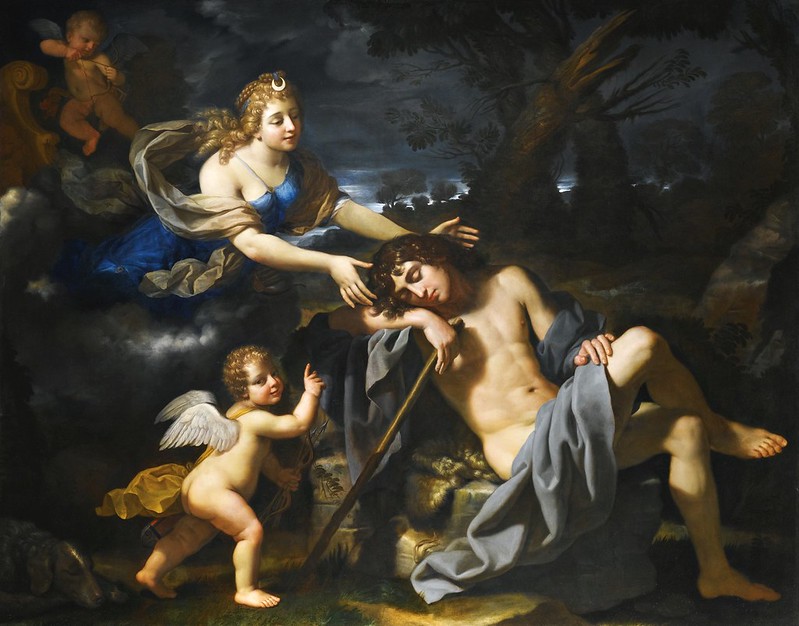
Benedetto Gennari - Diana and Endymion
Obra de Benedetto Gennari 'el Jove' (1633-1715), pintor italià (1)


- Recordatori de Giacomo Antonio Perti -
En el dia de la commemoració del seu 260è aniversari de decés


Parlem de Pintura...

Benedetto Gennari 'el jove' (Cento, bap. 19 d'octubre de 1633 - Bologna, 9 de desembre de 1715), va ser un pintor italià. Pertanyent a una dinastia de pintors, va ser el nét de Benedetto Gennari 'el vell' i fill d'Ercole Gennari i Lucia Barbieri, la germana de Guercino, amb qui es va formar. En conseqüència, el seu estil va ser proper al de Guercino i quan va morir va heretar els seus béns així com la direcció del seu estudi juntament amb el seu germà Cesare Gennari. El 1672 va viatjar a París on va ser rebut amb tots els honors rebent diversos encàrrecs. El 1674 va viatjar a Londres on va assolir la condició de pintor de cambra del rei Carles II i posteriorment de Jaume II. Va pintar escenes al·legòriques i mitològiques, però sobretot retrats. Caterina de Bragança i Maria de Mòdena, esposes catòliques de reis oficialment protestants, van sol·licitar els seus serveis per aconseguir obres d'art destinades a la seva devoció particular. El 1692 va tornar a Itàlia on es va establir a Bolonya. Allà va engrandir la seva fama com a retratista tot desenvolupant un estil propi, diferenciat del seu mestre. El 1709 va ser membre fundador de l'Accademia Clementina. Va morir a Bolonya el desembre de 1715.

Font: En català: No disponible En castellano: Benedetto Gennari 'el Jove' (1633-1715) In english: Benedetto Gennari 'el Jove' (1633-1715) - Altres: Benedetto Gennari 'el Jove' (1633-1715)


Parlem de Música...

Giacomo Antonio Perti (Bologna, 6 de juny de 1661 - Bologna, 10 d'abril de 1756) va ser un compositor italià. Es va formar a la Universitat de Bolonya abans d’entrar a estudiar cant, orgue i composició. El 1680 va ser l’encarregat de dirigir les seves primeres obres, una missa, un oratori, diverses obres religioses i una òpera. Un any més tard, als 19 anys, va entrar com a membre de l’Acadèmia Filharmònica, ens que va presidir fins en cinc ocasions. Aquell mateix any es va establir a Parma, ciutat on hi va viure fins el 1690. Allà va compondre diverses òperes que va exportar amb èxit a Bolonya, Venècia, Milà i Roma. El seu èxit, rotund, va motivar el seu nomenament com a mestre de capella de la Catedral de San Pedro i després de la Basílica de San Petronio, ambdues a Bolonya. A partir d’aleshores va compondre principalment música religiosa de la qual se’n van documentar més de 600 obres, moltes d’elles només conservades en manuscrit. Va rebre la influència de Carissimi i Cesti si bé el seu talent per assumir les noves tendències emergents van ser determinants per assolir l’èxit en el qual va viure la quasi totalitat de la seva vida. Va treballar també com a professor de cant i contrapunt amb alumnes com Torelli, el Pare Martini, D. Gabrielli, Jacchini i els germans Manfredini. Posteriorment, Giovanni Battista Martini va incloure exemples del contrapunt de Perti en la seva obra Esemplare ossia Saggio fondamentale pratico di contrappunto (1774-75). Giacomo Antonio Perti va morir a Bolonya l’abril de 1756.

OBRA:

Vocal secular:

Operas:
lost unless otherwise stated
dm dramma per musica
Atide [Act 3] (dm, 3, T. Stanzani), Bologna, Formagliari, 23 June 1679, lib (Bologna, 1679) [Act 1 by G.F. Tosi, Act 2 by P. degli Antoni]
Marzio Coriolano (dm, 3, F. Silvani), Venice, SS Giovanni e Paolo, 20 Jan 1683
Oreste in Argo (drama [per musica], 3, G.A. Bergamori), Modena, Spelta, carn. 1685, I-MOe
L’incoronazione di Dario (dm, A. Morselli, rev. G.M. Rapparini), Bologna, Malvezzi, 13 Jan 1686
La Flavia (dm, 3, Rapparini), Bologna, Malvezzi, 16 Feb 1686, MOe
La Rosaura (dm, 3, A. Arcoleo), Venice, S Angelo, carn. 1689, D-SWl, I-MOe
Dionisio Siracusano (dm, A. Salvi), Parma, Ducale, carn. 1689
Brenno in Efeso (dm, 3, Arcoleo), Venice, S Salvatore, 1690
Il Pompeo (dm, N. Minato), Genoa, Falcone, carn. 1691
L’inganno scoperto per vendetta (dm, Silvani), Genoa, Falcone, 1691, MOe
Furio Camillo (dm, 3, M. Noris), Venice, S Salvatore, carn. 1692, D-Bsb
Nerone fatto cesare [Nerone infante] (dm, 3, Noris), Venice, S Salvatore, 1693, SWl, I-Rsc (inc.); sinfonia by Giuseppe Torelli
La forza della virtù (dm, 3, D. David, with alterations), Bologna, Malvezzi, 25 May 1694
Laodicea e Berenice (dm, Noris), Venice, S Salvatore, 26 Dec 1694; rev. as L’inganno trionfante in amore
Penelope la casta (dm, Noris), Rome, Tordinona, 25 Jan 1696
Fausta restituita all’impero (dm, 3, N. Bonis), Rome, Tordinona, 19 Jan 1697
?Perseo (P.J. Martello), Bologna, 1697, collab. others
Apollo geloso (Martello), Bologna, Formagliari, 16 Aug 1698
La prosperità di Elio Sejano (drama musicale, Minato), Milan, Ducale, carn. 1699, collab. A.F. Martinenghi and A. Vanelli
Ariovisto [Act 1] (drama musicale, 3, P. d’Averara), Milan, Ducale, Sept 1699, collab. F. Ballarotti and P. Magni
Lucio vero [Acts 2 and 3] (dm, 3, A. Zeno), Bologna, 1700
Astianatte (dm, Salvi, after J. Racine: Andromaque), Florence, Pratolino, 1701; sinfonia by Giuseppe Torelli
Dionisio rè di Portogallo (dm, Salvi), Florence, Pratolino, Sept 1707
Il Venceslao, ossia Il fratricida innocente (dm, Zeno), Bologna, Malvezzi, 19 May 1708
Ginevra principessa di Scozia (dm, Salvi, after L. Ariosto: Orlando furioso), Florence, Pratolino, aut. 1708
Berenice regina d’Egitto (dm, Salvi), Florence, Pratolino, Sept 1709
Demetrio (Salvi), Florence, Pratolino, 1709 [according to G.B. Martini]
Il riso nato tra il pianto (drama da rappresentarsi, ?A. Aureli), Bologna, 11 Feb 1710, collab. others
Rodelinda regina de’ Longobardi (dm, Salvi, after P. Corneille: Pertharite, roi des Lombards), Florence, Pratolino, aut. 1710
Faramondo (Zeno), Bologna, 1710
Il più fedele tra i vassalli (dm, Silvani), Bologna, 1710, collab. others
Il Cortegiano (A. Basili), Palestrina, 1739, prol only
Foca, Munich
Rosinda ed Emireno (Arcoleo), A-Wn, never perf.

revs. of ops by others:
L’eroe innocente, ovvero gli equivoci del sembiante by A. Scarlatti, Bologna, 1679;
Pompeo Magno by D. Freschi, Bologna, 1687;
Teodora Augusta by D. Gabrielli, Bologna, 1687;
Il re infante by C. Pallavicino, Bologna, 1694

Other:
Cantate morali e spirituali, 1–2vv, vn, op.1 (Bologna, 1688; 4 /R1969 in BMB, lxxxv–lxxxvi)
93 cants. (dialogues, serenades, accademie), solo vv, bc;
49 cants., solo vv, bc, insts;
30 arias: I-Ac, Bsp

Vocal religiosa:

Oratorios:
S Serafia [I due gigli porporati nel martirio de S Serafia e S Sabina] (L. Lotti), Bologna, 23 Feb 1679
Abramo [Abramo vincitore; Agar; Agare scacciata; Sara] (G. Malisardi), Bologna, 10 Dec 1683, score also in I-MOe (facs. in IO, iv, 1986)
Mosè (G.B. Giardini), Modena, 1685, score also in MOe
Oratorio della Passione [Gesù al Sepolcro] (G.A. Bergamori), Bologna, 1685, score also in Ac (facs. in BMB, section 4, 85, 1977), Bc
La Beata Imelde Lambertini, Bologna, late March 1686, score also in Bc
La passione di Cristo [Oratorio sopra la passione del Redentore; Affetti di compassione alla morte del Redentore], Bologna, 1694
S Galgano (Bergamori), Bologna, 1694
Cristo al limbo, Bologna, 28 March 1696
La morte del giusto overo Il transito di S Giuseppe (B. Sandrinelli), Venice, c1700, lost
La sepoltura di Cristo, Bologna, 21 March 1704
S Petronio (G.B. Rampognani), Bologna, 17 March 1720, score also in Bc
La passione del Redentore, Bologna, 11 April 1721
L’amor divino [I conforti di Maria Vergine] (C.I. Frugoni), Bologna, 26 March 1723
La nascita del Signore
Il figlio prodigo

Pasticcio orats:
La morte delusa, Milan, 1703, lost;
I trionfi di Giosuè [Giosuè in Gabaon], Florence, 1704
?8 other orats
Profetia à 8, score also in Bc, D-MÜs;
Profetia di Nabucodonosor, score also in I-Bc

Masses:
Messa e salmi concertati, 4vv, insts, chorus, op.2 (Bologna, 1735)
28 masses, 1v, chorus, bc, insts [Ky, Gl only];
11 Cr, 1v, chorus, bc, insts

Other:
7 canzonette in aria marmoresca sopra le 7 principali feste di Nostra Signora (Bologna, 1780)
c120 pss, cantica, hymns, solo vv, chorus, bc, insts
54 motets, solo vv, chorus, bc, insts
83 versetti;
miscellaneous sacred works, I-Bsp
1 motet, B, 2 vn, bc, 16951

Instrumental:

Sonata, d, in Sonate per camera a violino e violoncello di vari autori (Bologna, c?1700)
15 sinfonie avanti la messa;
2 sinfonie avanti il prologo;
2 sinfonie avanti l’oratorio;
3 sinfonie
1 sonata à 4
3 adaptations of concs. or sonatas by G. Torelli

Font: En català: Giacomo Antonio Perti (1661-1756) En castellano: Giacomo Antonio Perti (1661-1756) In english: Giacomo Antonio Perti (1661-1756) - Altres: Giacomo Antonio Perti (1661-1756)


Parlem en veu pròpia o en veu d'altri...

« Questi nacque in Bologna, ma oriondo di Crevalcore, e sotto la parrocchia di Santa Maria Maggiore da Vincenzo Perti da Crevalcore e da Angiola Beccantini, a' 6 giugno, lunedì di Pentecoste, l'anno 1661; e fu batezato in S. Pietro, essendo stato suo padrino Gio. Pozzi; nel 1668 fu cresimato dal Card. Girolamo Boncompagni Arcivescovo; nel 1670 studiò il canto sotto D. Lorenzo Perti suo zio, che era mansionario di S. Petronio sin dall'anno 1655 a' 14 gennaio, e nel 1671 studiò gramatica sotto i padri Gesuiti; nel 1675 si applicò al contrappunto sotto lo stesso suo zio, e poscia sotto Petronio Franceschini. Si applicò alla logica sotto il canonico Magnani di S. Petronio e lettor pubblico. Nel 1679 compose il 3° atto dell'opera intitolata Atide e l'oratorio di S. Serafia e S. Sabina. Nel 1681 a' 13 maggio fu aggregato all'Accademia de' Filarmonici, e nel mese di Ottobre si portò in Parma, ricominciando sotto D. Giuseppe Corso detto Celano, maestro di cappella della Steccata, lo studio del contrapunto. Nel 1682 si portò in Modona ove compose il drama intitolato L'Oreste, nel 1683 in Venezia il Coriolano; nel 1687 fu Principe de' Filarmonici, così pure nel 1693, 1697, 1705 e 1719. Nel 1688 stampò la prima opera intitolata Cantate Morali e Spirituali a 1 e 2 voci con violini e senza (Bologna, Monti, in 4°), dedicata a Leopoldo I Imperatore, dal quale dopo vari anni fu riconosciuto con una collana d'oro di valore 100 ungari. Nel 1690 in luogo di suo zio D. Lorenzo Perti fu a pieni voti eletto maestro di cappella di S. Pietro, a' 30 agosto 1696 fu fatto maestro di capella della Collegiata di S. Petronio senza alcuna di lui ricerca; si presentò in capitolo a' 28 settembre e pregò i Canonici di darli il permesso di portar la veste lunga e la cotta, e promise obbedienza nelle cose che a lui spettavano e al suo officio.

In quest'anno compose per Roma il drama intitolato La Penelope coll'onorario di 400 scudi, e 40 per il viaggio ed altre tanti per il ritorno, 20 scudi il mese per la spesa; fece anco la 2a opera intitolata Il Furio Camillo, per cui li furono dati 100 scudi. Nel 1697 fu ricercato per maestro di capella da Leopoldo Imperatore. La quantità delle composizioni ecclesiastiche, oratori, cantate, e specialmente drami da esso posti in musica per Bologna, Venezia, Roma, Genova, Modona, Firenze, Pratolino in Toscana per commodo del gran Principe Ferdinando, dal quale fu ricercato per maestro di capella, il carteggio coi principi, signori, professori di musica sono innumerali e dimostrano un uomo instancabile alla fatica, stimato e amato da tutti. Nel 1735. stampò la 2a opera, e dedicolla a Carlo VI Imperatore, il quale l'onorò d'una collana d'oro di valore di 100 ungari, e lo dichiarò suo consigliere, come dal Diploma in data degli 11 febbraio 1740. Diede il suo voto per cinque concorsi delle più raguardevoli capelle d'Italia. [...] Nel 1740 a' 25 novembre fu dato al Perti il coadiutore, e fu il Sig. D. Giuseppe Carretti; e in qualità tale servì sino al 1756 a' 10 aprile, nel qual giorno morì il Perti; a' 18 maggio 1756 fugli fatto il solito officio da' musici e, dove agli altri della capella suol farsi all'altar della B. V. della Pace, si fece all'altar maggiore, ove erano adobate le pilastrate; e strato mortorio fu invitato il Capitolo ad intervenirvi, e ciò per parte de' musici, al che acconsentì il Capitolo in riguardo d'un tanto uomo e in benemerenza di avere nel suo testamento sotto li 10 aprile 1756 (rog. Tommaso Lodi) sostituito il Capitolo alla sua eredità, quando gli eredi non avessero eseguito ciò che ordinava. Cantò la messa il sacrista, essendo l'officio che si fa a tutti li musici della capella a spese della Fabrica, in cui canta la messa il sacrista. »

Nota biografica di Giacomo Antonio Perti redatta da Padre Giovanni Battista Martini (source/font: aquí)

---

Every music lover knows about the polychoral tradition in Venice, of which Andrea and Giovanni Gabrieli are the most renowned representatives. There were other cities in Italy with their own tradition of polychoral writing, though. One of them was Rome, another one Bologna. The huge basilica San Petronio provided the maestri di cappella ample opportunities to perform music for three or four groups of singers and instrumentalists. Pieces of such texture have created the term "colossal baroque". This should be taken with a grain of salt, though, as there are not that many pieces of which we can be absolutely sure that they were performed by large numbers of singers and instrumentalists. This disc is devoted to two composers from Bologna. The disc opens with Laudate Dominum by Giovanni Paolo Colonna. He was born in Bologna and studied some time in Rome, where Carissimi and Benevoli were among his teachers. After his return he acted as organist in San Petronio and in 1662 he was appointed maestro di cappella, a post he retained until his death. It was in Rome that he became acquainted with the polychoral style, and this was to become a major part in his compositional oeuvre. Another important feature of his style was the increasing independence of the instrumental parts. These two features are also part of the oeuvre of Giacomo Antonio Perti. He was also from Bologna and studied with Petronio Franceschini, who played the cello in San Petronio. When Colonna died he succeeded him as maestro di cappella. In 1681 he was admitted as composer to the Accademia Filarmonica. That is especially noteworthy in regard to this disc. The main work is the Messa à 12 which was performed at San Giovanni in Monte on 26 June 1687. 

The occasion was the feast of St Anthony, who was the patron saint of the Accademia Filarmonica. During Lent the members of the Accademia elected their Principe who acted as president and artistic director. It was also his duty to organise the celebrations for the feast of St Anthony, which consisted of Mass and Vespers. He could choose the composers who should write the music for the liturgy, and usually composed the Kyrie and Gloria himself. In 1687 Perti was chosen Principe for the first time. Among the composers whom he chose to contribute to the liturgical music were Giovanni Bononcini, Giovanni Battista Vitali and Domenico Gabrielli. Perti himself composed the Messa à 12, consisting of Kyrie and Gloria. It was written for 12 voices divided over three choirs. In his liner-notes Michele Vannelli mentions 80 performers, which justifies to rank this work into the category of 'colossal baroque'. The Mass begins with a Sinfonia, which is interestingly written according to the concerto grosso principle. The Kyrie is in three sections: Kyrie I and II are for 12 voices, the Christe for six solo voices, three sopranos and three basses. It should be noted, though, that the episodes for 12 voices include passages for reduced forces, which are performed here by the soloists. The Gloria is divided into 11 sections, alternately for 12 voices or for two to nine solo voices. The 'Quoniam tu solus Sanctus' is for four voices, but as these come from the three choirs all twelve solists are involved. Perti had a strong preference for counterpoint, and his skills come impressively to the fore in the last section, 'Cum Sancto Spiritu', which is a double fugue. The instrumental scoring of the Mass is for strings and bc, whereas the other works on this disc include parts for two trumpets. That is explainable from the long tradition of trumpet playing which goes back to the early renaissance. 

It was in Bologna that the Concerto Palatino was founded in the 16th century. In the second half of the 17th century music for trumpet and strings was written in Bologna which contributed to the development of the solo concerto. In the Sinfonia avanti la Serenata the second trumpet acts as echo of the first. Plaudite mortales is a motet for eight voices: two solo voices, two choirs and an ensemble of two trumpets, strings and bc. It belongs to the category of the motetto grosso which was common to Bologna. It has the structure of chorus - aria - aria - chorus dacapo. The two solo sections, for soprano and alto respectively, are rather short. This motet dates from 1678 and if it was performed in San Petronio it is unlikely the number of performers will have been very large. When Perti became maestro di cappella there was no fixed ensemble in the San Petronio. This situation changed during his term of office (which ended with his death), and in 1723 he had 36 musicians at his disposal. Only for special occasions could the number of musicians be increased. This situation makes it unlikely that Colonna's motet, whose scoring is indicated as a 3 cori di voci and dates from 1672, will have been performed with such large forces as Perti's Mass in 1687. The fact that this is the recording of a live performance in 2006 explains a lack of synchronization between the choirs and the orchestra now and then, probably also due to the problematic acoustical circumstances (the San Petronio is renowned for its large reverberation). The performances are admirable, though; the soloists have fine voices and they sing their solos very well. This disc is an interesting contribution to our knowledge of music practice in Bologna and in particular San Petronio. Michele Vannelli is maestro di cappella of the basilica since 2006, and successor of Sergio Vartolo, who in his time has paid much attention to the music of Perti. It is good to note that his work is continued by his successor, and that will hopefully result in further recordings of music by Perti and other masters from Bologna. This is a most intriguing disc which I strongly recommend. Don't be put off by the short playing time, as regrettable as it is. Michele Vannelli has written the informative liner-notes.

Johan van Veen (source/font: aquí)

Gaudiu i compartiu! 


Informació addicional... 

dimecres, 10 d’abril del 2013

PERTI, Giacomo Antonio (1661-1756) - Il Mosè conduttor del popolo ebreo

Antonio De Bellis - The Finding of Moses
Obra d'Antonio de Bellis (1616-1656), pintor italià.


- En record del 257è aniversari del decés de Giacomo Antonio Perti -


Giacomo Antonio Perti (1661-1756) compositor i organista italià nascut a Bologna. Si fem una mirada al passat observarem que Perti ja havia estat protagonista d'aquest espai en el seu dia. Avui, novament, tornarem a situar-nos en el seu pla galàctic per a descobrir-ne un dels seus oratoris. De fet, Perti va ser un autor italià molt prolífic, principalment, de música religiosa. El seu llegat, en aquest sentit, presenta un paisatge molt variat, extens i estilísticament diversificat en funció de l'època en què aquest va ser escrit. La vida i obra la va desenvolupar, exclusivament, a Itàlia i, concretament, a cavall de Venècia, on passaria uns pocs anys de la seva dilatada existència, i Bolonya on hi desenvoluparia una carrera artística impressionant. És precisament en aquest període de Bolonya, si bé en la seva època bullent de joventut, en què trobem a Perti immers en una frenètica i insaciable activitat creativa. Hem de tenir present, tot i que normalment associarem musicalment a Perti en relació a la seva producció litúrgica, que també va dedicar gran part de la seva creativitat a l'òpera, gènere pel qual va deixar un llegat d'una vintena llarga de produccions. Comprensible entendre la magnitud d'un savi que entre els seus alumnes hi va figurar un tal Giovanni Battista Martini, el guru teòric per antonomàsia del classicisme. Doncs bé, i ja que estem de commemoració, celebrarem aquesta efemèride del dia tot recuperant l'oratori Il Mosè conduttor del popolo ebreo per a cinc veus solistes, trompeta, cordes i baix continuo. Tot plegat escrit i publicat el 1685, any de naixement de Bach, i que, tal com ens informa convenientment la pàgina web de Tactus relacionada amb aquesta edició, se'ns explica el següent:
"El renaixement de l'oratori Mosè Liberatore del popolo Ebreo (1685), per a cinc veus, trompeta i cordes, celebra el 350 aniversari del naixement de Giacomo Antonio perti, un músic versàtil Bolognese, que va néixer el 1661 i va morir el 1756 a l'edat de 95 anys, després de més de 70 anys d'activitat musical. Mosè, una òpera en miniatura (com els oratoris barrocs de l'època), presenta una sèrie de personatges que són hàbilment descrits per la música alegre del pertinent oratori. Els personatges que es destaquen són el solemne i turmentat Moisès (alt), l'arrogant i irascible Faraó (un virtuós i àgil baix), i el testo (text), que relata els esdeveniments i comentaris sobre ells. Les àries pertinents requereixen d'un obligat virtuosisme dels cantants -en aquesta edició, registrat pel conjunt de les Les Nacions, es troben alguns dels millors especialistes italians de cant barroc-. La trompeta és una presència inusual però aquest instrument era molt apreciat a l'ambient musical bolonyès de l'època ja que l'hi dóna un timbre instrumental realment únic per a la composició." 
Ens trobem amb un oratori minimalista, de paisatges breus i de conjuncions constants d'àries i recitatius. Tot plegat no s'allarga en excés en el temps ni compromet la nostra paciència ja que els constants canvis de ritme atorguen a la producció un bon discurs i un agradable argument. En definitiva, un bon dia per a recordar-nos dels nostres veïns italians ja que, en tot allò que fa referència a les belles arts i a la música, Itàlia va ser, i és, un país meravellós. Perti n'és un bon exemple, 257 anys després de la seva defunció, que demostra i dóna fe del per què al seu temps va ser un dels autors més admirats, respectats i sol·licitats pels seus col·legues. Probablement, el seu ressò es va apaivagar espacialment degut a què el seu treball de camp fou molt limitat geogràficament i exclusiu del seu territori. Una restricció que malauradament l'ha convertit en un ciutadà anònim més enllà de les seves fronteres. Aquí, allà i en el més enllà i tot i la ignorància que en tinguem, avui és un bon dia per fer-ne alguna cosa més que un epígraf insignificant al seu nom perquè ell, i la seva música, s'ho mereixen!

A la interpretació el conjunt i les veus de l'Ensemble Les Nations amb Maria Luisa Baldassari a la direcció.

Gaudiu i compartiu!


Font (on trobareu informació addicional així com dels discs on podeu trobar aquestes obres):

Perti: Moses, Leader of the Jewish People

Tant si us ha agradat com si no, opineu, és lliure i fàcil!