Es mostren els missatges amb l'etiqueta de comentaris Krebs J.L.. Mostrar tots els missatges

diumenge, 13 d’octubre del 2024

KREBS, Johann Ludwig (1713-1780) - Lobet den Herrn in seinem Heiligtum

Sebastiano Conca (1680-1764) - Trinità in Gloria tra Angeli e Santi


Johann Ludwig Krebs (1713-1780) - Cantate | Lobet den Herrn in seinem Heiligthum, | à 2 Clarin: | Tympani |
2 Oboi | 2 Violin: | Viola, | Canto | Alto | Tenore | Basso et Continuo (1770)
Performers: Gesine Adlеr (soprano); Britta Schwаrz (alto); Tobias Hungеr (tenor); Tobias Bеrndt (bass);
Collegium Vocale Lеipzig; Mеrsеburger Hofmusik; Michael Schönhеit (conductor)

---


German composer and organist, eldest of the three sons of Johann Tobias Krebs (1690-1762). He received his first musical instruction from his father, including organ lessons as early as his 12th year. He later studied with Johann Sebastian Bach on the organ. Bach (who had also instructed Krebs's father) held Krebs in high standing. From a technical standpoint, Krebs was unrivaled next to Bach in his organ proficiency. However, he found it difficult to obtain a patron or a cathedral post. His Baroque style was being supplanted by the newer galant music style and the classical music era. Krebs took a small post in Zwickau, and in 1755 (five years after the death of Bach, which is normally referred to as the end of the Baroque period) he was appointed court organist of Saxe-Gotha-Altenburg under Prince Friedrich. Krebs had seven children and struggled to feed his family. Despite never holding a court composer post, and never being commissioned for a work, Krebs was able to compose a significant collection of works, though few were published until the 1900s. Krebs’s three surviving sons were all musicians: Johann Gottfried Krebs (1741-1814) was the Stadtkantor in Altenburg; Carl Heinrich Gottlieb Krebs (1747-1793) was court organist in Eisenberg from 1774 but no compositions by him survive; Ehrenfried Christian Traugott Krebs (1753-1804) succeeded his father as court organist at Altenburg from 1780 and published a collection of six organ chorale preludes (Leipzig, 1787); he also wrote a jubilee cantata (music lost) to a text published in Altenburg in 1793. His son, Ferdinand Traugott Krebs, was awarded the post of ‘Mittelorganist’ at Altenburg in 1808 but nothing further is known of him.

dimecres, 12 d’octubre del 2022

KREBS, Johann Ludwig (1713-1780) - Concerto a II Cembali obligati (c.1753)

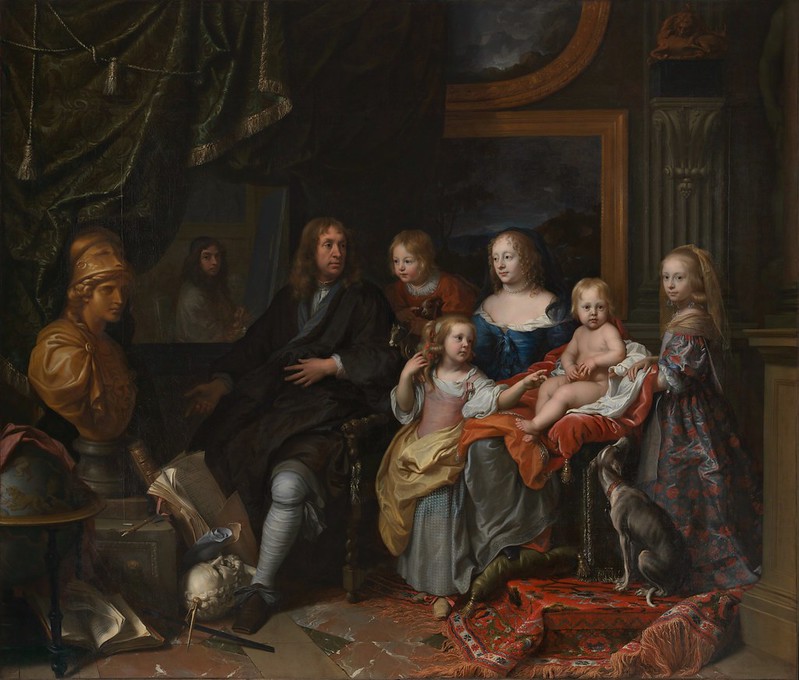
Charles Le Brun (1619-1690) - Everhard Jabach (1618-1695) and his Family (c.1660)


Johann Ludwig Krebs (1713-1780) - Concerto (a-Moll) a II Cembali obligati (c.1753)
Performers: Mаriаngiola Mаrtеllo (cembalo); Giorgio Tаbаcco (cembalo)

---


German composer and organist, eldest of the three sons of Johann Tobias Krebs (1690-1762). He received his first musical instruction from his father, including organ lessons as early as his 12th year. An improvement in the family fortunes enabled him to enter the Thomasschule in Leipzig in July 1726. He learnt the lute and violin, continued with his keyboard studies, and as late as 1730 was still singing treble in the choir. Anticipating that his eight years of study at the Thomasschule would end in 1734, he competed for the position of organist at St Wenzel, Naumburg, on 25 August 1733, along with his father (who later withdrew), C.P.E. Bach and five others; neither he nor C.P.E. Bach was successful. The Thomasschule therefore extended Krebs’s term, and a year later J.S. Bach summed up in a testimonial of 24 August 1735 that his pupil had ‘distinguished himself’ on the clavier, violin and lute, as well as in composition. This special recommendation undoubtedly refers to an otherwise unknown application for a post, perhaps at St Katharinen, Zwickau. During the next two years (1735-37) Krebs read law and philosophy at Leipzig University, occasionally assisting Bach at the Thomaskirche or playing the harpsichord in Bach’s collegium musicum. During his long professional life Krebs held only three appointments, all in the area south of Leipzig. From 1737 to 1743 he was organist at St Marien, Zwickau. Neither the organ nor the salary was attractive, and in 1744 he moved to Zeitz as organist of the castle. During his 12 years there his beloved teacher died and Krebs applied for the position. He was unsuccessful: in organ playing he was unsurpassed, but the Thomaskirche wanted a Kantor, not a Kapellmeister. Finally in 1755 he went to the castle in nearby Altenburg to become organist at the court of Prince Friedrich of Gotha-Altenburg. The organ was better there, but the salary was scarcely so. Contemporaries spoke well of Krebs. Charles Burney, for example, reported that ‘M. Krebs of Altenburg, scholar of Sebastian Bach, has been much admired for his full and masterly manner of playing the organ’. Forkel considered his organ compositions as among the most important of their time. Others praised his expert knowledge in matters connected with organ building. Krebs’s three surviving sons were all musicians: Johann Gottfried Krebs (1741-1814) was the Stadtkantor in Altenburg; Carl Heinrich Gottlieb Krebs (1747-1793) was court organist in Eisenberg from 1774 but no compositions by him survive; Ehrenfried Christian Traugott Krebs (1753-1804) succeeded his father as court organist at Altenburg from 1780 and published a collection of six organ chorale preludes (Leipzig, 1787); he also wrote a jubilee cantata (music lost) to a text published in Altenburg in 1793. His son, Ferdinand Traugott Krebs, was awarded the post of ‘Mittelorganist’ at Altenburg in 1808 but nothing further is known of him. 

dilluns, 1 de febrer del 2016

KREBS, Johann Ludwig (1713-1780) - Sinfonien & Sonaten

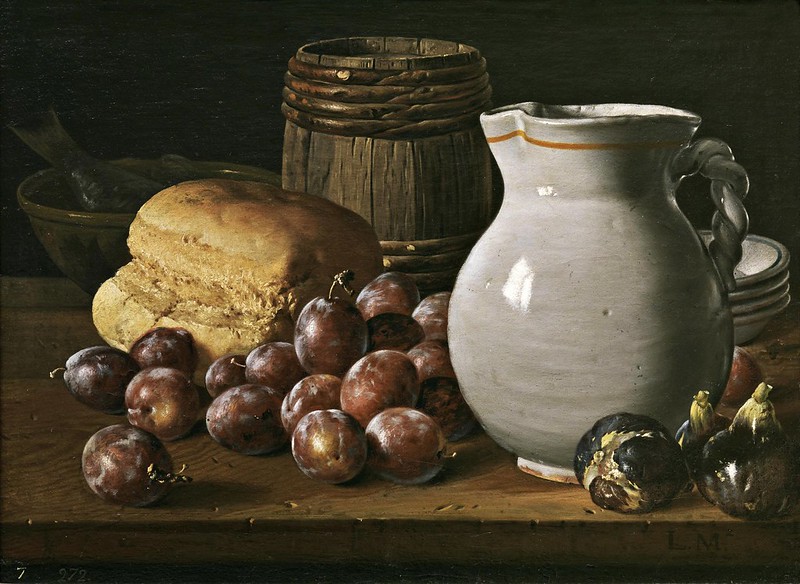
Luis Eugenio Meléndez - Bodegón con ciruelas, brevas, pan, barrilete, jarra y otros recipientes
Obra de Luis Eugenio Meléndez (1716-1780), pintor espanyol (1)


Parlem de Pintura...

Luís Eugenio Meléndez (Napoli, 1716 - Madrid, 11 de juliol de 1780) va ser un pintor espanyol. Nascut a Itàlia, però de família espanyola d'origen asturià, va ser fill de Francisco Antonio, miniaturista, i nebot de Miguel Jacinto, també pintor. Va iniciar la seva educació a Madrid al costat del seu pare, després va seguir la seva formació a la Junta Preparatòria de l'Acadèmia de San Fernando i va ser alumne de Louis-Michel van Loo, arribant a dominar a fons la tècnica del retrat, com va quedar demostrat en el seu magnífic Autoretrat (Musée du Louvre). Poc després va marxar a Itàlia i va tornar a Espanya, on va treballar inicialment com a miniaturista, però el seu paper preponderant el va desenvolupar en natures mortes convertint-se en un dels pintors més importants de la història del gènere. Els quadres de Meléndez, en general, van ser d'una gran sobrietat i van estar executats amb gran solidesa, especialment en el dibuix, d'un realisme perfeccionista que va arribar fins als més mínims detalls. Les seves composicions ordenades i clares, amb marcats contrasts de llums i ombres, van rebre la influència dels autors Sánchez Cotán i Zurbarán. Meléndez va ser, alhora, un expert en el tractament de les superfícies, evidenciant una extraordinària habilitat per aconseguir donar idea de les qualitats d'allò que representava: fruites, ceràmica, vidre, suro, tèxtils, metalls o pedra. En alguns llenços va introduir el fons de paisatge fet que el va aproximar al bodegó napolità. Mestre de gran força expressiva i extraordinari en la tècnica, va ser un reflex del desig d'exactitud, és a dir, els principis del món il·lustrat en la seva aplicació a l'hora de descriure els elements d'una forma realista, científica i didàctica. Va morir a Madrid el juliol de 1780.


Parlem de Música...

Johann Ludwig Krebs (Buttelstedt, 12 d'octubre de 1713 - Altenburg, 1 de gener de 1780) va ser un organista i compositor alemany. Va ser el tercer fill de Johann Tobias Krebs, qui des de l'any 1710 era Kantor a la ciutat de Buttelstedt. Es va formar inicialment amb el seu pare, tant en orgue com en composició. El juliol de 1726 va viatjar a Leipzig on va estudiar a la Thomasschule. Allà va aprendre llaüt i violi, va seguir la seva formació a l'orgue i va ser cantant del cor. El 1734 va postular per un càrrec d'organista St Wenzel de Naumburg, càrrec que va recaure en favor de C.P.E. Bach. Va seguir a Leipzig on va ser alumne de Johann Sebastian Bach, rebent recomanacions del seu mestre. Aquesta circumstància va ser determinant a l'hora de rebre el nomenament a St Katharinen de Zwickau. Entre el 1735 i el 1737 es va formar a la Universitat de Leipzig en Dret i Filosofia alhora que treballava com assistent ocasional de Bach a la Thomaskirche i com a intèrpret de clavecí del Bach collegium musicum. Poc després, entre els anys 1737 i 1743, va ser nomenat organista a St Marien de Zwickau. El 1744 va viatjar a Zeitz on va ser organista del seu castell. El 1755 va canviar novament d'aires i es va situar a Altenburg, on va ser nomenat, gràcies al suport de Georg Benda, organista de la cort del príncep Frederic de Gotha-Altenburg. Allà va viure la resta de la seva vida fins el gener de 1780, l'any de la seva mort.

OBRA:

Vocal religiosa:

sources: D-Bsb, LEm
Oratorio funebre all’occasione della morte di Maria Gioseppa Regina di Pollonia, SATB, 2 ob, str, bc, cNov 1757
Missa (F), SATB, 2 hn, str, bc, 24 June 1755, ed. N. Klose (Embühren, 1998), ed. F. Friedrich (St Augustin, 1999);
Sanctus (D), SATB, 2 hn, 2 ob, str, bc;
Sanctus (D), SATB, 3 tpt, 2 ob, str, bc, timp;
Sanctus (F), SATB, 2 hn, 2 ob, str, bc (bwv Anh.27, see Kobayashi), ed. F. Friedrich (St Augustin, 1999);
Magnificat deutsch (F), SATB, bc;
Magnificat (D) SATB, 3 tpt, str, bc, timp
Bist du noch fern (aria), S, hpd;
Der Herr hat Grosses an uns getan (cant.), SATB, 2 tpt, 2 ob, str, bc, 23 Dec 1739;
Erforsche mich, Gott (motet), SSATB, ed. in Cw, lxxxix (1963), ed. K. Tittel (Stuttgart, 1983);
Gott fähret auf mit Jauchzen (cant.), SATB, 2 hn, str, bc, 27 April 1766;
Jesu, meine Freude (cant.), SATB, ob, str, bc, ed. N. Klose (Embühren, 1993);
Seid barmherzig (cant.), SATB, 2 bn, str, bc, ed. N. Klose (Embühren, 1995)
Tröste uns Gott (motet), 8vv, lost

Instrumental:

Chbr.:
VI Trio, 2 fl/vn, hpd (Nuremberg, n.d.);
no.1 ed. in Collegium musicum, xxxi (Leipzig, c1910);
no.6 ed. in NM, cix (1934);
nos.2, 5 ed. H. Ruf (Wilhelmshaven, 1968);
MS copies, US-CA
[6] Sonata da camera, hpd, fl/vn (Leipzig, 1762);
ed. B. Klein as Sechs Kammersonaten (Leipzig, 1963)
Musikalischer und angenehmer Zeitvertreib bestehet in zwey Sonaten, hpd, fl/vn (Nuremberg, [1752])
III sonate, fl, vn, bc, cited in Breitkopf catalogue, 1762, MS copies in D-Bsb, ed. F. Nagel, no.1 (Wolfenbüttel, 1975), nos.2, 3 (Heidelberg, 1975);
VI soli, vn, hpd, cited in Breitkopf catalogue, 1767 (suppl. 2), autograph frag. ALa, MS copies of 4 sonatas B-Bc, D-Bsb
2 sinfonias, 2 vn, va, bc, ed. F. Friedrich (Stuttgart, 1998);
2 concs., lute, str, bc, ed. R. Chiesa (Milan, 1970–71);
Conc., hpd, ob, str, bc, ed. K. Jametzky (Heidelberg, 1976);
2 sonatas, vn, bc: all in Bsb;
Conc., vn, str;
Sonata, vn, bc: both cited in Breitkopf catalogue

Organ:
for organ alone unless otherwise stated
principal MS sources, including numerous autographs, D-Bsb, LEm, F-Pn; also A-Wn, B-Bc, Br, D-Dlb, DS, GOl, GB-Lbl, US-NH, private collection, Montclair, NJ
7 praeludia (C, c, D, d, f, F , G), W i;
2 toccatas and fugues (E, a), W i;
1 fantasia and fugue (F);
11 free preludes/fantasias;
11 fugues;
17 trios, W ii
41 chorale settings (incl. 6 doubtful), W iii
4 fantasias, ob, org;
1 fantasia, fl;
1 fantasia, ob d’amore;
chorale fantasia, tpt, org;
15 chorale settings, 1 inst, org (8 for ob or ob/tpt, 1 for ob d’amore, 1 for hn, 5 for tpt/clarino): ed. H. McLean (Borough Green, 1981), ed. G. Weinberger (Wiesbaden, 1991)

Other keyboard:
Erste Piece, Bestehend In sechs leichten … Praeambulis (Nuremberg, 1740), ed. F. Friedrich (Wilhelmshaven, 1994)
Andere Piece, Bestehend In einer leichten … Suite (Nuremberg, 1741), ed. F. Friedrich (Wilhelmshaven, 1994)
Dritte Piece, Bestehend In einer … Ouverture (Nuremberg, 1741), ed. F. Friedrich (Wilhelmshaven, 1994)
Vierte Piece, Bestehend In einem … Concerto (Nuremberg, 1743), ed. F. Friedrich (Wilhelmshaven, 1994)
Clavier Ubung Bestehend in verschiedenen vorspielen und veränderungen einiger Kirchen Gesaenge (Nuremberg, n.d.), W iv
Clavier-Ubung bestehet in einer … Suite … Zweyter Theil (Nuremberg, n.d.)
Clavier-Ubung bestehend in sechs Sonatinen … IIIter Theil (Nuremberg, n.d.), ed. F. Friedrich (Stuttgart, 1999)
Exercice sur le clavessin consistant en VI suites, op.4 (Nuremberg, n.d.), part ed. K. Herrmann, Leichte Tanzstücke (Hamburg, 1949); nos.2 and 6 ed. in Organum, v/32, 34 (Lippstadt, 1965)
Sonata, in Musicalisches Magazin, in Sonaten … bestehend, pt.2 (Leipzig, 1765)
3 sonatas cited in Breitkopf catalogue
3 partite, D-Bsb, Dlb, 2 ed. in Alte Meister, nos.11–12 (c1870); Conc. 2 hpd, LEb, ed. B. Klein (Leipzig, 1966)

Font: En català: No disponible En castellano: Johann Ludwig Krebs (1713-1780) In english: Johann Ludwig Krebs (1713-1780) Altres: Johann Ludwig Krebs (1713-1780) 


Parlem en veu pròpia o en veu d'altri...

Contemporaries spoke well of Krebs. Charles Burney, for example, reported that ‘M. Krebs of Altenburg, scholar of Sebastian Bach, has been much admired for his full and masterly manner of playing the organ’. Forkel considered his organ compositions as among the most important of their time. Others praised his expert knowledge in matters connected with organ building. Krebs may not have been the favourite in the circle of Bach’s pupils, as some have suggested; in Spitta’s opinion his place in the hierarchy was next to Altnickol, Bach’s future son-in-law. But Bach certainly regarded him very highly, if there is any truth to the contemporary pun on ‘Krebs’ (crayfish) and ‘Bach’ (stream): ‘In this great stream only a single crayfish has been caught’, reported by C.F. Cramer in the Magazin der Musik for 1784. The close association between teacher and pupil has given scholars reason to be grateful as well as perplexed. Krebs, with others in the Thomaskirche circle, found useful occupation as a copyist. His work in the period 1729–31 is particularly important, as the parts he made then for cantatas 192, 37 and 140 are primary sources. Other compositions of Bach in his hand have prompted the speculation that Krebs had access to Bach’s musical estate. Löffler, for example, whose research into Krebs’s life and works was so extensive, thought that this was the case with the unique Krebs copy of Bach’s Fantasia and Fugue in C minor bwv537. In fact most of the manuscript (D-Bsb P803) is in the hand of Tobias Krebs, presumably copied when he was studying with Bach; O’Donnell argues that the repetition of the fugal exposition that Ludwig wrote out on 10 January 1751 provides at best only a makeshift solution for an incomplete but otherwise ‘noble’ and ‘balanced’ work. Other problems concern the authenticity of works which appear in the hands of both Bach and Ludwig Krebs or bear their ascription. H.-J. Schulze discovered that the Trio in C minor bwv585 was composed by neither man but by J.F. Fasch. Tittel considers the chorale Wir glauben all an einen Gott in similar settings in four parts (Krebs) and five (Bach, bwv740) to be both by the former. Bach’s Eight Short Preludes and Fugues bwv553–60 have also been attributed to both Tobias and Ludwig; on stylistic grounds neither seems likely.

Only a handful of the Bach pupils who became professional organists wrote for the instrument, and among these Krebs and J.G. Kittel stand out. Krebs’s compositions are the more diverse in free forms, toccatas and trios, as well as in the variety of the chorale-based works. The organ works of the younger and more prolific Kittel (who also copied a great many of Krebs’s organ pieces) anticipate the new currents of pre-Classical change. The style of Krebs’s music, on the other hand, reflects the transitional period in which he lived. Some of his pieces, such as the chorale Jesu, meine Freude for obbligato oboe and organ, are cast in a Bachian mould; others show the leavening influence of the galant style. But even in his warmest melodic works he could not altogether deny the contrapuntal influence of his youth. Few of the lesser composers of the mid-century share his proclivity towards counterpoint. Some of the organ pieces are modelled on his teacher’s work. Bach’s Toccata in F bwv540 was undoubtedly the stimulus for Krebs’s E major Toccata; the Toccata in C bwv564 for a Praeludium in C; and so on. In general his fugues are thoroughly worked out but show few touches of originality. He seems to have considered them more as examples of the craftsman’s art than the artist’s craft. One fugue on B–A–C–H pays direct homage to his teacher. The chorales and fantasias for organ and solo instrument show a more consistent level of invention, and in the case of the fantasias have no parallel in the music of G.F. Kauffmann, J.B. Bach, G.A. Homilius and others who wrote for such combinations of instruments. Krebs’s Fantasia in F minor for oboe and organ has rightly been praised by Sietz, and may well be one of his most expressive works in any form.

Unlike the organ compositions, most of Krebs’s clavier works were published in his own lifetime. They range in style from the simpler settings of German chorales in the Clavier Ubung to sophisticated examples in the ‘French and Italian taste’. It is tempting to speculate that, like Bach before him, he wished to leave a representative anthology of works in all the current idioms to demonstrate that he was fluent in all styles. His Concerto in A minor for two harpsichords is perhaps superior to the solo pieces; he wrote it for the Dresden court where he performed in 1753. Gerber’s account of his success is undoubtedly true, for Krebs’s inspiration remains remarkably high, not only in the lively dialogue of the outer movements but also in the appealing slow movement; here the fusion of Baroque and galant is extremely well contrived. Much the same is true of Krebs’s sonatas for one and two flutes and harpsichord, where again his contrapuntal skill saves him from writing music of merely empty elegance. Krebs’s three surviving sons were all musicians, the eldest being (3) Johann Gottfried Krebs. Carl Heinrich Gottlieb Krebs (1747–93) was court organist in Eisenberg from 1774; no compositions by him survive. Ehrenfried Christian Traugott Krebs (1753–1804) succeeded his father as court organist at Altenburg from 1780 and published a collection of six organ chorale preludes (Leipzig, 1787); he also wrote a jubilee cantata (music lost) to a text published in Altenburg in 1793. His son, Ferdinand Traugott Krebs, was awarded the post of ‘Mittelorganist’ at Altenburg in 1808 but nothing further is known of him.

GROVE MUSIC ONLINE (source/font: aquí)

Gaudiu i compartiu! 


Informació addicional... 

INTERPRETS: Leipziger Concert
RECICLASSICAT: KREBS, Johann Ludwig (1713-1780)
AMAZON: KREBS - Sinfonien & Sonaten
CPDL: No disponible.
SPOTIFY: KREBS - Sinfonien & Sonaten


Tant si us ha agradat, com si no, opineu, és lliure i fàcil!

dissabte, 12 d’octubre del 2013

KREBS, Johann Ludwig (1713-1780) - Organ, Oboe & Harpischord

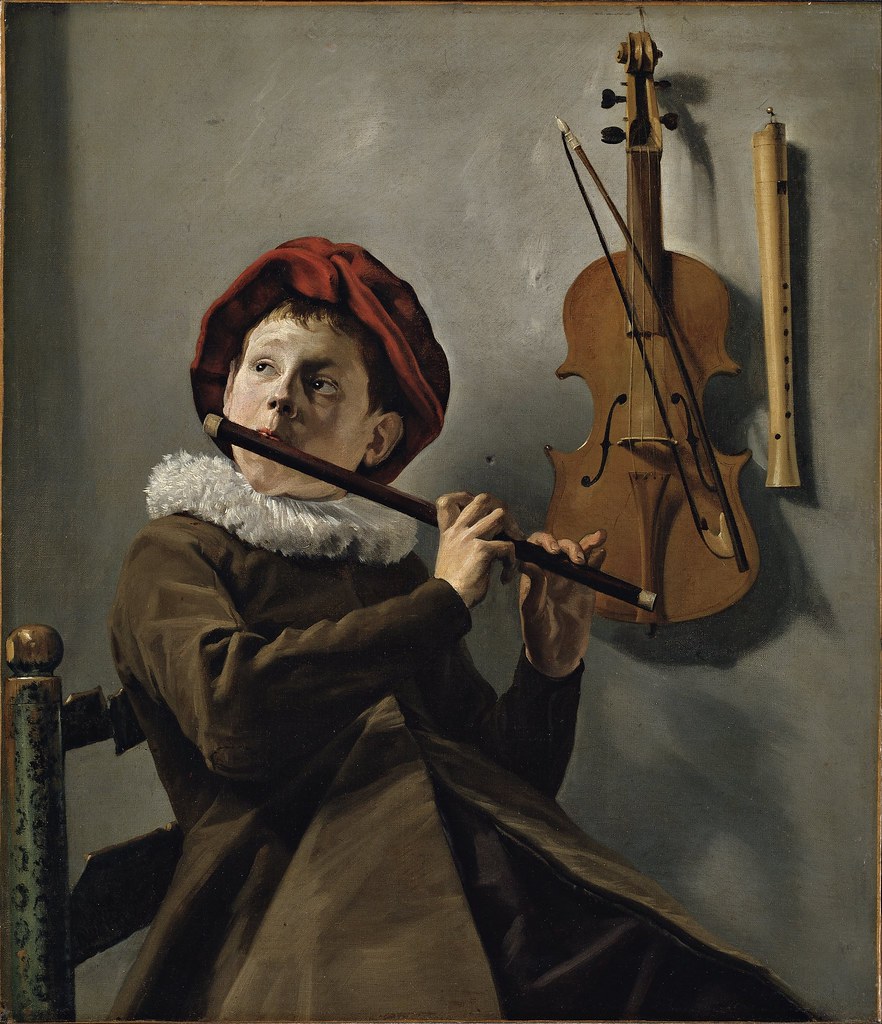
Judith Leyster - Boy playing the Flute (c.1630)
Obra de Judith Leyster (1609-1660), pintora holandesa (1)


- Recordatori de Johann Ludwig Krebs -
En el dia de la celebració del seu 300è aniversari de naixement


Parlem de Pintura...

Judith Jans Leyster (Haarlem, 28 de juliol de 1609 - Heemstede, 10 de febrer de 1660) va ser una pintora de l'Edat d'Or Holandesa. Judith Leyster fou la primera pintora professional d'Haarlem i en un estil proper al de Frans Hals: escenes vivaces de taverna, nens jugant i pinzellada enèrgica. Judith fou molt coneguda a la seva època, però desaparegué de la història de l’art fins ben entrat el segle XIX. Com a pintora d’èxit, regentà el seu propi estudi amb ajudants del gènere masculí, fet singular en aquell temps a la ciutat d'Haarlem. Possiblement es va formar, durant un temps, a l’estudi del famós pintor local Frans Hals. El seu estil és tan similar que algunes de les seves pintures es confonen amb les del seu suposat mestre Hals. El seu període de major productivitat fou la dècada de 1630, abans de contraure matrimoni amb el pintor Jans Miense Molenaer i traslladar-se a Amsterdam. Les seves pintures representen a nens i joves gaudint de la vida, sovint amb missatges moralitzadors sobre la brevetat del temps o amb la representació de les conductes esbojarrades dels adults. Les seves obres les signava amb l'etiqueta de Judita Leystar i sovint ho feia amb un monograma amb les seves inicials JL i amb una estrella adjunta. Aquest era un joc de paraules ja que "Lei estrella" significa "estrella principal" en holandès, que era el nom comú de l'estrella del Nord usat en el seu moment pels navegants holandesos. Leyster era especialment innovadora en les seves escenes de gènere nacionals. En elles, dibuixava escenes tranquil·les de la dona a la llar que, fins aleshores, no eren un tema recurrent a Holanda fins a la dècada de 1650. 

Font: En català: Judith Leyster (1609-1660) En castellano: Judith Leyster (1609-1660) In english: Judith Leyster (1609-1660) - Altres: Judith Leyster (1609-1660)


Parlem de Música...

Johann Ludwig Krebs (1713-1780) va ser un músic del Barroc i organista alemany. Va ser el tercer fill de Johann Tobias Krebs (1690-1762), qui des de l'any 1710 era Cantor a la ciutat de Buttelstedt, això no li va impedir anar caminant, dues vegades per setmana, a Weimar per estudiar, entre els anys 1711 i 1716, amb Bach, a qui li enviaria els seus tres fills per aprendre el seu art. Entre els anys 1726 i 1735 va ser alumne a l'Escola de Sant Tomàs, a Leipzig, on va estudiar composició i teclat (especialment orgue) amb Johann Sebastian Bach. Malgrat que era bastant petit, tot just un adolescent, la seva tècnica i coneixement musical li va permetre ser, juntament amb Wilhelm Friedemann Bach, el fill gran de Bach, un dels tres Prefectes del cor. Aquest càrrec li va comportar alguna sorpresa negativa, especialment amb el rector Ernesti, veient-se obligat a substituir al propi Bach quan aquest havia de dirigir els cors d'altres esglésies. Va assistir als constants enuigs del seu mestre quan el rector va imposar diferents prefectes mal preparats havent de ser ell mateix l'encarregat de la direcció del cor tot i que, amb prou feines, no tenia ni 20 anys.

Matthäus Merian - Altenburg (before 1650)
Vista d'Altenburg, obra de Matthaüs Merian (1593-1650), gravador suís (2)

En acabar els estudis, el propi Bach va escriure una elogiosa carta de recomanació per al seu jove i prometedor alumne ja que era un consumat organista encara que també tocava altres instruments (Bach escriu d'ell: "...es distingeix musicalment entre nosaltres pel seu mestratge amb el clavecí, el violí i el llaüt, no menys que en la composició..." Entre els anys 1737 i 1743 va ocupar el càrrec d'organista a l'església de Santa Maria, a la ciutat de Zwickau, els anys 1744-1756 ho va ser a Zeitz i des de 1756 a Altenburg, Turíngia. Era un alumne molt aplicat i estimat per Bach, no només per la seva relació musical, sinó personalment. En una ocasió va dir d'ell: "és l'únic cranc del meu rierol", jugant familiarment amb els seus cognoms alemanys (Krebs, cranc i Bach, rierol). En paraules de Gottsched, un dels seus biògrafs, va ser un dels més destres aprenents del Mestre de Capella Bach, sent conegut en l'actualitat pel seu virtuosisme a l'orgue; va deixar nombroses composicions per a aquest instrument, algunes d'elles editades pel propi Bach a càrrec seu. El seu repertori inclou, a banda de l'orgue i el clavecí, concerts, simfonies, trios i sonates per a diversos instruments així com també cantates, salms i motets sacres.

Font: En català: No disponible En castellano: Johann Ludwig Krebs (1713-1780) In english: Johann Ludwig Krebs (1713-1780) Altres: Johann Ludwig Krebs (1713-1780)


Parlem amb veu pròpia...

Curiosament, aquest més d'octubre se'ns han acumulat dos dels tres compositors de qui, aquest any 2013, en celebrem el seu 300è aniversari de naixement. Un d'ells, el francès Antoine Dauvergne, en parlava fa pocs dies i avui tocarà el torn de Krebs, el cranc del rierol de Bach. Properament, parlarem del tercer i misteriós, per ara, actor protagonista. En qualsevol cas, aniversaris acompanyats de la forma que ens agrada, de bona música i avui no en serà l'excepció ja que, en el cas que ens ocupa, tenim teca musical per estona. Ni més ni menys que tres seran les edicions seleccionades per a celebrar la festivitat de Krebs. Totes elles es presenten amb registres i instruments protagonistes diferenciats. De fet, no ens hauria de sorprendre aquesta diversitat ja que la destresa de Krebs amb la instrumentació era sòlida, consistent i àmpliament contrastada, fins i tot, pel mateix Bach. Per tant, i entrant en matèria, introduirem el menú del dia amb una partitura que ens defineix, eloqüentment, el qui va ser Johann Ludwig Krebs. Orgue, en estat pur, amb el seu Preludi i Fuga en Do major. Una partitura esplèndida i representativa del seu enginy amb el més majestuós dels instruments. Seguidament, i la sorpresa del dia, serà el Concert en Si menor per a oboè, orquestra i clavecí. Accentuaré i reiteraré el nom del clavecí perquè en aquest concert quasi simfònic-concertant, aquest instrument és tant o fins i tot més important, amb matisos, que el propi oboè... deliciós. I ja que parlem del clavicèmbal, finalitzaré amb la transcripció, per a dos clavecins, del Concert en La menor per a clavecí i orquestra. Una partitura superba i a l'altura dels celestials concerts del seu mestre Bach. Si la meva esbiaixada memòria no em falla, aquesta és la primera de les entrades relacionades amb l'alemany, per tant, benvingut al bloc i gràcies pel teu imponent art!

Gaudiu i compartiu! 


Informació addicional...

INTÈRPRETS: Richard Egarr & Patrick Ayrton (harpsichords)
INTÈRPRETS: Camerata BernHeinz Holliger (oboe)
INTÈRPRETS: Jan van de Laar (organ)