Es mostren els missatges amb l'etiqueta de comentaris Tartini G.. Mostrar tots els missatges

dimecres, 8 d’abril del 2026

TARTINI, Giuseppe (1692-1770) - Concertino con Flauto solo

Jan Josef Horemans (1682-1752) - Company in the garden


Giuseppe Tartini (1692-1770) - Concertino (Fa maggiore) con Flauto solo | Violini Obligati
Performers: Ensemble Baroque Le Rondeau; Jean-Pierre Boullet (flute & conductor)

---


Italian composer, violinist, teacher and theorist. Son of Giovanni Antonio Tartini and Caterina Zangrando, his parents desired that he enter the church, but while a law student at the University of Padua, he married Elisabetta Premazore on 29 July 1710. Compelled to leave Padua, he took refuge for three years in the convent of San Francesco d’Assisi, where he studied the violin without a teacher. By 1714, he was a violinist in the Ancona opera and spent the next years playing at various theaters in northeastern Italy. On 16 April 1721, he was appointed 'primo violino e capo di concerto' at San Antonio of Padua. From 1723 to 1726, he was in Prague, in service to the Kinsky family, where he met Johann Joseph Fux, Antonio Caldara, and Sylvius Weiss, among other luminaries. Then he returned to Padua, started his school, and about 1730, brought out his first published volume of violin works. About 1740, he suffered a stroke that adversely affected his playing, and he devoted more and more time to music theory in his last years. In an age when composing for the church or the theater was the sure path to success, he refused to do either and embarked upon an idiosyncratic career establishing an international reputation as violinist and philosopher of music, writing five treatises contesting the ideas of Giovanni Battista Martini, Jean-Philippe Rameau, and Jean-Jacques Rousseau, among others, and leaving an oeuvre concentrated on the violin: about 135 solo violin concertos, about 135 violin sonatas with continuo, 30 unaccompanied sonatas, and about 40 trio sonatas. He also composed 2 flute concertos, 2 concertos for viola da gamba, 4 motets, and 20 Italian sacred songs. Most of his living was made as a freelance violinist. In the late 1720s, he founded his own school of violin playing, the first of its type, known as 'school of the nations' because it attracted students from all over Europe.

divendres, 25 de febrer del 2022

TARTINI, Giuseppe (1692-1770) - Concerto a Violoncello principale obligato

Dominicus Gottfried Waerdigh (1700-1789) - A family playing music in an interior (1734)


Giuseppe Tartini (1692-1770) - Concerto a Violoncello principale obligato (c.1740)
Performers: Mstislav Rostropovitch (1927-2007, violoncelle); Collegіum Musіcum de Zurіch;
Paul Sacher (1906-1999, conductor)

---


Italian composer, violinist, teacher and theorist. Tartini's father Giovanni Antonio, of Florentine origin, was general manager of the salt mills in Pirano. Giuseppe, destined for the church by his pious parents, was to have been first a minore conventuale, a branch of the Franciscan order, and subsequently a full priest. To this end he was educated in his native town and then in nearby Capodistria (now Koper, Slovenia) at the scuole pie; as well as the humanities and rhetoric, he studied the rudiments of music. In 1708 he left his native region, never to live there again, but carrying in his memory the peculiarities of the local musical folklore. He enrolled as a law student at Padua University, where he devoted most of his time, always dressed as a priest, to improving his fencing, a practice in which, according to contemporary accounts, few could compete with him. A few months after his father's death, Tartini openly rebelled against his parents' intentions, and on 29 July 1710 he married Elisabetta Premazore, a girl of lower social standing and two years his elder. He was then compelled to leave Padua and took refuge in the convent of S Francesco in Assisi, where he was sheltered by the superior, Padre G.B. Torre, from Pirano. There Tartini remained for at least three years, devoting himself determinedly to practising the violin, always without tuition. Although direct evidence is lacking, he probably studied composition during this period with Padre Bohuslav Černohorský, then organist of the basilica in Assisi. 

By 1714, he was a violinist in the Ancona opera and spent the next years playing at various theaters in northeastern Italy. On 16 April 1721, he was appointed primo violino e capo di concerto at San Antonio of Padua. From 1723 to 1726, he was in Prague, in service to the Kinsky family, where he met Johann Joseph Fux, Antonio Caldara, and Sylvius Weiss, among others. Then he returned to Padua, started his school, and about 1730, brought out his first published volume of violin works. In an age when composing for the church or the theater was the sure path to success, Tartini refused to do either and embarked upon an idiosyncratic career establishing an international reputation as violinist and philosopher of music, writing five treatises contesting the ideas of Giovanni Battista Martini, Jean-Philippe Rameau, and Jean-Jacques Rousseau, among others, and leaving an oeuvre concentrated on the violin: about 135 solo violin concertos, about 135 violin sonatas with continuo, 30 unaccompanied sonatas, and about 40 trio sonatas. He also composed 2 flute concertos, 2 concertos for viola da gamba, 4 motets, and 20 Italian sacred songs. Most of his living was made as a freelance violinist. In the late 1720s, he founded his own school of violin playing, the first of its type, known as “school of the nations” because it attracted students from all over Europe. About 1740, he suffered a stroke that adversely affected his playing, and he devoted more and more time to music theory in his last years.

dilluns, 26 de febrer del 2018

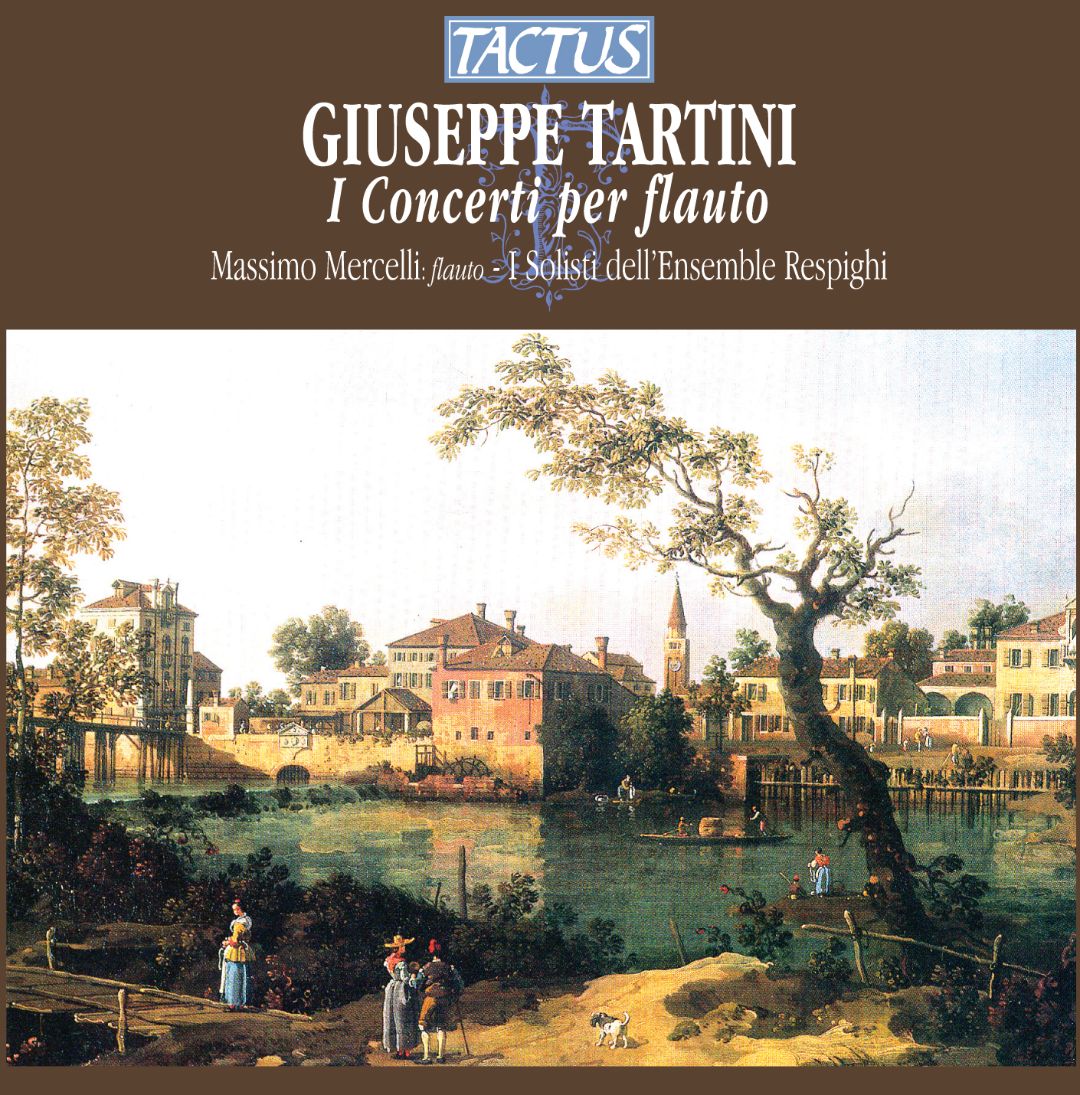
TARTINI, Giuseppe (1692-1770) - I concerti per flauto

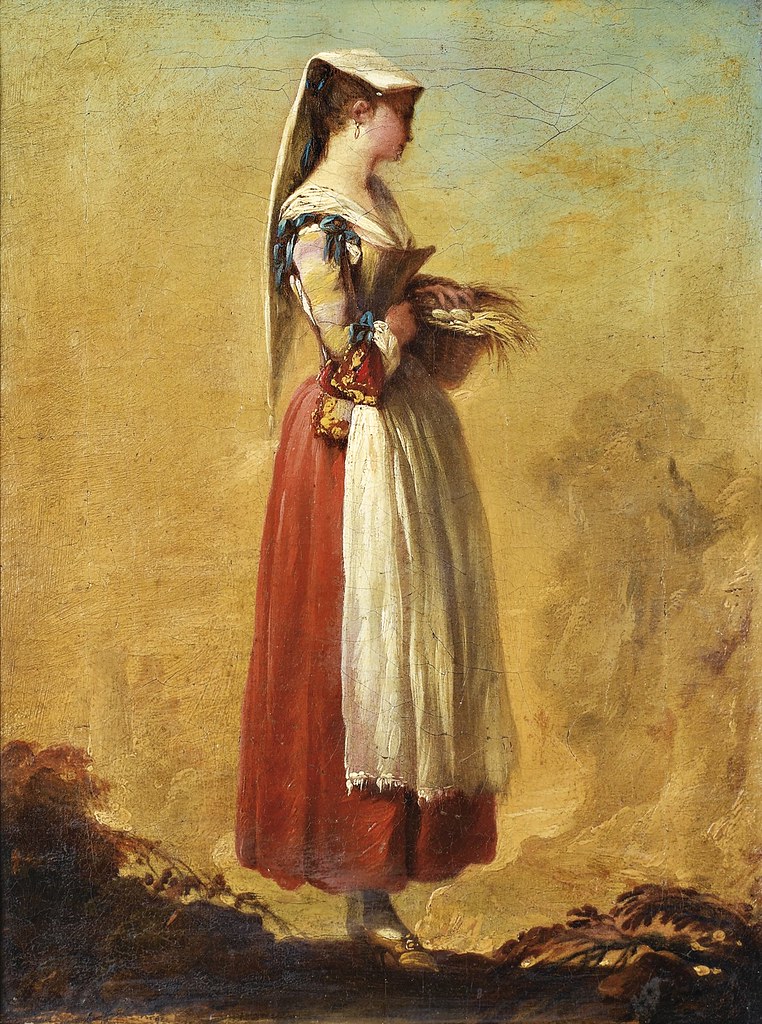
Jean Barbault - La Frascatane
Obra de Jean Barbault (1718-1762), pintor francès (1)


- Recordatori de Giuseppe Tartini -
En el dia de la commemoració del seu 248è aniversari de decés


Parlem de Pintura...

Jean Barbault (Viarmes, 1 d'agost de 1718 - Roma, 28 de maig de 1762) va ser un pintor francès actiu a Itàlia. Es desconeix la seva formació sent la primera referència de 1750, any que va entrar com a membre de l'Acadèmia Francesa de Roma. Allà va desenvolupar la seva carrera com a pintor realitzant principalment obres de petit format de temàtica singular amb figures individuals sovint caracteritzades amb vestits orientals. També va realitzar paisatges i escenes de gènere si bé com a artista va ser en general bastant desconegut. Jean Barbault va morir a Roma el maig de 1762.


Parlem de Música...

Giuseppe Tartini (Pirano, 8 d'abril de 1692 - Padova, 26 de febrer de 1770) va ser un violinista, teòric i compositor italià. Es va formar en lleis i teologia a Pàdua en una època en què va assolir notable reputació en esgrima. Abans de celebrar els 20 anys es va casar, en secret, amb una noia sota tutela de l'arquebisbe de Pàdua fet que va motivar el seu empresonament. Disfressat de monjo va fugir de Pàdua establint-se a Assis. Allà va començar a tocar el violí amb destresa i va ser enviat a Venècia per ampliar formació. Al seu retorn a Pàdua, i ja alliberat dels seus càrrecs, va ser nomenat violinista de l'església de San Antonio. Més tard, entre els anys 1723 i 1726 va ser director de l'orquestra del conseller de Bohèmia a Praga. El 1728, i després de tornar novament a Pàdua, va fundar una escola de violí i composició on va tenir nombrosos alumnes entre ells Domenico Ferrari, Pasquale Bini, Filippo Manfredi, André-Noël Pagin i Friedrich Wilhelm Rust. A partir del 1740, i establert com un dels més importants violinistes del seu temps, va iniciar una extensa gira concertant per Itàlia. Com a compositor, va ser autor d'un centenar de concerts per a violí i d'abundant obra de cambra així com de diversa música religiosa. Com a teòric va ser autor d'alguns tractats com Trattato di musica (1754) o Dissertazione dei principi dell’armonia musicale (1767). Tartini va morir a Padova el febrer de 1770.

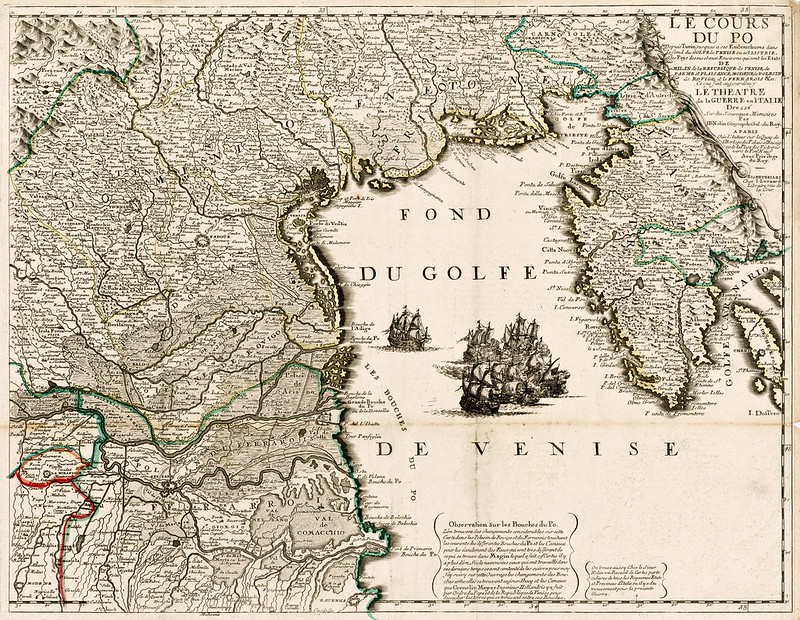
Jean-Baptiste Nolin - Le Cours Du Po (c.1700)
Jean-Baptiste Nolin (c.1657-1708) - Le Cours Du Po (c.1700) (2)

OBRA:

Vocal religiosa:

Canzoncine sacre, 1–3vv (some in more than one version):
Alma contrita;
Alma pentita;
Amare lacrime;
Caro Signor amato;
Chi cerca un'innocenza;
Crocifisso mio Signor;
Dio ti salvi regina;
Dolce mio Dio;
E m'ami ancor;
Iddio ti salvi;
Infrangiti mio cor;
Mio Gesù con tutto il cuore;
No, che terreno fallo;
O peccator che sai;
Rimira, o peccatore;
Ti voglio amar Gesù;
Vedi, Signor, ch'io piango;
Vergine bella del ciel regina;
Vergine bella e pietosa;
Voglio amar Gesù anch'io: all I-Pca; 5 ed. in Musica sacra, lxxxiii (1959), suppl.

Other:
Stabat mater, 3vv, copy, 1769;
Pange lingua, 3vv;
2 Tantum ergo, 3vv;
3 Miserere, 3vv, 4vv, 5vv, copy, 1770 (additional copies, F-Pc, GB-Ob);
Salve regina, 4vv, copy, 1773 (‘ultima composizione del … Tartini’): all I-Pca

Instrumental:

Published:
op.
1 lib.1. Sei concerti a 5: d85, 55, 60, 15, 58, 89 (g, e, F, D, F, A) (Amsterdam, 1728)
1 lib.3. Sei concerti a 5 del … Tartini a G. Visconti:d Anh.III–VI (B , D, F, a), 2 others unlisted (Amsterdam, c1728); none definitely attributable (Dounias); date derived from Le Cène's publishing numbers
1 lib.2. Sei concerti a 5: d111, 91, 59, 71, 88, 18 (a, A, F, G, A, D) (Amsterdam, 1730); date derived from Le Cène's publishing numbers
1 VI sonate vn, b: b B 7, a9, b5, g9, A3, B 8 (Amsterdam, 1732)

1 (12) Sonate e una pastorale: b A14, F9, C11, G17, e6, D12, D6, c2, A15, g10, E5, F4, A16 (Amsterdam, 1734); nos.1–6 church sonatas, nos.7–12 chamber sonatas; A16, ‘Pastorale’, uses scordatura; the nickname of g10, ‘Didone abbandonata’, is of 19th-century origin; ed. in FS, vii–viii, xii
2 VI concerti a 8: d73, 2, 124, 62, 3, 46 (G, C, b, F, C, E) (Amsterdam, c1734)
VI concerti … d'alcuni famosi maestri, lib.2 (no.5): d1 (C) (Amsterdam, c1740)
2 VI Sonate, vn, bc: b g4, A5, d4, e7, F5, E6 (Amsterdam, 1743)
2 (12) Sonate, vn, bc: b D13, G18, A17, b6, a10, C12, g11, D14, B 9, F8, e8, G19 (Rome, 1745); pubd as op.3 (Paris, c1747)
Nouvelle étude … par Mr. Pétronio Pinelli: b F11 (17 variations on Gavotte from Corelli's op.5 no.10) (Paris, c1747); see L'arte del arco
4 (6) Sonates: b E3, G20, B 10, A3, D, c5 (Paris, 1747); no.6 probably by Mauro D'Alay
5 (6) Sonates: B, a11, B 11, A18, G21, F10, B 12 (Paris, c1747); some doubtful; ed. E. Bonnelli (Padua, 1951)
6 Sei sonate: b G8, A19, D8, A6, B5, G10 (Paris, c1748)
7 (6) Sonate: b D11, B 7, G9, E4, g3, F7 (Paris, 1748); ed. P. Brainard: La raccolta di sonate autografe per violino, Ms 1888, fasc.1 nell’Archivio musicale della Venerando Arca del Santo di Padova (Padua, 1975)
8 Sei sonate a tre: Trios A5, D7, G4, D10, A10, D11, some with movts added (Paris, 1749)
XII Sonatas, 2 vn, b: Trios G4, D11, A5, D10, G3, F2, D7, A8, A9, D12, A10, A7 (London, 1750)
VI [and VI] sonate, 2 vn, bc, lib. [I], II: Trios D8, C4, D6, F2, D5, D2, D12, C5, D4, C3, D3, D9 (Amsterdam, c1755), as op.3 (London, 1756)
L'arte del arco: b F11 (38 variations on Gavotte from Corelli's op.5 no.10) (Paris, 1758); attrib. of both this and the earlier print is questionable
9 Sei sonate: b E 1, G6, G22, A20, F6, D16 (Paris, c1763)
J.B. Cartier: L'art du violon: b g4, A14, F11 (expanded to 50 variations), g5 (first appearance in print of ‘Le trille du diable’), and Adagio varié (17 variations on b F5, 1st movt) (Paris, 1798); the Adagio, probably spurious, R in H.-P. Schmitz: Die Kunst der Verzierung im 18. Jahrhundert (Kassel, 1955)

Manuscrit:
c135 vn concertos (vn, str a 4, bc), thematic catalogue by Dounias, supplemented by Duckles and others; principal MS collections in I-Pca(incl. 55 complete autographs), F-Pc, GB-Mp, US-BE (first publications listed below); 6 ed. in FS: d125, i; d12, x; d83, xi; d117, xiii; d21, xiv; d115, xv
Concs. for other insts (str a 4, bc): vc/va da gamba, A, I-Pca*; autograph; va (va da gamba), 2 hn, D, A-Wgm*; fl, G, S-Skma, doubtful; fl, F, I-Nc, doubtful
Sinfonie and sonatas a 4 (str qt, bc): D (autograph), G, A, D, I-Pca; 11 (some a 5, one with 2 clarini),

Doubtful:
c40 trio sonatas (2 vn, bc), mostly 1745–9, I-Pca, F-Pc (thematic catalogue by Brainard)
c135 authentic, 40 doubtful sonatas (vn, bc), mostly I-Pca, F-Pc, US-BE (thematic catalogue by Brainard); 3 ed. in FS, xvi
c30 sonatas, many single movts (vn, without acc. or with optional bc), probably c1745–60, mostly I-Pca, A-Wgm (thematic catalogue by Brainard)

Literatura:

Regole per arrivare a saper ben suonar il violino (MS compiled by G.F. Nicolai, I-Vc); ed. in Jacobi (1961); variant versions: Libro de regole, ed esempi necessari per ben suonare, US-BE; and Traité des agréments de la musique (Paris, 1771); Petrobelli (Giuseppe Tartini: le fonti biografiche, 1968) reports the discovery of a further It. MS version; a further copy has been discovered in I-Vlevi (ed. D. Vitali: Il ‘Trattato degli abbellimenti’ di Giuseppe Tartini, diss., U. of Rome, 1995)
Trattato di musica secondo la vera scienza dell'armonia (Padua, 1754/R; Eng. trans. in Johnson, 1985)
De' principi dell'armonia musicale contenuta nel diatonico genere (Padua, 1767/R)
Risposta di Giuseppe Tartini alla critica del di lui trattato di musica di Mons. Le Serre di Ginevra (Venice, 1767)
Scienza platonica pudata sul cerchio, ed. A. Todeschini Cavalla (Padua, 1977)


Informació addicional... 

INTERPRETS: Massimo Mercelli (flute); I Solisti dell'Ensemble Respighi
PRESTOCLASSICAL: Tartini - I concerti per flauto
CPDL: No disponible
SPOTIFY: Tartini - I concerti per flauto


Tant si us ha agradat, com si no, opineu, és lliure i fàcil!