dilluns, 17 d’octubre del 2016

ZIPOLI, Domenico (1688-1726) - Sonate d’intavolatura (1716)

Antiveduto Grammatica - S. Cecilia, XVI-XVII sec
Obra d'Antiveduto Grammatica (1571-1626), pintor italià (1)


- Recordatori de Domenico Zipoli -
En el dia de la celebració del seu 328è aniversari de naixement


Parlem de Pintura...

Antiveduto Grammatica (Siena, 1571 - Roma, 1626) va ser un pintor italià i un dels precursors de l'estil Barroc. Segons Giovanni Baglione, el curiós nom de l'artista ‘Antiveduto’ (vist abans d'hora en un sentit de profecia) li va ser donat pel seu pare, qui havia tingut una premonició del seu naixement mentre viatjava de la seva Siena natal cap a Roma, ciutat on el seu fill va ser batejat i on va créixer i va desenvolupar la seva carrera. Es va formar amb Giovanni Domenico Angelini, qui el va educar en artesania a petita escala i principalment sobre coure. No obstant i ben aviat es va guanyar el títol de 'Gran Capocciante' degut a l’especialització en la pintura de caps d'homes cèlebres. A partir del 1591 es va independitzar com a artista. El 1593 va ingressar a l'Accademia di San Luca des d’on va promocionar el seu nom fins assolir el mecenatge dels cardenals Federico Borromeo i Francesco María del Monte. No obstant i després d’assolir la condició de ‘príncep’ de l’Acadèmia, fou destituït per una disputa amb el seu col·lega Tommaso Salini. Aquell any va entrar en contacte breument amb Caravaggio, amb qui probablement va col·laborar abans de morir a Roma el 1626.

Font: En català: No disponible - En castellano: Antiveduto Grammatica (1571-1626) - In english: Antiveduto Grammatica (1571-1626) - Altres: Antiveduto Grammatica (1571-1626) 


Parlem de Música...

Domenico Zipoli (Prato, 17 d'octubre de 1688 - Córdoba, 2 de gener de 1726) va ser un compositor italià, considerat el músic més famós de l'Amèrica colonial i un dels més destacats de les missions jesuítiques al continent. A partir del 1707 va estudiar a Florència, probablement amb Giovanni Maria Casini, sota el patronat de Cosme de Médicis, Gran Duc de Toscana. Durant un breu període, va estudiar a Nàpols amb Alessandro Scarlatti, per traslladar-se després a Bolonya, on va treballar a les ordres del pare Felipe Lavinio Vannucci. El 1709 va completar la seva formació musical amb Bernardo Pasquini a Roma per poc temps, fins a la mort d'aquest últim. Després va romandre a la ciutat, on va ocupar diversos càrrecs, el més important dels quals va ser com a organista de la Chiesa del Gesú. Durant els primers mesos de 1716, Zipoli va viatjar a Sevilla, on va ingressar directament a la Província jesuítica del Paraguai l'1 de juliol i va començar el seu noviciat. Es va traslladar a Sud-Amèrica durant l'any següent, establint-se a Córdoba. Allà va completar els seus estudis en teologia i filosofia, com a preparació per a ser ordenat sacerdot. Degut a què la seu bisbal de Córdoba es trobava vacant, la cerimònia mai es va realitzar. Va morir el gener de 1726 a causa d'una malaltia infecciosa d'origen desconegut.

OBRA:

Vocal religiosa:

Oratorios:
only librettos extant
Sara in Egitto (D. Canavese), Florence, Compagnia di S Marco, 1708, collab. others
S Antonio di Padova (C. Uslenghi), Rome, Oratorio della Chiesa Nuova, 1712
S Caterina vergine, e martire (G.B. Grappelli), Rome, Oratorio S Girolamo della Carità, 1714

Sacred Latin:
Missa, SAT, 2 vn, org, bc, Sucre, Archivo Nacional, Música 1208 [?pasticcio, copied 1784]; contains concordances with a Missa brevis (ky and Gl) and Misa de San Ignacio (Cr and San), both Concepción, The Apostolic Vicariate of Ñuflo de Chávez, Bolivia
Messa concertata, 8vv, insts, lost, mentioned by G.B. Martini, see MGG1
Ave maris stella, S, vn, bc (odd verses), SAT, vn, bc (even verses);
Beatus vir, S, SAT, 2 vn, bc;
Confitebor tibi Domine, A, SAT, 2 vn, bc;
Deus ad adjutorium, SAT, 2 vn, bc;
Deus ad adjutorium, S, T, SATB, vn, bc;
Dixit Dominus, S, T, SATB, vn, bc;
Laudate Dominum omnes gentes, SATT, vn, bc: all Concepción, The Apostolic Vicariate of Ñuflo de Chávez, Bolivia
Letania, Tantum ergo, see Claro

Cants.:
Dell’offese a vendicarmi chiamo all’armi, Bar, bc, D-Bsb;
Mia bella Irene, S, bc, GB-Lcm

Instrumental:

Sonate d’intavolatura, org, hpd, parte prima (?Rome, 1716; 2/c1722 as A Third Collection of Toccates, Vollentarys and Fugues … with particular Great Pieces for the Church), parte seconda (?Rome, 1716; 2/1725 as Six Suits of Italian Lessons … with great Variety of Passages and Variations, hpd/spinet, op.1); ed. in I classici della musica italiana, xxxvi (Milan, 1919); ed. L.F. Tagliavini (Heidelberg, 1959)
Sonata, vn, bc, D-Dl; ed. in Erikson-Bloch
Retirada del emperador de los dominios de S[ua] S[antidad], kbd, Concepción, The Apostolic Vicariate of Ñuflo de Chávez, Bolivia; other works, kbd, org (incl. ?earlier versions of some in 1716 vol., ?autograph), I-MAC

Font: En català: No disponible - En castellano: Domenico Zipoli (1688-1726) - In english: Domenico Zipoli (1688-1726) - Altres: Domenico Zipoli (1688-1726) 


Parlem en veu pròpia o en veu d'altri...

The charm and winsomeness of Zipoli’s 1716 keyboard works inspired their republication in London by Walsh and in Paris (1741; the harpsichord music only). The first part, for organ, consists of a brilliant prefatory toccata followed by five sets of short versos, each set ending with a canzona (of which much the most elaborate is the last in G minor), two elevations, a post-communion, an offertory and a folklike pastorale. The second part, for harpsichord, contains four short dance suites and two partitas (or variations). Zipoli moved freely between keys, timed his modulations exquisitely, never laboured an imitative point, made a virtue of concision, and wrote melodies instead of mere contrapuntal lines. His South American mass, copied at Potosí in 1784, closing with the ‘Osanna’, exhibits similar virtues. He was the most renowned Italian composer to go to the New World in colonial times and the most famous to have chosen the Jesuit order.

GROVE MUSIC ONLINE (source/font: aquí)

Gaudiu i compartiu! 


Informació addicional... 

INTERPRETS: Carlo Guandalino (orgue)
SPOTIFY: ZIPOLI, D. - Complete Keyboard Music


Tant si us ha agradat, com si no, opineu, és lliure i fàcil!

diumenge, 16 d’octubre del 2016

WEINRAUCH, Ernestus (1730-1793) - Grosse Messe (c.1780)

Bernardo Bellotto, called Canaletto - Vienna, Dominican Church (1760)
Obra de Bernardo Bellotto (1721-1780), pintor italià (1)

- Recordatori d'Ernestus Weinrauch -
En el dia de la celebració del seu 286è aniversari de naixement


Parlem de Pintura...

Bernardo Bellotto, o "Canaletto el jove" (Venezia, 30 de gener de 1721 - Warszawa, 17 d'octubre de 1780) va ser un pintor i gravador vedutista italià. Nebot de Canaletto, Bellotto va començar la seva formació artística als 15 anys al taller del seu oncle Giovanni Antonio Canal i no només va adoptar la seva especialitat, la pintura de veduta, sinó també el seu estil i fins i tot el nom Canaletto. Com el seu oncle, va viure a Venècia fins al 1742, data en què es va traslladar a Roma i potser també a la Toscana. Va treballar en diferents llocs d'Itàlia, a Llombardia i a Torí abans de viatjar a Anglaterra el 1746. Un any després va ser rebut a Dresden per l'aleshores Príncep Elector Frederic August II el Fort, que va mostrar un viu interès per la seva obra. A Viena va treballar per a María Teresa I i l'aristocràcia austríaca, passant per Munich, i retornant el 1762 a Dresden, on després de perdre el seu lloc a la cort, va treballar com a professor de perspectiva a l'acadèmia fundada el 1764. Bellotto no es va establir definitivament fins el 1768, any en què va ser nomenat pintor de la cort d'Estanislau II Poniatowski a Varsòvia. L'estreta col·laboració entre oncle i nebot fan difícil la delimitació entre les obres de joventut d'un i les de maduresa de l'altre. Les obres personals Bellotto es va diferenciar de les de Canaletto per un cromatisme més fred, per un predomini del clarobscur i per una realista precisió topogràfica. Les seves obres principals, com les 14 vedute de Dresden i la Vista de Varsòvia, van mostrar una qualitat semblant a les del seu oncle. Les seves vistes de capitals europees van constituir, per la seva precisió i fidelitat a l'original, una important font històrica, fins el punt que es van utilitzar per a la reconstrucció d'edificis històrics de Dresden i Varsòvia que havien patit danys durant la Segona Guerra Mundial. Va morir a Vàrsovia l'octubre de 1780.


Parlem de Música...

Ernestus [Faustinus] Weinrauch (Donauwörth, 17 d'octubre de 1730 - Zwiefalten, 9 d'abril de 1793) va ser un organista i compositor alemany. Fill d'artesans, el 1748 va entrar al Monestir Benedictí de Zwiefalten on va rebre formació teològica i musical. Allà hi va servir durant 30 anys com a organista, Regens chori i a vegades com a sotsprior. Com a compositor va escriure gran quantitat de música religiosa entre la que va destacar la passió Die Geisslung, l'oratori Kain und Abel i nombroses misses i rèquiems. I tot i que la majoria de les seves obres van romandre en manuscrit es van localitzar còpies dels seus treballs en diverses zones d'Alemanya. Va treballar com a professor amb alumnes com Konrad Back, Conradin Kreutzer i J.L. Schubaur. Va morir a Zwiefalten l'abril de 1793.

Font: En català: No disponible - En castellano: No disponible - In english: Ernestus Weinrauch (1730-1793) - Altres: Ernestus Weinrauch (1730-1793)


Parlem en veu pròpia o en veu d'altri...

Ernestus Weinrauch, sotsprior i membre de la capella musical del Monestir Benedictí de Zwiefalten, va ser un dels millors testimonis per entendre el poder de la música ja que nombroses congregacions religioses van cercar l'excel·lència en aquest sentit per estendre la seva influència. I així va ser en una àmplia regió geogràfica que avui situaríem al Sud d'Alemanya en un paisatge de mosaics agroforestals on la música religiosa hi va viure una edat d'or en els segles XVII i especialment XVIII i fins a la desintegració de l'Imperi Romanogermànic i la posterior secularització de 1806. Abans no obstant, Weinrauch, conegut per la seva destresa en el contrapunt i també com a organista i compositor, va llegar un repertori íntegrament religiós amb oratoris, misses i rèquiems com a material més important. De fet, va ser a partir del 1760 quan va iniciar la seva labor com a mestre de capella i del cor del Monestir i quan va compondre la majoria de les seves obres, entre elles, aquesta Grosse Messe en Do major per a solistes, cor i gran orquestra de data desconeguda però probablement situada a l'entorn del 1780. Propera a la filosofia de Johann Michael Haydn (escoltar aquí), autor amb qui es va emmirallar per estil i per proximitat, l'extensió de la missa la converteix en una obra solemne i monumental. I si bé el seu repertori no es va publicar ni imprimir el cert és que s'han trobat còpies de moltes de les seves partitures arreu fet que demostra, i més enllà del que avui certificarem, que el seu nom va ser àmpliament conegut i admirat, sent sol·licitat com a professor per alumnes provinents d'arreu d'Alemanya, entre ells, pel famós Conradin Kreutzer (escoltar aquí). Pel que fa a la missa, introduïda instrumentalment amb el Kyrie abans de l'entrada d'un cor solemne, presenta un esplèndid ventall de possibilitats de les que destacaria l'ús de la instrumentació i de les diferents veus de l'orquestra mostrant un domini acadèmic i precís del llenguatge orquestral. L'edició on la trobarem és superba en totes direccions i ho és evidentment per la combinació de qualitat i repertori, en el cas d'avui, meravellós i insuperable!

Gaudiu i compartiu! 


Informació addicional... 

INTERPRETS: Annette Ruoff (soprano); Birgit Huber (alto); Hans-Jürgen Schöpflin (tenor); Reinhard Hagen (bass); Matthias Eisenberg (orgue); Chor der Uni Tübingen; SWR Sinfonieorchester; Alexander Sumski (conductor)
JPC: Ernest Weinrauch: Große Messe
IMSLP: No disponible
CPDL: No disponible
SPOTIFY: No disponible


Tant si us ha agradat, com si no, opineu, és lliure i fàcil!

dimecres, 12 d’octubre del 2016

NEUBAUER, Franz Christoph (c.1760-1795) - Stabat Mater (1781)


- Recordatori de Franz Christoph Neubauer -
En el dia de la commemoració del seu 221è aniversari de decés

( ... viatjant per l'univers ... )


Informació addicional... 

INTERPRETS: Tölzer Knabenchor (cor i solistes); Amati-Ensemble München; Gerhard Schmidt-Gaden (conductor)
MUSICA-BAVARICA: Andechs - Musik vom Heiligen Berg
CPDL: No disponible
SPOTIFY: No disponible 


Tant si us ha agradat, com si no, opineu, és lliure i fàcil!

dimarts, 11 d’octubre del 2016

WESLEY, Samuel (1776-1837) - Symphonies

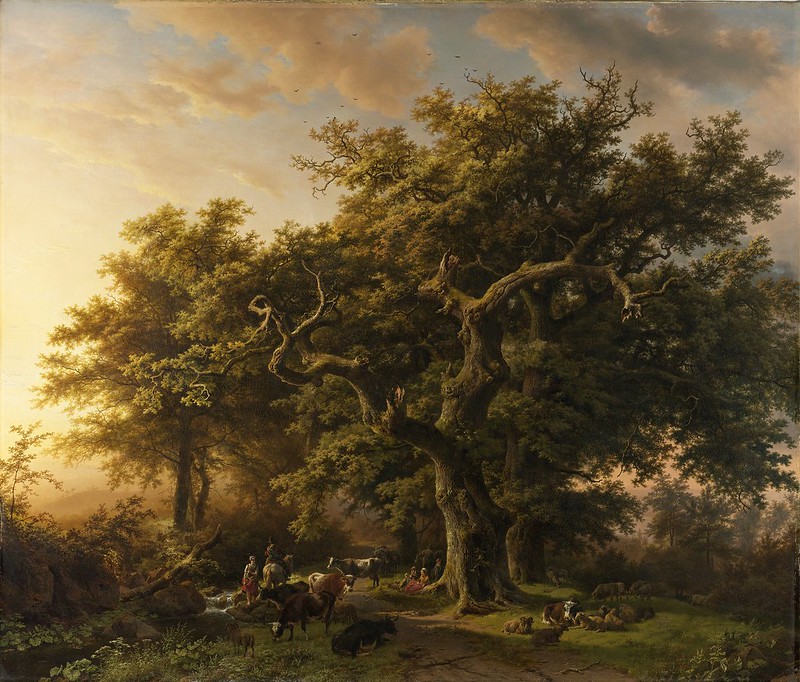
Barend Cornelis Koekkoek - Bosgezicht (1848)
Obra de Barend Cornelis Koekkoek (1803-1862), pintor holandès (1)


- Recordatori de Samuel Wesley -
En el dia de la commemoració del seu 179è aniversari de decés


Parlem de Pintura...

Barend Cornelis Koekkoek (Middelburg, 11 d'octubre de 1803 - Kleve, 5 d'abril de 1862) va ser un pintor holandès. Conegut al llarg de la seva vida amb l'etiqueta del "príncep de la pintura de paisatge", es va formar amb el seu pare Johannes Hermanus Koekkoek. El 1817 es va matricular a l'Acadèmia de Dibuix de Middelburg on va rebre formació d'Abraham Krayestein. El 1822 es va traslladar a Amsterdam on va estudiar 4 anys a la Koninklijke Academie van Beeldende Kunsten iniciant la seva carrera de pintor a partir del 1824. Ràpidament es va especialitzar en pintura de paisatges concentrant-se en les diferents estacions de l'any i en com aquestes modificaven l'entorn natural. Sovint va emfatitzar la grandesa de la naturalesa vers petites figures humanes en un clar sentit al·legòric romàntic. Guardonat en diverses ocasions, va gaudir d'ampli reconeixement al seu país i va treballar pel rei Friedrich-Wilhelm IV de Prussia, pel Tsar Alexander II i pel rei Willem II. Els seus germans Hermanus Koekkoek i Marinus Adrianus Koekkoek van ser pintors. Barend Cornelis va morir a Kleve l'abril de 1862.

Font: En català: No disponible - En castellano: No disponible - In english: Barend Cornelis Koekkoek (1803-1862) - Altres: Barend Cornelis Koekkoek (1803-1862)


Parlem de Música...

Samuel Wesley (Bristol, 24 de febrer de 1766 - London, 11 d'octubre de 1837) va ser un organista i compositor anglès de l'època georgiana tardana. Fill del conegut metodista i escriptor d'himnes Charles Wesley, nét de Samuel Wesley (poeta de l'últim període de Stuart) i nebot de John Wesley, el fundador de l'església metodista, va mostrar bon talent musical des de ben petit. Tocava el violí i l'orgue i va treballar com a director d'orquestra i professor de música. Moltes de les seves composicions més conegudes van ser escrites per a l'església, incloent el motet In exitu Israel. Les seves composicions seculars inclouen madrigal en cinc parts O singe unto mie roundelaie basat en el poema ben conegut de Thomas Chatterton. El 1788 Wesley va ser iniciat en la maçoneria en la Lògia d'Antiguitat. El Duc de Sussex el va nomenar Gran Organista el 1812, però va renunciar al càrrec el 1818. El seu fill, Samuel Sebastian Wesley, va ser també compositor i, com el seu pare, es va especialitzar en la música d'orgue i d'església. Al llarg de la seva vida va ser anomenat per alguns com "el Mozart anglès" tot i que amb aquesta etiqueta també es va conèixer a Linley Jr. Samuel Wesley va morir a Londres l'octubre de 1837.

OBRA:

Vocal secular:

Secular choruses, glees, partsongs:
for 3 voices, unaccompanied, unless otherwise stated
Adieu ye soft scenes of delight, glee, 1781, Lbl*, US-NYpm*
Begin the noble song (S. Wesley, 1662–1735: Ode to St Cecilia), 4vv, orch, 1799, GB-Lbl, Lcm; ed. F. Routh (1997)
Beneath, a sleeping infant lies (S. Wesley, 1691–1739), c1798, Lcm*
Beneath these shrubs (Epitaph on a Favourite Dog), 1800, Lcm*
Beneath yon grassy hillock, 1818, Lbl*
Blushete me, Carolos, 1798, Lcm*
But if his teeth so far are gone, 1824, Lcm*
Circle the bowl with freshest roses, 4vv, 1782, Lbl*, US-NYpm*
Father of light and life (J. Thomson: The Seasons), 4vv, 1801, GB-Lbl* (1820)
Goosy goosy gander, c1781, GB-Lbl*, US-NYpm* (c1800)
Happy the man and happy he alone (J. Dryden, after Horace), 1800, GB-Lcm*
Harsh and untuneful are the notes, glee (L. Sterne: Tristram Shandy), 1783, Lcm*, US-NYpm*
Here shall the morn (A. Pope), 4vv, c1807, GB-Lbl*, Lcm*
Hilaroi piomen oinon (Anacreon), 1800, Lbl*
Hurly burly, blood and thunder (E. Thurlow: The Asylum for Fugitive Pieces), 1810, Lbl, Lcm
If in fighting foolish systems, 1807, Lbl*
Integer penis (Imitation of Horace), c1798, Lcm*
I walked to Camden Town, burlesca, c1807, Lcm*
Life is a jest, 4 male vv, 1807, Lbl*, US-Wc*
Mihi est propositum (W. Mapes), 4vv, 1794, GB-Lbl*
Nella casa troverete, c1781, Lbl*, US-NYpm*
Now the trumpet's martial sound (W.B. Kingston), 4vv, 1815, GB-Lbl*
O Delia, ev'ry charm is thine, 4vv, Lcm
Old King Cole, 1813, Lbl*
On the salt wave we live, Lbl*
O sacred bird (M. Akenside: Ode to a Nightingale), 1800, Lcm*
O sing unto mie roundelaie, madrigal (T. Chatterton), 5vv, 1812, Lbl (1813)
Qualem ministrum, ode (Horace), 6vv, 1785, Lbl*
Roses, their sharp spines being gone, 1798, Lbl*, Lcm*
Say, can pow'r or lawless wealth, 1791, Lbl*
Sol do re me, 3vv, Lbl*
The glories of our birth and state (after W. Shirley), 4vv, 1799, Lbl*, Lcm*, Dorking, Royal School of Church Music
The Macedon youth, 1800, Lbl*
There are by fond mama supplied, 2 S, A, b, c1778, Lbl*, US-NYpm*
Thou happy wretch (E. Young: Night Thoughts), 1783, GB-Lcm*, US-NYpm*
Three bulls and a bear, catch, c1775, GB-Lbl*
Thus through successive ages stands, 4vv, orch, Lbl*
Tobacco’s but an Indian weed, 1800, private collection* (1800)
Unde nil maius (Eulogium de Johanne Sebastiano Bach) (after Horace), 1810, Lbl*
What bliss to life can autumn yield (S. Johnson), 1807, Lbl*
When Bacchus, Jove's immortal boy, 1806, Lbl* (1806)
When down his throat (M. Madan), c1798, Lcm
When first thy soft lips, glee, 1783, Lcm*, US-NYpm*
When friendship, love and truth abound, glee, GB-Lbl
When Orpheus went down, ?1781, Lbl*, US-NYpm*
While ev'ry short-liv’d flower of sense, 4 vv, 1822, GB-Cfm*, Ge*, Lbl*
While others, Delia, use their pen (The Rights of Men), 1800, Lbl, Dorking, Royal School of Church Music
While Prussia's warlike monarch blusters, 4vv, 1782, Lbl*
Whoes there? a granidier, catch, c1775, Lbl
Why should we shrink from life's decline? (Harvest Cant.), S, T, orch, 1813, Lbl
You are old, Father Dennis (after R. Southey), 1799, Lcm*

Songs, duets:
for solo voice with bass instrument unless otherwise stated
Adieu, ye joyful youths (W. Shenstone), 1783, GB-Ob*, US-NYpm*
Alack and alack (Derdam Downs), 1v, orch, c1775, GB-Lbl*
Alone on the sea-beat rock (Ossian: Armin's Lamentation), 1v, orch, 1784, Lbl*, US-NYpm*
And is he then set free (On the Death of William Kingsbury), 2vv, 2 vn, b, 1782, GB-Lbl*
An election’s a comical plan, c1777, Lbl
Autumnus comes (T. Percy), 1v, kbd, ?1778, Lbl, in D. Barrington: Miscellanies (1781)
Come all my brave boys who want organists' places (The organ laid open), 1798, Cfm*, Lbl* (1798)
Come, Stella (S. Johnson), 1801, Lbl*
England, the spell is broken, Lbl*
Eyes long unmoisten'd wept (Elegy on the Death of Malibran), recit and aria, 1v, pf (1836)
Fairy minstrels (W.B. Kingston), S/T, 2 fl, pf, Lbl [new words to Gentle warblings in the night]
Farewell! if ever fondest prayer (Byron), 1v, pf, Lbl*
Flutt'ring spread thy purple pinions (J. Swift), 1783, Lcm*, US-NYpm*
Gentle breath of melting sorrow, 1v, orch, c1780, GB-Lbl*
Gentle warblings in the night, S/T, 1799, 2 fl, pf, Lbl*
Go, minstrel, go (On Cramer's Leaving England), 1v, pf, c1835, Lbl*
Hark! his hands the lyre explore (T. Gray: Ode to the Progress of Poesy), S, pf, 1790, Lbl*, Lcm*
Hope away! enjoyment's come, aria, S, 2 vn, b, 1793, Lbl*
In gentle slumbers (M. Madan), 1v, orch, c1773, Lbl*
In radiant splendor (J. Davies), 1v, pf, 1816, Lbl*, Lcm* [on the marriage of Princess Charlotte]
La belle Gabrielle (Chanson d’Henri quatre), 2vv, b, 1792, Lbl*
Little tube of mighty power (Address to a Pipe), 1798, Lcm*
Louisa, view the melting tears, S, b, c1783, Lbl*, US-NYpm*
Love and folly were at play, 1v, pf (c1800)
Love, like a cage-contented bird, 1v, pf, GB-Lcm*
Love's but a frailty of the mind, 1783, Ob*, US-NYpm*
Near Thame's fam'd banks, 1v, 2 vn, b, 1799, Lbl
Not heav’n itself (J. Dryden, after Horace), 1804, Lbl
Of all the joys were e'er possest, 2vv, b, 1801, Lbl*
O how to bid my love adieu, arietta, 1783, Lcm*, US-NYpm*
One kind kiss before we part, c1783, GB-Ob*
Orpheus could lead the savage race (Dryden: A Song for St Cecilia's Day), 1v, pf, 1836, Lbl
O! that I had wings like a dove, ?1800, Lcm*
Pale mirror of resplendent light, arietta, 1783, Lcm*, US-NYpm*
Parting to death we will compare, arietta, 1783, GB-Lbl*, Lcm*, US-NYpm*
Phere moi kupellon (Anacreon), 1797, GB-Lbl*
Phere moi kupellon (Anacreon), 1829, Lbl*
See the young, the rosy spring (T. Moore, after Anacreon), 2vv, pf, 1809, Lbl, Lcm
Since pow'rful love directs thine eye, 2vv, b, 1783, Ob*, US-NYpm*
Sweet constellations, 2vv, b, 1782, GB-Lbl*, US-NYpm*
Tergi il pianto, idolo mio, rondo, 1v, orch (c1785)
There was a little boy, 2vv, pf (c1800)
The rising sun of freedom, 1v, 4vv, b, ?1798, Gb-Lcm*
The white robed hours, arietta, 1783, Lcm*, US-NYpm*
The world, my dear Mira, is full of deceit, 1v, hpd, 1784, NYpm*
Think of me, 1v, pf, 1837, GB-Lbl*
This is the house that Jack built, 1809, Lbl*
Too late for redress, arietta, 1783, Lcm*, US-NYpm*
’Twas not the spawn of such as these (after Horace), 1v, pf, 1825, GB-Lbl*, Lcm*
What a folly it is, 1836, Lbl*
What are the falling rills (cant.), 1v, orch, c1775, Lbl*
What shaft of fate's relentless pow'r, 1v, pf, c1795, Lbl*, Lcm*; ed. in MB, xliii (1979)
When all around grew drear and dark, 1v, pf, 1837, private collection*
When this life unblest we rove, 1v, pf, 1837, Lbl*
When we see a lover languish, aria, 1783, Lcm*, US-NYpm*
Within a cowslip's humble bell, c1808, GB-Lbl*
Yes, Daphne, in your face, 1v, kbd, 1781, Lbl, Ob*, US-NYpm*
Various vocal canons, Gb-Lbl

Vocal religiosa:

Masses:
Missa de Spiritu Sancto, 5 solo vv, 4vv, orch, 1784, GB-Lbl*, Cfm*; ed. F. Routh (1997)
Missa ‘In duplicibus’, plainchant, bc, 1789, Lbl (1816)
Missa ‘Pro angelis’, 4 solo vv, 4vv, org acc., 1811–12, Lbl, Lcm
Missa de sanctissimo Trinitate: Ky, Gl, Cr (inc.), 4vv, Lbl
Missa defunctorum, plainchant, org acc., Lbl
Requiem [int only], 4vv, 1800, Lbl, Lcm

Oratorios:
Ruth, 1774, GB-Lbl*
The Death of Abel, 1779, Lbl*

Service music and anthems:
Morning and Evening Service, F, 4vv, org (1824): TeD, Jub, 1808, GB-Lbl; Ky, San, Lbl*; Mag, Nunc, 1822, Lcm*
Evening Service, G (1897)
Nunc dimittis, G, S/T, org acc., c1775, Lbl
Litany responses, A, 4vv, 1806, Lbl
Kyrie, E, 4vv, 1827, Lcm;
Sanctus, E , 4vv, Lcm
Kyrie, 4vv, org acc., c1780, Lbl
Agnus Dei, 2vv, bc, Lcm

Other Latin:
Amavit eum Dominum, 2 female vv, org acc., c1780, Lbl*
Anima nostra erepta est, 5vv, c1798, Lbl*, Lcm*
Ave maris stella, 2 female vv, orch, 1786, Lbl*; ed. J. Marsh (1977), ed. F. Routh (1984)
Ave regina caelorum, 2 female vv, org acc., c1781, Lbl*
Ave regina caelorum, 5vv, org acc., Lbl* (c1840); ed. G. Webber (1997)
Ave verum corpus, 2 female vv, org acc., 1781, Lbl*
Ave verum corpus, 3vv, org acc., 1812, Lbl*
Beati omnes qui timent Dominum, 2vv, org acc., 1801, Lbl*
Benedicamus Deo, 4vv, Lbl* (1811)
Christe eleison, 4vv, 1810, Lbl
Collaudate Dominum, 3 male vv, 1830, Lcm*
Confitebor tibi, Domine, 4 solo vv, 5vv, orch, 1799, Lbl*; ed. in MB, xli (1978), ed. F. Routh (1984)
Constitues eos principes, 5vv, 1814, Lbl*; ed. J. Marsh (1974)
Credo in Deum, 3vv, c1780, Lbl
De profundis clamavi, 3 male vv, c1800, Lbl*
Deus majestatis, 8vv, orch, 1799, Lbl*, US-Wc*
Deus noster refugium, 3vv, 1807, GB-Lbl*
Dixit Dominus, 4vv, 1782, Ob*
Dixit Dominus, 8vv, org acc., 1800, Lbl*, Lcm*
Dixit Dominus, 3vv, 1806, Ge*, Lbl*
Domine salvam fac reginam nostram Mariam, 4vv, org acc., Lcm (1811)
Domine salvum fac regem nostrum, 3vv, org acc., 1780, Lbl*
Domine salvum fac regem nostrum, 2 female vv, org acc., 1780, Lbl*
Ecce iam noctis tenuatur umbra, 3 male vv, org acc., 1801, Lbl*
Ecce iam noctis tenuatur umbra, 5vv, org acc., 1808, Lbl*
Ecce Maria genuit nobis, 3 female vv, org acc., 1780, Lbl*
Ecce panis angelorum, 4vv, 1813, Lbl*; ed. G. Webber (1998)
Ecce sic benedicetur, 3 male vv, 1801, Lbl*
Emitte lucem tuam, 2 female vv, org acc., c1781, Lbl*
Exultate Deo, 5vv, orch/org acc., 1800, Lbl* (1830)
Gloria et honore, T, org acc., US-Wc* (1842); ed. J. Schwarz (1988)
Gloria Patri, B , 2 female vv, org acc., c1780, Lbl*
Gloria Patri, F, 2 female vv, org acc., ?1780, GB-Lbl*
Gloria Patri, 4vv, org acc., 1780, Lbl*
Gloria Patri, 3 male vv, c1800, Lbl*
Hodie Beata Virgo Maria, 3 female vv, org acc., 1780, Lbl*
In exitu Israel, 8vv, org, 1810, Lcm* (1885)
In manus tuas Domine, 4vv, Lbl*
In te, Domine, speravi, unison S, org acc., 1798, Lbl*, Lcm*
Justus ut palma florebit, 3vv, org acc., Lbl
Levate capita vestra, 4 male vv, 1798, Lbl*, Lcm*
Magnificat anima mea, 3 female vv, org acc., 1783, Lcm*
Magnificat anima mea, 4vv, org acc., 1821, Lbl*
Miserere mei, Deus, 2vv, org acc., 1792, Lbl*
Nocte surgentes, 3 male vv, 1801, Lbl*
Omnes gentes plaudite, 3 female vv, org acc., Lbl*
Omnia vanitas (Carmen funebre), 5vv, 1824, Lbl*, Lcm*, US-AUS; ed. in S.S. Wesley: A Dew Words on Cathedral Music (1849); ed. S. de B. Taylor (1952)
Ostende nobis, Domine, 4vv, 1827, GB-Lcm*
Pro peccatis suae gentis, 3 vv, 1792, Lbl*, Lcm*
Qui tollis peccata mundi, unison S, org acc., 1781–2, Lbl*, Lcm*
Sacerdos et pontifex, 4vv, c1780, Lbl*
Salve regina, 3vv, org acc., 1799, Lbl*, Lcm* (1826)
Sanctus Dominus Deus Sabaoth, 4vv, Lcm
Sit nomen Domini, 3vv, 1801, Lbl*
Sperate miseri, 2 female vv, org acc., 1783, Lbl*
Stabat mater, 1v, bc, Lcm
Stabat mater, 4vv, Lcm
Tantum ergo, Lcm*
Te decet hymnus, 4vv, 1798, Lcm*
Tota pulchra es, 2vv, org acc., 1812, Lbl*
Tu es sacerdos, 4vv, 1814, Lbl*; ed. J. Marsh (1974)
Tu es sacerdos, 6vv, 1827, Lcm*; ed. in S.S. Wesley: A Few Words on Cathedral Music (1849)
Ut queant laxis, 3 male vv, ?1812, Lcm*
Several antiphons, plainchant, bc, Lbl

Other English:
All go unto one place, B solo, 4vv, org acc., 1834, Lbl (c1837) [funeral anthem for C. Wesley (ii)]
All the earth doth worship thee, 4vv, org acc., 1801, Lbl*
Behold how good and joyful, G, S/T, 4vv, orch, org acc., c1775, Lbl*
Behold how good and joyful, B , 3 male vv, org, 1813, Lbl*
Behold, I was shapen in wickedness, S/T, org acc., c1775, Lbl*
Be pleased, O Lord, to deliver me, 3vv, c1802, Lbl*
Go not far from me, O God, S, S, org acc., c1825, Lbl*, Lcm*
Hear, O thou shepherd of Israel, 2 solo vv, 4vv, org acc., ?c1800, Lbl*
Hide thy face from my sins, S/T, org acc., c1775, Lbl*
In the multitude of the sorrows, 3 male vv, 1801, Lbl*
I said, I will take heed, A solo, 4vv, org acc., 1776, rev. 1797, in Page's Harmonia sacra, ii (1800)
I will arise and go to my Father, S/T, org acc., ?1837, Lbl*
Lord of the earth and heavens sublime, S/T, unison S, org acc., c1834, Lbl*
Mansions of heav’n your doors expand, 2 S, unison S, org acc., 1835, Lbl*
My delight shall be in thy statutes, S, org acc., 1816, Lbl*
Now the strife of death is over, 2 S, orch acc., ?1837, Lcm*
O deliver me, 2 S, org acc., Lcm, ed. S.S. Wesley, The European Psalmist (1872)
O give thanks unto the Lord, E, S, S, unison S, org acc., c1835, Lbl*
O give thanks unto the Lord, D, 4vv, org, 1837, Lcm* [coronation anthem]
O Lord God most holy, 4vv, 1800, Lbl*, US-Bp*
O praise the Lord, all ye heathen, S/T, org acc., c1775, GB-Lbl*
O praise the Lord of heaven, S, B, 4vv, org acc., c1775, Lbl*
O praise the Lord, ye that fear him, 4vv, org acc., c1825, Cfm
O remember not our old sins, 2 S, org acc., 1821, Lbl*, Lcm*, ed. S.S. Wesley, The European Psalmist (1872)
O ye that love the Lord, S/T, org acc., c1775, Lbl*
Praise the Lord, O ye servants, S/T, org acc., c1775, Lbl*
Praise the Lord, ye servants, T, SATB, c1810, Lbl*
Praise ye the Lord, ye immortal quires, S/T, B, 4vv, 1775, Lbl*
Sing praises unto the Lord, 4vv, org, Lbl*
The Lord is my shepherd, F, S/T, org acc., 1774, Lbl*
The Lord is my shepherd, B , S, A, 2 female vv, org acc., 1834, Lbl*
This shall be my rest for ever, 3vv, 1800, Lbl*, Lcm*
Thou, O God, art praised in Sion, 4vv, 1824, Lcm*, in A. Pettet: Original Sacred Music (1825) [Eng. version of ‘Te decet hymnus’]
Thou shalt make me hear of joy, 3vv, c1775, Lbl*
Who can tell how oft he offendeth?, S, org acc., 1823, Lbl*

Hymn tunes and sacred songs:
Original Hymn Tunes Adapted to Every Metre in the Collection by the Rev. John Wesley (1828)
57 original hymns in The Psalmist (1835–42)

Individual pieces:
And now another day is done (I. Watts), S, unison S, org acc., c1775, GB-Lbl*
Awake my glory, harp and lute, S, org acc., 1827, Lcm*
Come, Lord, from above, 2 S, org acc., c1775, Lbl*
Eternal father of mankind, 2 S, org acc., 1799, Lcm*
Far above their noblest songs (C. Wesley (ii)), 4vv, c1792, Lbl*
Father, I know my end is nigh, 1v, org acc., Lbl*
Father of me and all mankind (C. Wesley (ii)), S, org acc., c1825, Lcm*
Gentle Jesus, meek and mild (C. Wesley (ii)), S, pf/org acc., 1808, Lbl, ed. R. Langley (1997)
God of almighty love (C. Wesley (ii)), S/T, org acc., c1775, Lbl*
Hark! In the wilderness a cry (W. Shirley), 3vv, org acc., c1775, Lbl*
He’s blest whose sins have pardon gain’d (‘Bristol’), S, org, acc., 1806, Lbl* (1808)
How are thy servants blest, O Lord (J. Addison), S, 3vv, orch, c1804, Lbl*
In dreary waste where horror dwells (C./J. Wesley), 3vv, org acc., c1775, Lbl
Let all that breathe Jehovah praise, S, org acc., c1828, Lcm*
Let earth and hell their powers employ, 1v, bc, c1773, Lbl*
Lord, if with thee part I bear, S, S, org acc., c1775, Lbl*
Meet and right it is to praise God, S, org acc., c1828, Lcm*
Might I in thy sight appear (C. Wesley), S/T, pf/org acc., 1807, Lbl*; ed. S.S. Wesley, The European Psalmist (1872); ed. in MB, xliii (1979)
Music as first by heav'n designed, S/T, org acc., c1775, Lbl*
O Jesus our King, 1v, org acc., 1777, Lbl*
O Lord, my rock (‘Hertford’), 1v, org acc., 1806, Lbl*
O ’tis like ointment on the head, 2vv, org acc., c1828, Lcm*
Praise God from whom all blessings flow (T. Ken), S/T, org acc., c1775, Lbl*
Praise the Father for his love, S/T, org acc., c1775, Lbl*
Shepherd of souls, with pitying eye (C./J. Wesley), S/T, org acc., c1775, Lbl*
Shout, sons of heaven, your voices raise, 2 S, 2 female vv, org acc., 1834, Lbl*
Sweet were the sounds of heavenly love, 2 S, unison S, org acc., c1835, Lbl*
The sacred minstrel plays and sings, S/T, org acc., c1775, Lbl*
The supremely good, supremely great, S/T, org acc., 1807, Lbl*
Thou, Jesu, art our King (J. Wesley, after J. Scheffler), 4vv, 1798, Lbl*, Lcm*
Thus saith the Lord (C./J. Wesley), S/T, org acc., c1825, Lcm*
Thy royal seat, O Lord, S/T, org acc., Lcm*
To God the Father, God the Son, 3vv, 1774, Lbl*
To thee great Author of all good, SS, org acc., c1775, Lbl*
We sing the wise, the gracious plan (‘Hooke’), in J. Major: A Collection of Sacred Music (c1824)
What hymns, O Lord, of grateful joy (Christmas Hymn), S, unison S, org acc., c1835, Lbl*
What tho’ my frail eyelids refuse (‘Protecting Love’), S, org acc., 1807, Lcm*
When shall the poor, the child of grief, S, org acc., 1807, Lbl*
With pleasure I obey, S, org acc., c1775, Lbl*
Who is the trembling sinner (C. Wesley (ii)), S/T, pf/org acc., 1821, Lcm*, ed. S.S. Wesley, The European Psalmist (1872)
Many separate tunes and chants, Lbl, Lcm

Instrumental:

Orch.:
3 ovs., GB-Lbl*: G, 1775, D, 1778, C, 1780
4 syms., Lbl*: D, 1784, ed. R. Platt (1976), E , 1784, A, c1784, B , 1802, ed. in The Symphony 1720–1840, ser. E, iii (New York, 1983)
2 hpd concs., c1774, Lbl*: G, F
3 org concs.: A, 1787, D, 1800, rev. 1809, Lbl*; C, 1814, rev. 1816, private collection*, Lbl*
8 vn concs., Lbl*: C, 1779, A, ?1780, D, 1781, E , c1781, E, 1782, B , 1782, G, 1783, B , 1785
Sinfonia obbligato, vn, org, vc, D, 1781, Lbl*, ed. in The Symphony 1720–1840, ser. E, iii (New York, 1983)

Chbr.:
Str Qt, C, 1779, GB-Lbl*;
Str Qt, G, c1779, Lbl*;
Str Qt, E , ?c1825, Lbl, ed. F. Routh (1984)
Fugue on a theme from Haydn’s Creation, B , 1800, Lbl*;
Minuet in Haydn's Manner, F, 1800, Lbl*;
Minuet and Trio, c, 1807, Lbl*, Lcm*;

Trios:
G, 2 vn, b, ?1774, Lbl*;
3 for 2 vn, b: C, c1775, ‘Catherine Hill’, 1776, ‘Warwicks Bench’, 1776, all Lbl*;
Fugue, B , 3 ?str insts, c1780, Lbl*;
A, ob, vn, vc, ?c1780, Lbl*;
D, 3 pf, 1811, Lbl*;
F, 2 fl, pf, 1826, Lbl (c1830);
Quodlibet, 3 insts, Lbl;
Trio, 3 insts, Lbl;
Fantasia, 3 insts, Lbl

Sonatas:
G, vn, b, ?1774, Lbl;
F, vn, hpd, ?1775, Lbl;
E , vn, b, 1778, Lbl;
A, vn, b, 1778, Lbl;
2 Sonatas, G, C, pf/hpd, vn, op.2 (c1786);
Duet for Solomon, F, vn, pf, 1797, Lbl*;
3 Sonatas, D, A, B , pf/hpd, Mr*
March, D, 2 ob, 2 hn, 2 bn, serpent, 1777, Lbl (c1880);
Glee, 4 vn, Lbl;
Duos, 2 vn, Lbl, Mr

Organ:
published
12 Voluntaries, op.6 (1802–17): D, C, c, G, D, C, E , D, g, F, A, F; no.9, g, US-Wc*, no.10, F, GB-Lbl*; all ed. F. Routh (1982–3), G. Atkinson (2000)
Duet in 3 Movements, C, 1812, Lbl* (1836); ed. W. Emery (1964)
12 [recte 13] Short Pieces with a Voluntary Added (1816), Lcm*: G, G, G, a, a, a, F, F, F, D, D, D, D, d; ed. in Tallis to Wesley, vii (1967)
Variations on ‘God Save the King’, Lcm*, in Beauties for the Organ, i (1820)
Variations on ‘Rule Britannia’, Lcm*, in Beauties for the Organ, i (1820)
3 Voluntaries, ded. J. Harding, bk 1 (c1824): D, F, D
3 Voluntaries, ded. J. Harding, bk 2 (c1824): e, C, B
A Voluntary, ded. W. Linley, g (c1825)
A Short and Familiar Voluntary, A (1827)
2 Preludes and Fugues, ded. T. Adams, c, 1826, Lcm, G (1838)
A Voluntary, ded. H.J. Gauntlett, G (c1827)
A Voluntary, ded. W. Drummer, D (1828)
A Voluntary, ded. T. Attwood, B , 1829, Lcm (1830)
6 Introductory Movements and a Loud Voluntary with Introduction and Fugue, D, E, F, A, C, e, D, Lbl (1831)
6 Voluntaries for the Use of Young Organists, F, A, G, B , D, C, op.36 (c1831)
6 Short Voluntaries with Introductions for Young Organists, D, B , F, F, E , C, c1834, Lcm (c1837)
Fugue, ded. Mendelssohn, b, 1837, Lbl, Lcm* (1837); ed. in, Tallis to Wesley, xiv (1962)

Unpublished:
12 voluntaries: C, 1 movt, c1774, Lbl*; D, B , C, 1817, Lbl*; D, A, D, D, C, D, F, c1836, Lbl*; B , Lbl
Preludes throughout the octave, 1797, Lbl, Cfm
4 short preludes, ?1825, Lbl: C, G, D, A; prelude, G, c1833, Lbl*
Introduction to Bach's ‘St Anne’ fugue, c, 4 hands, 1812, Lbl*, Lcm*
3 introductions and fugues, Lbl: G, G, c1833, d, c1833 [fugue after Mozart's Requiem]
12 fugues, Lbl*: B , D, d, G, 1774; C, B , C, D, D, 1800; G, c1833; D, C, c1836
Many other miscellaneous pieces, Lbl*, Lcm*

Other keyboard:
published
† in LPS, viii (1984)
8 Sonatas [op.1] (1777): B , D, F, C, A, E, †G, E
3 Sonatas, op.3 (?1789): C, F, D
12 Sonatinas, op.4 (1799): C, F, D, B , D, A, E , B , F, G, g, E
4 Sonatas and 2 Duets, op.5 (1801): A, B , D, E , F, D
March, 4 hands (c1807)
†Sonata in which is Introduced a Fugue on a Subject of Mr. Salomon, d (1808)
Sonata ‘The Siege of Badajoz’, D (1812)
The Sky Rocket, a Jubilee Waltz (1814)
Cobourg Waltz (1816)
Hornpipe and Variations from a Favorite Organ Concerto, D (1820)
Fugue, ded. J.B. Logier, D, 1825, private collection* (1828)
Grand Coronation March (1837)
5 variation sets: The Bay of Biscay (1813), Sweet Enslaver (1816), Scots wha hae wi' Wallace bled (1824), A Favorite Italian Air, Lbl*, Mr* (1827), Jessy of Dunblane, c1830–34, Dorking, Royal School of Church Music* (c1837)
14 rondos: Old Towler (c1795), Le melange (1800), Off she goes (c1802), A Favourite Polish Air (1808), Will Putty (?1809), †Widow Waddle, Lbl (c1810), Jacky Horner (c1810), †The Deserter's Meditations (1812), †A Christmas Carol (1814), †Moll Pately (1815), Bellissima signora (c1815), Kitty Alone and I (An Old English Air), Lbl (1830), I attempt from love’s sickness to fly (Purcell), 1830, Lbl* (c1830) Polacca, Lbl (c1880)

Unpublished:
Andante, D, and Presto, G, 4 hands, 1791, Lbl [on operatic themes]
Duet, G, 4 hands, 1791, Lbl
War Song, 1814, Lbl
The Duke of Wellington's Return, C, 1816, Lbl
8 pieces, 4 hands, c1831, Lbl: D, G, F, A, G, B , B , G
Sonata, G, 4 hands, 1832, Lbl
3 Variations on God Save the King, D, 4 hands, 1834, Lbl, Lcm
6 sonatas, G, g, B , G, F, 1774, Lbl; C, 1813–31, Lbl* (c1880)
5 rondos: del Signor Sporini, F, 1833, Lcm; [untitled], A , c1836, Lbl*; Drops of Brandy, 1837, Lbl*; A frog he would a-wooing go, Lbl*; The Lass of Richmond Hill, 1837, Lbl
3 variation sets: Happy were the days, c1800, Lbl; Le diable en quatre, 1801, Lcm; College Hornpipe, c1836, Lbl
Many other miscellaneous pieces, Lbl*, Lcm*

Editions and arrangements:
(selective list)
G.F. Pinto: 4 Canzonets and a Sonata [recte 2 sonatas] (London, 1807), collab. J. Woelfl
J.S. Bach: 6 Trio Sonatas bwv525–30 [org], adapted for pf 3 hands (London, 1809), collab. C.F. Horn
J.S. Bach: Das wohtemperirte Clavier (London, 1810–13), collab. Horn
G.F. Handel: 3 Hymns [in GB-Cfm], Lcm (London, 1826); ed. D. Burrows (1987)
Other Bach works, Lcm, US-NYp*; Handel duets and arias, GB-Lbl*, Lcm*

Literatura:

Lectures on music, GB-Lbl
An Exploration of the Gregorian Chant, Lbl
Reminiscences, 1836, Lbl
Letters (principal collections only): Cfm, Lbl, Lcm, Mr, US-ATu
E. Wesley, ed.: Letters of Samuel Wesley to Mr Jacobs (London, 1875); facs. repr. as The Wesley Bach Letters (London, 1988)
P.J. Olleson, ed.: The Letters of Samuel Wesley: Professional and Social Correspondence, 1797–1837 (Oxford, forthcoming)

Font: En català: Samuel Wesley (1766-1837) - En castellano: No disponible - In english: Samuel Wesley (1766-1837) - Altres: Samuel Wesley (1766-1837) 


Parlem en veu pròpia o en veu d'altri...

Wesley's reputation in his lifetime was chiefly as an organist. He was particularly noted for his improvisations, the brilliance and originality of which are recorded in a number of rapturous first-hand accounts. According to his obituary in The Times, ‘his resources were boundless, and if called upon to extemporize for half-a-dozen times during the evening, each fantasia was new, fresh, and perfectly unlike the others’. Edward Hodges, hearing him play at Bristol in October 1829, described his performance as ‘truly astounding … the most wonderful I ever heard, more even than I had before been capable of conceiving; the flow of melody, the stream of harmony, was so complete, so unbroken, so easy, and yet so highly wrought that I was altogether knocked off my stilts’. Wesley's music reflects the wide range of influences to which he was exposed during his early years: the ‘ancient’ style of Corelli, Handel and other late Baroque composers heard during his childhood, the more ‘modern’ style of J.C. Bach and C.F. Abel, which he encountered after the move to London, and Gregorian chant and the idioms of continental Roman Catholic church music, which he heard at the embassy chapels. To these were added at various later stages the Haydn of the London symphonies and The Creation, and as much of the music of J.S. Bach as was available: the keyboard works, the solo and accompanied violin sonatas, and the Credo of the B minor Mass. A large proportion of Wesley's instrumental music dates from the early 1780s, a particularly prolific period when the family concerts provided a regular outlet for new compositions of all kinds. Apart from the later organ concertos, his one mature orchestral composition is the splendid Symphony in B  of 1802, written for an unsuccessful concert series and apparently never subsequently performed in his lifetime. It is an ambitious and wholly original work, which in the richness of its wind scoring and its well-integrated use of counterpoint nonetheless shows how much Wesley had learnt from the London symphonies of Haydn. The Overture in E formerly ascribed to him is now thought to be by his son Samuel Sebastian. Given Wesley's fame as a keyboard player, it is not surprising that keyboard music should form an important part of his output, and the largest category of his music published in his lifetime. Despite a good deal of recent publishing activity, however, only a small proportion of his keyboard music is available in modern editions. In the organ music, Wesley's grand manner is heard at its best in the op.6 voluntaries, while a more intimate and miniaturist side to his musical character is apparent in the Twelve Short Pieces. The piano music, written for a burgeoning domestic market, divides into two categories: unashamedly opportunistic potboilers such as the battle-piece The Siege of Badajoz and the jubilee waltz The Sky Rocket on the one hand, and more serious and substantial works such as the Sonata in D minor and many of the rondos and variation sets on the other.

GROVE MUSIC ONLINE (source/font: aquí)

Gaudiu i compartiu! 


Informació addicional... 

INTERPRETS: Milton Keynes Chamber Orchestra; Hilary Davan Wetton
RECICLASSICAT: WESLEY, Samuel (1776-1837)
AMAZON: WESLEY, S. - Symphonies
SPOTIFY: WESLEY, S. - Symphonies


Tant si us ha agradat, com si no, opineu, és lliure i fàcil!

dilluns, 10 d’octubre del 2016

BORTNYANS'KY, Dmitry (1751-1825) - Sinfonie Concertante (1790)

Benjamin West - Cymon and Iphigenia (1773)
Obra de Benjamin West (1738-1820), pintor nord-americà (1)


- Recordatori de Dmitry Bortnyans'ky -
En el dia de la commemoració del seu 191è aniversari de decés


Parlem de Pintura...

Benjamin West (Springfield, 10 d'octubre de 1738 - London, 11 de març de 1820) va ser un pintor nord-americà. Especialitzat en escenes històriques i retrats, va ser un dels artistes més destacats de la seva època. Es va formar en gran part de forma autodidacta. Va realitzar retrats a Filadèlfia entre 1746 i 1759, any que va marxar a Itàlia, on va adoptar un estil clàssic en la seva pintura degut a l'exhaustiu estudi de les obres de mestres italians com Tiziano i Rafael. El 1763 es va traslladar a Anglaterra país on aviat es va guanyar l'amistat del retratista anglès Sir Joshua Reynolds i la protecció de Jordi III, qui li va encarregar la realització de retrats dels membres de la família reial i, el 1772, el va nomenar pintor de la cort. West va ser un dels fundadors, el 1768, de la Royal Academy of Arts, i es va convertir en el seu president quan va morir Reynolds el 1792. Se'l considera un dels pioners del realisme en trencar la tradició de representar els soldats en les escenes de batalles contemporànies amb vestimentes greco-romanes, com s'aprecia en la seva obra La mort de Wolfe (1771, Galeria Nacional, Ottawa). West va estimular i va influir a molts joves pintors nord-americans que van estudiar al seu taller de Londres, entre els quals cal citar Gilbert Charles Stuart i John Singleton Copley. Entre les obres més destacades de l'artista en destaquen El tracte d'un penic amb els indis (1772, Independence Hall, Filadèlfia) i Mort sobre un cavall pàl·lid (1796, Museu d'Art de Filadèlfia). Va morir a Londres el març de 1820.

Font: En català: Benjamin West (1738-1820) - En castellano: Benjamin West (1738-1820) - In english: Benjamin West (1738-1820) - Altres: Benjamin West (1738-1820) 


Parlem de Música...

Dmitry Bortnyans'ky [Дмитро Степанович Бортнянський] (Hlukhiv, 1751 - Sant Petersburg, 10 d'octubre de 1825) va ser un cantant, director i compositor ucrainès actiu principalment a Rússia. Es va formar inicialment al cor d'una escola de Hlukhiv abans de viatjar, el 1758, a la Capella de la Cort Imperial Russa de Sant Petersburg. Allà va rebre el suport de l'emperadriu Elizabeth rebent la protecció de la reialesa russa que va finançar la seva formació amb el mestre italià Baldassare Galuppi. Precisament amb l'italià va viatjar a Venècia el 1769 on va publicar les seves primeres obres, entre elles diverses òperes. El 1779 va ser reclamat novament a Rússia on va ser assistent de direcció i compositor i a partir del 1783 assistent de Paisiello. Poc després va assolir el càrrec de Kapellmeister de la Cort de Lesser escrivint gran quantitat de música religiosa ortodoxa si bé no va deixar de compondre òperes, la majoria en un estil còmic. El 1796, i després de la mort de Caterina la Gran i de l'ascenció de Paul I, va assumir el càrrec de director de la capella imperial de la cort on a banda de compondre va realitzar una important feina de divulgació de la música europea convertint Sant Petersburg en un dels centres musicals més importants d'Europa. Posteriorment, la influència de Bortnyans'ky va créixer i es va estendre per Rússia i els països de religió ortodoxa on la seva música va gaudir de gran popularitat fins ben entrat el segle XX. Va morir a Sant Petersburg l'octubre de 1825.

OBRA:

Vocal secular:

Operas:
Creonte (dramma per musica, 2, after M. Coltellini: Antigone), Venice, S Benedetto, 26 Nov 1776, P-La
Quinto Fabio (dramma seria, 3, after A. Zeno: Lucio Papirio dittatore), Modena, Ducale, 26 Dec 1778, RUS-Mcm, Glinka Cappella library, St Petersburg
Alcide (dramma per musica, 3, after P. Metastasio: Alcide al bivio), Venice, 1778, GB-Lbl; ed. M. Berdennikov (Kiev, 1985)
La fête du seigneur (comédie mêlée d'aires et des balets, 1, G.I. Chernïshev, A.A. Musin-Pushkin and A.F. Viole, after C.-S. Favart: Annette et Lubin), Pavlovsk Palace, sum. 1786, RUS-SPia, Bolshoya Filarmonia library, St Petersburg; 12 nos. in Muzïkal'noye nasledstvo, iii (Moscow, 1970), 411–57 [music suppl.]
Le faucon (oc, 3, F.-H. Lafermière, after G. Boccaccio and M.-J. Sedaine), Gatchina Palace, 11/22 Oct 1786, GB-Lbl, RUS-SP-Lit*, Ltob; ed. A. Rozanov (Moscow, 1975)
Le fils-rival, ou La moderne Stratonice (oc, 3, Lafermière), Pavlovsk Palace, 11/22 Oct 1787, GB-Lbl, RUS-SPit*, SPtob

Other secular vocal:
Recueil de romances et chansons, 1v, pf (St Petersburg, 1793), edn (Kiev, 1976)
Pesnosloviye, TTB, 1797, RUS-SPsc*
Pevets vo stane russkikh voynov [Bard in the Encampment of Russian Warriors] (V.A. Zhukovsky), 1v, choir, orch, 1813

Vocal religiosa:

Sacred choral concertos:
for SATB unless otherwise stated; numbering follows both editions; all in T iiA
1 Vospoyte Hospodevi pesn' novu [Sing unto the Lord a new song];
2 Torzhestvuyte dnes' [Celebrate this day], 1st movt for SSATB;
3 Hospodi, siloyu tvoyeyu vozveselitsya tsar' [O Lord, in thy strength the king shall be glad];
4 Voskliknite Hospodevi, vsya zemlya [Make a joyful noise unto the Lord, all ye lands];
5 Uslyshit tya Hospod' v den' pechali [May the Lord hear thee in the day of trouble];
6 Slava vo vyshnikh Bohu [Glory to God in the highest];
7 Priidite vozraduyemsya Hospodevi [Come let us rejoice in the Lord];
8 Milosti tvoya, Hospodi, vo vek vospoyu [Of thy mercies, O Lord, shall I sing for ever];
9 Sei den', yeho zhe sotvori Hospod' [This is the day which the Lord hath made]
10 Poyte Bohu nashemu, poyte [Sing praises to our God, sing praises], also in version for 5vv according to Rïtsareva (1979);
11 Blahosloven Hospod', yako uslysha hlas moleniya moyeho [Blessed is the Lord, for he hath heard the voice of my supplication], also in version for 8vv according to Rïtsareva (1979);
12 Bozhe, pesn' novu vospoyu tebe [O God, a new song shall I sing unto thee];
13 Raduytesya Bohu, pomoshchniku nashemu [Rejoice in God, our helper];
14 Otryhnu serdtse moye slovo blaho [My heart overflows with a good word];
15 Priidite, vospoim lyudiye [Come, let us sing, o ye people];
16 Voznesu tya, Bozhe moy, Tsaryu moy [I will exalt thee, O my God, my king]
17 Kol' vozlyublenna seleniya tvoya, Hospodi [How lovely is thy dwelling place, O Lord];
18 Blaho yest' ispovyedatisya Hospodevi [It is good to give praise unto the Lord];
19 Reche Hospod' Hospodevi moyemu [The Lord said unto my Lord];
20 Na Tya Hospodi, upovakh' [In thee, O Lord, have I trusted];
21 Zhiviy v pomoshchi Vyshnyaho [He that dwelleth in the help of the Most High];
22 Hospod' prosvyeshcheniye moye [The Lord is my light];
23 Blazheni lyudiye vedushchii voskliknoveniye [Blessed are the people who know jubilation];
24 Vozvedokh ochi moi v hory [I will lift up mine eyes to the mountains];
25 Ne umolchim nikohda, Bohoroditse [We will never be silent, Mother of God];
26 Hospodi, Bozhe Izrailev [Lord, God of Israel]
27 Hlasom moim ko Hospodu vozvakh [With my voice unto the Lord have I cried];
28 Blazhen muzh, boyaysya Hospoda [Blessed is the man, that feareth the Lord];
29 Voskhvalyu imya Boha moyeho [I will praise the name of my God];
30 Uslyshi, Bozhe, hlas' moy [Hear, O God, my voice];
31 Vsi iazytsy vospleshchite rukami [O clap your hands, all ye nations];
32 Skazhi mi, Hospodi, konchinu moyu [O Lord, make me to know mine end];
33 Vskuyu priskorbna yesi, dusha moya? [Why art thou cast down, O my soul?];
34 Da voskresnet Boh [Let God arise], also in version for 8vv according to Rïtsareva (1979);
35 Hospodi, kto obitayet v zhilishchi Tvoyem? [Lord, who shall abide in thy tabernacle?]

For SATB, SATB; numbering follows both editions; all in T iiB:
1 Ispovemsya Tebe, Hospodi [I will confess to thee, O Lord];
2 Khvalite, otrotsï, Hospoda [Praise the Lord, ye servants of the Lord];
3 Priidite i vidite dela Bozhiya [Come and see the works of the Lord];
4 Kto vzïdet na horu Hospodnyu? [Who shall see the Lord's mountain?];
5 Nebesa povedayut' slavu Bozhiyu [The heavens are telling the glory of God];
6 Kto Boh veliy, yako Boh nash? [Who is so great a God as our God?];
7 Slava v vïshnikh Bohu [Glory to God in the highest];
8 Vospoite, lyudiye, boholepno v Sionye [O people, sing joyfully in Zion];
9 Se nïnye blahoslovite Hospoda [This day praise the Lord];
10 Utverdisya serdtse moye o Hospode [Strengthen thyself my heart, in the Lord]

c23 others: 20 for 4vv, 1 for 6vv, 2 for 8vv, unauthenticated/lost

Liturgical settings and sacred hymns:
for 4vv unless otherwise stated; all in T i:1–3

Obednya [Liturgy], SSA:
Slava i nynyey;
Izhe kheruvimï (Glory to thee) [Cherubic Hymn];
Vyeruyuï (I believe);
Tebye poem (We sing to thee);
Dostoyno yest' (It is truly meet);
Otche nash [Our Father];
Khvalite Gospoda [Praise the Lord];
Prostoe penie (arr. of liturgy), 2vv, 1814

Arkhanhel'skiy hlas [Song of the Archangel], 3 solo vv, 4 vv (for feast day of the Annunciation); Blahoobraznïy Iosif [The noble Joseph];
Da ispravitsya molitva moya [Let my prayer arise], 4 settings, 1 F, 2 d, 3 g, 4 d, all for 3 solo vv;
Da molchit vsyakaya plot' cheloveka [Let all mortal flesh keep silence] SATB, SATB;
Dostoyno yest' [It is truly meet]; Himn Spasiteliu [Hymn to the Saviour] (D.I. Khvostov), 1v, pf;
Hospodi, siloyu tvoyeyu vovzeselitsya Tsar' [O Lord, in thy strength the king shall be glad];
Is polla ye ti, desnota [Many years to you, O master], 3 solo vv, chorus;
Izhe Kheruvimï [Cherubic Hymn], 7 settings for SATB/(1v, pf), 1 E , 2 d, 3 F, 4 C, 5 F, 6 F, 7 D (RUS-SPit), 2 settings for SATB, SATB, 1 c, 2 B ;
Khavalite Hospoda s nebes [Praise God from the heavens] (communion ant), 2 settings, 1 F, 2 C;
Kol' slaven nash Hospod' [How great is our Lord] (M.M. Kheraskov), 2 versions 1 for 1v, 1 for SATB;
Mnohaya lyeta [Many years], 2 versions, Bol'shoye [Greater], Maloye [Lesser];
Molitvy pered obyedom i uzhinom [Prayers before meals];
Nadezhda i predstatel'stvo [Hope and intercessor], 3 solo vv, chorus;
Otche nash [Our Father], RUS-SPsc*;
O tebye raduyetsya, Blahodatnaya, vsyakaya tvar [In thee, O blessed one, all creation rejoices] Predvyechniy i neobkhodimïy [Pre-eternal and uncircumscribed (God)] (IU.A. Isledinsky-Meletsky), 1v, pf;
Raduytesya pravednii o Hospodye [Rejoice ye righteous ones in the Lord], SATB, SATB;
Slava i nïnye, Yedinorodnïy Sïne [Glory to thee, only-begotten son], SATB, SATB;
Slava tebye, Bozhe nash [Glory to thee, our God];
Tebye Boha Khvalim [We praise thee O God], 4 settings for SATB, 1 F, 2 C, 3 F, 4 B ;
10 settings for SATB, SATB, 1 D, 2 C, 3 C, 4 B , 5 C, 6 C, 7 C, 8 D, 9 C, 10 B ;
Tvoryay anhelï svoya dukhi [Thou makest thine angels spirits], SATB, SATB;
Vecheri tvoyeya [Thy supper] (communion ant), SATB, SATB;
Vkusite i vidite [Taste and see] (communion ant), 3 settings, c, for SATB, SATB (later arr. for SATB), E , c, both for SATB;
Voskresniey Bozhe [Rise up, O God], 2 versions, both for 3 solo vv, chorus;
Vo vsyu zemlyu [Of all the earth], 2 settings, 1 C, 2 C, both SATB, SATB;
V pamyat' vyechnuyu [In eternal memory], 2 settings, E , B , both SATB, SATB;
Yavisya blahodat' Bozhiya [The grace of God has appeared], 4 settings, 1 A, 2 E , 3 G, 4 E , all for SATB, SATB;

Other sacred choral:
for 4vv unless otherwise stated; all in T i:1–3
Chant harmonizations and arrs.:
Anhel vopiyashe [The angel announced] (Gk. chant);
Arkhanhel'skiy hlas [Song of the Archangel] (znamennïy chant), 3 solo vv, chorus;
Chertoh Tvoy [Thy bridal chamber] (Kievan chant);
Da ispolnyatsya usta nasha [Let our mouths be filled] (Kievan chant);
Nïnye silï nebesnïya [Today the powers of heaven], 3 settings, E , A (Kievan chant), also in version for SATB, SATB;
Pod tvoyu milost' [Under your mercy] (Kievan chant);
Pomoshchnik i pokrovitel' [Helper and protector] (Gk. chant);
Priidite, ublazhim Iosifa [Come, let us bless Joseph] (unknown chant source);
Slava i nïnye, Dyeva dnes' [Glory be, today the Virgin] (Bulg. chant);
Slava i nïnye, Yedinorodny Sïne [Glory be, only-begotten son] (Kievan chant);
Tyelo Khristovo priimite [Receive the body of Christ] (Communion ant, Kievan chant)

Lat. texts:
Ave Maria, S, A, 2 hn, str, bc, 1775, RUS-SPit*;
Salve regina, A solo, 2 ob, 2 hn, str, bc, 1776, Glinka Cappella library, St Petersburg;
Gloria;
Dextera domini fecit virtutem, SPit, doubtful
Ger. text: Nemetskaya obednya [German Liturgy], SPit*

Instrumental:

Qnt no.2, C, vn, va da gamba, vc, hp, pf, 1787, ed. B. Dobrokhotov (Moscow, 1951) [Qnt no.1 lost];
Concert Sym., B , 2 vn, va da gamba, vc, hp, bn, pf, 1790, edn (Moscow, 1953)
Wind insts: ‘Gatchinsky’ March, B , 1787

Hpd sonatas:
no.1, B , ed. V.A. Natanson and A.A. Nikolayev, Russkaya fortepiannaya muzïka, i (Moscow, 1954), 43–8;
no.2, C, ed. in IRMO, i (1968), 233–47;
no.3, F, ed. L.A. Barenboym and V.I. Muzalevsky, Khrestomatiya po istorii fortepiannnoy muzïki Rossii (Moscow and Leningrad, 1949), 29–37

Doubtful:
Hpd Conc., ?lost

Font: En català: Dimitry Bortnyansky (1751-1825) - En castellano: Dimitry Bortnyansky (1751-1825) - In english: Dimitry Bortnyansky (1751-1825) - Altres: Dimitry Bortnyansky (1751-1825)


Parlem en veu pròpia o en veu d'altri...

Dimitry Bortnyans'ky va ser compositor ucraïnès nascut a la impronunciable ciutat de Hlukhiv, en un temps en què aquesta formava part de l'antic Imperi Rus. Per tant, ens trobem davant d'un dels primers representants russos del segle XVIII, si més no, que en tinguem constància perquè no dubto en devien ser alguns més. De ben petit el seu talent com a cantor del cor d'església va facilitar el seu ingrés en el cor imperial de la capella de Sant Petersburg. Allà va conèixer al seu mestre, l'extraordinari i estimat Baldassarre Galuppi, qui en aquell temps treballava i componia al servei de la cort imperial russa i lluny de la seva Venècia natal. Convertit en el seu alumne i en protegit del mestre italià, quan aquest va tornar a Itàlia ho va fer juntament amb Bortnyans'ky. Allà va cultivar, amb considerable èxit, el gènere teatral fet que el va ajudar a encarar la seva carrera definitivament i especialment en el seu retorn a Sant Petersburg, on va ser realment productiu però sobretot creatiu, donant vida a diverses òperes escrites en francès, sonates per a piano, quintets, concerts i obres litúrgiques ortodoxes, la majoria a capella. Tant d'èxit el va promocionar a l'hora de ser nomenat mestre i director del cor imperial de la capella de Sant Petersburg, càrrec que havia ocupat el seu mestre Galuppi i a qui va substituir amb solvència. Posteriorment, la seva música va caure en l'oblit fins que el geni de Tchaikovsky va redescobrir i editar novament, l'any 1882, les obres litúrgiques de Bortnyans'ky. El retorn triomfal del seu nom i repertori va motivar l'exploració integral del mateix facilitant l'accés al seu opus instrumental, sensiblement menor en quantitat que el vocal. No obstant, l'existent, com aquesta Obertura d'Alcides o la Simfonia Concertant en Si bemoll major per a clavecí, arpa, dos violins, viola de gamba, fagot i violoncel que escoltarem, fan vertigen pel seu ritme desenfrenat, el seu cromatisme orquestral i la seva bellesa melòdica tot demostrant que si Bortnyans'ky ho hagués desitjat també hauria estat un geni instrumentalment parlant. El seu escàs repertori en aquest sentit així ens ho demostra i ens recorda que la seva música també va ser l'alegria de Rússia!

Gaudiu i compartiu! 


Informació addicional... 

INTERPRETS: Musica Viva; Alexander Rudin (conductor)
AMAZON: BORTNYANSKY, D. - Musica Viva
SPOTIFY: BORTNYANSKY, D. - Musica Viva


Tant si us ha agradat, com si no, opineu, és lliure i fàcil!