diumenge, 4 d’agost del 2019

300 anys després, celebrem i commemorem els desconeguts

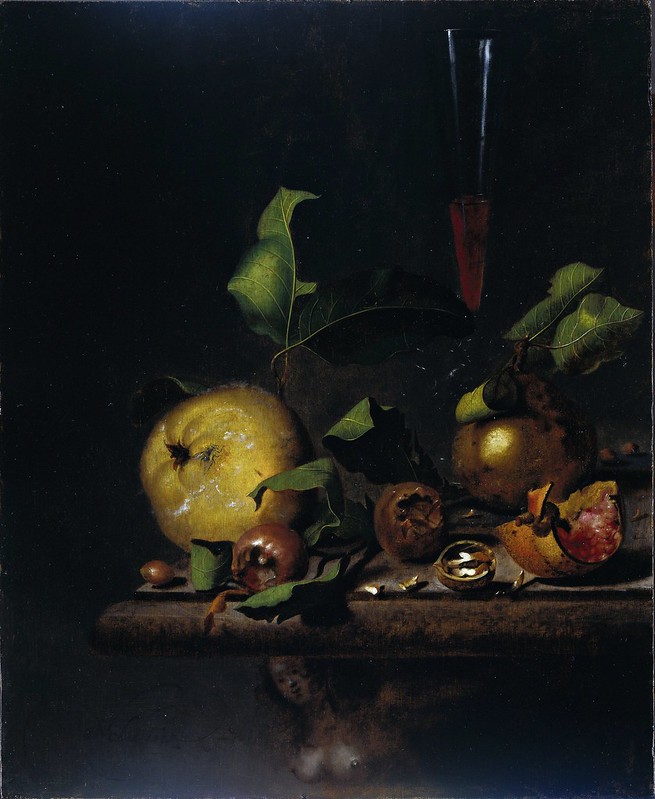
Martinus Nellius (1669-1719) - Stilleven met peren, mispels en een glas
Obra de Martinus Nellius (1669-1719), pintor holandès (1)


Johann Georg Christian Störl (1675-1719) - Sonata No.3
Giovanni Battista Alveri (c.1660-1719) - Cantata a voce sola Op.1 'Mia vita, mio bene'
Joaquín Oxinagas (1719-1789) - Sonata in C
Gregor Schreyer (1719-1767) - Two Pastorellas
Christian Gottfried Krause (1719-1770) - Trio Sonata in d
Franz Niklaus Jakob (1719-1791) - Salve Regina

- 300è aniversari de compositors a qui difícilment escoltarem -


Parlem de Pintura...

Martinus Nellius (1621 - Den Haag, 1719) va ser un pintor holandès. Es desconeix la major part de la seva vida sent la primera referència de 1674, any que la Rijksbureau voor Kunsthistorische Documentatie va documentar la seva estada com a pintor a Leiden. Posteriorment, es va traslladar a La Haia, en la qual ja hi va romandre la resta de la seva vida i on va realitzar la majoria de les seves obres. En aquest sentit, es va especialitzar en natures mortes en un estil proper al de l'escola neerlandesa i flamenca del seu temps. Martinus Nellius, la carrera de qui es va desenvolupar principalment entre els anys 1671 i 1712, va morir a La Haia el 1719.


Parlem de Música...

Giovanni Battista Alveri (c.1660-1719) va ser un organista i compositor italià.

He was a pupil of G.P. Colonna and is described in his Cantate a voce sola da camera op.1 (Bologna, 1687; one ed. H. Riemann: Ausgewählte Kammer-Kantaten, Leipzig, [1911]) as a musician in the service of Marquis Guido Rangoni. Alveri also published Arie italiane amorose e lamentabili for solo voice and continuo (Antwerp, 1690), and two operas by him (Il re pastore, overo il Basilio in Arcadia and L'Isione) were performed at the court of Wolfenbüttel in 1691. The libretto of Il re pastore describes him as a ‘virtuoso’ of the duke there and as a member of the Accademia Filarmonica di Bologna. His name appears in a list of instrumentalists who were at Parma Cathedral on 10 August 1719. According to Schmitz, his cantatas are mostly fairly conservative in form although not without interesting features. Seven motets by him survive (D-Bsb Mus.ms. 30094); since his book of 1687 is his op.1, printed volumes of cantatas by him of 1671 and 1678, mentioned by Fétis, must be spurious.

---

John Barrett (c.1676-1719) va ser un organista i compositor anglès.

From about 1686 to 1691 he was a chorister in the Chapel Royal under John Blow. He became organist of St Mary-at-Hill on 25 August 1693 and was appointed music master at Christ’s Hospital on 28 September 1697. He held both these posts until his death. He contributed a poem in homage to Blow to Amphion Anglicus (London, 1700) and was elected to the Amicable Society of Blues in about 1704. It is possible that he married Mary Saunders on 9 March 1711 in St Mary-at-Hill. Like many of his contemporaries, such as Jeremiah Clarke, John Eccles and Daniel Purcell, Barrett composed mainly for the theatre, and his many songs, mostly of the double-barrelled art song variety, are both tuneful and attractive, as are the several little keyboard pieces published in the first three books of The Harpsicord Master (1697–1702) and various other early 18th-century anthologies. The style is essentially Purcellian, but the use of motto openings in almost all the extended songs reveals an awareness of rather more up-to-date Italian vocal practice, and in one case (Begone, begone, thou too propitious light, n.d.) Barrett actually produces what must be one of the very first English recitative–aria–recitative–aria cantatas as such (though the term ‘cantata’ is not used). His incidental music for Shadwell’s The Lancashire Witches was popular, and no fewer than 30 performances at Drury Lane between 1713 and 1729 are recorded; like that of several other plays to which he also contributed, however, it is no longer extant.

---

Giacomo Battistini (c.1665-1719) va ser un compositor italià.

He was probably born in northern Italy. From 14 April 1694 he was maestro di cappella of Novara Cathedral, and provided the cathedral with a completely new and varied repertory; he was also active in the theatre (1694–5). For financial reasons he left the cathedral on 1 April 1706, becoming maestro di cappella of S Gaudenzio on 27 June; he held the post for the remainder of his life and reorganized the music there. Battistini's best-known works are the Motetti sacri (1698), the Armonie sagre (1700) and his pieces in the concertato style; these show a secure technique and a light though expressive style.

---

John Broderip (1719-1770) va ser un compositor anglès.

Organist and composer, son of William Broderip. On 2 September 1740, during a brief period as organist of Minehead, he advertised for subscribers to his New Set of Anthems (Wells, c1747). On 2 December he was admitted vicar-choral of Wells Cathedral and from 1 April 1741 until his death he was organist. He may also have been organist at Shepton Mallet, a post that was advertised as vacant in January 1771. A second book of anthems was published in London in about 1750, and Psalms, Hymns and Spiritual Songs in 1769.

---

Alexander Damascene (c.1650-1719) va ser un cantant i compositor anglès.

He is described as a French Protestant in his letters of denization (22 July 1682). He was appointed to the ‘King's Vocall Musick’ and made ‘composer in his Majesty’s private musick in ordinary’ in 1689. However, he is listed as one of the vocal musicians who remained in England with Queen Mary when William III went to Holland in 1691. Although he had sung with the Chapel Royal at the coronation in 1689, and had been ‘extraordinary’ since 1690, it was not until 1695 that he obtained a full place in the Chapel – the one vacated by Henry Purcell on his death. He sang solos in most of Purcell's court odes from 1690 onwards, as well as in Hail! bright Cecilia (1692). He again sang at the coronation of Queen Anne in 1702. In his will he described himself as ‘of the Parish of St Anne's, Westminster, Gentleman’, bequeathing his estate to Sarah Powell, his daughter-in-law. He was a prolific composer of songs, many of which were published in such collections as Choice Ayres and Songs (RISM, 16843/R1989 in MLE, A5), The Theater of Music (16855–16875/R1983 in MLE, A1), Comes amoris (16874–16888, 16936–16945), Vinculum societatis (16917) and the Gentleman's Journal (1692–4). Some were popular enough to be included in Pills to Purge Melancholy (1707–20).

---

Robert Desbrosses (1719-1799) va ser un actor i compositor francès.

---

Aureus Dix (1668-1719) va ser un compositor bohemi.

He was a friend and possibly a pupil of Count Jan Antonín Losy. His death certificate states that he died of consumption and that he was then 50. Dix had a high reputation in his day and both Baron and Walther mention him with approval. He also had some repute as a teacher. Dlabačz described a lute tutor by Dix, but this has not been located. Nor have two sonatas for two lutes listed in a Breitkopf catalogue of 1761. For a long time it was believed that no compositions by Dix had survived, but in 1955 two suites were found (in CZ-Bm), and since then seven more pieces have come to light. While it is difficult to generalize from so few sources, one can say that his pieces, all in the standard dance forms of the time, are in a squarer, less ornamented style than those of his contemporaries. The suites are melodically attractive and exploit the lute well, showing that Dix deserved his title of ‘supreme Prague lutenist’.

---

Adalbert Fauner (1719-1769) va ser un compositor austríac.

Einer der ersten bekannten Komponisten der Alt-Wiener-Volkskomödie (Volkstheater). War zunächst in Wien an St. Peter, dann als Musikdirektor an der Minoritenkirche tätig. Hielt sich 1747 beim Regens chori M. Gurtler im Stift Melk auf.

---

John Goldwin (1667-1719) va ser un organista i compositor anglès.

He was a chorister of St George's Chapel, Windsor, from 1675 to 1684, and in 1685 he became assistant to William Child as organist and to Matthew Green, Master of the Choristers, receiving ‘half a clerk's pay, provided he assist the organist upon all necessary occasions and diligently instruct the choristers in the art of singing’. In 1694 he was granted a reversion of both posts, to which he duly succeeded in 1697 (as organist, at £44 a year) and 1704 (as Master, at £23 14s. a year). In the chapter records of St George's Chapel he is referred to as ‘Golding’ (likewise in his baptismal record at Windsor Parish Church), but he usually signed himself Goldwin, as did his contemporaries when copying his music. All his surviving compositions are for the church, and comprise a Service in F (printed in Samuel Arnold's Cathedral Music, 1790) and at least 37 anthems (principally GB-Och 94, in the hand of his Windsor colleague William Isaack). The service is a rather routine piece, but some of the full anthems, among them Hear me, O God and O Lord God of hosts, are imaginative and comparable with Purcell's in the same vein. The verse anthems are more numerous and mainly celebratory in nature, hence somewhat prone to cliché, but competently written; there are striking moments in such works as Unto thee have I cried, Ponder my words, O Lord and O Lord my God. He is fond of treble solos and duets, and growing sectionalization with contrast of movement, tempo and key between verses is a feature, leading to the establishment of the ‘cantata anthem’ in a work like O be joyful in the Lord. Various anthems were included by Boyce, Arnold and Page in their collections of cathedral music, but their choice was governed by considerations of 18th-century taste and ease of performance.

---

Johann Christian Gössel (1719-1797) va ser un organista i compositor alemany

---

Franz Leopold Graff (1719-1779) va ser un compositor austríac.

Franz Leopold Graff, ein Sohn des Ruppersthaler Schulmeisters Andreas Graff, war ab 1741 Kantor und ab 1774 Schulmeister im Benediktinerstift Göttweig. Er komponierte etwa 100 Sakralwerke, darunter 10 Messen und 14 Requien, von denen viele im Musikarchiv des Stiftes Göttweig erhalten sind.

---

Johann Daniel Grimm (1719-1760) va ser un professor i compositor alemany.

Following early education from local musicians, he joined the Moravian Church in 1747, teaching at religious schools in Herrnhut and Marienborn. Among his students was Johann Friedrich Peter. In 1755 he compiled a chorale book containing around 1000 tunes, arranged according to meter. His other composition, written in a homophonic style, include 13 string trios, 13 cantatas, and many anthems.

---

Johann Kaspar Hardmeyer (1651-1719) va ser un compositor suís.

Fils de Johann Melchior (1630-c.1700). Après sa formation de pasteur (examen en 1679), H. fut catéchète à Wollishofen en 1680, pasteur à Bonstetten en 1686 et à Affoltern am Albis en 1701, puis doyen du chapitre du Freiamt en 1707. Il traduisit les psaumes de l'hébreu et les publia accompagnés de mélodies (Die Harpf des Gottsäligen Königs und Propheten David, 1701). Auteur d'une série de poésies de circonstance sur des personnalités zurichoises et d'un hymne célébrant le renouvellement de l'alliance de Zurich et Berne avec Venise. Quelques textes politiques anonymes lui sont également attribués.

---

Johann Christian Jacobi (1719-1784) va ser un oboista i compositor alemany.

Jacobi was born in Tilsit, Prussian Lithuania (now Sovetsk, Russia). He had his first lessons on the oboe from his father, a skilled player of the violin and oboe. After the premature death of his father, he spent a period of self-tuition before moving to Berlin where he immediately sought lessons with the royal Kammermusicus and famous oboe virtuoso Peter Glösch. In 1746, he was accepted into the Hofkapelle of Frederick the Great and, at this time, began studying composition with his colleague, the flautist Friedrich Wilhelm Riedt. By 1754, Jacobi was employed as the principal oboist in the Hofkapelle of Frederick the Great's cousin, Charles Frederick Albert, Margrave of Brandenburg-Schwedt in Berlin. On the recommendation of Johann Joachim Quantz, in 1768 King Frederick appointed Jacobi as the director of the Hautboistenschule in Potsdam, responsible for training the nearly 2000 oboists in the Prussian army. Jacobi was a member of the "Freitagsakademien" (Friday academies), a musical society which met each Friday at the house of Johann Gottlieb Janitsch. For Jacobi, Janitsch was said to have composed all manner of trios, quartets and concertos in "all the usual and unusual keys". Such pieces allowed Jacobi to improve his skills as an oboist, and earned him a great reputation amongst Berlin's musical societies. Two works by Janitsch bear a dedication to Jacobi, and several other works in extremely uncharacteristic keys for the oboe by Janitsch can be presumed to have been composed for him. They are a testament to his great skill on the instrument. Bruce Haynes lists him among the great oboists of the baroque period. Unfortunately, no compositions by Jacobi have survived.

---

Franz Niklaus Jakob (1719-1791) va ser un compositor alemany.

---

Christian Gottfried Krause (1719-1770) va ser un compositor alemany.


He received instruction on the violin, keyboard and timpani from his father, a town musician also named Christian Krause, but decided upon a career in law, with music as an amateur pursuit. After juristic studies at the University of Frankfurt an der Oder (1740–45), he became a legal secretary to Count Rothenburg in Berlin by the end of 1745. With his appointment as lawyer to the municipal council in 1753 his prestige increased rapidly, and he acquired a large home in Potsdam in which he established a highly popular music salon, attracting writers, poets and philosophers as well as musicians. The performances which he held there during and after the Seven Years War were among the few concert series of serious music in Berlin. He later became Justizrat of the High Prussian Court (probably in 1762) and held that post until his death. Although Krause composed several cantatas for private performances, some lieder, a few instrumental pieces and a Singspiel, he is most important as a writer and music compiler. His Von der musikalischen Poesie, written by 1747, was one of the first treatises dealing with the setting of words to music. Its publication five years later marked the beginning of a new era for the lied, and the foundation of the first Berlin lied school. In this work Krause advocated a return to folklike simplicity, in contrast to the instrument-orientated style of the Leipzig lied school led by Sperontes. He cited French folksong as an ideal (perhaps a political gesture reflecting the king's preference for French culture) and called for unornamented lieder with simple accompaniments which could be eliminated without destroying the continuity of the vocal line. Krause soon began to compile lieder of the style he wished to encourage. He collaborated with the poet Karl Ramler in gathering and editing 31 lieder which they published as Oden mit Melodien (1753); a second volume followed in 1755. Neither Krause, Ramler, the poets nor the composers were named in these volumes or others Krause edited, presumably because he wished the lieder to be judged solely on their intrinsic merit. However, Friedrich Marpurg published an index to the first volume of Oden mit Melodien (Historisch-kritische Beyträge zur Aufnahme der Musik, i, 1754, p.55) which showed that Krause himself had composed five songs for it; among the other composers represented were C.P.E. Bach, Quantz and J.F. Agricola, and the poets included J.W.L. Gleim, Friedrich von Hagedorn, E. von Kleist and G.E. Lessing. Krause and Ramler's last and largest compilation was the four-volume Lieder der Deutschen mit Melodien (1767–8), which incorporated most of the lieder from their earlier collections.

---

Pietro Paolo Laurenti (1675-1719) va ser un cantant i compositor italià.

Composer, string player and singer, son of Bartolomeo Girolamo. According to Fétis he was a Franciscan and managed to accommodate a great diversity of musical activities in both sacred and secular spheres. His first instrument was the violin; he then devoted himself to the cello; but it was as a viola player that he was engaged at S Petronio in December 1691. In the period 1695–1706 he was listed among the violinists but he returned to the ranks of the viola players, 1706–12. He was admitted to the Accademia Filarmonica as a cellist in 1698 and as a composer (having studied with Perti) in 1701. He was elected principe of the academy in 1701 and again in 1716. From 1703 he was maestro di cappella at the Collegio dei Nobili in Bologna. Pietro Paolo was noted as a singer in church when young, and was active as an opera singer in the last nine years of his life. He sang in Lotti's Teuzzone at Bologna in 1711–12 and made his final appearance in 1718–19 at Venice. His works reflect this many-sided career. The surviving instrumental works comprise a published trio sonata, two cello sonatas and a sinfonia in manuscript. Six operas of his were performed in Bologna between 1701 and 1714; 11 of his oratorios are known, all but one performed in Bologna (the first nine are attributed to B.G. Laurenti in older reference works).

---

Johann Lindell (1719-1787) va ser un compositor finès.

Oli Turun katedraalikoulun ja tuomiokirkon yhteinen director cantus, laulunjohtaja, hiippakunnan johtava laulunopettaja. Monet ovat sitä mieltä, että hän oli koko vuosisadan merkittävin kanttori. Katedraalikoulussa, joka oli tietenkin poikakoulu, oli laulua entiseen malliin: joka päivä puolenpäivän ja kello yhden välisenä aikana. Koulun kuoro avusti tuomiokirkon jumalanpalveluksissa. Opetuksen tarpeisiin Lindell julkaisi 1770-luvulla kaksi kokoelmaa keskiaikaisia Piae Cantiones –koululauluja. Toisen kokoelman kansilehdellä on sykähdyttävä kuva näihin lauluihin liittyvistä kaari-tansseista. Lindell julkaisi myös ensimmäisen suomalaisen musiikkiopin. Hän soitti ja opetti monia soittimia. Ehkä niihin kuului myös kantele. Urkuja Marianpäivänä soitti epäilemättä Carl Petter Lenning (1711-1788), tuomiokirkon urkuri, vuosisatansa merkittävin hänkin alallaan. Aariasta ja sen esityksestä vastasivat siis vuosisadan parhaat voimat. Tästä on muistutettava siksi, että monet pitävät tuon ajan kanteletta vain kansan soittimena.

---

Jan Antonín Mareš (1719-1794) va ser un compositor bohemi.

Narodil se v Chotěboři, hudbu a zpěv studoval v tamním klášteře. Později hru na roh také v Drážďanech a hru na violoncello v Berlíně. Tam se seznámil s knížetem Bestuževem a na jeho radu odešel roku 1748 do Petrohradu a podstatnou část života pak prožil v Rusku v Petěrburské oblasti. Je zakladatelem tzv. „ruské rohové hudby“, což byl sbor 37 hornistů, původně z poddaných knížete Naryškina, z nichž každý hrál pouze jeden tón chromatické stupnice. Podobný orchestr pak vznikl i u carského dvora a Mareš se stal jeho kapelníkem. V Chotěboři je dnes téměř neznámý, v Rusku je však ctěn a vážen.

---

Benedikt Müller (1659-1719) va ser un compositor suís.

Wirkte am damaligen Benediktinerstift Mehrerau, ausgebildet von P. Josephus Langenauer (1647–1708) und P. Placidus Hellbock (1642–1710), als die „überragendste künstlerische Persönlichkeit“ dieses Klosters. Seine geistlichen Kompositionen sollen wegen ihrer „außerordentlich süßen Harmonien von allen Musikkennern empfohlen und täglich in der Mehrerau und in den umliegenden Klöstern verwendet“ worden sein. Langenauer dürfte M. die Begeisterung für das Schuldrama vermittelt haben. Ergebnis waren viele „Comoediae et Exhibitiones comicae“, die in der Mehrerau wie auch in Rottweil/D aufgeführt wurden. Eine Drucklegung seiner Werke lehnte er „aus Bescheidenheit“ ab.

---

Joaquín Oxinagas (1719-1789) va ser un organista i compositor espanyol.

The chapter records of Toledo Cathedral provide the date of baptism. Donostía reported his service as organist at Burgos Cathedral (1740) and in Bilbao (1742). A note by Vicente Pérez in the royal chapel records (E-Mn M.762) indicates his appointment as third organist of the royal chapel on 8 January 1747, a position he still occupied in 1749 when he wrote the dictamen to the works of Elías. He was appointed principal organist of Toledo Cathedral in 1750, assuming the post on 11 December, and became the expert on the organ built by Justo Llaneza for the collegiate church of Talavera de la Reina, Toledo, in 1786. Pérez, in reporting his death, mentioned that he had been in Madrid for the coronation of Carlos IV in 1789. The few known works by Oxinaga are of high quality. A sonata and two minuets were published by Ruiz-Pipó in Música vasca del siglo XVIII para tecla (Madrid, 1972). Pedrell included a paso in El organista liturgico español (Barcelona, 1905) and three fugues in Antologia de organistas clásicos españoles, ii (Madrid, 1908, 2/1968); one of these corresponds to one of the two fugues (termed intentos) in Rubio’s Organistas de la Real capilla, i (Madrid, 1973). P. Donostia published a sonata on the fifth tone in Música da tecla en el país vasco: siglo xviii (Lecaroz, Navarra, 1953, 2/1976). Oxinaga’s fugues are among the finest Spanish organ pieces of the 18th century, distinguished by their sparkling counterpoint, varied treatment of the subjects and climactic endings. A 1793 inventory from Toledo Cathedral (Barbieri papers, E-Mn) lists an eight-voice mass and Dixit, neither apparently extant.

---

Johann Sigismund Richter (1657-1719) va ser un organista i compositor alemany.

---

Aegidius Schenk (1719-1780) va ser un organista i compositor austríac.

Sohn des Schulmeisters und Organisten Johann Sch. (* ca. 1694 [Ort?], † 13.11.1750 Birkfeld/St), der 1724 mit seiner Familie nach Birkfeld übersiedelte. 1736 ging Sch. nach Graz, um an der Univ. zu studieren, und trat 1738 in das Minoritenkloster Mariahilf ein (Profess 1739, Priesterweihe 1742). Dort war er Organist und komponierte zahlreiche kirchenmusikalische Werke, die bis ins 19. Jh. sehr beliebt waren. 1747 wurde er Baccalaureus. Ab 1759 hielt er sich z. T. in anderen steirischen Klöstern auf, u. a. 1764–67 in Pettau (Ptuj/SLO).

---

Gregor Schreyer (1719-1767) va ser un compositor alemany.

In 1740 he entered the Benedictine house at Andechs, one of the most musical German monasteries at the time, where he had ample opportunity to study music, and eventually became choirmaster. He may have spent some time at the monastery of St Emmeram in Regensburg in the early 1750s, but was certainly at Andechs as choirmaster in 1756, the year of his first publication. Unlike many composers of church music in the mid-18th century, Schreyer does not seem to have had the needs of the small and comparatively inexperienced parish choir in mind. The eight masses of his op.1, Jubilus musicus, for four voices, two violins, trumpets, drums and organ (Augsburg, 1756), apparently originally written for the 1000th anniversary celebrations at Andechs, are on a large scale; the Kyrie, Gloria and Credo are each treated as a succession of separate movements, often with difficult solo arias. Moreover, the six masses of Sacrificium matutinum for four voices, two violins and organ, op.2 (Augsburg, 1763), though described as ‘breves’, are with one exception on an almost equally large scale. His op.3, Sacrificium vespertinum, containing vesper psalms for four voices, two violins and organ, was published at Augsburg in 1766. Almost all Schreyer’s arias contain much elaborate coloratura and are heavily ornamented; his violin parts are among the most complex to be found in contemporary published church music, making much use of multiple stopping and recurrent demisemiquaver figurations. For the most part, however, Schreyer’s ability to devise elaborate vocal and instrumental figuration is not matched by his powers of musical invention, especially in contrapuntal choral movements; but he occasionally shows himself capable of expressive word-painting at appropriate points. (E. Kraus: Weltenburg und die Musik des Bayerischen Barock, Weltenburg, 1971)

---

Carl Pirmin Singer (1719-1774) va ser un organista i compositor austríac.

Trat 1734 ins Kloster Neustift ein und wurde 1742 zum Priester geweiht. Die Kunst seines Orgelspiels wurde besonders gelobt.

---

Johann Georg Christian Störl (1675-1719) va ser un organista i compositor alemany.

He grew up in Gaildorf, near Backnang, and, according to Mattheson, was a chorister at the Stuttgart court at the age of 12; but he is recorded there only after 16 April 1690 (he remained a chorister until 22 January 1695). He received his basic training in music at the hands of the Hofkapellmeister Theodor Schwartzkopff, who later boasted that he had taught Störl many good things for seven years and had ‘brought him so far in the field in instrumental achievement, especially on the keyboard’ that even as a junior member of the Kapelle Störl was capable of ‘playing the organ for ordinary occasions at court’. At the beginning of 1697 Duke Eberhard Ludwig sent him to Pachelbel in Nuremberg, where Störl received instruction in composition and keyboard. He returned to Stuttgart and in 1699 became court organist. In 1701 the duke granted him permission to spend time studying under F.T. Richter in Vienna; while there he played before the emperor. In February 1702 he travelled to Maastricht, by sea to Venice, and then on to Ferrara, Bologna and Rome, where he arrived on 8 March and remained until 11 January 1703. While in Rome he came into contact with Francesco Grassi, Bernardo Pasquini and Arcangelo Corelli. The return journey took him through Florence, Bologna, Ferrara and Venice, where he stayed from 23 January until 24 March (here he met C.F. Pollarolo), and on through Maastricht, Augsburg and Ulm. He reached Stuttgart again on 5 May, having been appointed Hofkapellmeister there on St George’s Day (23 April). He worked in this post alongside his former teacher, Schwartzkopff, under the senior Kapellmeister; until 1704 that position was held by J.S. Kusser, and from 1706 by J.C. Pez. Disagreements with Pez and the poor remuneration in this post were the reasons behind Störl’s application for the post of organist at the Stiftskirche at the beginning of 1707; he was appointed on 19 February and took up office on St George’s Day, but apparently remained Hochfürstlich Württembergischer Kapellmeister. In his new capacity he did much to reorganize the music of the chapter. His hymnbook for the organ (its melodies are typical of the taste of the period) contains many original settings, some of which continued in use until the 20th century. Schubart, writing of Störl’s ecclesiastical cantatas, considered the ‘tuttis and the final choruses to be particularly masterly’. Störl’s dignified, two-movement sonatas for cornett and three trombones were presumably intended as tower music for the Stiftskirche.

---

Johann Friedrich Treiber (1642-1719) va ser un escriptor i compositor alemany.

He was headmaster of the Arnstadt Lyceum. For two generations his family had been friends and acquaintances of the Bach family. He wrote on philosophy and jurisprudence, but only two published musical works by him are known: Preces et hymni Lycei Schwartzburgi Arnstadtiensis, cum melodiës et numeris musicis (Arnstadt, 1694), a collection of prayers and 19 polyphonic hymns for use in his school; and De musica Davidica, itemque discursibus per urbem musica nocturnis (Arnstadt, 1701). A few other educational pieces by him survive in manuscript (in D-ARsk). He probably composed jointly with his son, Johann Philipp Treiber, the ‘operetta’ Die Klugheit der Obrigkeit in Anordnung des Bierbrauens (Arnstadt, 1705).

---

Jean Joseph Vade (1719-1757) va ser un poeta i compositor francès.


He was the son of a merchant and moved to Paris with his parents at the age of five. Despite a deficient education, he became contrôleur du vingtième (a tax-collecting appointment) at Soissons in 1739, and moved to similar posts at Laon and Rouen before returning to Paris in 1743 as secretary to the Duke of Agenois. In 1745 he was employed in the bureau du vingtième in Paris. His lively output of verse and prose brought him into literary circles, and he became friendly with Collé and Fréron; the latter friendship earned him the enmity of Voltaire, who nevertheless admired his work. After an unsuccessful début at the Comédie-Française in 1749 (his play Les visites du jour de l’an had only one performance), Vadé turned to the Opéra-Comique at the invitation of the new director, Jean Monnet. The huge success of La fileuse (1752), his first opéra comique, helped to put the newly reopened theatre on a sound financial basis, and most of his subsequent works staged there were equally well received. In 1751 he was granted a pension of 400 livres by Louis XV, whom he had earlier dubbed ‘le Bien-Aimé’. But his dissipated way of life affected his health, and he died aged 38 after a painful operation. His illegitimate daughter, known as Mlle Vadé, enjoyed brief fame in the late 1770s as an actress at the Comédie-Française. Although Vadé’s prolific output includes serious fables and epistles and a quantity of epigrams, bouquets and other light poetry, he is best remembered for the creation of the genre poissard, or ‘fish-market style’, which he used in many of his chansons and opéras comiques. This style developed from a close study of the behaviour and language of Parisian market folk, giving his writing a new realism and earthy humour which made it immensely popular at all levels of society until long after his death. The burlesque poem La pipe cassée was particularly admired. It was the spontaneity and liveliness of his early work for the Théâtre de la Foire that caused him to be chosen as librettist for Les troqueurs (1753), produced at the height of the Querelle des Bouffons and modelled on opera buffa. The combination of Vadé's simple plot and lifelike peasant characters with Dauvergne's italianate music was particularly successful, and did much to establish the style of opéra comique in which newly composed music replaced the traditional vaudevilles. Vadé's remaining opéras comiques, prominent among which were the still-popular parodies of contemporary Opéra productions, are all of the earlier type which enjoyed a final flowering in the 1750s. Although most of the music for these consists of standard vaudeville melodies, Vadé composed some of the airs himself (exactly how many is difficult to establish, for many of the ‘airs de M. Vadé’ included in editions of the plays are in fact well-known tunes). They are written in a simple but attractive style, strongly influenced by the Italian music of the Bouffons. Only the melodic lines survive. As well as those included in editions of the librettos, others were printed in the Recueil noté de chansons de M. Vadé (Paris, 1758) and in the various editions of Oeuvres de M. Vadé (Paris, 1755, enlarged 2/1758; The Hague, 1759).

---

Adam Weissenhofer (1663-1719) va ser un compositor austríac.

Legte 1683 die Profess im Stift Seitenstetten ab und wurde 1688 zum Priester geweiht. Ca. 1687–93 war er dort Sängerknabenpräfekt, später Seelsorger in Ybbsitz, St. Michael am Bruckbach/NÖ und auf dem Sonntagberg.

---

Diakonus Zänkl (1719-1783) va ser un compositor alemany.

Zänkl, (Diakonus), wurde zu Unterwinkling in Baiern 1719 geboren, und 1740 als Franziskaner eingekleidet. Er besaß ausserordentliche musikalische Talente, und war ein guter Sänger. Auch in der Komposition war er sehr bewandert, und verfertigte für seinen Orden über 100 Messen, mehrere Litaneien, Offertorien u. dgl. die nicht nur von seinen Mitbrüdern, sondern auch von andern Künstlern und Kennern der Musik sehr geschätzt wurden. Er starb zu München 1783.

---

Laurentius Mathias Žrižek (1719-1787) va ser un compositor austríac.

---

diumenge, 28 de juliol del 2019

400 anys després, celebrem i commemorem els desconeguts

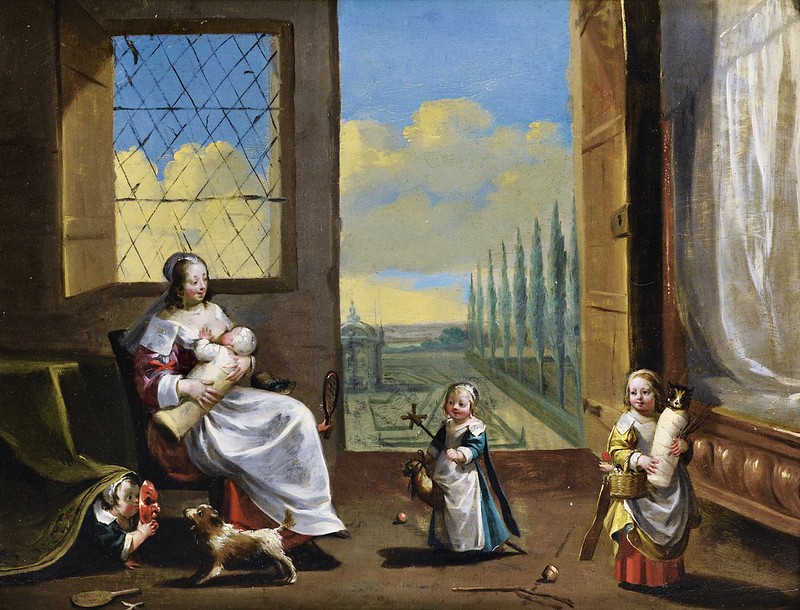
Charles Le Brun (1619-1690) - The allegory of childhoodObra de Charles Le Brun (1619-1690), pintor francès.


Giulio Cesare Arresti (1619-1701) - Sonata XVI
Rogier Michael (c.1554-1619) - Te Deum laudamus
Giulio Cesare Arresti (1619-1701) - Sonata XVII
Francisco Soto de Langa (1534-1619) - Signor, ti benedico
Giulio Cesare Arresti (1619-1701) - Sonata XVIII
Nicolaus Zangius (1570-1619) - Congratulamini nunc omnes
Ottavio Bariolla (1573-1619) - Canzon Vigesima et ultima
Juan Garcia de Zéspedes (1619-1678) - Guaracha, Convivando está la noche

- 400è aniversari de compositors a qui difícilment escoltarem -


Parlem de Pintura...

Charles Le Brun (Paris, 24 de febrer de 1619 - Paris, 22 de febrer de 1690) va ser un pintor francès que amb els seus dissenys barrocs va dominar l'art realitzat a França durant dues generacions. Va néixer a París, en el si d'una família d'artistes, i va rebre la seva formació artística a la seva ciutat natal i a Roma, on va treballar amb el pintor Nicolas Poussin. El 1646 va tornar a París, ciutat on va desenvolupar, gradualment, un estil clàssic basat en el gust barroc pel drama, el naturalisme i la decoració. El 1648, amb el ministre de finances francès Jean-Baptiste Colbert, i altres, va promoure la fundació de la Reial Acadèmia de Pintura i Escultura. També en aquell temps va pintar els frescs de castells com Vaux-le-Vicomte, considerats com la seva obra mestra, Sceaux i la Galeria d'Apolo, al Louvre. Va obtenir el favor del rei Lluís XIV gràcies a una sèrie de cinc llenços que documentaven les gestes d'Alexandre el Gran (1661-1673), va ser nomenat pintor del rei i va aconseguir la noblesa el 1662. Un any més tard es va convertir en el director de la Reial Fàbrica dels Gobelins de tapissos i mobles, per a la qual va pintar diferents obres. Entre els anys 1679 i 1684 va dirigir la decoració del Palau de Versalles, incloent l'Escala d'Ambaixadors i el Saló dels Miralls i a més a més va dissenyar alguns dels seus jardins. Charles Le Brun va morir a París el febrer de 1690.


Parlem de Música...

Giulio Cesare Arresti (1619-1701) va ser un organista i compositor italià.

He spent his entire life in Bologna. He was a pupil of Ottavio Vernizzi whom he succeeded as second organist at S Petronio in 1649, being promoted to first organist ten years later. In December 1661 he was summarily dismissed following a vitriolic attack on the maestro di cappella Maurizio Cazzati, circulated anonymously as the Dialogo fatto tra un maestro ed un discepolo desideroso d'approfittare nel contrappunto. While Gaspari attributed this work to Arresti, it is now considered unlikely that it is by him. Matters came to a head when Arresti published his Messa e Vespro dell Beata Virgine (1663), including the Kyrie of Cazzati's Messe e salmi a 5 voci (1655) liberally marked with alleged errors. Cazzati was forced to reply in the lengthy Risposta alle opposizoni fatte dal Signor Giulio Cesare Arresti nella Lettera al Lettore posta nell'opera sua musicale (1663). After Cazzati's own dismissal in 1671, Arresti was reinstated as first organist, being pensioned in 1696. He also served at S Salvatore in 1668 and 1680 and at the Cappella del Rosario, S Domenico. He played a major part in the foundation (1666) of the Accademia Filarmonica di Bologna, which apparently originated in some highly successful concerts of his given at the home of its founder Count Vincenzo Carrati. Arresti became president of the academy in 1671. He had previously been a member of the Accademia dei Filomusi, with the name ‘Il Sollevato’. The pedantic dispute over the proprieties of the a cappella style have coloured later perceptions of Arresti's music. His Sonate (1665), however, are novel in their inclusion of arie obviously indebted to contemporary secular vocal music, and his Sonate da organo di varii autori (?1697), containing three of his own compositions, is an important anthology of late 17th-century Italian organ music. His contribution to the oratorio appears to have been significant but cannot be assessed in the absence of surviving scores.

---

Ottavio Bariolla (1573-1619) va ser un organista i compositor italià.

---

Tobias Clausnitzer (1619-1684) va ser un compositor alemany.


Clausnitzer wurde als Sohn eines Kärrners und Landfuhrmanns in Thum geboren. Er studierte ab 1642 Evangelische Theologie an der Universität Leipzig. Im Jahr 1644 wurde er Feldprediger in einem schwedischen Regiment. Nachdem er 1649 in Weiden auf Befehl des schwedischen Generals Wrangel die Feldpredigt zur Feier des Westfälischen Friedens hielt, wurde er dort Pfarrer und später auch kurpfälzischer Kirchenrat und Inspektor des gemeinschaftlichen Amtes Parkstein und Weiden. Er starb 1684 als Superintendent in Weiden. Neben zahlreichen Erbauungsschriften, Passions- und Festpredigten verfasste er ebenfalls einige Kirchenlieder.

---

Bernardo Corsi (c.1570-1619) va ser un compositor italià.

In 1598 he was organist of the collegiate church of S Agata, Cremona. The dedications of three of his publications between 1607 and 1618 were written from Cremona, and he probably spent all his life there. A remark in the dedication of his op.5 indicates that he was either a priest or, more probably, a monk. In the same dedication he mentioned that for many years he had been in the service of Count Pietro Maria Rossi and that both he and his patron preferred sacred music. His output to some extent reflects the changes that were taking place in sacred music in the early 17th century. His 1613 book is in the tradition established by Viadana’s Cento concerti ecclesiastici, but even in his later books his style remained conservative: for example, the five-part psalm Laudate Dominum (1617) is a prima pratica work with a basso seguente rather than a fully independent continuo line.

---

Mathias de Sayve (c.1550-1619) va ser un cantant i compositor flamenc.

Singer and composer, elder son of Raskin de Seave. He was appointed second succentor at the collegiate church of St Martin-en-Mont, Liège, on 9 July 1571, and held the post at least until 1588. By 1 January 1590 he was an alto in the chapel of Emperor Rudolf II in Vienna, and in 1593 he was Monte’s deputy as choirmaster. According to Vannes he was choirmaster in Salzburg from 1606 to 1608, after which he rejoined the imperial chapel until 30 September 1617. It seems likely he died in Bohemia late in 1619. He published his five-voice Liber primus motectorum in Prague in 1595, and one motet and two odes by him appeared in collections.

---

Euricius Dedekind (1554-1619) va ser un compositor alemany.

His first name has sometimes been incorrectly cited as Heinrich. He was the son of the pastor and poet Friedrich Dedekind, who worked at Neustadt from 1551 to 1576, when he moved to Lüneburg, and thus he must have grown up at Neustadt and may also have moved to Lüneburg in 1576. In 1578 he matriculated at the University of Wittenberg. On 26 April 1581 he was engaged to assist Christoph Praetorius, Kantor of the Johannisschule, Lüneburg, and at the beginning of 1582, when Praetorius had been pensioned off, he was appointed his successor. On 18 December 1594 he was appointed third pastor at St Lamberti, Lüneburg, and from 1617 until his death he was principal pastor. At St Lamberti he continued the tradition whereby the Lüneburg Kantors wrote polyphonic Christmas songs (‘cantilenae scholasticae’) every year to words supplied by the headmasters of the local schools. It is impossible to assess his achievement as a composer since of his three known published collections one is lost and the other two survive in incomplete form.

---

Thomas Fritschius (1563-1619) va ser un compositor alemany.

He may have attended the Gymnasium in Görlitz although there is no evidence that he received his musical training from Kantor Winkler. He was a member of the order of Kreuzherren mit dem Roten Stern at Breslau. In 1608 he became prior at the monastery and in 1609, following the death of Johann Henceius, he was elected master. However, the monastery failed to notify the master-general of their decision, and he nullified the election. After a new vote, Elias Bachstein was appointed master and Fritsch was despatched to a monastery in Bohemia for three years. He may have returned to Breslau in autumn 1612. Fritsch was evidently on good terms with Georg Rudolph, Duke of Liegnitz, to whom his motet collections were dedicated. The title ‘Magister’ in the tenor volume of his Novum et insigne opus musicum (1620) was probably a posthumous tribute to a highly-esteemed musician and composer. The main source of his music, all of it sacred, is Novum et insigne opus musicum, which contains 119 works for four to ten voices for the church year. It was complemented by several other works surviving only in manuscript, but most of these disappeared at the end of World War II. Fritsch adhered on the whole to the conventions of late Renaissance polyphonic music and was clearly influenced by Lassus, Handl and Hassler. He also cultivated polychoral techniques, even when writing for only six voices (as in Gabriel angelus apparuit, in PL-PE). His music is clearly transitional in character and typical of a period when the declining Renaissance was slowly giving way to early Baroque practice. There is often a close correlation between words and music both in works to Latin texts – the vast majority – and in the four pieces to German texts in the 1620 volume.

---

Juan Garcia de Zéspedes (1619-1678) va ser un cantant i compositor mexicà.

He was appointed as a soprano at Puebla Cathedral on 16 August 1630, with an initial stipend of 50 pesos to cover the cost of choir robes; in January the following year the cathedral chapter offered him the annual salary of 80 pesos, and in 1632 it was almost doubled to 150 pesos. In the ensuing decades the chapter experienced economic problems, and García's salary began to diminish in 1651, although his prestige within the cathedral hierarchy was ascending. The Capitular Acts of 19 June 1654 assigned him the tasks ‘of teaching plainchant, polyphony, and viols to the young choirboys that are sopranos and to the other cantors who are worthy of instruction, and that he give lessons every day at the Church’. Robert Stevenson has pointed out that this job description is slightly unorthodox, for under normal circumstances the maestro de capilla (in this case Juan Gutiérrez de Padilla) would have assumed these tasks; however, in 1658 and 1660 Padilla was formally urged to respect his teaching obligations, but to no avail, so the work fell to the younger García. In the August following Padilla's death (April 1664) García was appointed interim maestro de capilla with a pay increase of 150 pesos on top of his salary as a singer; the post became permanent in 1670. In July 1672 the chapter expressed displeasure that he was neglecting the teaching of plainchant and polyphony to two choirboys, and in the same year he was instructed to bring back ‘the viols, music paper, and books that belong to this Church’ that he had been borrowing. He was chastised again in 1676 for sloughing off and not recruiting with the vigour that the chapter expected, and he was also found to be emphasizing instrumentalists at the expense of singers. Late in life his health declined and he became paralysed. His surviving compositions reveal him as a composer adept at several styles. He was capable of handling rigorous counterpoint, as is amply demonstrated by his seven-voice Salve regina. He captured the spirit of the Mexican villancicos in his vivacious Convidando está la noche, which opens with an introductory juguete (vocal prelude) in majestic, four-voice homophonic chords, and proceeds with a guaracha for two voices, opening with ‘Ay que me abrazo ¡ay!’. The piece is driven forward by a hypnotic rhythmic hemiola coupled with inexorable loops of I–IV–V harmonies. It exhibits the defining characteristics of the guajira that was later to become popular in Cuba.

---

George Loosemore (1619-1682) va ser un organista i compositor anglès.

English organist and composer, brother of Henry Loosemore and John Loosemore. He was organist of Jesus College, Cambridge, in 1635, and of Trinity College from 1660 until his death. He took the Cambridge MusD degree in 1665. He may have been the ‘Mr Loosemore’ who played the organ and taught the choristers at St John’s College, Cambridge, at various times during the 1660s. The majority of his works survive in one or other of two autograph manuscripts. The first, GB-Lbl Add.34203, is a book of organ accompaniments; it includes six of his own works and a further two by Henry Loosemore. The second, GB-Ctc R.2.58, is a medius partbook from a set of grace books copied by George Loosemore in 1664 and intended for use on feast days in the hall of Trinity College. It contains 11 full anthems by Loosemore, most of which are settings of Prayer Book collects for the major church festivals. A twelfth anthem, to the text of the Advent antiphon ‘O sapientia’, was apparently copied into the manuscript, although it is now missing. Loosemore’s instrumental fancies, most of which also are now lost, were admired by Dudley, 3rd Lord North, at whose home at Kirtling they are known to have been played.

---

Conrad Matthaei (1619-1667) va ser un teòric i compositor alemany.

He was a pupil of Heinrich Grimm at Brunswick. He apparently spent the major part of his life at Königsberg. He studied law and philosophy at its university about 1650 and seems to have continued his association with that institution on receiving the degree of doctor of law; he acknowledged the support of its faculty in the preface to his treatise Kurtzer, doch ausführlicher Bericht von den Modis Musicis, which was published in Königsberg in 1652 (reprinted 1658). In 1654 he became Kantor of the Old Town church. It is generally believed that he remained in that appointment until his death, though according to Walther he returned to Brunswick and practised law. No evidence supports this statement, and the fact that all his known compositions were published at Königsberg seems to contradict it. All Matthaei’s compositions are occasional sacred pieces. They display features similar to those found in the music of Johannes Eccard and his pupil Johann Stobaeus, particularly those in cantional style. This led Winterfeld to suggest that he studied with Stobaeus; he also believed that he may have been influenced by the Arien for several voices of Heinrich Albert. Matthaei’s mentors as a theorist are more easily determined. In addition to the treatises of his teacher Grimm it is apparent that he relied on those of Seth Calvisius and Johannes Lippius.

---

Rogier Michael (c.1554-1619) va ser un cantant i compositor holandès.

His father was a tenor in the Vienna Hofkapelle, where Rogier became a choirboy. In 1564 he was transferred to the Graz Hofkapelle of Archduke Karl II, where the Kapellmeister was first Johannes de Cleve and then Annibale Padovano and where the boys were taught from 1567 by Jacob de Brouck. In 1569 he was given a three-year scholarship and may have studied in Italy. He was a tenor in the Hofkapelle of Margrave Georg Friedrich von Brandenburg-Ansbach at Ansbach from 1572 to 1574, when he went to the Dresden Hofkapelle as singer and musician. He remained there until his death, serving four electors during this 45-year period. From 12 December 1587 he was Hofkapellmeister, but because of increasing infirmity he was assisted from 1613 by Michael Praetorius and later by Schütz, who was appointed his successor in 1619.

---

Valentin Neander II (c.1575-1619) va ser un compositor alemany.

German composer, son of Valentin Neander. He matriculated at the University of Frankfurt an der Oder in 1597 and was a pupil of Bartholomäus Gesius in that town. He published Newe christliche Kirchen Gesänge, die man Introitus, Prosas, Responsoria und Hymnos nennet … auff die Melodeyen des Lobwassers Psalmen … gerichtet (Frankfurt an der Oder, 1619; ?lost), which consists of 89 four-part pieces. It provides interesting evidence of the penetration of the Huguenot manner of psalm setting into Lutheran north Germany, a development that may have been encouraged by the decision of the Elector Johann Sigismund of Brandenburg in 1613 to adopt Calvinism as his faith (see Bohn). According to Grimm, Neander had earlier published Neue geistliche Lieder for four to eight voices (Frankfurt an der Oder, 1601), and he also seems to have written Cantio nuptialis sumpta ex psalmo CXII for eight voices (Wittenberg, 1607), for the wedding of the Duke of Saxony; both are lost.

---

Santi Orlandi (c.1575-1619) va ser un compositor italià.

He was employed in at least May and September 1596 at S Maria Novella, Florence. His next known appointment was as maestro di cappella in the household of Prince Ferdinando Gonzaga at Florence. In 1608, when Ferdinando was created a cardinal by Pope Paul V, he followed him to Rome. On the death of Duke Vincenzo Gonzaga I in February 1612, Ferdinando’s brother Francesco succeeded to the duchy of Mantua, and he appointed Orlandi temporarily to the post of maestro della musica from which he had dismissed Monteverdi. Orlandi was recalled to Rome by Cardinal Ferdinando in October 1612, but on 22 December Duke Francesco II died, and the cardinal became duke. Orlandi seems to have spent the rest of his life in his service at Mantua. He may have been employed as a singer at S Pietro there; a list of singers in a partbook (in I-Mc) refers to a tenor by the name of Orlandi from S Pietro. He published five volumes of five-part madrigals. The first, third and fifth, none of which survives complete, appeared in Venice in 1602, 1605 and 1609 respectively. The other two books are effectively lost. The fourth may have been published in Venice in 1607; the only surviving (bass) partbook is fragmentary. One six-part madrigal by him survives (in RISM 161310). He also composed an opera, Gli amori di Aci e Galatea, which was performed at Mantua in March 1617 as part of the festivities celebrating Duke Ferdinando’s marriage to Caterina de’ Medici; this is also the first opera known to have been performed in Poland (in 1628). The libretto was by Chiabrera; the music is lost. Bonini surveyed the history of composition between the time of Willaert and about 1645, and divided composers into three ‘orders’: Orlandi he placed in the third, together with Monteverdi, Filippo Vitali and others, and recommended his works as models.

---

Giovanni Piccioni (c.1548-1619) va ser un organista i compositor italià.

He was organist at the cathedral of Rimini from 1569 probably until shortly before 15 November 1577 when, according to the dedication of his first book of five-voice madrigals, he moved from Rimini to Conegliano, Veneto, where he became maestro di musica to the ‘Magnifici Signori Desiosi’, who formed an academy there. His books of canzoni of 1580 and 1582 bear dedications testifying to connections in the Romagna, and he may once again have been active there during these years. In the years 1583–6 he may have been in Dalmatia with Marc’Antonio Venier, as he later claimed (in his seventh book of madrigals). From August 1586 until 31 December 1591 he was organist at the cathedral of Gubbio. He held the same post at Orvieto Cathedral from 8 January 1592 until 1617; in 1615 he became maestro di cappella there as well. In 1616 he held the additional posts of organist and maestro di cappella at nearby Monte Fiascone. He was recalled to Orvieto as organist in 1619, and the last notice of his activity there is found in the dedication of his Concertus ecclesiastici on 17 June 1619.

---

Melchior Schramm (1553-1619) va ser un organista i compositor alemany.

He is first heard of in 1565 as a chorister in the Hofkapelle of Archduke Ferdinand of the Tyrol. He left in 1569 with a three-year scholarship and became a student of the Innsbruck court organist, Servatius Rorif. In 1571 and 1572 he was organist of a convent at Halle. In 1574 he became Kapellmeister and organist of the court at Sigmaringen; from 1594 he was organist only. From 1605 until his death he was civic organist of Offenburg, at the Heilig Kreuz Kirche. Inventories of the period show that his works were widely known, and the appearance of individual pieces in anthologies is a measure of their popularity. As a composer of German madrigals he ranks with Jacob Meiland as one of the most important forerunners of Hans Leo Hassler.

---

Francisco Soto de Langa (1534-1619) va ser un compositor espanyol.

Probablemente fue cantor en la Catedral de Burgo de Osma, diócesis de su ciudad de origen. Está considerado el primero, o uno de los primeros, castrato empleados en la Capilla Sixtina, donde permaneció del 8 de junio de 1562 hasta su jubilación en el 1611, sirviendo también como maestro durante cinco años. En 1566 trabajó para el Oratorio de S. Felipe Neri, uniéndose formalmente en 1571 a la congregación por éste fundada. A Francisco Soto y Felipe Neri les unió una profunda amistad, componiendo numerosos laudes, género que fue particularmente cultivado en los oratorios de S. Felipe. Estuvo relacionado con la fundación de la "Compagnia dei musicisti di Roma", a la cual otros cantores papales no querían pertenecer. En 1575 fue ordenado sacerdote. Durante dos años estuvo al servicio de la iglesia S. Giacomo degli Spagnoli y desde 1582 hasta su muerte fue miembro de la Confraternita della Resurrezione, con sede justo al lado de S. Giacomo donde fue encargado de organizar las músicas para la celebración del nacimiento de una hija de Felipe III. Soto fue muy famoso como cantor, y sus actuaciones atrajeron grandes multitudes. Fue elogiado como tal por Pietro della Valle en su Discorso. El recuerdo de Soto en el Oratorio de S. Felipe, donde ejecutaba los laudes espirituales escritos especialmente para su voz por Giovanni Animuccia, permaneció durante mucho tiempo en la memoria de sus contemporáneos. Sus obras fueron editadas en gran parte por él mismo y se conocen varias antologías suyas, pero es difícil saber con certeza el número de obras que compuso realmente y cuales son verdaderamente suyas. Murió en Roma el 25 de septiembre de 1619.

---

Gregor Stemmelius (?-1619) va ser un compositor alemany.

In about 1600, together with Johann Seytz and Carolus Andreae, he composed liturgical music for the Benedictine abbey at Irsee, of which he was a member. His surviving works show that he handled the techniques of vocal polyphony competently. His date of death is given in the manuscript D-As TS 95.

---

Giuseppe Felice Tosi (1619-1693) va ser un organista i compositor italià.

Italian composer and organist, father of Pier Francesco Tosi. The description of Il Celindo as his ‘first musical work’ must mean that he came late to composition. He was among the paid musicians (probably as a singer) in S Petronio, Bologna, from 1636 to 1641, which possibly means that he received his musical education there. He was a founder-member of the Bolognese Accademia Filarmonica in 1666 and was elected its principe in 1679. He composed a Dixit Dominus for the annual celebration of the academy in S Giovanni in Monte on 4 July 1675. From 1680 to 1683 he was maestro di cappella of the Accademia della Morte, Ferrara, and in 1682–3 of Ferrara Cathedral as well. In 1686 he served temporarily as maestro di cappella of S Giovanni in Monte, Bologna. From 7 July 1692 until early December 1693 he was second organist at S Petronio. The score of Il Celindo shows a competent hand, albeit with a trace of awkwardness in the vocal writing; like many operas of the 1670s it makes prominent use of a solo trumpet in dialogue with the voice. His sacred music is written in typical late 17th-century Bolognese style.

---

Nicolaus Zangius (1570-1619) va ser un compositor alemany.

He is first heard of in 1597, when he was Kapellmeister to Prince-Bishop Philipp Sigismund of Brunswick-Wolfenbüttel at Iburg, near Osnabrück. In 1599 he went to Danzig, first as deputy to the Kapellmeister of the Marienkirche, Johannes Wanning, who was then a sick man, and shortly afterwards as his successor. In order to escape from plague-ravaged Danzig he obtained a long leave of absence in 1602, and until the end of 1605 he was an official at the imperial court in Prague. Only in 1607 did he return to Danzig, and even then only for a short time, for he was soon staying briefly at Stettin before returning to Prague, where he resumed his court duties in 1610. Finally, in 1612 he moved to Berlin as Kapellmeister to the Elector of Brandenburg, in succession to Johannes Eccard. He was joined there by several members of the Prague establishment, and during his few years in office he did much to raise musical standards. He is important as a composer for his sacred, and especially his secular, ensemble songs, which were highly esteemed by his contemporaries. Although he also on occasion cultivated the older polyphonic style, he was one of the first composers, particularly in north Germany, to adapt the Italian villanella style to German usage. His three three-part collections, the first of which was twice reprinted, are evidence of his achievements in this genre. His Gesellschaftslieder are also highly successful. A specially notable piece is the inventive five-part quodlibet Ich will zu land ausreiten from his 1597 collection, which probably served as a model for Melchior Franck’s farrago Kessel, Multer binden (in his Grillenvertreiber of 1622), the most famous example of the genre at that period.

---

Martin Zeuner (1554-1619) va ser un organista i compositor alemany.

He was appointed to the collegiate church of St Gumbertus at Ansbach on 16 June 1576 with a yearly salary of 50 florins and remained at this post until his retirement. On 20 June 1610 he was called to play the positive, regals and other instruments at the Brandenburg-Ansbach court; he was entrusted with composing the ceremonial music for the marriage of Margrave Joachim Ernst in 1612. He retired on 17 September 1616 after playing a leading role in the musical life of Ansbach for 40 years. Municipal tax records show that he was involved in several disputes concerning the payment of taxes and his various dealings in wine, and on 5 October 1615 the margrave settled in his favour a quarrel concerning singing and organ playing in which he had become involved with the Konrektor. His German songs (1617) show the influence both of prominent earlier German composers of such pieces, notably Georg Forster and Leonhard Lechner, and of such Italians as Gastoldi, Marenzio and Orazio Vecchi. They are predominantly contrapuntal, as are some of the chorale settings (1616). Other chorales, however, are chordal pieces in a more modern style with very simple harmonies; the frequent modulation and the cadential appoggiaturas anticipate Bach. Zeuner's wedding music (1612), for 12 and 24 voices, is in the polychoral Venetian tradition adopted in Germany by such composers as Hassler and Lechner, who may have influenced him.

---

diumenge, 21 de juliol del 2019

ZIMMERMANN, Anton (1741-1781) - Missa solemnis 'Sancta Caeciliae' (1773)

Pierre Alexandre Wille (1748-1821) - The Festival of Good People, or the Reward for Virtue (1776)
Obra de Pierre Alexandre Wille (1748-1821), pintor francès (1)


Parlem de Pintura...

Pierre-Alexandre Wille (Paris, 19 de juliol de 1748 - Paris, gener de 1821) va ser un pintor francès. Fill del gravador Johann Georg Wille, es va formar inicialment en el taller del seu pare. El 25 de juny de 1774 es va acreditar com a membre de l'Académie royale de peinture et de sculpture i en la qual hi va exposar de forma intermitent fins el 1819. Durant la Revolució Francesa va perdre tots els seus privilegis i va patir greus problemes de salut familiars si bé va continuar venent les seves obres, principalment retrats i escenes de gènere. Tanmateix, el darrers anys va viure en la misèria morint a París el gener de 1821.


Parlem de Música...

(Johann) Anton Zimmermann (Breitenau [ara Široká Niva], bap. 27 de desembre de 1741 - Pressburg [ara Bratislava], 8 d'octubre de 1781) va ser un compositor moravià. Es va formar inicialment a Silesia abans d'assolir el seu primer càrrec com a organista de la Catedral de Königgrätz. A principis de la dècada de 1770 va constar actiu a Pressburg, ciutat on el 1772 va representar el singspiel Narcisse et Pierre i el 1773 una missa solemne en motiu de les festivitats de Santa Cecilia. A principis del 1776 va ser nomenat mestre de capella i compositor de la cort al servei del comte, i posteriorment arquebisbe d'Hongria, Joseph Batthyány. Allà va crear una potent orquestra que va dirigir la resta de la seva vida i en la qual hi van destacar, entre altres, els seus instrumentistes de vent. A partir del 1780, va treballar com a organista de la Catedral de Sant Martí de Pressburg. Com a compositor, va ser notablement prolífic especialment en música religiosa i instrumental amb algunes simfonies atribuïdes erròniament a Joseph Haydn. Anton Zimmermann va morir a Pressburg l'octubre de 1781.

Ansicht von Pressburg (heute Bratislava), Kupferstich (1787) (2)

OBRA:

Vocal secular:

Stage:
Narcisse et Pierre (Spl, A. Berger), Pressburg, 1772;
Die Wilden (melodrama or incid music, J. Schilson), Pressburg, 13 Dec 1777, lost;
Andromeda und Perseus (melodrama, A. Cremery), Vienna, Hofburg, 23 April 1781, arr pf (Vienna, 1781);
Zelmor und Ermide (melodrama);
Leonardo und Blandine (melodrama, 1), doubtful, arr. pf (Vienna, n.d.)

Other:
Denis Klage auf Tod M. Theresien (cant., Denis), 1v, hpd (Pressburg, c1781);
Ziehet ein zu diesen Thoren (cant.), vv, orch

Vocal religiosa:

Masses:
6 in C;
3 in D;
1 in A;
c6, doubtful, also attrib. C.D. von Dittersdorf, J. Haydn, Hofer, I. Holzbauer, K. Loos, Novotny, F.N. Novotny, S. Seiler;
3, spurious, by F.X. Brixi, K. Vogl, M. Haydn

Other sacred:
Der sterbende Heiland (orat), doubtful;
6 grads, 1 doubtful, also attrib. T. Gabrielli;
6 offs, 2 doubtful, also attrib. L. Hofmann, G. Huber, Ryba;
2 TeD;
1 ps;
6 motets;
2 Tantum ergo, 1 doubtful, also attrib. Brixi;
3 Veni Sancte Spiritus, 1 doubtful;
Pange lingua, doubtful;
Vexilla regis;
3 Ave regina;
6 Regina coeli;
6 Salve regina, 1 doubtful, also attrib. Brixi;
7 Litaniae lauretanae, 1 doubtful, also attrib. L. Hofmann;
Litaniae lauretanae, spurious, by J.A. Kobrich;
4 arias;
1 chorus

Instrumental:

Syms.:
c9 in C, ed. Z. Fekete (Vienna and Basle, 1950), 1 also attrib. Haydn;
6 in D;
5 in E ;
3 in E;
3 in F;
5 in G, incl. Sinfonia pastoritia, 1 ed. in the Symphony 1720–1840, ser. B, xiv (New York, 1985), 1, doubtful, also attrib. G.B. Sammartini;
3 in A;
5 in B ;
1, F, spurious, by I. Pleyel

Concs. (only solo insts listed):
Grand concert, hpd/pf, op.3 (Vienna, 1782);
1 for hpd;
1 for vn;
3 for db, incl. 1 in D, c1778, ed. R. Malaric (Vienna and Munich, 1978), 1 in D, c1779, 1 in E ;
1 for bn;
1 for bn, lost, listed in Breitkopf suppl., 1769;
1 for 2 bn;
1 for hp, 1 for ob, both lost

---

Chbr:
6 quartetti, str, op.3 (Lyons, c1775);
6 duetti, hpd, ?vn, op.1 (Lyons, ?1776), lost, listed in Breitkopf suppl., 1776–7;
6 sonate, hpd, vn, op.2 (Lyons, 1777), ed. D. Múdra (Vienna and Munich, 1998);
3 sonate, hpd, vn, op.1 (Vienna, 1779);
Quartetto, A , 2 vn, vc, hpd (Pressburg, before 1794);
6 sextets, 2 vn, va, 2 hn, bc;
12 qnts, 3 vn, va, vc, ed. J. Mezei (Budapest, 1996);
12 qnts, 2 vn, 2 va, vc;
Qnt, A, 2 vn, 2 hn, vc;
12 qnts, fl, 2 vn, va, vc, lost, listed in Traeg catalogue, 1799;
Quartetto, 2 vn, va, vc;
Quartetto, G, vn, va, vc, hpd;
3 trios, vn, va, vc, 2 ed. D. Múdra (Bratislava, 1996);
Duetto, fl, vn, ed. D. Múdra (Bratislava, 1994);
2 duets, hpd, vn;
Duetto, hpd, vn;
Duetto, vn, bc;
Belagerung von Valenciennes, vn, pf (Vienna, n.d.), lost;
Sonata, vn, vc, op.4;
Sonata, hpd, vn

Other inst: (for ens unless otherwise stated):
5 cassations;
10 divertimentos, 1 lost, listed in Breitkopf suppl., 1782–4;
6 ländler, str, lost, ed. P. Polák in Tance (Bratislava, 1966);
13 minuets;
Notturno-quartetto, str;
3 other notturni;
4 partitas;
1 serenata, 2 vn, 2 va, 2 cl, 2 bn, bc;
3 preludes, kbd, 1 doubtful, also attrib. Albrechtsberger;
3 fugues, kbd, 1 doubtful;
7 versets org, 1 in F, doubtful, also attrib. M. Haydn, in F.P. Rigler: Anleitung zum Gesange, und dem Klaviere (Ofen [now Buda], 1798);
12 zingareses, pf, ed. G. Papp in Hungarian Dances 1784–1810 (Budapest, 1986)


Informació addicional... 

INTERPRETS: Helga Varga Bach (soprán); Judita Andelová (alt); Jozef Gráf (tenor); Martin Mikuš (bas); Musica aeternaChorus SalvatorisPeter Zajíček
IMSLP: Anton Zimmermann (1741-1781)
CPDL: No disponible
SPOTIFY: No disponible

Tant si us ha agradat, com si no, opineu, és lliure i fàcil!

dissabte, 20 de juliol del 2019

VON ORDONEZ, Karl (1734-1786) - Symphonies

Bernardo Bellotto (1721-1780) - Widok Warszawy z tarasu Zamku Królewskiego (1773)
Obra de Bernardo Bellotto (1721-1780), pintor italià (1)


Parlem de Pintura...

Bernardo Bellotto (Venezia, 30 de gener de 1721 - Warszawa, 17 d'octubre de 1780) va ser un pintor i gravador italià. Nebot de Canaletto, va començar la seva formació artística als 15 anys al taller del seu oncle de qui no només va adoptar la seva especialitat, la pintura de veduta, sinó també el seu estil i fins i tot el nom de Canaletto. Com el seu oncle, va viure a Venècia fins al 1742, data en què es va traslladar a Roma i potser també a la Toscana. Va treballar en diferents llocs d'Itàlia, a Llombardia i a Torí abans de viatjar a Anglaterra el 1746. Un any després va ser rebut a Dresden pel príncep elector Frederic August II el Fort, que va mostrar un viu interès per la seva obra. A Viena va treballar per a María Teresa I i l'aristocràcia austríaca, passant per Munich, i retornant el 1762 a Dresden, on després de perdre el seu lloc a la cort, va treballar com a professor de perspectiva a l'acadèmia fundada el 1764. Bellotto no es va establir definitivament fins el 1768, any en què va ser nomenat pintor de la cort d'Estanislau II Poniatowski a Varsòvia. L'estreta col·laboració entre oncle i nebot fan difícil la delimitació entre les obres de joventut d'un i les de maduresa de l'altre. Les obres personals Bellotto es va diferenciar de les de Canaletto per un cromatisme més fred, per un predomini del clarobscur i per una realista precisió topogràfica. Les seves obres principals, com les 14 vedute de Dresden i la Vista de Varsòvia, van mostrar una qualitat semblant a les del seu oncle. Les seves vistes de capitals europees van constituir, per la seva precisió i fidelitat a l'original, una important font històrica, fins el punt que es van utilitzar per a la reconstrucció d'edificis històrics de Dresden i Varsòvia que havien patit danys durant la Segona Guerra Mundial. Bernardo Bellotto va morir a Vàrsovia l'octubre de 1780.


Parlem de Música...

(Johann) Karl (Rochus) von [Carlo d’] Ordonez [Ordenitz, Ordoneez, Ordonetz, Ordonitz] (Wien, bap. 16 d'agost de 1734 - Wien, 6 de setembre de 1786) va ser un violinista i compositor austríac. Fill de Johann Baptist Christoph von Ordonez i d'Anna Maria Theresa, es va formar a Viena, ciutat on hi va viure tota la seva vida. A partir del 1758 va començar a treballar com a funcionari de l'administració austríaca en un temps en què també va rebre formació musical. En aquest sentit, va participar com a violinista en diversos salons aristocràtics assolint, el 1779, el seu primer càrrec oficial com a músic de cambra. També va formar part de la Tonkünstler-Societät en la qual sovint hi va participar com a violinista. Com a compositor, va ser autor d'obra diversa si bé va destacar pel seu corpus simfònic el qual va mostrar notables influències d'autors com Gassmann, Leopold Hofmann i Wagenseil. Karl von Ordonez va morir a Viena el setembre de 1786.

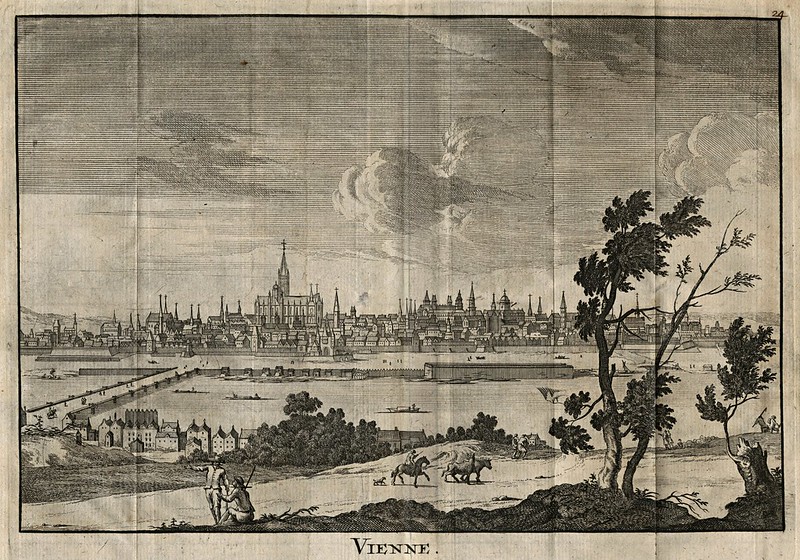
Henri du Sauzet (c.1687-1754) - Vienne (1739)
Henri du Sauzet (c.1687-1754) - Vienne (1739) (2)

OBRA:

Vocal:

Stage:
Musica della parodie d’Alceste (marionette op, J.K. von Pauersbach), Eszterháza, 30 Aug 1775, H-Bn
Diesmal hat der Mann den Willen! (Original Singspiel, 1, J.F. Schmidt), Vienna, Burg, 22 April 1778; A-Wn (abbreviated version)

Cantata:
Der alte wienerische Tandelmarkt, 1779, pubd lib, Wst

Instrumental:

Orch.:
74 syms. (2 doubtful), incl.: Sinfonie périodique no.26 (Paris, 1764); some in 3 symphonies del Signor Dune & Ordonne (Paris, 1769); Symphonia, C (Lyons, 1777), also in 3 Symphonies … par Mes.rs. Haydn & Ordoniz (Lyons, 1780s); 4 others, spurious; principal sources A-GÖ, LA, Wgm, Wn; B-Bc; CZ-Bm, BRnm, K, KRa, Pnm; D-Rtt, RUl; I-Fc, Gl, MOe; 7 ed. in The Symphony 1720–1840, ser. B, iv (New York, 1979)

Other:
Pantomima, 1758, A-GÖ;
Vn Conc., Wn;
12 menuetti, Wgm;
Serenade, 31 wind insts, mentioned in Wienerisches Diarium, xliv (1779);
Partita per la caccia, listed in Traeg catalogue (1799)

---

Chbr.:
28 qts, 2 vn, va, b (1 doubtful), incl.: 6 quartetti, op.1 (Lyons, 1777), ed. A.P. Brown (Madison, WI, 1980); 2 in 6 Quat. no.1 a 6, listed in Westphal catalogue (1782); 10 others, spurious; principal sources A-GÖ, LA, M, Wgm, Wn, CZ-Bm, K, Pnm; D-Bsb; GB-Lbl, Lcm; H-Bn, KE; I-Gl
21 trios, 2 vn, b (1 other, spurious, also attrib. J. Haydn, hV:G4), A-M, B-Bc, CZ-Pnm, D-Bsb, I-Gl

Other:
Octet, 2 ob, 2 eng hn, 2 hn, 2 bn, CS-K;
Sextet, 2 vn, va, b, 2 hn, D-HR;
Qnt, 2 vn, 2 va, b, A-Wn;
[3] Gassatione, vn, va, b, 2 hn (Paris, 1768);
2 trios, vn, va, b (doubtful, 1 other, spurious), Wgm;
3 vn duos, listed in Traeg catalogue (1799);
2 sonatas, vn, b, Wgm


Informació addicional... 

INTERPRETS: L'Arte del Mondo; Werner Ehrhardt
AMAZON: VON ORDONEZ, K. - Symphonies
CPDL: No disponible
SPOTIFY: VON ORDONEZ, K. - Symphonies


Tant si us ha agradat, com si no, opineu, és lliure i fàcil!