divendres, 30 de juliol del 2021

MOZART, Franz Xaver (1791-1844) - Klavierkonzert Es-Dur, Nr.2 (c.1819)

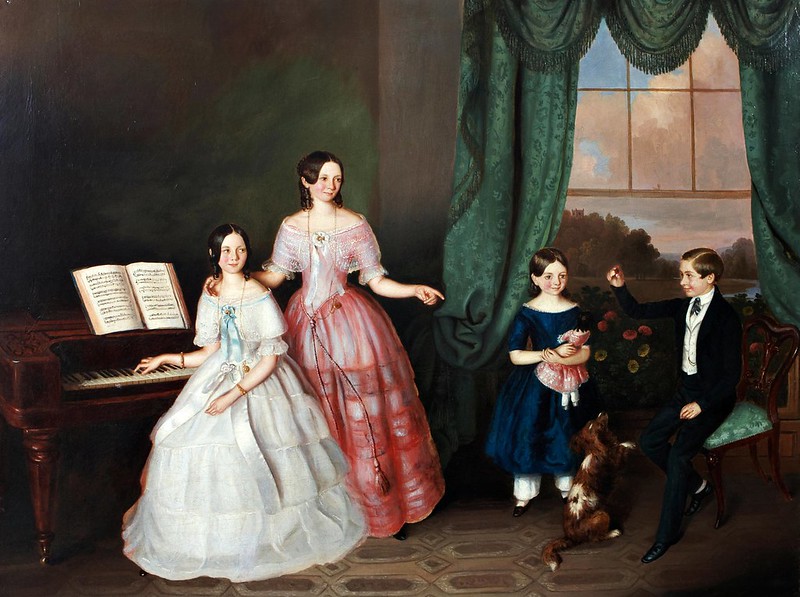
English School (19th Century) - A family in their drawing room


Franz Xaver Mozart (1791-1844) - Klavierkonzert Es-Dur, Nr.2 (c.1819)
Performers: Grant Johannesen (1921-2005, piano); The Chicago Sinfonietta; Paul Freeman (1936-2015, conductor)

---


Composer and pianist, the sixth child and younger surviving son of Wolfgang Amadeus and Constanze Mozart. He received his first piano instruction in 1796 from František Xaver Dušek in Prague, where he lived with the Dušek family. In Vienna he continued his studies under Sigismund Neukomm, Andreas Streicher, J.N. Hummel, Antonio Salieri, G.J. Vogler and J.G. Albrechtsberger. His first compositions, which include the Piano Quartet op.1, appeared in 1805. On 30 March 1807 Salieri declared his pupil to possess ‘a rare talent for music’, and prophesied a career for him ‘not inferior to that of his celebrated father’. On 22 October 1807 Franz Xaver went to Lemberg (now L'viv). In Podkamien he accepted a post as tutor in the home of Count Viktor Baworowski, a position he held until December 1810. In 1811 he became a music teacher in the home of the imperial chamberlain, Janiszewski, in Sarki (near Lemberg). He gave up that post in 1813 and lived as a freelance musician in Lemberg, where he supervised the training of Julie Baroni-Cavalcabò. From 1819 to 1821 he undertook an extended concert tour during which he played in Kiev, Warsaw, Copenhagen (where he saw his mother and his stepfather, Georg Nikolaus Nissen), Hamburg, Berlin, Leipzig, Dresden (where he visited his cousin, Carl Maria von Weber), Prague, Vienna, Venice, Milan (where he visited his brother Carl), Zürich, Berne, Frankfurt, Mannheim, Augsburg, Munich and Salzburg (where he visited his aunt, Maria Anna).

In 1822 he returned to teach in Lemberg; in 1826 he went to Salzburg to see his mother. In the same year he renewed his studies in counterpoint with Wagenseil’s pupil, Johann Mederitsch, who bequeathed him all his compositions. Also in that year he founded the Cäcilien-Verein in Lemberg, but in 1838 he left Lemberg and settled in Vienna. In 1841 he was made honorary Kapellmeister of the Dommusikverein and the Mozarteum in Salzburg, and in 1842 he stayed with his brother there during celebrations on the unveiling of the Mozart memorial; at the festival concert he played his father’s D minor Piano Concerto k466. In December of the same year the Congregazione ed Accademia di S Cecilia in Rome named him maestro compositore onorario. In his will Franz Xaver stipulated, among other things, that any of his father’s autographs found in his papers, his father’s portrait and piano, as well as his own library, should be given to the Dommusikverein and the Mozarteum as a lasting memorial to his father. This Mozart-Nachlass passed partly to the Internationale Stiftung Mozarteum and partly to the consistorial archive in Salzburg. The brilliant pianistic figuration prominent in Franz Xaver’s music reveals the particular influence of his teacher Hummel. The more relaxed quality and richer sonority of his piano writing, as reflected especially in his Second Piano Concerto (1818), however, hint at the characteristic piano style of Chopin and Liszt.

dimecres, 28 de juliol del 2021

GRAGNANI, Filippo (1768-1820) - Quartetto en La maggiore, Op.8 (c.1808)

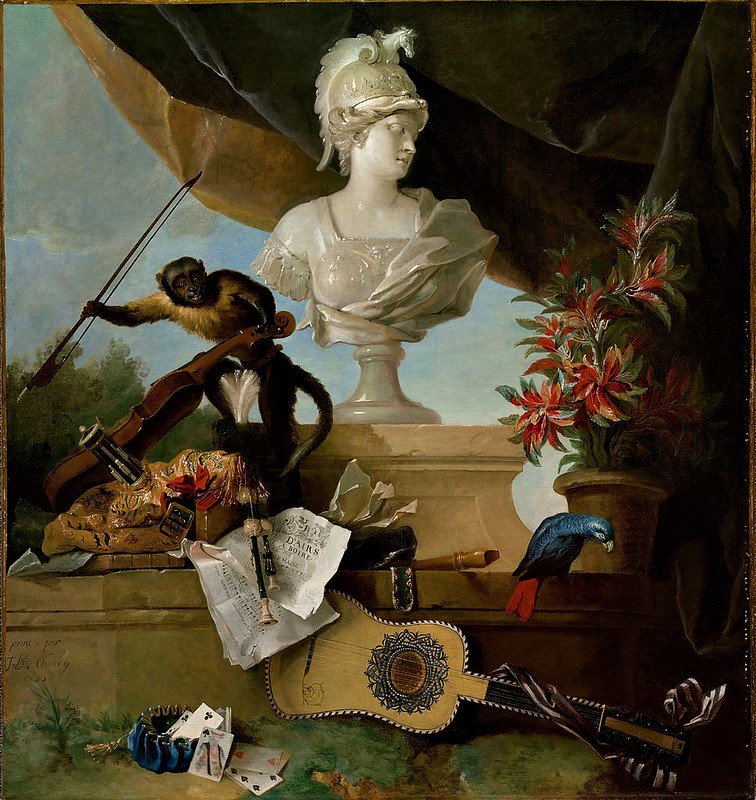
Jean-Baptiste Oudry (1686-1755) - An Allegory Of Air


Filippo Gragnani (1768-1820) - Quartetto en La maggiore, Op.8 (c.1808)
Performers: Nedyalko Petkov (clarinet); Fabian Bertoncelo (violin); Edgar Ocampo (guitar); Jonas Kubickas (guitar)

---


Italian guitarist and composer. The son of Antonio Gragnani and coming from a family of notable luthiers and musicians, he studied music in his home town with Giulio Maria Lucchesi, first studying the violin then later devoting himself to the guitar, becoming known as a virtuoso performer. Gragnani first published works for guitar and chamber music in Milan around the beginning of the 19th century with the publishers Ricordi and Monzino. During these times he travelled to Germany and eventually settled in Paris by 1810. There he befriended and became a pupil of Ferdinando Carulli, to whom he dedicated three of his guitar duets and who in turn also dedicated some duets to Gragnani. Little is known about Gragnani after 1812. The "Registro dei Morti" (Register of Deaths) of the Church of St. Martino di Salviano in Livorno indicates he died on 28 July 1820.

dilluns, 26 de juliol del 2021

ENDLER, Johann Samuel (1694-1762) - Sinfonia (in D) à 6 strumenti (1757)

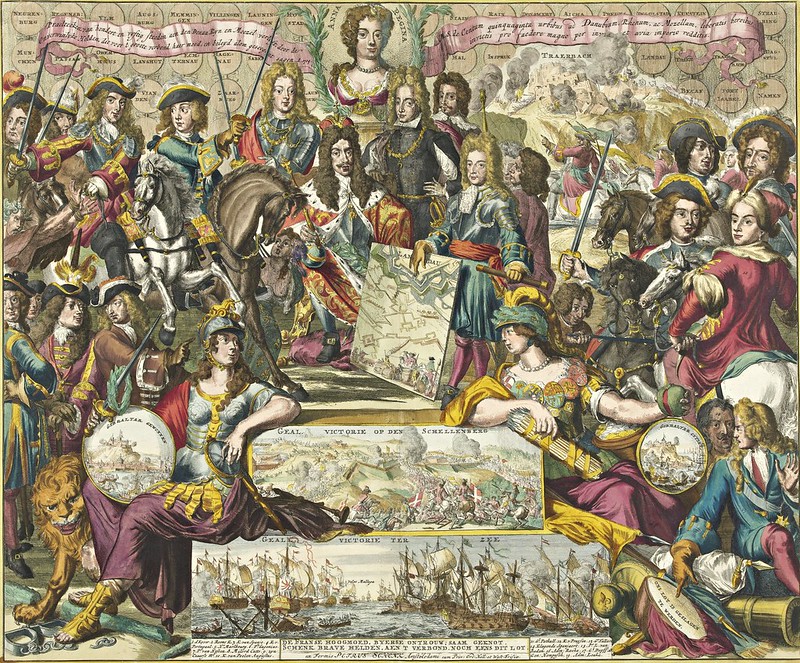
Anoniem - Allegorie op de overwinningen van de Geallieerden in 1704


Johann Samuel Endler (1694-1762) - Sinfonia (in D) à 6 strumenti (1757)
Performers: Otto Sauter (trumpet); Philharmonisches Staatsorchester Bremen; Simon Wright

---


German composer. His father was organist and schoolmaster at Olbernhau. No documents concerning Endler's schooling are known, but many circumstances, including his connections to Christoph Graupner, suggest that he attended the Thomasschule in Leipzig. He enrolled at the university there in 1716. Archival documents regarding the Neukirche show Endler, still a student, substituting there as organist and director of church music in 1720. From 1721 to 1723 he directed Fasch's collegium musicum. While Graupner was in Leipzig in connection with his application for the post of Thomaskantor, he evidently offered Endler a post at Darmstadt, and the latter was installed at the court in 1723 as an alto singer and violinist. He was promoted to Konzertmeister before 1740 and then (before 1744) to vice-Kapellmeister under Graupner. After Graupner's death in 1760 Endler succeeded to his position, which he held until his own death two years later. Three early church cantatas and one secular cantata (the political satire Der Raritätenmann, written in 1747 for the birthday celebration of Landgrave Ludwig VIII) survive; another secular cantata, Der Nachtwächter (1746), has been lost. Endler's remaining extant works are orchestral. Two-thirds of the sinfonias were written for special festivities and first performed between 1748 and 1761 at the landgrave's favourite hunting castle, Kranichstein. Often richly orchestrated, they exploit skilfully the court's especially large group of virtuoso brass and wind players. They consist of a modern Allegro movement followed by a suite of up to six further movements with dance, tempo and, occasionally, character titles. Concertante elements are apparent, except in the first movements. The overtures are similar, except that the first movement is in the form of a French overture, tonal unity is maintained throughout the cycle and a larger selection of dance movements is found. The autograph manuscripts of Endler's compositions, together with his excellent copies of other 18th-century works, are in the Hessisische Landes- und Hochschulbibliothek, Darmstadt.

diumenge, 25 de juliol del 2021

REIMANN, Ignaz (1820-1885) - Kurze Festmesse F-Dur (c.1860)

Franz Xaver Zalder (1815-) - Die Vorstadt Landstrasse in Wien am 28 Oct. 1848


Ignaz Reimann (1820-1885) - Kurze Festmesse F-Dur (c.1860)
Performers: No available

---


German composer. He received early lessons from his father, who was an innkeeper and musician in the Silesian Marian pilgrimage site Albendorf. His school teacher, also a local cantor, noticed his musical talent and trained him to play the organ. From 1838 to 1841 he attended the Catholic school seminar in Breslau. There he came into contact with the so-called Breslau School, founded by Joseph Ignaz Schnabel (1767-1831) as a composer. Joseph Ignaz Schnabel's nephew Joseph Schnabel (1809-1881), music director and cathedral music director, gave his pupil the post of music director in the seminary thanks to his outstanding musical skills and achievements. After completing the seminar, Reimann worked for two years as an assistant teacher in Niederhannsdorf near Glatz. In 1843 the Rengersdorf schoolmaster and cantor brought him to his school. After the schoolmaster death in 1852, Reimann took on the dual role of headmaster and cantor. While he had already composed smaller church music works since his time in Wroclaw, a fruitful creative period began as a Rengersdorf cantor. In 1884 Reimann suffered a stroke that partially paralyzed his right arm. He applied for his retirement, which was granted on July 1, 1885. Three days later, he suffered a second stroke that resulted in death two weeks later. As a composer, he wrote about 400 works, mainly sacred and all primarly for his own use. Easy, but pleasing works with a sense for melodic for choirs and orchestras, that are not able to perform difficult works. This made his works in his time widely spread and they were loved bis singers and directors. His son Henry Reimann (1850-1906) was also a teacher and composer.

divendres, 23 de juliol del 2021

GRANT, David (b. 1984) - Symphony in E flat major (c.2002)

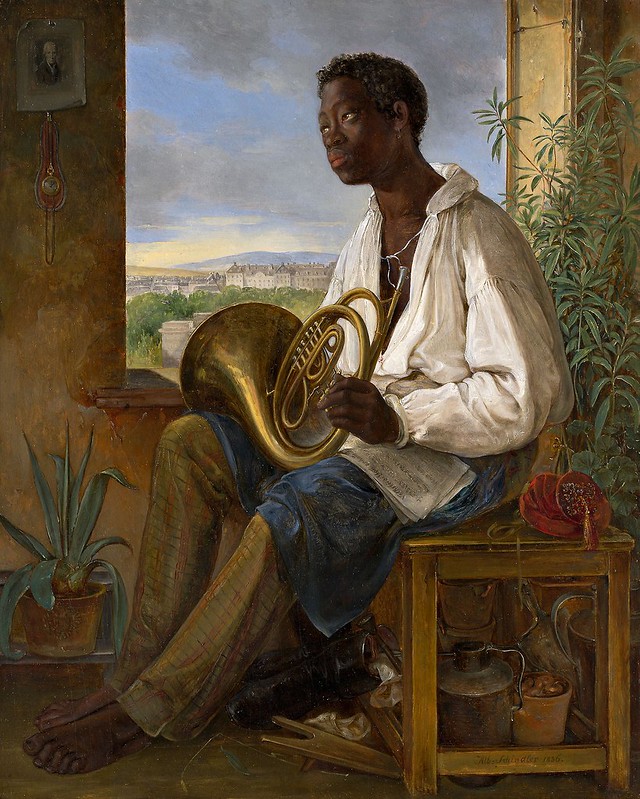
Albert Schindler (1805-1861) - Portrait of Emmanuel Rio (horn) (1836)


David Grant (b. 1984) - Symphony in E flat major (c.2002)
World Premiere Recording
Performers: Sibelius + instruments samples (edited by Pau NG)

---

David Grant (b. 1984). American composer.