divendres, 29 de setembre del 2023

AUBERT, Jacques (1689-1753) - Concerto a quatre violons (1740)

Attribué à Louis-Michel Van Loo (1707-1771) - Portrait d'un violoniste (possibly Jacques Aubert)


Jacques Aubert (1689-1753) - Concerto (en mi mineur) a quatre violons, violoncello et basse-continue... IIe livre, gravé par De Gland..., oeuvre XXVI (1740)
Performers: Les Cyclοpеs ensemble

---


French violinist and composer. He was probably a son of Jean Aubert, a member of the 24 Violons du Roi until his death in 1710. He was a student of Jean Baptiste Senaillé. In 1717 he is known to have been working in the Théâtres de la Foire, as a violinist and dancing-master, and had composed at least five ballets and comedies. In 1719, the year in which he married Marie Louise Lecat and published his first book of violin sonatas, he was appointed to the service of Louis-Henri, Duke of Bourbon and Prince of Condé. In 1727 he succeeded Noël Converset in the 24 Violons du Roi, remaining a member until 1746, and in the next year he accepted a position with the Académie Royale de Musique and was named first violinist of the Opéra orchestra, with which he performed for the next 24 years. As a composer, his output includes ballet and dance music, opéras comiques, concertos, sonatas for violin and continuo and what he called ‘concerts de simphonie’. His son, the painter Louis Aubert Aubert (1720-c.1800), was also a violinist and composer. Another son, Jean-Louis Aubert (1731-1814) was a dramatist, poet and journalist, also known as the Abbé Aubert.

dimecres, 27 de setembre del 2023

PUNTO, Giovanni (1746-1803) - Concerto [E] a Cor Principal (1777)

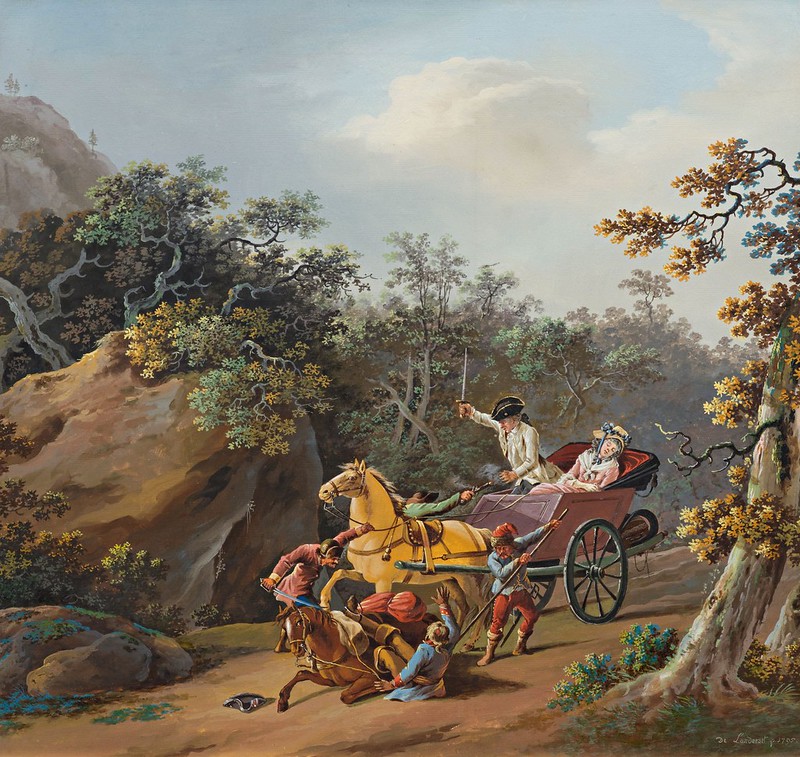
Joseph de Landerset (1753-1824) - The attack (1795)


Giovanni Punto (1746-1803) - Concerto [E] a Cor Principal (1777)
Previously attributed to Carl Stamitz (1745-1801)
Performers: Peter Arnοld (horn); Bohuslav Martinu Philharmonie; Ernst Wеdаm (conductor)

---


Bohemian horn player and composer. Born into a poor family on the estate of Count Joseph Johann von Thun, Stich was sent to Prague by his patron to study horn with Joseph Matiegka and composition with Johann Schindlarz. In 1764 he became a student of Anton Joseph Hampel in Dresden, where he perfected his technique of hand-stopping. His return to and service in the court ensemble of Count Thun, however, was marked by charges of insubordination, and he escaped to Italy pursued by the count’s thugs who were charged with either bringing him back to Bohemia or knocking out his front teeth. He made his way to Italy, where he “Italianized” his name to Giovanni Punto, winning approbation for his performance and obtaining a post as a violinist at the court of Joseph Friedrich Wilhelm von Hohenzollern- Heuchingen. In 1769 he moved to Mainz to perform for Elector-Archbishop Emmerich Joseph von Breidbach zu Bürresheim. In 1772 he began a career as a touring soloist, centering his activities in Paris and London, although he maintained a post with Archbishop Adam von Seinsheim in Würzburg and with the private orchestra of George III of England. Settling in Paris in 1788 he was appointed conductor of the Théâtre des Variétés Amusantes a year later, riding out the Revolution as a popular conductor. Refusal to appoint him to the faculty of the new Conservatoire in 1798, however, led him to return to touring in Bohemia and Austria, where his performance ability was noted by composers such as Ludwig van Beethoven. As a performer, he concentrated on second or low horn, perfecting the art of hand-stopping to produce notes outside the natural harmonic series. Charles Burney noted the “astounding execution” of his performances. As a composer, he concentrated on his own instrument, writing 16 horn concertos (plus another for two horns), 103 horn duets, 47 horn trios, 21 horn quartets, and a horn sextet; in addition he composed a clarinet concerto, three flute quartets, three flute quintets (with horn), and a large number of trios for flute and strings.

dilluns, 25 de setembre del 2023

PICHL, Václav (1741-1805) - Sinfonia in B-Dur 'Melpomene'

Bernardo Bellotto (1722-1780) - The Liechtenstein Garden Palace in Vienna, seen from the East


Václav Pichl (1741-1805) - Sinfonia in B-Dur 'Melpomene', ZakP 14
Performers: Tοrοntο Chamber Orchestra; Kevin Mаllοn (conductor)

---


Bohemian composer and violinist. His earliest education was at the Jesuit school in his hometown with the cantor Jan Pokorny, followed thereafter by study at St. Václav in Prague. In 1762 he was appointed first violin at the Týn Church, even as he studied law at Prague University. He was appointed concertmaster at the court of the Archbishop of Grosswardein (now Oradea, Romania), serving under Michael Haydn, and when that orchestra dissolved in 1769 he returned to Prague to serve as music director with Count Ludwig Hartig. At the same time he began regularly visiting Vienna, where he also performed at the court theatre there. In 1777 his reputation was such that he was appointed music director in Milan for Archduke Ferdinand, a position he retained until the French invasion in 1796. While there he became a member of the Accademia filarmonica, as well as serving occasionally in cities such as Monza and Padua. The remainder of his life was spent commuting between Prague and Vienna. As a composer, Pichl was extremely prolific, with over 900 compositions. His style was similar to colleagues in Vienna, such as Michael Haydn, Jan Křtitel Vanhal, and Wolfgang Amadeus Mozart, with clear contrasting themes, interesting harmonies, colorful orchestration, and solid formal structures. He left over 14 operas or Singspiels; 30 Masses; 100 sacred works such as Psalms, motets, and offertories; 90 symphonies; 20 serenades; 30 concertos (for most instruments, but mainly violin); 18 string quartets; 45 string trios; 12 trios for flute and strings; two trio sonatas; over 200 exercises for solo violin; 15 duets for two violins; 18 duets for violin and viola; three flute and three clarinet quartets; and over 180 chamber pieces, including works for the baryton. He must be regarded as one of the major composers of the last half of the 18th century.

diumenge, 24 de setembre del 2023

LEVENS, Charles (1689-1764) - Messe des morts

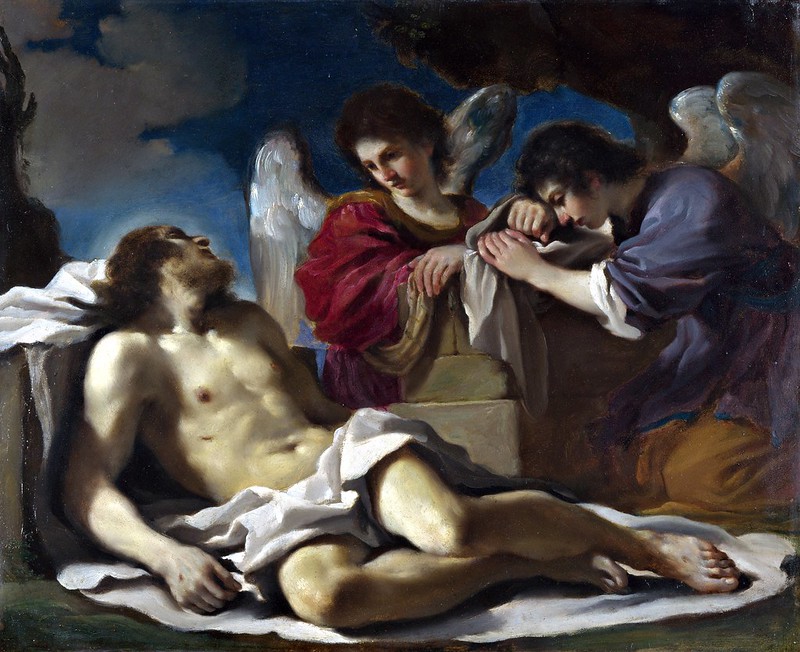
Giovanni Francesco Barbieri (1591-1666) - Angels Weeping over the Dead Christ


Charles Levens (1689-1764) - Messe des morts (en fa majeur)
Performers: Ensemble Sagittarius; Michel Laplénie (conductor)

---


French composer. He received early formation as a choirboy. He later settled in Vannes before traveling to Toulouse where he took over the post of 'maître de musique' of the Saint-Étienne Cathedral. Also there he was under the musical direction of the city music schools. In 1738 he was appointed 'maître de musique' of the Saint-André Cathedral in Bordeaux in a post he held the rest of his life. His authority as director of music was now based on a maturity as a teacher and composer, a maturity evidenced not only by the esteem in which his patrons held him but also by the influence of his notoriety as a musician and theoretician. His output was exclusively sacred and most of his 'Grands Motets' were performed in the Concert Spirituel in Paris.

divendres, 22 de setembre del 2023

FRANCOEUR, François (1698-1787) - Simphonie (Suite) in D (1773)

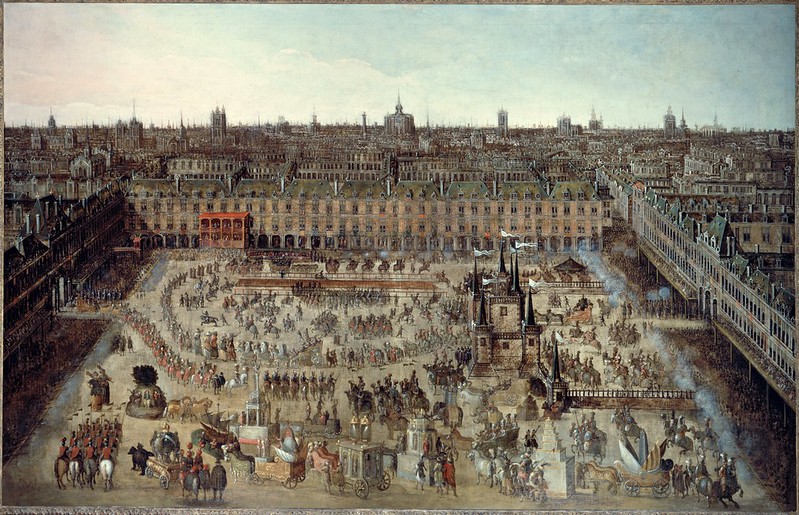
Anonyme - Le Roman des chevaliers de la gloire, grand carrousel donné du 5 au 7 avril 1612, à l'occasion du mariage


François Francoeur (1698-1787) - Simphonie (Suite) in D (1773)
Performers: La symphonie du Mаrаis; Hugo Rеynе (conductor)

---


French composer and violinist, son of Joseph Francoeur (c.1662-1741). A violin pupil of his father, he began his long association with the Paris Opéra at the age of 12 as a dessus de violon in the Grand Choeur; shortly afterwards he became a member of the Musique de la Chambre du Roi. After touring Europe as a musician, he returned to Paris as a member of the Concert Spirituel. In 1730 he was appointed to the 24 violons du roy and 'maître de musique' to the Opera in 1739. In 1744, he and François Rebel, his lifelong colleague and friend, were appointed 'inspecteurs musicaux' of the Paris Opéra becoming responsible of its management in 1757. Rebel and Francœur faced numerous challenges in their joint roles, including a large deficit, personnel problems, lack of discipline and the controversy surrounding the Querelle des Bouffons, culminating in the destruction by fire of the Opéra on 6 April 1763. King Louis XV appointed him as his Music Master in 1760, ennobling Rebel in the same year and Francœur himself in May 1764. Disaster struck when the Paris Opéra was consumed in flames on 6 April 1763, and the two directors were forced to resign in 1767 in its aftermath. However, Louis XV asked Rebel to return to the Opéra as Administrateur général in 1772, a position he held until shortly before his death three years later.