Es mostren els missatges amb l'etiqueta de comentaris Eichner E.. Mostrar tots els missatges

dilluns, 16 de febrer del 2026

EICHNER, Ernst (1740-1777) - Sinfonia in D-Dur (1772)

Robert Dighton (1752-1814) - The Travelling Musicians


Ernst Eichner (1740-1777) - Sinfonia in D-Dur des 'Trois simphonies à huit parties obligées ... œuvre VI' (1772)
Performers: KurpfäIzisches Kammerorchester; Hаns Oskаr Kοch (conductor)

---


German bassoonist, violinist and composer. The son of a musician, Johann Andreas Eichner (1694-1768), he studied under his father before becoming, on 1 September 1762, Kapellmeister at the court of Duke Christian IV in Zweibrücken. After his symphonies were published in Paris, he obtained a position as violinist with the Mannheim orchestra in 1768, winning a prestigious award in Paris in 1772 for his compositions after tours there and in London. In 1773 he accepted a position in Potsdam with the musical ensemble of Crown Prince Friedrich (later Friedrich Wilhelm). He interrupted his service there only once, to visit Arolsen and Leipzig (1775). His early death passed unnoticed by the musical public. Despite so, he was one of the most significant and progressive composers of the mid-century German symphony, though he often chose to retain the three-movement format. Eichner, no doubt consciously, sought a synthesis of the forms and idioms of his time; he fits into none of the important 18th-century ‘schools’, but was a solitary figure who, like so many of his contemporaries, aimed to give structure and substance to the new genre of the ‘concert symphony’. His music is known for its colorful and sensitive orchestration. His output includes 30 symphonies, 18 concertos (mostly for winds), 14 quartets, a quintet, two wind divertimentos, 12 trios for strings, seven sonatas, six duos, and six keyboard sonatas. He married Maria Magdelena Ritter and his daughter, Adelheid Eichner (c.1761-?), was a singer and composer with a precocious talent. 

dimecres, 7 d’agost del 2024

EICHNER, Ernst (1740-1777) - Sinfonia in D-Dur (1775)

Gottlieb Friedrich Riedel (1724-1784) - Saxon troops on the march (1779)


Ernst Eichner (1740-1777) - Sinfonia (D-Dur) à 11. Strom. ... Op.X (1775)
Performers: Kurpfälzisches Kammerorchester; Hans Oskar Koch (conductor)

---


German bassoonist, violinist and composer. The son of a musician, Johann Andreas Eichner (1694-1768), he studied under his father before becoming, on 1 September 1762, Kapellmeister at the court of Duke Christian IV in Zweibrücken. After his symphonies were published in Paris, he obtained a position as violinist with the Mannheim orchestra in 1768, winning a prestigious award in Paris in 1772 for his compositions after tours there and in London. In 1773 he accepted a position in Potsdam with the musical ensemble of Crown Prince Friedrich (later Friedrich Wilhelm). He interrupted his service there only once, to visit Arolsen and Leipzig (1775). His early death passed unnoticed by the musical public. Despite so, he was one of the most significant and progressive composers of the mid-century German symphony, though he often chose to retain the three-movement format. Eichner, no doubt consciously, sought a synthesis of the forms and idioms of his time; he fits into none of the important 18th-century ‘schools’, but was a solitary figure who, like so many of his contemporaries, aimed to give structure and substance to the new genre of the ‘concert symphony’. His music is known for its colorful and sensitive orchestration. His output includes 30 symphonies, 18 concertos (mostly for winds), 14 quartets, a quintet, two wind divertimentos, 12 trios for strings, seven sonatas, six duos, and six keyboard sonatas. He married Maria Magdelena Ritter and his daughter, Adelheid Eichner (c.1761-?), was a singer and composer with a precocious talent. 

dimecres, 15 de febrer del 2023

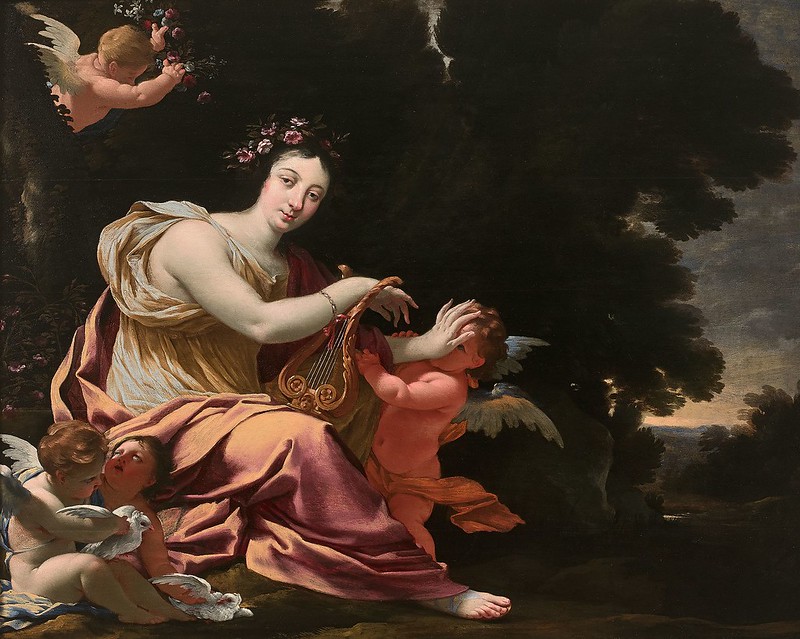
EICHNER, Ernst (1740-1777) - Concerto per l'harpa (1771)

Michel Dorigny (1617-1665) - Erato, muse de la Poésie lyrique


Ernst Eichner (1740-1777) - Concerto (C-Dur) per l'harpa (1771)
Performers: Annie Challan (harp); Antiqua Musica Chamber Orchestra; Marcel Couraud (1912-1986, conductor)

---


German bassoonist and composer, father of Adelheid Maria Eichner (1762-1787). As a son of the Waldeck court musician and bassoonist Johann Andreas Eichner (1694-1768), he must have learnt the violin and bassoon, and been introduced to the rules of counterpoint and composition (the basis of his lauded prowess later in ‘strict writing’), from musicians at the court. On 5 August 1753 he was confirmed. His marriage to Maria Magdelena Ritter (probably of the Mannheim family of musicians) undoubtedly took place before 1760, and their first daughter Adelheid was probably born between 1760 and 1762; a second daughter, Maria Catherina Elisabeth, was born on 14 August 1764 but died four days later. On 1 September 1762 Eichner entered the court orchestra of Duke Christian IV of Zweibrücken (the brother of Waldeck’s Princess Christiane), where he served primarily as a violinist and later (1769) was appointed Konzertmeister. He toured as a virtuoso bassoonist from 1767, establishing a considerable fame. In 1770 he travelled in the prince’s entourage to Paris, where his earliest symphonies – among other works – appeared in print and where he was placed second to Cannabich in the Foire Germain symphony contest in 1772. He left the Zweibrücken court on 18 November 1772 and travelled via Paris to London. There he appeared as a bassoonist in 12 of J.C. Bach’s subscription concerts (March–May 1773). In August of that year he was a bassoonist in the service of the Prussian crown prince, later Friedrich Wilhelm II, in Potsdam. He interrupted his service there only once, to visit Arolsen and Leipzig (1775). His early death passed unnoticed by the musical public. 

Although active as a composer only from 1763 to 1776, Eichner left a noteworthy corpus of symphonies, solo concertos, chamber music and vocal works. His early style is typified in the solo concertos which were written before 1769 for the court at Zweibrücken; the chamber and symphonic works, on the other hand, date from his years as Konzertmeister or from his tenure in Potsdam. The last solo concertos seem untouched by his symphonic style; they strongly follow the so-called ‘sonata-concerto’ in their rounded, cantabile melodies and noticeably more adventurous harmonies. The sequence of themes is reduced to a first and second group (not always contrasting), and certain details depart from contemporary convention in this regard. The 12 two-movement keyboard trios and 24 three-movement symphonies (nos.1–24), which were two parallel series from the Zweibrücken years, resemble one another in the treatment of forms and themes, and reveal the application of Eichner’s symphonic style to his chamber works – a novelty not universally accepted by his contemporaries. As was the custom at the time, the keyboard part is predominant in the trios, with violin accompanying and a cello part merely doubling the keyboard bass line. The remaining chamber works are all more or less isolated or occasional pieces, if not arrangements from contemporary operas. The core of Eichner’s output is his symphonies. Within the relatively brief span of seven years he composed 31 orchestral works (24 of them between 1769 and 1772) whose progress outlines a remarkable maturing of style. Eichner fits into none of the important 18th-century ‘schools’, but was a solitary figure who, like so many of his contemporaries, aimed to give structure and substance to the new genre of the ‘concert symphony’.

dimarts, 29 de maig del 2012

EICHNER, Ernst (1740-1777) - Oboe concerto

Obra de Jan van Os, pintor holandès.


Ernst Eichner (1740-1777) compositor alemany nascut a Bad Arolsen. Comencem la setmana laboral amb música germànica autènticament mannheniama. Eichner va néixer en un context artístic fill d'un pare músic de la Cort de Waldeck. Amb ell s'introduiria en els principis bàsics de la música i en l'amor per aquest art. El seu cas, com el de molts altres col·legues de professió, va ser el d'una carrera curta però intensa fruit del seu malaguanyat destí. Tot i això, va tenir temps d'entrar a formar part, com a violinista, del servei del Duc Christian IV de Zweibrücken. Des d'allà treballaria activament la seva vocació musical i seria promocionat, l'any 1768, com a mestre de concerts de la orquestra de Mannheim de la qual n'he parlat incomptables vegades. Càrrec que ocuparia fins el 1772. Àmpliament reconegut com a director, com a violinista i mestre del fagot durant el seu temps, va ser ràpidament oblidat tant pont punt va morir prematurament als 37 anys. Comprensible és que quan parlem d'Eichner ho fem inevitablement de l'escola de Mannheim per la qual serviria fidelment i professionalment al llarg de la major part de la seva vida. Òbviament, la música d'avui ens serà coneguda. Cannabich, Holzbauer, Stamitz... tots ells representen un estil que estèticament és la culminació del classicisme i del seu mètode. Música de formes clares, de melodies harmòniques i senzilles però d'un gust refinat i d'una elegància indiscutible. La música d'Eichner n'és un bon exemple. Avui dimarts dues obres característiques d'aquest autor. D'entrada, una simfonia en Do major opus 5.1 on els vents metalls són quasi protagonistes de l'allegro inicial i del presto final i amb un andante poco allegro tranquil i circumscrit a les cordes. Bona introducció pel seu brillant i esplèndid concert d'oboè en Do major, instrument que viuria la seva peculiar edat d'or amb Bach o Händel però que perdria protagonisme en favor d'un nou invitat de vent fusta, el clarinet. Tot i això, durant el classicisme podem trobar bones mostres d'artistes agraïts amb la textura sonora i l'arquitectura melòdica del nostre bell amic del dia, i la d'avui, sens dubte, és una d'elles. Honor a Mannheim i als seus músics que un dia van il·luminar una Europa bullent de cultura!

El concert d'oboè interpretat per la Northern Sinfonia amb Kurt Meier a l'oboè i Howard Griffiths a la batuta.

La simfonia interpretada pel conjunt l'Arte del Mondo sota la direcció de Werner Ehrhardt.

Gaudiu i compartiu!


Font: (on trobareu informació addicional així com dels discs on podeu trobar aquesta obra):

BIOGRAFIA: Ernst Eichner (Mannheim 1740 - Potsdam, 1777)
CPDL: No disponible
SPOTIFY: Ernst Eichner – Eichner, E.: Symphonies - Opp. 5, 6, 7, 11

LEBRUN, L.A.: Oboe Concerto No. 7 / HOLZBAUER, I.: Oboe Concerto in D Minor / WINTER, P.: Oboe Concerto No. 2

Tant si us ha agradat com si no, opineu, és lliure i fàcil!