Es mostren els missatges amb l'etiqueta de comentaris Balbastre C.. Mostrar tots els missatges

divendres, 9 de maig del 2025

BALBASTRE, Claude (1724-1799) - Sonata en quatuor (1779)

John Tinney (1706-1761) - A View of the Chapel of the Palace of Versailles


Claude Balbastre (1724-1799) - Sonata (I, Si bemol majeur) en quatuor des 'Sonates en quatuor pour le clavecin ou le forte-piano avec accompagnement de deux violons, une basse et deux cors ad libitum... Oeuvre III' (1779)
Performers: France Clidat (1932-2012, piano); Orchestre de Chambre; Jean-Louis Petit (conductor)
Further info: Sonates En Quatuor

---


French organist and composer. He received his earliest musical education from his father Bénigne Balbastre (?-1737) and under Claude Rameau, the brother of Jean-Philippe Rameau, in Dijon. Moving to Paris in 1750 he continued his studies with Pierre Février, and with the help of Rameau was introduced to the most important musical circles. He obtained a position as organist at Saint Reh, later adding additional posts at Nôtre Dame and the Chapelle Royale, where he became the tutor of Marie Antoinette in 1776. In 1759 he published his 'Premier livre pièces de clavecin' and began performing frequently as a soloist at the Concerts spirituels. Charles Burney entered a long account of the performance there in his 'Present State of Music in France and Italy': "He performed in all styles in accompanying the choir. When the Magnificat was sung, he played likewise between each verse several minuets, fugues, imitations, and every species of music, even to hunting pieces and jigs, without surprising or offending the congregation, as far as I was able to discover." Burney also visited Balbastre at home and described the instruments he saw there, "...including a large organ and a fine Rucker harpsichord which he has had painted inside and out with as much delicacy as the finest coach or snuff-box I ever saw at Paris. … On the outside is the birth of Venus; and on the inside of the cover the story of Rameau’s most famous opera, 'Castor and Pollux'; earth, hell and elysium are there represented; in elysium, sitting on a bank, with a lyre in his hand, is that celebrated composer himself [i.e. Rameau]; … The tone of this instrument is more delicate than powerful; one of the unisons is of buff, but very sweet and agreeable; the touch is very light, owing to the quilling, which in France is always weak." His playing also earned the praise of an anonymous reviewer in the Mercure de France (May 1755): "M. Balbatre played an organ concerto of his own composition, that surprised and charmed the entire assemblage; his brilliant playing made this instrument sound in an authoritative manner and made the impression that he alone has the right to lead all others. One cannot praise too highly … the singular talent of M. Balbatre." Thereafter he appeared frequently at the Concert Spirituel until 1782. As organist of the Panthémont, he taught the daughters of prominent French and foreign dignitaries, including Thomas Jefferson. With the fall of the royalty, he lived in poverty for the rest of his life. One of his last performances was his own arrangement of the Marseillaise, played on the organ of the deconsecrated Notre Dame. As a composer, his output include 14 organ concertos (of which only one survives), four noëls variés, six sonates en quatuors, and numerous variations and smaller pieces for keyboard. He also wrote church music, of which nothing survives. His style is more homophonic than some of his contemporaries.

dissabte, 8 de desembre del 2018

BALBASTRE, Claude (1724-1799) - Sonates en Quatuor (1779)

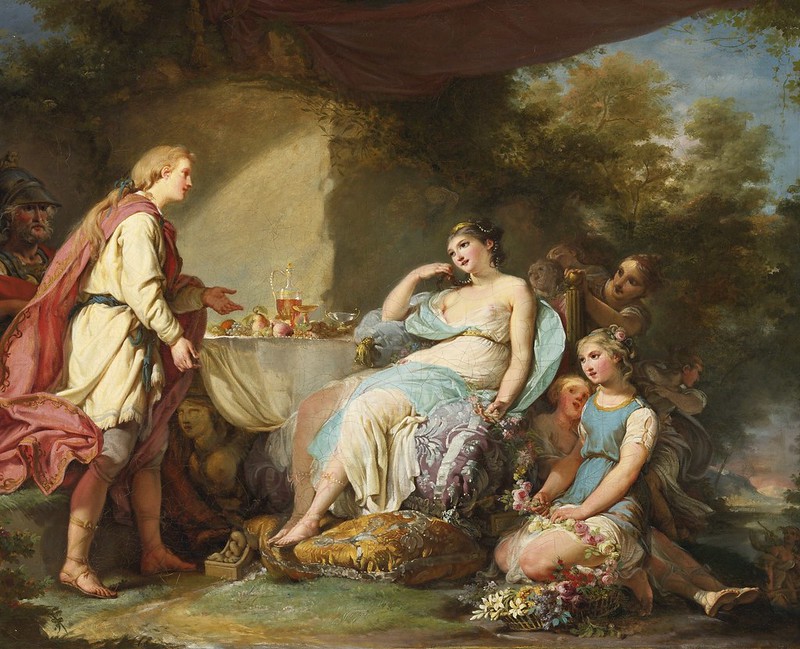
Jean-Hugues Taraval - Telemachus on the island of the goddess Calypso
Obra de Jean-Hugues Taraval (February 1729-1785), pintor francès (1)


- Recordatori de Claude Balbastre -
En el dia de la celebració del seu 294è aniversari de naixement


Parlem de Pintura...

Jean-Hugues Taraval (Paris, 27 de febrer de 1729 - Paris, 19 d'octubre de 1785) va ser un pintor francès. Fill del pintor francès Guillaume Taraval i resident a Estocolm des de ben petit, es va formar inicialment amb el seu pare. El 1750, i després de la mort del seu pare, va tornar a París on va estudiar amb Jean-Baptiste Marie Pierre i Charles-André van Loo. El 1756 va guanyar el Prix de Rome i va viatjar a Itàlia, on va ser alumne de Charles-Joseph Natoire a l'Académie française de Roma. Al seu retorn a París, el 1765 va ser admès com a membre de l'Académie royale de peinture et sculpture. Com a pintor i decorador, va treballar al Château de Bellevue, al France in Meudon (1767), l'École Militaire de Paris (1773), al Collège de France (1777), al Château de Marly (1781) i al Palau de Fontainebleau (1781). Hugues Taraval va morir a París l'octubre de 1785.


Parlem de Música...

Claude-Bénigne Balbastre [Balbâtre] (Dijon, 8 de desembre de 1724 - Paris, 9 de maig de 1799) va ser un organista i compositor francès. Fill de l'organista Bénigne Balbastre, es va formar amb el seu pare i posteriorment amb Claude Rameau. El 1742 va fundar una escola de música a Dijon, ciutat on va treballar com a organista de St-Etienne fins a l'entorn del 1748. Va ser aleshores quan es va traslladar a París on va ser alumne de Jean Philippe Rameau i on el 1756 va assolir el càrrec d'organista de Saint-Roch. El 1760 va ser nomenat organista de la Notre-Dame, catedral on va assolir notable ressò gràcies a les seves improvisacions. El 1766 va accedir a treballar al servei del futur rei Lluís XVIII en un temps en què també va treballar com a organista de la Capella Reial i com a mestre de clavecí de Marie Antoinette i del duc de Chartres. No obstant, l'esdevenir de la Revolució Francesa va perjudicar greument la seva feina perdent la totalitat dels seus càrrecs professionals. Com a compositor, va ser autor principalment d'obres d'orgue i clavecí totes elles en un estil genuïnament francés. Claude Balbastre va morir a París el maig de 1799.

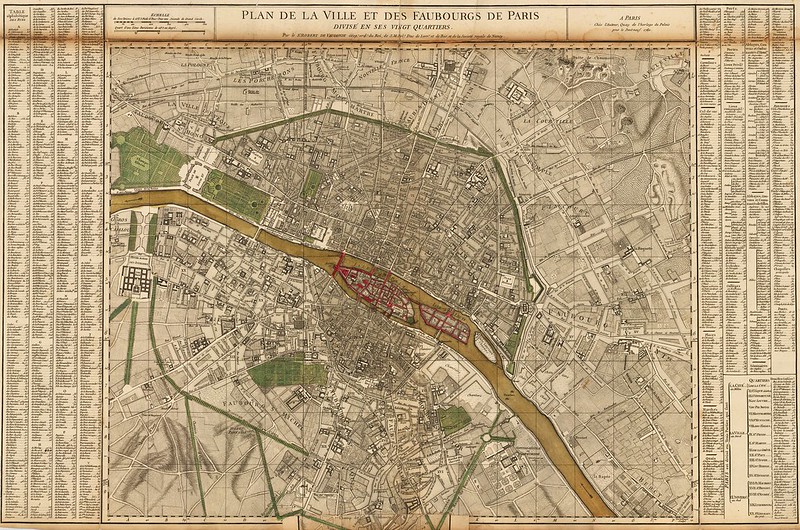
Gilles Robert de Vaugondy - Plan de la Ville et des Faubourgs De Paris Divise en ses Vingt Quartiers
Gilles Robert de Vaugondy (1688-1766) - Plan de la Ville et des Faubourgs De Paris Divise en ses Vingt Quartiers (c.1760) (2)

OBRA:

Vocal:

Mes souvenirs, 1v, acc., Etrennes lyriques anacréontiques (Paris, 1786)

Instrumental:

Chbr:
Sonates en quatuor, hpd/pf, acc. 2 vn, b, 2 hn ad lib, op.3 (Paris, 1779);
Sonates en quatuor, 1 movt, F-Pn

Kbd:
Pièces de clavecin, 1er livre (Paris, 1759);
Recueil de noëls formant 4 suittes, hpd/pf (Paris, 1770), nos.1–3 ed. in L’organiste liturgique, xlviii, lii, lv–lvi (Paris, 1968–9);
Marche des marseillais et l’air Ça ira, arr. pf (Paris, 1793);
pièces and fugues, by 1748, Pn;
pièces, unmeasured prelude, La canonade, 1777, Pn;
pièces, 1787, Pn;
La d’Esclignac, pièce, hpd, 1787, Pc;
Romance, Pa, Pn;
5 pieces, US-CHua: Marche guerrier, La canonade, Symphonie, La De Villiers, Rondo;
other pieces and arrs. of operatic airs, F-Pn;
parodies of airs in Amusements d’un convalescent dédiés à ses amis (1761) and Mercure de France (Sept 1767);
parody of pastorale, Pn;
org concs., ?lost


Informació addicional... 

INTERPRETS: Concerto Rococo
AMAZON: Balbastre - Sonates en Quatuor, Opus III
CPDL: No disponible
SPOTIFY: Balbastre - Sonates en Quatuor, Opus III


Tant si us ha agradat, com si no, opineu, és lliure i fàcil!