Es mostren els missatges amb l'etiqueta de comentaris Kirnberger J.P.. Mostrar tots els missatges

dilluns, 25 d’abril del 2022

KIRNBERGER, Johann Philipp (1721-1783) - Concerto per il Cembalo Obligato (c.1770)

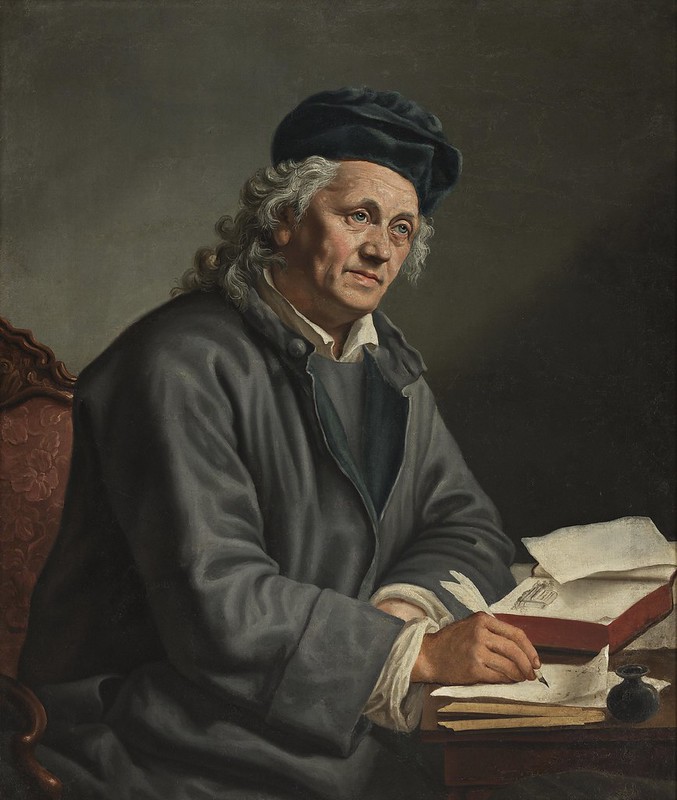
Christoph Friedrich Reinhold Lisiewski (1725-1794) - Portrait of Johann Philipp Kirnberger


Johann Philipp Kirnberger (1721-1783) - Concerto (c-moll) per il Cembalo Obligato (c.1770)
previously attributed to Johann Sebastian Bach
Performers: Luciano Sgrіzzі (1910-1994, cembalo); Orchestre Jean-François Pаllаrd

---


German theorist and composer. All information relating to his career before 1754 is based on F.W. Marpurg’s biographical sketch (1754), an autograph album described by Max Seiffert (1889) and comments found in letters Kirnberger wrote to J.N. Forkel in the late 1770s. He received his earliest training on the violin and harpsichord at home, and attended grammar school in Coburg and possibly Gotha. He studied the organ with J.P. Kellner in Gräfenroda before 1738, and then the violin with a musician named Meil and the organ with Heinrich Nikolaus Gerber in Sondershausen in 1738. According to Marpurg, Kirnberger went in 1739 to Leipzig, where he studied composition and performance with Bach for two years (the autograph book shows that he was in Sondershausen in 1740 and Leipzig in 1741, which does not preclude his period of study with Bach). In June 1741 Kirnberger travelled to Poland, where he spent the next ten years in the service of various Polish noblemen. He also held a position as music director at the Benedictine convent at Reusch-Lemberg. In 1751 Kirnberger returned to Germany apparently stopping at Coburg and Gotha before going to Dresden, where he studied the violin for a short time. He was then engaged by the Prussian royal chapel in Berlin as a violinist. By 1754 he had resigned that post and obtained permission to join the chapel of Prince Heinrich of Prussia, and in 1758 was given leave to enter the service of Princess Anna Amalia of Prussia, a position he retained to the end of his life. Kirnberger was among the most significant of a remarkable group of theorists, centred in Berlin, which included J.J. Quantz, C.P.E. Bach and Marpurg. 

Almost without exception his contemporaries described him as emotional and ill-tempered, but dedicated to the highest musical standards. Criticized for being inflexible, conservative, tactless, and even pedantic, his detractors still acknowledged his devotion to his students and friends. These included his employer Princess Anna Amalia (whose famous library he helped to assemble), and such eminent musicians as C.P.E. Bach, J.F. Agricola, the Graun brothers, J.A.P. Schulz (his most important pupil) and the encyclopedist J.G. Sulzer, to whose Allgemeine Theorie der schönen Künste (1771-74) he contributed articles. Most accounts agree that he was a middling performer and that his compositions were correct if uninspired. Many are in a galant style similar to that of C.P.E. Bach; others are in the older ‘strict’ style in the manner of J.S. Bach, but in neither category does Kirnberger display the harmonic or melodic imagination of his models. Although his musical knowledge was wide and profound, it was, according to his contemporaries, disorganized. He found it so difficult to express his ideas in writing that he had to call on others to edit or even rewrite his theoretical works (Die wahren Grundsätze (1773), for example, was written by J.A.P. Schulz under Kirnberger’s supervision). Nonetheless, even his most severe critics, such as Marpurg, considered his theoretical and didactic works to be invaluable. Kirnberger regarded J.S. Bach as the supreme composer, performer and teacher. He regretted that Bach left no didactic or theoretical works and tried through his own teaching and writing to propagate ‘Bach’s method’. His devotion to this cause is reflected in 14 years’ intermittent effort to obtain the publication of all Bach’s four-part chorale settings.

dimarts, 24 d’abril del 2018

KIRNBERGER, Johann Philipp (1721-1783) - Flotensonaten

Antoine Pesne (1683-1757) - The Masquerade Ball
Obra d'Antoine Pesne (1683-1757), pintor francès.


- Recordatori de Johann Philipp Kirnberger -
En el dia de la celebració del seu 297è aniversari de naixement


Parlem de Pintura...

Antoine Pesne (Paris, 23 de maig de 1683 - Berlin, 5 d'agost de 1757) va ser un pintor francès emmarcat en l'època rococó. Pintor de cort, va desenvolupar una carrera brillant al servei del Sacre Imperi Romà Germànic i també del Regne de Prússia. Pesne va estudiar a París i a Itàlia, en concret amb Andrea Celesti a Venècia. Va ser pintor de la cort de Frederic I i més tard de Frederic II el Gran. Va treballar com a professor destacant el seu alumne Philippe Mercier. Presne va realitzar nombrosos frescs de tema mitològic i al·legòric en els palaus de Berlín, Charlottenburg, Potsdam, Rheinsberg i al Palau de Sanssouci. És també conegut pels seus nombrosos retrats d'actrius i ballarines franceses i italianes de l'òpera de Berlín, com La Barberina. Antoine Pesne va morir a Berlín l'agost de 1757.


Parlem de Música...

Johann Philipp Kirnberger [Kernberg] (Saalfeld, bap. 24 d'abril de 1721 - Berlin, 27 de juliol de 1783) va ser un teòric i compositor alemany. Es va formar en violí i clavecí amb el seu pare abans d'entrar a una escola de Coburg. Abans del 1738 va estudiar orgue amb Johann Peter Kellner i a partir del 1738 va estudiar violí amb un tal Meil i orgue amb Heinrich Nikolaus Gerber. Segons Marpurg, el 1739 es va traslladar a Leipzig on va estudiar amb Johann Sebastian Bach durant dos anys. El 1741 es va traslladar a Polònia on hi va viure els següents deu anys al servei de diversos nobles polonesos i com a director musical del convent benedictí de Reusch-Lemberg. El 1751 va tornar a Alemanya per estudiar violí a Dresden. Des d'allà va ser reclamat a Berlin on va treballar com a violinista de la capella reial fins el 1754. Aquell any es va unir a la capella del príncep Heinrich de Prussia i el 1758 va entrar al servei de la capella de la princesa Anna Amalia de Prussia en un càrrec que va preservar la resta de la seva vida. Com a teòric la seva labor va ser molt notable sent autor de diversos tractats musicals de gran valor al seu temps. En aquest sentit, va ser reclamat com a professor amb alumnes molt destacats com C.P.E. Bach, J.F. Agricola, els germans Graun, J.A.P. Schulz i J.G. Sulzer, entre molts altres. Com a compositor, la majoria de les seves obres van datar del període 1757-1780 i van ser principalment obres de cambra i vocals de caràcter secular. Johann Philipp Kirnberger va morir a Berlin el juliol de 1783.

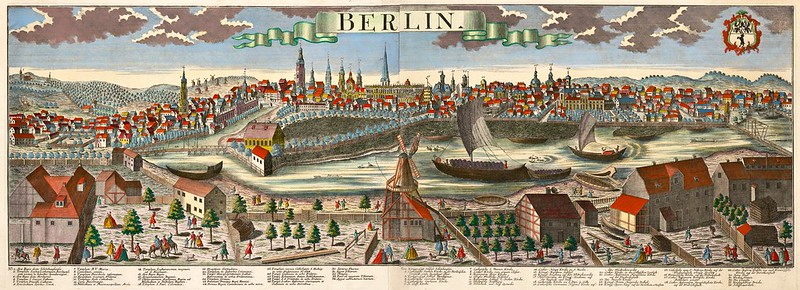
Johann Friedrich Probst - Berlin (c.1760)

OBRA:

Vocal secular:

Lieder, songs:
3 verschiedene Versuche eines einfachen Gesanges (1760);
Lieder mit Melodien (1762), 3 ed. in Borris-Zuckermann;
[24] Oden mit Melodien (Danzig, 1773), 1 ed. in Borris-Zuckermann;
Lied nach dem Frieden vom Herrn Claudius (c1779);
Gesänge am Clavier (Berlin and Leipzig, 1780), repr. with 1773 Oden as Kleine Oden und Lieder (Berlin and Leipzig, 1789), 2 ed. in E. Lindner: Geschichte des deutschen Liedes (Leipzig, 1871);
3 Gesänge in Musik gesetzt (n.p., n.d.);
Lieder in contemporary anthologies pubd Berlin, mostly repr. in Lieder (1762)

Vocal religiosa:

Cants., all D-Bsb: Ino (K.W. Ramler), S, insts;
Der Fall der ersten Menschen (Bodmer), 1780, S, insts (autograph);
Christus ist des Gesetzes Ende, 4vv, insts;
6 motets, 4vv, insts/bc, Bsb, Mbs, SWl;
Wende dich zu mir, fugue, 4vv, pubd in Die Kunst des reinen Satzes;
Masses, lost

Instrumental:

Kbd:
Clavierfuge mit dem Contrapunct in der Octava (1760);
Vermischte Musikalien (1769);
Diverses pièces, hpd (c1769–70);
8 fugues, hpd/org (c1777);
Recueil d’airs de danse caractéristiques, hpd (c1777);
chorale arrs., D-Bsb, and in Choralvorspiele, ed. J.C. Kühnau (1790);
kbd sonatas/partitas in contemporary anthologies, incl. Raccolta delle nuove composizioni, ii (1757) and Collection récréative, ii (Nuremberg, 1761);
1 partita ed. in Borris-Zuckermann;
single works in anthologies pubd Berlin (1760–63), incl. Musikalisches Allerley, Musikalisches Mancherley, also in Musikalisches Vielerley, ed. C.P.E. Bach (Hamburg, 1770)

Other inst:
2 fl sonatas (c1762);
Fl Sonata, Bsb;
12 minuets, 8 insts, bc (1762);
Sonata a tre, 2 vn, bc (1763);
Musicalischer Circul, pf, vn/fl (n.d.);
2 syms., Bsb, SWl;
2 ovs., A-Wn;
6 Triosonaten, 2 vn, bc, D-Bsb*, extracts ed. in Borris-Zuckermann;
Pf Conc., lost

Editions:
C.H. Graun: Duetti, terzetti … ed alcuni chori, i–iv (Berlin and Königsberg, 1773–4)
H.L. Hassler: Psalmen und christliche Gesänge [1607] (Leipzig, 1777)

Literatura:

Der allezeit fertige Polonoisen- und Menuettencomponist (1757)
Construction der gleichschwebenden Temperatur (1760/R)
Anmerkung über das Allabreve des Herrn Kirnberger’, in F.W. Marpurg: Clavierstücke mit einem practischen Unterricht, iii (1763)
Die Kunst des reinen Satzes in der Musik, aus sicheren Grundsätzen hergeleitet und mit deutlichen Beyspielen erläutert, i (1771/R; with new title-page, Berlin and Königsberg, 1774), ii (Berlin and Königsberg, 1776–9/R); both vols. (2/1793), Eng. trans., 1982 as The Art of Strict Musical Composition
Die wahren Grundsätze zum Gebrauch der Harmonie … als ein Zusatz zu der Kunst des reinen Satzes in der Musik (Berlin and Königsberg, 1773/R, 2/1793) [written by J.A.P. Schulz under Kirnberger’s supervision]
Grundsätze des Generalbasses als erste Linien zur Composition (1781/R)
Gedanken über die verschiedenen Lehrarten in der Komposition, als Vorbereitung zur Fugenkenntniss (1782/R, 2/1793)
Anleitung zur Singcomposition mit Oden in verschiedenen Sylbenmassen begleitet (1782)
Methode Sonaten aus’m Ermel zu schüddeln (1783)
Articles on music in J.G. Sulzer: Allgemeine Theorie der schönen Künste (1771) [A–I by Kirnberger, J–S by J.A.P. Schulz under Kirnberger’s supervision]

Publications of music for didactic purposes:
Allegro für das Clavier alleine, wie auch für die Violin mit dem Violoncell zu accompagniren … componirt und vertheidigt (1759)
Clavierübungen mit der Bachischen Applicatur in einer Folge von den leichtesten bis zu den schwersten Stücken (1762–6)
Canons in F.W. Marpurg: Abhandlung von der Fuge (1753–4/R)


Informació addicional... 

INTERPRETS: Henrik Wiese (flöte); Aniko Soltesz (cembalo); Yves Sava (violoncello)
AMAZON: KIRNBERGER - Flotensonaten
SPOTIFY: No disponible


Tant si us ha agradat, com si no, opineu, és lliure i fàcil!