Es mostren els missatges amb l'etiqueta de comentaris Rolle J.H.. Mostrar tots els missatges

divendres, 23 de desembre del 2022

ROLLE, Johann Heinrich (1716-1785) - Auf, Preiset Gott Mit Vollen Chören

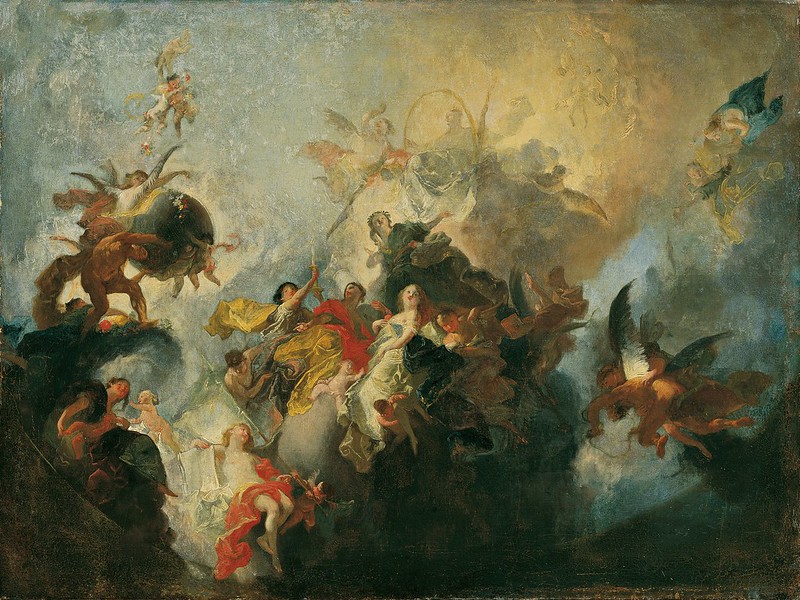
Franz Anton Maulbertsch (1724-1796) - Die göttliche Vorsehung und Tugenden (1765)


Johann Heinrich Rolle (1716-1785) - Auf, Preiset Gott Mit Vollen Chören
Performers: Mеlаnie Hirsch (Sopran); Marie Hеnriеtte Rеinhold (Alt); Michaеl Zаbаnoff (Tenor); Matthias Viеwеg (Bass); Kammerchor der Biеdеritzеr Kantorеi; Märkisch Barock; Michael Schοll (Leitung)

---


German composer. His father, Christian Friedrich Rolle (1681-1751), wrote several Passions and some chamber music and he was among Bach's competitors for the Kantorate at the Leipzig Thomaskirche. He was Kantor at Quedlinburg until 1721, then left for a similar position in Magdeburg, where he later became city music director. J.H. Rolle received his early training from his father. He served as organist in Magdeburg from 1734. He left Magdeburg in 1737, possibly for Leipzig, where he may have continued his music studies; the claims in his autobiography, that he studied law at Leipzig and entered into legal practice in Berlin, are not supported by records at Leipzig University. In 1741 Rolle, now in Berlin, was engaged as a violinist (later violist) in Frederick the Great's chapel orchestra. There he became acquainted with the Bendas, Grauns, Quantz and C.P.E. Bach. Compositions that may come from this period include an Italian secular cantata, a setting of Metastasio's Isaaco in German translation, and the birthday cantata L'apoteoso di Romulo; Rolle's later works reveal the importance of his contact with the musicians of the Prussian court and with the operas of Hasse and C.H. Graun. At the same time, Rolle maintained strong connections with Magdeburg. In 1747 Rolle obtained his dismissal from Frederick's orchestra and returned to Magdeburg to become organist at the Johanniskirche. On his father's death in 1751 he was unanimously appointed to succeed him as city music director, a position he held until his death. Rolle's main duty in Magdeburg was to provide service music for the city's six parish churches; a large number of his cantatas and motets survive in manuscript and printed editions. He was also required to perform a Passion each year, and to present a new composition every four or five years. Eight Passion settings are mentioned in his autobiography, one based on each of the four Gospel narratives and four on newly written librettos. These works established Rolle's reputation as a composer of sacred music. 

From 1764 on, Rolle participated in a local gathering of intellectuals known most often as the Mittwochsgesellschaft, started around 1760. Out of the meetings of this group arose the idea of presenting a series of public concerts under Rolle's direction. The concerts began in 1764 (after the Seven Years War) and continued until some time after Rolle's death. Rolle presented his most important compositions, nearly 20 dramatic concert works or ‘musikalische Dramen’, at these ‘öffentliche Concerte’. Though they have most often been called oratorios, Rolle's music dramas are a hybrid genre possessing characteristics of both opera and oratorio. Their subjects are primarily, but not exclusively, biblical. Some texts show the oratorio's usual bipartite division, but others consist of one or three parts, depending on dramatic considerations; the divisions are called parts (Theile) by some librettists and acts (Handlungen) by others. Like German oratorios, Rolle's music dramas place great weight on the chorus, and they also provide the chorus with a dramatic role. Most curious (and revealing) are the stage directions in Rolle's scores and in the published editions of the librettos, indicating scenery, costuming and gestures. While there is no evidence that these works were ever staged, nothing is left to the imagination of anyone wishing to do so. Rolle was virtually alone at this time in writing biblical-historical works. His musical style, often reminiscent of Graun, includes simple melodies full of repeated diatonic patterns, square phrases, an abundance of parallel 3rds and 6ths, melodic sighs and cadential appoggiaturas. When the text becomes more violently emotional, however, the music employs disjunct melodic lines, chromaticism, sudden tonal shifts and unusual harmonies reminiscent of C.P.E. Bach. Rolle's cousin Christian Carl Rolle (1725-1788), was Kantor at the Berlin Jerusalemer Kirche; he wrote a theoretical-didactic treatise, Neue Wahrnehmung zur Aufnahme … der Musik (Berlin, 1784), including complaints about the fallen state of church music and biographies of Graun and J.F. Agricola.

divendres, 23 de desembre del 2016

ROLLE, Johann Heinrich (1716-1785) - Motets

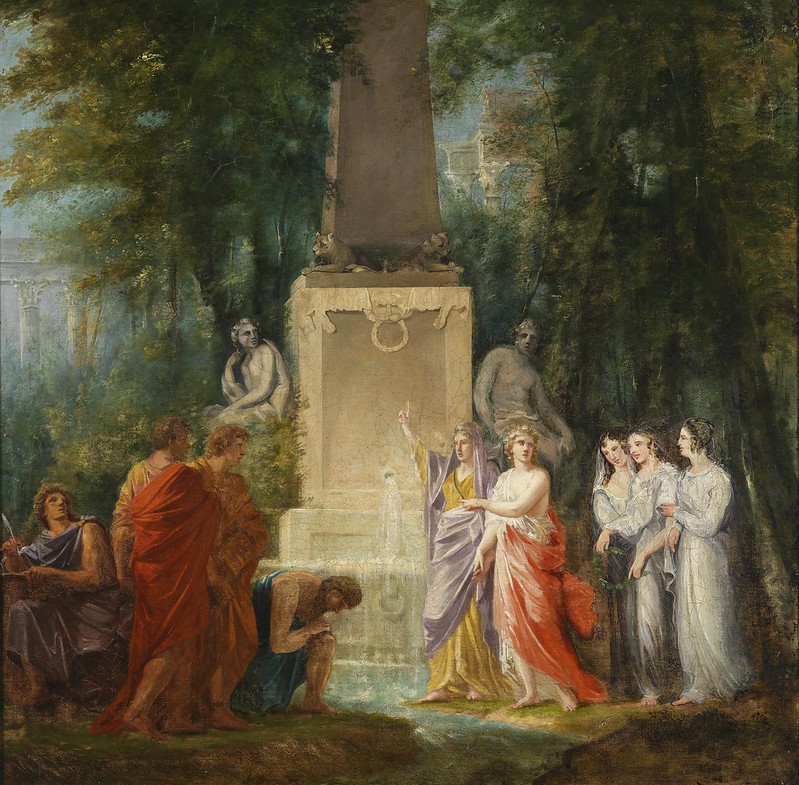
Heinrich Friedrich Füger - Dichter trinken am Kastalischen Quell (c.1790)
Obra d'Heinrich Friedrich Füger (1751-1818), pintor alemany (1)


- Recordatori de Johann Heinrich Rolle -
En el dia de la celebració del seu 300è aniversari de naixement


Parlem de Pintura...

Heinrich Friedrich Füger (Heilbronn, 8 de desembre de 1751 - Wien, 5 de novembre de 1818) va ser un pintor alemany. Es va formar amb Nicolas Guibal a l'Academia de Belles Arts de Stuttgart i amb Adam Friedrich Oeser a Leipzig. Poc després va viatjar a Itàlia on va estudiar els clàssics i on va pintar alguns dels frescs del Palazzo Caserta. Més tard va viatjar a Viena on va assolir la condició de pintor de la cort, professor i subdirector de l'Academia de Belles Arts de la ciutat. El 1806 va accedir al càrrec de director de la Galería Belvedere. Com a pintor el seu estil va ser neoclàssic i proper al dels pintors Jacques-Louis David i Anton Raphael Mengs i la seva temàtica va ser principalment històrica i religiosa si bé també va realitzar nombrosos retrats. Com a professor va tenir diversos alumnes sent els més destacats Gustav Philipp Zwinger i Franciszek Ksawery Lampi. Friedrich Füger va morir a Viena el novembre de 1818.

Font: En català: No disponible - En castellano: Heinrich Friedrich Füger (1751-1818) - In english: Heinrich Friedrich Füger (1751-1818) - Altres: Heinrich Friedrich Füger (1751-1818)


Parlem de Música...

Johann Heinrich Rolle (Quedlinburg, 23 de desembre de 1716 - Magdeburg, 29 de desembre de 1785) va ser un compositor alemany. Fill de l'organista i compositor Christian Friedrich Rolle, es va formar inicialment amb el seu pare abans d'assolir el seu primer càrrec d'organista a Magdeburg. Des d'allà va partir, el 1737, cap a Leipzig on va continuar la seva formació musical i on també va entrar a la Universitat de Leipzig per estudiar Dret. Poc després va entrar a treballar a l'orquestra de Frederic el Gran fins el 1747, any que va tornar a Magdeburg per treballar com a organista de la Johanniskirche. Allà va assumir, després de la mort del seu pare el 1751, el càrrec de director musical de la ciutat, en un lloc que ja va mantenir la resta de la seva vida. Des d'aquesta posició es va encarregar de servir musicalment les diferents esglésies de la ciutat així com d'organitzar-ne la seva activitat musical. També en el sí d'aquest càrrec va compondre la major part del seu repertori format principalment per música religiosa assolint una notable reputació en aquest sentit. Heinrich Rolle va morir a Magdeburg el desembre de 1785.

OBRA:

Vocal secular:

Stage:
Der Sturm, oder Die bezauberte Insel (occasional piece, 1, Patzke, after W. Shakespeare), Berlin, 1782;
Melida (Spl, C.J. Sucro), 1784 (Leipzig, 1785), score CH-Bu

Secular cants.:
Der Nachtwächter, B-Bc, D-Bsb;
Quando un cor vive lontano, B-Bc;
Holder Mai sei uns gegrüsst, D-BDk

Lieder, incl.:
Sechzig auserlesene Gesänge über die Werke Gottes in der Natur (Halle, 1775);
Sammlung geistliche Lieder für Liebhaber eines ungekünstelten Gesang (Leipzig, 1775);
Lieder nach dem Anakreon (Berlin, 1775);
6 Lieder, addns to pubd kbd reduction of Hermanns Tod (Leipzig, 1783)

Vocal religiosa:

Dramatic:
L'aposteoso di Romolo (cant.), for birthday of Friedrich II, Berlin, ?1741–6;
Die Opferung Isaacs (orat, P. Metastasio), Berlin, ?1741–6, D-Bsb;
Jakobs Ankunft in Aegypten (orat, G.S. Rötger), Berlin, ?1741–6, Bsb*;
Die Befreyung Israels (orat, F.W. Zachariä), 1764, rev. (1784);
Szenen aus Klopstocks Messias (F.G. Klopstock), 1764;
Die Götter und Musen (cant., S. Patzke), for birthday of Frederick the Great, 1765;
David und Jonathan (musikalisches Eligie, Klopstock), 1766 (1773);
Idamant, oder Das Gelübde (music drama, Patzke), 1766, Bsb* (1782);
Davids Sieg im Eichthale (music drama, Patzke), 1766 (Halle, 1776);
Die Schäfer (cant., J.A. Eberhard), for birthday of Frederick the Great, 1766;
Orest und Pylades, oder Die Stärke der Freundschaft (music drama, Patzke), 1768;
Die Geburt Jesu (Christmas orat, Patzke), 1769, A-Wn;
Der Tod Abels (music drama, Patzke, after S. Gessner), 1769, A-Wn* (1771)
Saul, oder Die Gewalt der Musik (music drama, Patzke, after J.J. Eschenburg's trans. of J. Brown), 1770, D-Bsb* (1776);
Die Taten des Herkules (cant., Patzke), for birthday of Frederick the Great, 1770;
Hermanns Tod (Patzke, after Klopstock), 1771 (1783);
Abraham auf Moria (music drama, A.H. Niemeyer), 1776 (1777);
Lazarus, oder Die Feier der Auferstehung (music drama, Niemeyer), 1777 (1779);
Thirza und ihre Söhne (music drama, Niemeyer), 1779 (1781);
Mehala, die Tochter Jephta (music drama, Niemeyer), 1781 (1784);
Simson (music drama, Patzke), 1782 (1785);
Gedor, oder Das Erwachen zum bessern Leben (music drama, C.F.W. Herrosee), 1785, ed. Zachariä (1787);
Ach, dass du den Himmel zerreisest (Christmas orat), A-Wn, D-Bsb, HAmk

Passions:
St Luke Passion, c1744, lost, cited in Magdeburgische privilegierte Zeitung (1744, 1761);
St Matthew Passion, 1748, D-MAs*, ABGa, BDk, F-Pn;
Die durch das schmerzliche Leiden und blutige Sterben unseres Weltversöhners und Seligmachers Jesu Christi entandene Hülfe aus Zion, 1752/3, lost, cited in Magdeburgische privilegierte Zeitung (1756);
St John Passion (E.C. Reichard), 1757, music lost, cited in Magdeburgische privilegierte Zeitung (1757);
Weinet heil'ge Thränen (C.A. Albrecht), 1762, B-Bc, CH-Zz, D-Bsb, BDk, DK-Kk, F-Pn, GB-Lcm;
O meine Seele ermuntre dich (Patzke, sometimes attrib. Klopstock), B-Bc, CH-Bu, W, Zz, D-Bsb, BDk, US-WS;
Der du voll Blutt und Wunden (Patzke), 1776, CH-Bu, D-Bsb, EC, HAu, F-Pn;
Die Feyer des Todes Jesu (Niemeyer, 1783), music lost

Other:
Mass (Ky, Gl), chorus, orch, D-BAR, HR, GB-Lcm
65 motets, A-Wn, CH-Zz, D-Bsb, EC, HER, LEm, Mbs, DK-Ch, Kk, F-Pn, GB-Lbl, PL-Wn, WRk, US-WS; 20 ed. in G. Rebling, Gesammelte Motteten (Magdeburg, c1870); 23 ed. in J. Sanders, Heilige Cäcilia (Berlin, 1818–19)
60 cants., B-Bc, D-BDk, Bsb, CR, EC, HAmk, HER, Mbs, RAd, STBp, DK-Ou, F-Pn, US-Cn, see C. Ledebur, Tonkünstler-Lexicon Berlin's (Berlin, 1861/R); 1 other, lost, cited in A. Schering, Geschichte des Oratoriums (Leipzig, 1911/R)

Instrumental:

Syms.:
D, 10 insts, D-Bsb, ?Swl;
D, 5 insts, Bsb;
B , 4 insts, Bsb; 1 pubd in Raccolta delle megliore sinfonia (Leipzig, 1761–2), iv; 6:
B , 4 insts;
F, G, A, 6 insts;
D, D, 8 insts; all lost, cited in Breitkopf catalogue, 1762
Ov., D, D-DS
Partita, B , 8 insts, lost, cited in Breitkopf catalogue, 1772

Kbd concs.:
B, g, g, Bsb; F, Bsb*;
D, g, d, F, C, a, F: all cited in Breitkopf catalogues, 1763, 1767, 1769, 1778;
3 pubd as Trois concerts, op.1 (Berlin, c1782)

Trios, all Bsb:
4 for kbd, vn, b;
1 for kbd/vn, fl, b;
5 for kbd, vn
Fl sonata, D, Bsb;
Vn sonata, F, ?D-SWl;
vn sonatas, F, f , C, G, c, G: ? all lost, cited in Breitkopf catalogue, 1763

Kbd sonatas:
E , Bsb*, pubd in F.W. Birnstiel, Musikalisches Allerley, vii (Berlin, 1762), ed. in L. Köhler, Maîtres du clavecin (Brunswick, 1860–73), and in E. Pauer, Alte Meister (Leipzig, 1868–85);
G, Bsb, pubd in F.W. Birnstiel, Musikalisches Allerley, viii (Berlin, 1763);
f, pubd in kbd reduction of Idamant (Leipzig, 1782);
e, Bsb*, pubd in L'arte antica e moderna (Milan, n.d.), iii

Kbd solos, e , d, G, B , Bsb, C, Bsb*;
Minuet, A (1766);
kbd suite, G (1763);
7 kbd suites, G, B , A, E , C, F, G, lost, cited in Breitkopf catalogue, 1763
Org fugue, E , in G.F. Körner, Der Orgel-Virtuose, no.193 (Erfurt, 1845)

Font: En català: Johann Heinrich Rolle (1716-1785) - En castellano: Johann Heinrich Rolle (1716-1785) - In english: Johann Heinrich Rolle (1716-1785) - Altres: Johann Heinrich Rolle (1716-1785)


Parlem en veu pròpia o en veu d'altri...

Rolle was virtually alone at this time in writing biblical-historical works. Composed from 1766 to 1785, they become progressively more dramatic, paralleling trends in German letters (but not those in sacred music). Most German oratorio composers continued setting the popular texts of K.M. Ramler (e.g. Tod Jesu), in which plot and characterization are peripheral to a core of meditative verse. Rolle composed two concert works in this reflective style, both on texts by his friend Klopstock (including scenes from Messias, 1764). For the vast majority of the music dramas, however, Rolle used the dramatic texts of two members of the Mittwochsgesellschaft: Johann Samuel Patzke, pastor of the Heilige Geist-Kirche and later of the Johanniskirche in Magdeburg, and August Herrmann Niemeyer, an educator and later chancellor in Halle. Patzke's librettos show a wide range of literary influences, including Classical literature, English moral journals and Shakespeare's plays, which became known in Germany during the 1760s and 70s. Niemeyer intentionally sought to create works that were religious yet resembled opera more than oratorio. In prefaces to the published editions of his librettos, Niemeyer described his ideas on sacred opera and offered his texts as examples. Both writers often chose sacrificial themes and expressed them with vivid, sometimes grotesque images and strongly emotional language that have their roots in 17th-century Protestant Pietism and reflect its continuing influence in North Germany. Such language was designed to elicit strongly emotional yet religious responses from the main characters and similar religious feeling within the listener. Following closely the dramatic intentions of his librettists, Rolle's settings became increasingly operatic. All his mature scores are continuous; traditional aria-recitative patterns, though unnumbered, are clearly perceptible, but at important moments the music is allowed to respond to a situation with a fluid mixture of arioso and obbligato recitative. In such passages one sees a clear parallel to Benda's melodramas. 

Rolle's music dramas are virtually concert operas, a lone Protestant equivalent to Jesuit school plays.With his setting of Patzke's Tod Abels (1769), Rolle's reputation spread quickly throughout Germany and beyond. Each new work brought increased fame, and generated feverish local interest. He arranged 12 of his oratorios in keyboard reductions for publication, by Breitkopf and Schwickert in Leipzig, whose printed lists of subscribers reveal a large, broadly based audience.Rolle wrote what many critics have considered his best, most dramatic music dramas when in his 60s, especially Abraham auf Moria, Lazarus (the same text Schubert set in part) and Thirza und ihre Söhne. Here tonal and dramatic units are organized on a larger scale; Schering noted that in Thirza the drama unfolds ‘as one great scene’. According to Köpken, Rolle studied his texts intently, then mapped out the key areas of an entire work before beginning composition. His musical style, often reminiscent of Graun, includes simple melodies full of repeated diatonic patterns, square phrases, an abundance of parallel 3rds and 6ths, melodic sighs and cadential appoggiaturas. When the text becomes more violently emotional, however, the music employs disjunct melodic lines, chromaticism, sudden tonal shifts and unusual harmonies reminiscent of C.P.E. Bach. Stirring and startling in one place, then soft and touching in another, Rolle called on every musical means known to him to express the meaning of the text.Rolle's cousin Christian Carl Rolle (b Cöthen, bap. 6 July 1725; d Berlin, 8 March 1788), was Kantor at the Berlin Jerusalemer Kirche; he wrote a theoretical-didactic treatise, Neue Wahrnehmung zur Aufnahme … der Musik (Berlin, 1784), including complaints about the fallen state of church music and biographies of Graun and J.F. Agricola.
GROVE MUSIC ONLINE

Gaudiu i compartiu! 


Informació addicional...