Es mostren els missatges amb l'etiqueta de comentaris Abel C.F.. Mostrar tots els missatges

dilluns, 22 de desembre del 2025

ABEL, Carl Friedrich (1723-1787) - Symphony in D major (1759)

George Stubbs (1724-1806) - The Prince of Wales's Phaeton (1793)


Carl Friedrich Abel (1723-1787) - Symphony in D major from 'VI Symhonies à 4 parties deux violons, alt-viole & basse continue con les haubois et cornes de chasse ... œuvre première' (1759)
Performers: Il Fondamеnto; Paul Dombrеcht (conductor)

---


German composer, impresario, and viola da gamba player. The son of the gambist at the court of Anhalt- Cöthen, Christian Ferdinand Abel (c.1683-1737), grandson of Clamor Heinrich Abel (1634-1696) and brother of Leopold August Abel (1718-1794), he received his early training from his father. Upon the recommendation of Johann Sebastian Bach, he obtained his first post in the Saxon Kapelle in 1748, but a decade later he immigrated to England to become the chamber composer for Queen Charlotte. On 29 February 1764 he performed his first joint concert with Johann Christian Bach at the Carlisle House on Soho Square. Its success began a collaborative series of 10 to 15 annual subscriptions concerts there and later at Hannover Square known as the Bach-Abel Concerts. Although competition began to weaken their appeal beginning with a series of concerts at the Pantheon in 1774, it was the death of his partner, Bach, in 1782 that caused these popular events to cease. At this time, Abel toured Paris and Germany, briefly staying in Potsdam at the court of Crown Prince Friedrich Wilhelm of Prussia, ultimately returning to London in 1785. He remained active as a performer on an instrument long out of fashion up until his death. He had a reputation as a generous and likeable person, who offered aid in establishing younger musicians. He also had a penchant for living well. As a soloist, he was particularly praised for his sensitive and lyrical playing, particularly in the slow movements. Charles Burney noted that “the most pleasing, yet learned modulations, the richest harmony and the model elegant and polished melody were all expressed with feeling, taste, and science.” He is also known to have played the keyboard and French horn. His 233 works were almost entirely concentrated on instrumental genres; only a couple of arias and a song exist of his vocal compositions. These include 44 sonatas for viola da gamba and keyboard, 42 symphonies, 39 trio sonatas (two violins, two flutes, and violin/cello with keyboard), 28 miscellaneous pieces for viola da gamba, 24 violin sonatas, 12 piano trios, 12 string quartets, 10 flute quartets, seven flute sonatas, six keyboard concertos, three sinfonia concertantes (including one for two clarinets), two flute concertos, two cello concertos, and a number of miscellaneous keyboard works.

dilluns, 23 de desembre del 2024

ABEL, Carl Friedrich (1723-1787) - Sinfonia a 5 (1767)

Balthasar Denner (1685-1749) - Family portrait formerly regarded as the Bach Family or Abel Family (c.1730)


Carl Friedrich Abel (1723-1787) - Sinfonia (D-Dur) a 5 des 'Six Simphonies a Deux Violons,
Taille & Basse. Deux Hautbois & deux Corns de Chasse ... Oeuvre VII' (1767)
Performers: Neue Düssеldorfеr Hofmusik; Mary Utіgеr (conductor)

---


German composer, impresario, and viola da gamba player. The son of the gambist at the court of Anhalt-Cöthen, Christian Ferdinand Abel (c.1683-1737), grandson of Clamor Heinrich Abel (1634-1696) and brother of Leopold August Abel (1718-1794), he received his early training from his father. Upon the recommendation of Johann Sebastian Bach, he obtained his first post in the Saxon Kapelle in 1748, but a decade later he immigrated to England to become the chamber composer for Queen Charlotte. On 29 February 1764 he performed his first joint concert with Johann Christian Bach at the Carlisle House on Soho Square. Its success began a collaborative series of 10 to 15 annual subscriptions concerts there and later at Hannover Square known as the Bach-Abel Concerts. Although competition began to weaken their appeal beginning with a series of concerts at the Pantheon in 1774, it was the death of his partner, Bach, in 1782 that caused these popular events to cease. At this time, Abel toured Paris and Germany, briefly staying in Potsdam at the court of Crown Prince Friedrich Wilhelm of Prussia, ultimately returning to London in 1785. He remained active as a performer on an instrument long out of fashion up until his death. He had a reputation as a generous and likeable person, who offered aid in establishing younger musicians. He also had a penchant for living well. As a soloist, he was particularly praised for his sensitive and lyrical playing, particularly in the slow movements. Charles Burney noted that “the most pleasing, yet learned modulations, the richest harmony and the model elegant and polished melody were all expressed with feeling, taste, and science.” He is also known to have played the keyboard and French horn. His 233 works were almost entirely concentrated on instrumental genres; only a couple of arias and a song exist of his vocal compositions. These include 44 sonatas for viola da gamba and keyboard, 42 symphonies, 39 trio sonatas (two violins, two flutes, and violin/cello with keyboard), 28 miscellaneous pieces for viola da gamba, 24 violin sonatas, 12 piano trios, 12 string quartets, 10 flute quartets, seven flute sonatas, six keyboard concertos, three sinfonia concertantes (including one for two clarinets), two flute concertos, two cello concertos, and a number of miscellaneous keyboard works.

dimecres, 5 d’octubre del 2011

ABEL, Carl Friedrich (1723-1787) - Sinfonia concertante in B-dur

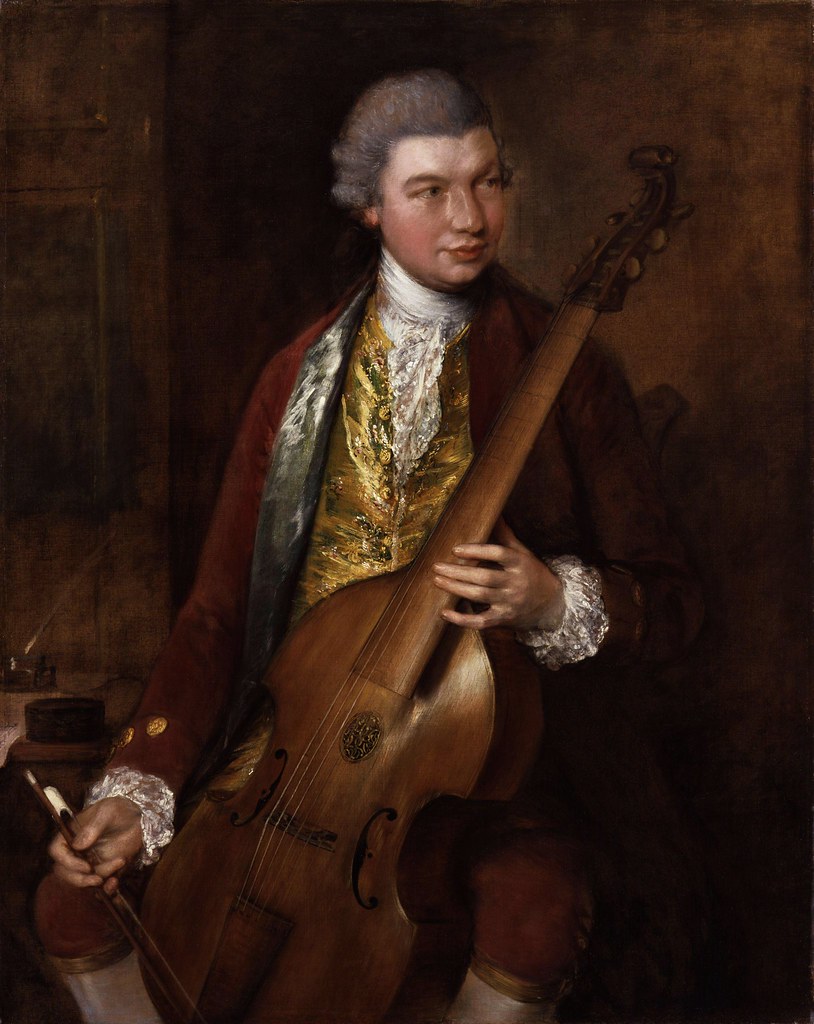
Thomas Gainsborough - Karl Friedrich Abel (c.1765)
Retrat de C.F. Abel, obra del pintor anglès Thomas Gainsborough 


Carl Friedrich Abel (1723-1787) viola gambista i compositor alemany nascut a Köthen. Tot i haver nascut a Alemanya, la major part de la seva carrera compositiva la va viure i desenvolupar a Anglaterra. Virtuós de la Viola de Gamba, un instrument que seria desconegut per a nosaltres si no fos per la immensa labor de Jordi Savall i el seu equip. Per aquest instrument va escriure la majoria de les seves obres, prop d'un centenar, tot i que també va escriure simfonies, sonates per a clavicèmbal, obertures... La seva vida a terres angleses el va fer coincidir en l'espai i el temps amb un altre gran compositor alemany que, curiosament com ell, va viure la major part de la seva vida a Anglaterra, Johann Christian Bach. Es van fer amics i van fundar els famosos concerts Bach-Abel. Curiosament, una de les obres més conegudes de C.F. Abel ho és degut a què, durant molt de temps, se'n va atribuir la seva autoria al gran geni de Salzburg, W.A. Mozart. Parlem de la simfonia n.3 en mi bemoll K.18, que Mozart va copiar d'Abel, probablement per estudiar-la. Doncs bé, revisant la immensa discoteca clàssica al meu abast he trobat un tresor d'aquest compositor alemany perdut en terres angleses i que crec que farà les delícies dels amants del "Galant music" com dirien en terres angloparlants. Es tracta d'una simfonia concertant, un gènere recurrent per la seva bellesa i per l'ús de dos o més instruments solistes. En aquest cas, els instruments solistes són l'oboè, el clarinet i el violí.

La simfonia es divideix en tres moviments:

1. Allegro ma non troppo - 7:11
2. Adagio - 5:32
3. Allegro - 4:59

Ens la interpreta la Academy of Sant Martin in the Fields sota la batuta de Iona Brown i té una durada total de 17:43 minuts.

Gaudiu i compartiu!


Font: (on trobareu informació addicional així com dels discs on podeu trobar aquesta obra):

BIOGRAFIA: Karl Friedrich Abel (Köthen, 22 de desembre de 1723 - Londres, 20 de juny de 1787)
CPDL: No disponible
SPOTIFY: No disponible


Tant si us ha agradat com si no, opineu, és lliure i fàcil!