Es mostren els missatges amb l'etiqueta de comentaris Bach J.C.F.. Mostrar tots els missatges

dilluns, 22 de juny del 2026

BACH, Johann Christoph Friedrich (1732-1795) - Sinfonia a 10 (c.1794)

Unknown - Leipzig (1815)


Johann Christoph Friedrich Bach (1732-1795) - Sinfonia (B-Dur) | a | X par: obl: | Due Violini |
Viola, et Basso | Due Corni | Due Clarinetti | Flauto | et Fagotto (c.1794)
Performers: RIAS Bach Orchestra; Günther Arndt (1907-1976, conductor)

---


German composer. Son of Johann Sebastian Bach (1685-1750) and Anna Magdalena Bach (1701-1760), he was known as the ‘Bückeburg Bach’. He received his musical education from his father and his cousin Johann Elias Bach (1705-1755) at the Thomasschule. After leaving the Thomasschule, he is thought to have studied law briefly, but there is no record of his matriculation at Leipzig University. In 1750, upon the death of his father, he was offered a position as harpsichordist with Count Wilhelm von Schaumberg-Lippe in Bückeburg. In 1759 he was elevated to concertmaster, a position he retained for the remainder of his life. He did not travel, save for a visit to his youngest brother, Johann Christian Bach (1735-1782), in London in 1778, preferring the calm surroundings of his small town. He was able to create music that was different from his brothers, thanks both to the intellectual stimulus of people such as Johann Gottfried Herder and his patron’s penchant for Italian music. His son, Wilhelm Friedrich Ernst Bach (1759-1845), was trained in this environment, becoming the third direct generation of the family of Johann Sebastian to pursue a career in music. The arrival in Bückeburg about 1793 of the Bohemian musician Franz Neubauer presented Bach with unaccustomed competition in the last years of his life. It inspired him to write new works (including a dozen large-scale symphonies and several double concertos) but it also intensified the latent depression from which he had been suffering since the death of his half-brother Carl Philipp Emanuel Bach (1714-1788) and which may have hastened the course of the chest ailment that brought about his death on 26 January 1795. In his obituary his friend Karl Gottlieb Horstig, superintendent at Bückeburg from 1793, described him as an industrious composer, always ready to be of service, and praised his upright character and ‘kindness of heart’. As a composer, his music, cataloged by Hansdieter Wolfarth (and using BR numbers), includes eight oratorios, a Miserere, nine sacred cantatas, 55 secular cantatas, odes, or other similar works, 79 Lieder, 28 symphonies, 16 piano concertos, three sinfonia concertantes (titled “concerto grosso” by Bach himself), a septet, six flute quartets and six string quartets, 13 trio sonatas, six piano trios, 22 sonatas (for flute, violin, or cello), 43 keyboard sonatas, and around 92 miscellaneous pieces for the keyboard. He was known for his ability to imbue drama into his works, particularly the oratorios, as well as his adherence to sonata principles and a progressive sense of harmony and orchestral color. Although much of his music did not survive the Second World War, what is left demonstrates that he was as innovative in his own way as his siblings. Among the better known of his pupils, in addition to his son Wilhelm Friedrich Ernst, were the future Thomaskantor August Eberhard Müller and perhaps Adolf, Baron von Knigge. For teaching purposes he wrote a number of pedagogically valuable keyboard works, including the 'Sechs leichte Clavier-Sonaten', variations, concertos and sonatas for four hands.

divendres, 22 d’octubre del 2021

BACH, Johann Christoph Friedrich (1732-1795) - Sinfonia (in E) à 6 Voci

Circle of Jean François de Troy (1679-1752) - A group of elegant figures seated in a park


Johann Christoph Friedrich Bach (1732-1795) - Sinfonia (in E) à 6 Voci (1769)
Performers: Orchestra of St. Luke's

---


Composer, son of Johann Sebastian Bach (1685-1750) and Anna Magdalena Bach (1701-1760). He is known as the ‘Bückeburg Bach’. He received his musical education from his father. After leaving the Thomasschule, he is thought to have studied law briefly, but there is no record of his matriculation at Leipzig University. At the express wish of Count Wilhelm of Schaumburg-Lippe he was appointed harpsichordist to the court in Bückeburg, where he may at first have been subordinate to the court organist Ludolf Münchhausen. In June 1751 his brother Carl Philipp Emanuel visited him in the retinue of Frederick the Great when the king awarded the Order of the Great Eagle to Count Wilhelm. On 8 January 1755 Bach had married Münchhausen’s daughter Lucia Elisabeth. The Seven Years War imposed considerable restrictions on the court of Bückeburg. Bach took this opportunity to apply, successfully, for the vacant post of organist at the German church in Altona, then under Danish rule, but for unknown reasons he never took it up. On 18 February 1759 he was appointed Konzertmeister of the Bückeburg Hofkapelle. However, court life did not return to normal until after the Peace of Hubertusburg, and the return of Count Wilhelm from his military missions in Portugal in November 1764. In the period up to 1770 Bach wrote symphonies, trio sonatas, a number of Italian arias and cantatas and perhaps his most important work of this time, the large-scale cantata Cassandra. After Count Wilhelm’s marriage to Marie Barbara Eleonore zur Lippe-Biesterfeld on 12 November 1765, Protestant sacred music was performed at the Bückeburg court. Perhaps encouraged by his successful application to Altona, Bach applied on 24 June 1767 to succeed the late G.P. Telemann in Hamburg. He was, in fact, one of the short-listed candidates, but his half-brother Carl Philipp Emanuel gained the appointment. Between 1765 and 1773 Johann Christoph Friedrich set the best-known Protestant oratorio texts of his time. The tendency towards sacred vocal composition increased with the arrival in Bückeburg of J.G. Herder, who was court preacher and superintendent there from 1771 to 1776. 

The death of Countess Marie Barbara in 1776, Herder’s appointment to Weimar in the same year and the death of Count Wilhelm in 1777 marked a watershed in the intellectual life of the Bückeburg court. In spring 1778 Bach asked for three months’ leave to visit his brother Johann Christian in London. A series of string quartets and a set of six keyboard concertos, printed in London with dedications to members of the house of Schaumburg-Lippe, show how rapidly J.C.F. Bach adapted his music to English tastes. He also brought back an English piano from his travels, so his keyboard compositions after 1778 were not necessarily for the harpsichord. In 1780 Count Philipp Ernst took as his second wife Princess Juliane zu Hessen-Philippsthal, who was particularly fond of the fine arts. At the Princess’s wish, attendance at court concerts was now open to the citizens of Bückeburg and to visitors. Forkel regarded the little Kapelle as one of the finest in Germany. Juliane took lessons in foreign languages and drawing, and studied the keyboard with J.C.F. Bach. Among the better known of his pupils (in addition to his son Wilhelm Friedrich Ernst and C.F. Geyer) were the future Thomaskantor A.E. Müller and perhaps Adolf, Baron von Knigge. For teaching purposes Bach wrote a number of pedagogically valuable keyboard works, including the Sechs leichte Clavier-Sonaten, variations, concertos and sonatas for four hands. The arrival in Bückeburg about 1793 of the Bohemian musician Franz Neubauer presented Bach with unaccustomed competition in the last years of his life. It inspired him to write new works (including a dozen large-scale symphonies and several double concertos) but it also intensified the latent depression from which he had been suffering since the death of his half-brother Carl Philipp Emanuel and which may have hastened the course of the chest ailment that brought about his death on 26 January 1795. In his obituary his friend Karl Gottlieb Horstig, superintendent at Bückeburg from 1793, described him as an industrious composer, always ready to be of service, and praised his upright character and ‘kindness of heart’.
dimecres, 27 de gener del 2021

BACH, Johann Christoph Friedrich (1732-1795) - Sinfonia in B flat major (1768)

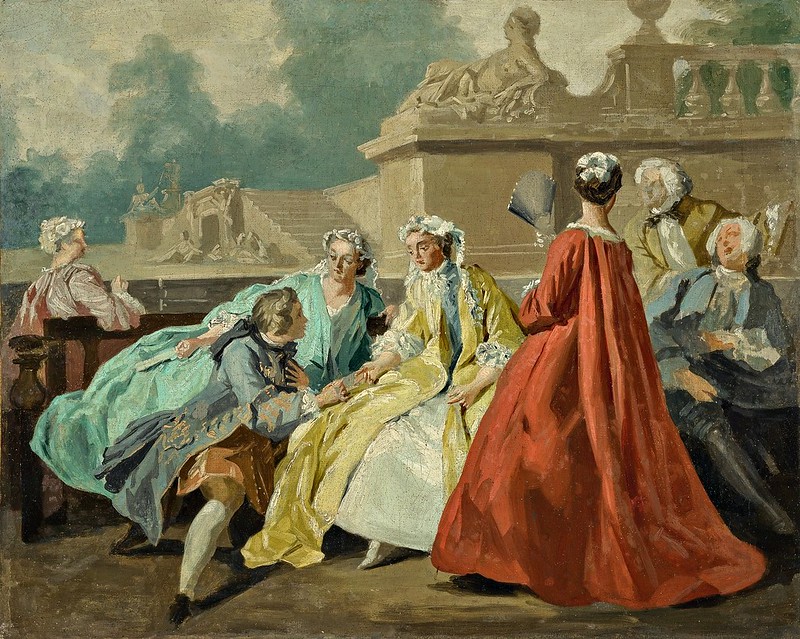
Balthasar Beschey (1708-1776) - A portrait of Jacques-Jean Cremers (1736-c.1803) and his wife, dancing, on a garden terrace surrounded by other members of the family, playing music


Johann Christoph Friedrich Bach (1732-1795) - Sinfonia in B flat major, HW 1/2 (1768)
Performers: Orchestra of St. Luke's; Dennis Russell Davies (conductor) 

---


Composer, son of Johann Sebastian Bach (1685-1750) and Anna Magdalena Bach (1701-1760). He is known as the ‘Bückeburg Bach’. He received his musical education from his father. After leaving the Thomasschule, he is thought to have studied law briefly, but there is no record of his matriculation at Leipzig University. At the express wish of Count Wilhelm of Schaumburg-Lippe he was appointed harpsichordist to the court in Bückeburg, where he may at first have been subordinate to the court organist Ludolf Münchhausen. In June 1751 his brother Carl Philipp Emanuel visited him in the retinue of Frederick the Great when the king awarded the Order of the Great Eagle to Count Wilhelm. On 8 January 1755 Bach had married Münchhausen’s daughter Lucia Elisabeth. The Seven Years War imposed considerable restrictions on the court of Bückeburg. Bach took this opportunity to apply, successfully, for the vacant post of organist at the German church in Altona, then under Danish rule, but for unknown reasons he never took it up. On 18 February 1759 he was appointed Konzertmeister of the Bückeburg Hofkapelle. However, court life did not return to normal until after the Peace of Hubertusburg, and the return of Count Wilhelm from his military missions in Portugal in November 1764. In the period up to 1770 Bach wrote symphonies, trio sonatas, a number of Italian arias and cantatas and perhaps his most important work of this time, the large-scale cantata Cassandra. After Count Wilhelm’s marriage to Marie Barbara Eleonore zur Lippe-Biesterfeld on 12 November 1765, Protestant sacred music was performed at the Bückeburg court. Perhaps encouraged by his successful application to Altona, Bach applied on 24 June 1767 to succeed the late G.P. Telemann in Hamburg. He was, in fact, one of the short-listed candidates, but his half-brother Carl Philipp Emanuel gained the appointment. Between 1765 and 1773 Johann Christoph Friedrich set the best-known Protestant oratorio texts of his time. The tendency towards sacred vocal composition increased with the arrival in Bückeburg of J.G. Herder, who was court preacher and superintendent there from 1771 to 1776. 

The death of Countess Marie Barbara in 1776, Herder’s appointment to Weimar in the same year and the death of Count Wilhelm in 1777 marked a watershed in the intellectual life of the Bückeburg court. In spring 1778 Bach asked for three months’ leave to visit his brother Johann Christian in London. A series of string quartets and a set of six keyboard concertos, printed in London with dedications to members of the house of Schaumburg-Lippe, show how rapidly J.C.F. Bach adapted his music to English tastes. He also brought back an English piano from his travels, so his keyboard compositions after 1778 were not necessarily for the harpsichord. In 1780 Count Philipp Ernst took as his second wife Princess Juliane zu Hessen-Philippsthal, who was particularly fond of the fine arts. At the Princess’s wish, attendance at court concerts was now open to the citizens of Bückeburg and to visitors. Forkel regarded the little Kapelle as one of the finest in Germany. Juliane took lessons in foreign languages and drawing, and studied the keyboard with J.C.F. Bach. Among the better known of his pupils (in addition to his son Wilhelm Friedrich Ernst and C.F. Geyer) were the future Thomaskantor A.E. Müller and perhaps Adolf, Baron von Knigge. For teaching purposes Bach wrote a number of pedagogically valuable keyboard works, including the Sechs leichte Clavier-Sonaten, variations, concertos and sonatas for four hands. The arrival in Bückeburg about 1793 of the Bohemian musician Franz Neubauer presented Bach with unaccustomed competition in the last years of his life. It inspired him to write new works (including a dozen large-scale symphonies and several double concertos) but it also intensified the latent depression from which he had been suffering since the death of his half-brother Carl Philipp Emanuel and which may have hastened the course of the chest ailment that brought about his death on 26 January 1795. In his obituary his friend Karl Gottlieb Horstig, superintendent at Bückeburg from 1793, described him as an industrious composer, always ready to be of service, and praised his upright character and ‘kindness of heart’.

dilluns, 26 de gener del 2015

BACH, Johann Christoph Friedrich (1732-1795) - Sonatas for Traverso and Fortepiano

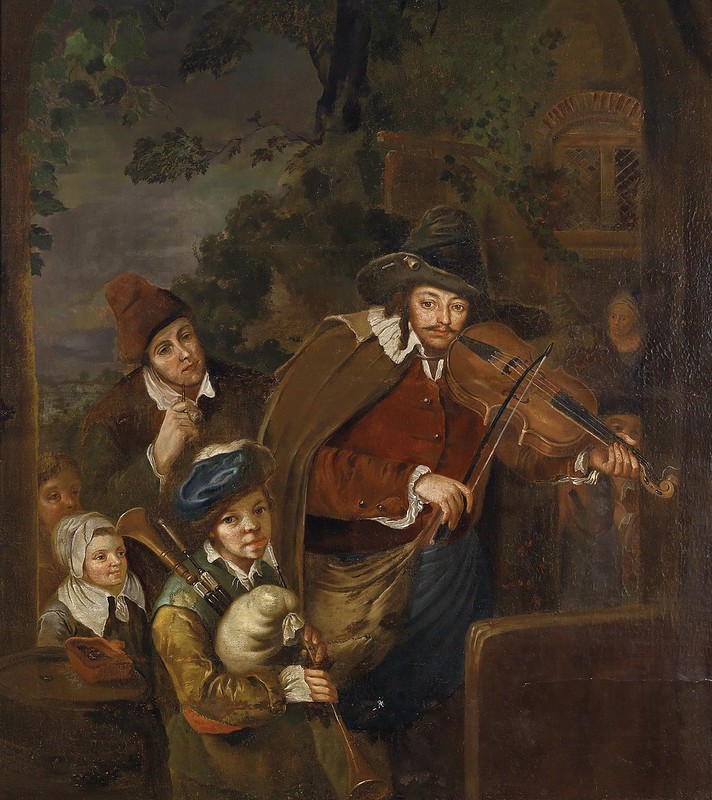
Christian Wilhelm Ernst Dietrich - The Wandering Musicians (c.1745)


- Recordatori de Johann Christoph Friedrich Bach -
En el dia de la commemoració del seu 220è aniversari de decés


Parlem de Pintura...

Christian Wilhelm Ernst Dietrich (Weimar, 30 d'octubre de 1712 - Dresden, 23 d'abril de 1774) va ser un pintor alemany. Es va formar amb el seu pare Johann Georg, pintor de miniatures a la cort del ducat de Weimar. Va viatjar a Dresden on va seguir la seva formació amb Johann Alexander Thiele. Allà va rebre el favor reial i va poder visitar diverses ciutats europees. Es va dedicar a copiar i a imitar els grans mestres pretèrits amb gran facilitat motiu pel qual mai va arribar a desenvolupar un estil propi. El 1741 va ser nomenat pintor de la cort d'August III a Dresden, amb un salari anual de 400 ducats. Dietrich va imitar totes les branques artístiques, amb l'excepció del retrat, des de vistes italians i holandeses fins a escenes bíbliques i natura morta. Tot i no desenvolupar material propi, va ser un pintor molt popular al seu temps i va viure en l'opulència i fins l'abril de 1774, l'any de la seva mort.


Parlem de Música...

Johann Christoph Friedrich Bach (Leipzig, 21 de juny de 1732 - Bückeburg, 26 de gener de 1795) va ser un compositor alemany, fill de Johann Sebastian Bach i Anna Magdalena Bach i conegut amb el nom de ‘Bückeburg Bach’. Va rebre la seva educació musical del seu pare. Després de deixar la Thomasschule de Leipzig, es creu que va estudiar Dret durant poc temps a la Universitat de Leipzig. Per desig del comte Guillem de Schaumburg-Lippe va ser nomenat clavecinista de la cort a Bückeburg, els primers anys a les ordres de l'organista de la cort Ludolf Münchhausen. El juny de 1751 va rebre la visita del seu germà Carl Philipp Emanuel acompanyat de Frederic el Gran. El 8 de gener de 1755 Bach es va casar amb Lucía Elisabeth, la filla del seu mentor Münchhausen. La Guerra dels Set Anys va imposar restriccions considerables a la cort de Bückeburg. Quan la ciutat va ser ocupada per les tropes franceses el 1757, el comte Wilhelm, amb uns pocs càrrecs de confiança entre ells Bach, es va retirar a la seva finca de Niensteden a l'Elba, prop de Pinneberg, des d'octubre del 1757 fins a l'abril de 1758. El 18 de febrer de 1759 va ser nomenat concertino de la Bückeburg Hofkapelle. No obstant això, la vida cortesana no va tornar a la normalitat fins després de la Pau d'Hubertusburg. La Hofkapelle generalment realitzava concerts dues vegades a la setmana. El conjunt estava format per uns 15 músics fixes i l'assistència d'intèrprets externs i fins i tot bandes militars quan fos necessari. Bach va ser el responsable de la composició o la contractació de les obres interpretades en aquests concerts, ajustant-les al gust del comte Guillem, enamorat de l'obra secular italiana vocal i dels instruments de teclat amb acompanyament de flauta. En aquell període i fins el 1770, Bach va escriure simfonies, sonates en trio, una sèrie d'àries i cantates italianes (sobretot amb texts de Metastasio) i potser la seva obra més important d'aquest temps, la cantata Cassandra. Bach va postular el 24 de juny de 1767 al càrrec vacant musical d'Hamburg després de la mort de Telemann. No obstant, el guanyador fou el seu germà Carl Philipp Emanuel. 

Bach va seguir a Bückeburg on, entre els anys 1765 i 1773, va compondre els seus oratoris més coneguts; Der Tod Jesu, Die Hirten bei der Krippe Jesu i Die Auferstehung und Himmelfahrt Jesu.  L'arribada de J.G. Herder, teòleg i escriptor, va motivar una major importància de la música religiosa a la Cort de Bückeburg. Bach va treballar conjuntament amb ell i es creu que aquest període, del 1771 al 1776, va ser el més creatiu i feliç de la seva vida. La mort de la comtessa Marie Barbara el 1776, el nomenament d'Herder a Weimar el mateix any i la mort del comte Wilhelm el 1777, van marcar una fita en la vida intel·lectual de la cort Bückeburg. El nou Comte Philipp Ernst zu Schaumburg-Lippe-Allverdissen va assumir el govern, i va situar la seva cort entre Münster i Bückeburg. La primavera de 1778 Bach va demanar tres mesos de permís per visitar el seu germà Johann Christian a Londres. Amb ell va viatjar el seu fill Wilhelm Friedrich Ernst Bach, que va decidir quedar-se amb Johann Christian a Londres. Bach va quedar impressionat de la música anglesa i especialment de la del seu germà Johann Christian. En part va adoptar el model anglès i va publica obra concertant per a teclat i quartets de cambra en el nou estil galant anglès. Fins i tot, es va fer importar un pianoforte anglès a Bückeburg fet que va redundar en la publicació de diverses obres per a aquest instrument. Va treballar com a professor i va publicar diverses obres didàctiques com el seu Sechs leichte Clavier-Sonaten (1784) així com diversos concerts i sonates per a clavecí a quatre mans. L'arribada a Bückeburg, el 1793, del brillant músic bohemi Franz Neubauer va provocar una inesperada competència amb Bach. Això el va obligar a buscar inspiració per a noves obres; va compondre simfonies a gran escala i diversos concerts dobles però també va intensificar el seu estrès i la depressió que la mort del seu germà Carl Philipp Emanuel li havia provocat. Aquest fet va precipitar el deteriorament de la seva salut, morint el gener de 1795 a Bückeburg.

Font: En català: Johann Christoph Friedrich Bach (1732-1795) - En castellano: Johann Christoph Friedrich Bach (1732-1795) - In english: Johann Christoph Friedrich Bach (1732-1795) - Altres: Johann Christoph Friedrich Bach (1732-1795)


Parlem amb veu pròpia...

Johann Christoph Friedrich Bach va viure, evidentment, en contacte directe, permanent i constant amb la música, el seu art i la seva bellesa, tot gaudint d'un entorn únic a nivell mundial en el qual pare i germans eren músics admirats, respectats i majestuosament influents arreu. El seu pare, com no podia ser d'altra manera, el va introduir en la música tot aprenent els primers compassos i teories essencials per tal de desenvolupar-se com a compositor. No obstant, el seu estil fou sensiblement diferenciat al del seu pare i en menor mesura al dels seu germans. De fet, el podríem situar entre la "galanteria" del seu germà petit Johann Christian Bach, el "Bach londinenc" i a qui va decidir imitar arrel de la seva visita, i l'estil més eclèctic de CPE Bach. Precisament, les sonates per a flauta travessera i pianoforte d'avui, de les que escoltarem la No.3 en Re major per a flauta i pianoforte i la No.1 en Re major per a flauta, pianoforte i violoncel, van ser escrites durant la seva estada a Londres del 1778 i el seu estil és molt proper al del seu germà Johann Christian. Estructurades en tres moviments característics, l'esquema galant és evident especialment en la No.3. Tanmateix, en algunes d'elles s'escolta, també, la sensibilitat de l'Empfindsamer Stil, un estil genuïnament alemany que en certa forma hauríem de considerar com una de les llavors del romanticisme. La interpretació, elegant i precisa, ens permet admirar i meravellar-nos amb aquestes delicades obres de cambra de Johann Christoph Friedrich Bach!

Gaudiu i compartiu! 


Informació addicional...

J.C.F. Bach: Sonatas for Traverso and Fortepiano

Tant si us ha agradat, com si no, opineu, és lliure i fàcil!