Es mostren els missatges amb l'etiqueta de comentaris Kuhnau J.. Mostrar tots els missatges

diumenge, 6 d’abril del 2025

KUHNAU, Johann (1660-1722) - Wie schön leuchtet der Morgenstern

Joachim Ernst Scheffler - Urbis lipsiae (1749)


Johann Kuhnau (1660-1722) - Feria I. Nativitatis Christi. Wie schön leuchtet der Morgenstern
 à 2 Corni grandi, 2 Violini, 2 Viole, 2 Canti, A. T. B. e Cont.
Performers: Johannes Hoefflin (1932-2017, tenor); Boys’ Choir of the Gymnasium Eppendorf;
Instrumental-Ensemble; Gottfried Wolters (1910-1989, conductor)

---


German composer, keyboard player and music theorist. His intelligence and musical talent were evident early on, so he was sent to study in Dresden in 1670. By 1671, he was a chorister at the Kreuzkirche, where he attracted the attention of the Kapellmeister Vincenzo Albrici. Another member of the Kreuzkirche staff, Erhard Titius, who had become cantor at Zittau, invited Kuhnau to continue his education at the prestigious Johanneum school there. After Titius died in 1682, Kuhnau filled in as cantor. He then moved to Leipzig, matriculated in law at the university, and after an unsuccessful application in 1682, won the post of organist at Thomaskirche in 1684. He published his law thesis in 1688 and began to practice. In 1689, he married and eventually had eight children. Before the turn of the century, he published all his keyboard music, built up his renown as an organist, and engaged in literary and linguistic scholarship. When the Thomaskantor Johann Schelle died on 10 March 1701, the authorities quickly elected Kuhnau as his successor, and he took up his new and prestigious post in April 1701. His career as cantor was not without difficulties. The growing Leipzig opera drew promising young singers away from enrolling at Thomasschule. Then, in 1701, Georg Philipp Telemann arrived in Leipzig to study law and immediately founded his Collegium Musicum, which also attracted some of Kuhnau’s students, and Telemann even inveigled the mayor, going over Kuhnau’s head, to allow himself to compose for Thomaskirche. Frequent illness troubled Kuhnau during this period, and in 1703, he learned that the city council had inquired of Telemann whether he might wish to succeed Kuhnau should he die. In the end, such intrigues counted as mere annoyances, and Kuhnau’s career at Thomaskirche was generally characterized by the esteem of Germany’s best musicians. Johann Kuhnau was a major figure in German music at the turn of the 18th century, and the immediate predecessor of Johann Sebastian Bach as cantor of Thomaskirche in Leipzig. Although Kuhnau composed at least 62 church cantatas, 14 Latin motets, a Magnificat, a passion according to St. Mark, and 2 masses, this considerable body of sacred music remained unpublished, and his single opera and a few other early stage pieces are lost, so he influenced his contemporaries principally through his published keyboard music: 14 suites, 2 preludes, 2 fugues, a toccata, and 14 sonatas, including the famous Biblical Sonatas for harpsichord (1700, Leipzig). Unlike Johann Sebastian Bach, he exhibited all the various talents and interests that the Leipzig city council evidently desired in the Thomaskantor: Kuhnau was not only an esteemed composer and organist but also had built a distinguished law career, translated scholarly works from French and Italian into German, learned mathematics, Greek, and Hebrew, and had written a satirical novel, 'Der musicalische Quack-Salber'. These self-motivated studies allowed him to carry out the multifarious teaching, administrative, and musical duties of his post with distinction. Much information about Kuhnau’s life comes from his autobiography published in Johann Mattheson’s collection, 'Grundlage einer Ehren-Pforte' (1740).

divendres, 6 d’abril del 2018

KUHNAU, Johann (1660-1722) - Kantaten

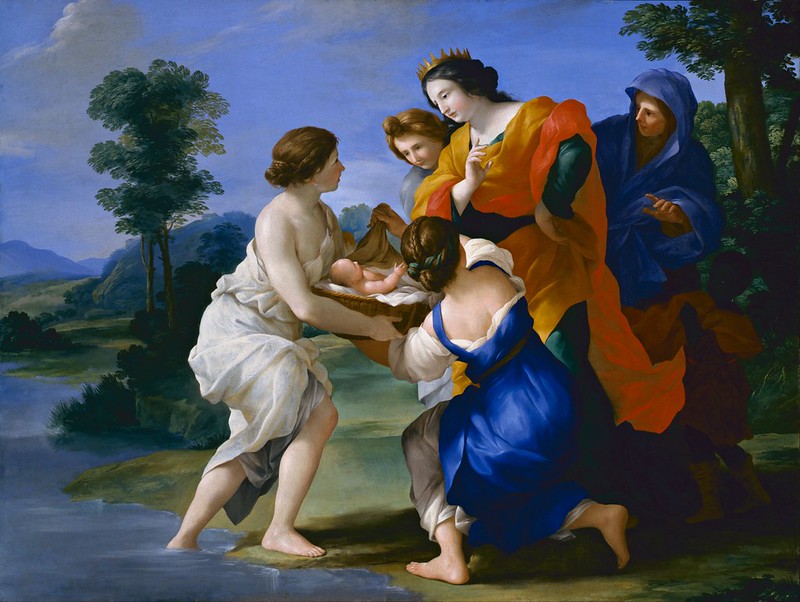
Giovanni Francesco Romanelli - The Finding of Moses (c.1656)
Obra de Giovanni Francesco Romanelli (1610-1662), pintor italià (1)


- Recordatori de Johann Kuhnau -
En el dia de la celebració del seu 358è aniversari de naixement


Parlem de Pintura...

Giovanni Francesco Romanelli (Viterbo, 1610 - Viterbo, 1662) va ser un pintor italià. Es va formar a Roma amb Pietro da Cortona, fet que el va permetre entrar en l'òrbita dels Barberini. També a Roma va entrar en contacte amb la família del pontífex Urbano VIII amb qui romandria la resta de la seva vida, especialment al costat del cardenal Francesco Barberini. El seu treball va ser rebut amb notable interès pel públic de Roma rebent, durant la dècada del 1630, un encàrrec per a la Basílica de Sant Pere. Durant la dècada de 1640 la seva pintura va evolucionar vers un major classicisme, en un nou equilibri compositiu que va tenir molt en compte el triomf contemporani d'artistes com Andrea Sacchi. Entre els anys 1646-1647 i 1654-1657 va viatjar a França on va ser rebut amb tots els honors i on va deixar empremta visible en alguns pintors francesos. La seva influència va arribar fins a Espanya sent reclamat per Felip IV, per a qui va realitzar diverses composicions de caràcter neoclàssic. Els darrers anys va tornar a la seva ciutat natal, on hi va morir el 1662.


Parlem de Música...

Johann Kuhnau (Geising, 6 d'abril de 1660 - Leipzig, 5 de juny de 1722) va ser un organista i compositor alemany. De ben petit va mostrar un gran talent vocal i un profund interès musical. El 1669 va ser matriculat a la Kreuzschule de Dresden, on va assolir la condició de Rathsdiscantist, i va obtenir instrucció regular en música. En canviar la veu va haver de treballar més dur i a més de la seva música va aprendre italià. La plaga de 1680 el va obligar a tornar a casa però ben aviat es va decantar per viatjar a Zittau on va ser professor abans de rebre l'encàrrec de Kantor de la ciutat. El 1682 va viatjar a Leipzig, ciutat on va viure la resta de la seva vida. Allà va succeir, el 1684, a Kühnel com a organista de l’església de Sant Tomàs on també va treballar com a professor amb alumnes com Johann David Heinichen i Christoph Graupner. El 1688 va fundar el 'Collegium Musicum' de la ciutat. Paral·lelament, es va graduar en Jurisprudència a la Universitat de Leipzig i el 1700 es va convertir en director musical de la mateixa universitat i d’un parell d’esglésies de la ciutat. El 1701 va ser nomenat Kantor, el càrrec més important de Leipzig. A banda de la seva labor musical, també va escriure tractats i traduccions diverses així com obra poètica de temàtica profana i satírica. Com a compositor, van destacar les nombroses partitures religioses així com obra secular la majoria de la qual es va perdre posteriorment. Kuhnau va morir a Leipzig el juny de 1722 sent Johann Sebastian Bach el seu substitut com a Kantor de la ciutat.

OBRA:

Vocal secular:

Stage:
Orpheus, opera, lost (mentioned in Der musicalische Quack-Salber) [probably for Weissenfels]
Singspiel, lost (according to Scheibe)
Music for school plays by C. Weise, lost
Dramma per musica, lost [for welcome of Elector-Prince Johann Georg, Michaelmas 1683]

Vocal religiosa:

German:
Ach dass Hülfe aus Zion käme (I Christmas), 25 Dec 1709, D-LEm (text only);
Ach Herr, wie sind meiner Feinde so viel, 2vv, 2 clarinos, trbn, 2 vn, bc, Bsb;
Also hat Gott die Welt geliebet (Whit Monday), 25 May 1711, LEm (text only);
Also werden die letzten die ersten sein (Septuagesima), 16 Feb 1710, LEm (text only);
Christ lag in Todesbanden, 4vv, 2 vn, 2 va, vle, 2 cornetts (ad lib), org, 1693 or earlier, Bsb, ed. H. Fishback (Glen Rock, NJ, n.d.);
Daran erkennen wir, dass wir in ihm verbleiben (Whit Sunday), 5vv, 2 ob, bn, 2 clarinos, timp, 2 vn, 2 va, org, Bsb;
Das Alte ist vergangen, 4vv, 2 clarinos, bn, timp, 2 vn, va, bc, B-Bc;
Der Herr, dein Gott wird selber mit dir wandeln (II Easter), 6 April 1711, D-LEm (text only);
Dies ist der Tag der heiligen Dreyfaltigkeit (Trinity Sunday), 31 May 1711, LEm (text only);
Du Arzt in Israel (Trinity XVII), Leipzig Nikolaikirche Archive (text only); Du weisst, mein Gott, dass ich dich liebe, III Christmas, 27 Dec 1710, LEm (text only);
Du wirst, mein Heyland, aufgenommen (Ascension), 14 May 1711, Bibliothek des Vereins für die Geschichte Leipzigs (text only)
Ende gut und alles gut (Trinity XXVII), date unknown, LUC;
Erschrick mein Hertz vor dir (Trinity XIV), 1v, chorus 4vv, 2 vn, violetta, org, before 1712, LEm;
Es steh Gott auf (Easter), 5vv, chorus 5vv, 2 clarinos, tamburi, 3 trbn, 2 va, bc, 1703, Dl (doubtful);
Fleuch, mein Freund, und sei gleich einem Reh (Sunday after New Year), 5 Jan 1710, LEm (text only);
Flöss mir von deinen süssen Lehren (Epiphany I), 11 Jan 1711, LEm (text only);
Fürchtet euch nicht für denen, die den Leib tödten (II Christmas), 26 Dec 1709, LEm (text only);
Für uns ein Mensch gebohren (III Christmas), 27 Dec 1720, Bibliothek des Vereins für die Geschichte Leipzigs (text only);
Gott der Vater, Jesus Christus, der Heil'ge Geist wohn uns bey, 4vv, ob (tromba da tirarsi), 2 vn, va, bc, Bsb;
Gott sei mir gnädig (Quinquagesima), 4vv, chorus 4vv, 2 vn, 2 va, bn, bc, 22 Feb 1705, Dl, ed. in DDT, lviii–lix (1918/R);
Himmel, bricht der Abgrund auf? (pts.i–iii) (I–III Easter), 1717, Leipzig Nikolaikirche Archive (text only)
Ich freue mich im Herrn (Epiphany II), 4vv, 2 vn, va, bc, 17 Jan 1712, Dl, ed. in DDT, lviii–lix (1918/R);
Ich habe Lust abzuscheiden (Purification), 4vv, chorus 4vv, ob, bn, 2 vn, va, vc, bc, lost (doubtful), ed. in Organum, i/14 (Leipzig, 1928);
Ich hebe meine Augen auff, 1v, 2 vn, vle, org, LEm (text only) (also attrib. Telemann);
Ich ruf zu dir Herr Jesu, 4vv (St Matthew), 10 insts, lost;
Ich unterrede mich mit deinem Hertzen (III Easter) 1711, LEm (text only);
Ich will aufstehen und in der Stadt umhergehen (Epiphany I), 12 Jan 1710, LEm (text only);
Ich will dich erhöhen, mein Gott (Circumcision), 1 Jan 1711, LEm (text only);
Ihr Himmel jubilirt von oben (Ascension), 5vv, 2 fl, 3 clarinos, 2 vn, va, bc, 6 May 1717, LEm;
Ist denn keine Salbe in Gilead? (Epiphany III), 26 Jan 1710, LEm (text only); Jesu, hier ist deine Stadt (Trinity XIX), Leipzig Nikolaikirche Archive (text only)
Kommt her und sehet an die Werke des Herrn (Sunday after Christmas), 28 Dec 1710, LEm (text only);
Kündlich gross ist das gottseelige. Geheimnis (New Year), 1 Jan 1721, Bibliothek des Vereins für die Geschichte Leipzigs (text only);
Leite mich in Liebesseilen (Trinity XVIII), Leipzig Nikolaikirche Archive (text only);
Lobe den Herrn meine Seele (Trinity VII), 2vv, vn, ob, org, 19 July 1722, Dl;
Lobe den Herrn meine Seele, 5vv, 2 cornetts, 3 trbn, bn, 2 vn, 2 va, bc, Bsb;
Lobet, ihr Himmel, den Herrn (Ascension), 4vv, 2 ob, 2 clarinos, timp, 2 vn, 2 va, org, Bsb;
Mache dich auff, werde Licht (Epiphany), 6 Jan 1710, LEm (text only);
Mein Alter kommt, ich kann nicht sterben, 5vv, 2 vn, 2 va, bn, bc, 1696, Dl;
Michael, wer ist wie Gott? (St Michael), Leipzig Nikolaikirche Archive (text only);
Muss nicht der Mensch auf dieser Erden, 1v, clarino, bn, vn, org, 1715, LUC
Nicht nur allein am frohen Morgen (II Christmas), 4vv, 2 clarinos, 2 hn, timp, 2 vn, va, bc, 26 Dec 1718, LEm;
O heilige Zeit, wo Himmel, Erd und Lufft, 2vv, 2 ob, 2 vn, va, bc, LEm (doubtful);
O heilige Zeit, wo Himmel, Erd und Luft, 4vv, 2 vn, 2 va, bc, Bsb;
O mehr als englisches Gesichte (I Christmas), 25 Dec 1710, LEm (text only);
O süssester Jesu, o freundliches Kind (Epiphany I), Bibliothek des Vereins für die Geschichte Leipzigs (text only);
Passion according to St Mark (Good Friday), 11 April 1721, lost, formerly RUS-KA (inc.);
Redet unter einander von Psalmen und Lobgesängen (New Year), 1 Jan 1721, Bibliothek des Vereins für die Geschichte Leipzigs (text only);
Sammle dir, getreue Seele (I Easter), 5 April 1711, D-LEm (text only);
Sanffter Wind, beliebtes Brausen (Whit Sunday), 24 May 1711, LEm (text only);
Schmücket das Fest mit Meyen, 4vv, 2 rec, 4 vn, violetta, bc, Bsb; Seyd willkommen, frohe Stunden (Sunday after New Year), 5 Jan 1721, Bibliothek des Vereins für die Geschichte Leipzigs (text only)
Siehe da, ich lege einen auserwehlten, köstlichen Edelstein (Sunday after Christmas), 29 Dec 1709, LEm (text only);
Siehe, es kommt ein Tag, der brennen soll (Epiphany V), 9 Feb 1710, LEm (text only);
Siehe, ich komme, im Buch ist von mir geschrieben (Quinquagesima), 2 March 1710, LEm (text only);
Siehe, ich will meinen Engel senden (Purification), 2 Feb 1710, LEm (text only);
Siehe, ich will mich meiner Heerde selbst annehmen (Whit Tuesday), 26 May 1711, LEm (text only);
Singet dem Herrn ein neues Lied, 4vv, 2 tpt, bn, 2 vn, va, org, Bsb;
Thue mir auff, liebe Freundin (1st Sunday in Advent), 1 Dec 1709, LEm (text only);
Träum ich nicht, so spricht mein Jesus (Sunday after New Year), 4 Jan 1711, LEm (text only);
Um deines Tempels Willen zu Jerusalem (Epiphany), 6 Jan 1711, LEm (text only);
Und ist ein Kind geboren (I Christmas), 25 Dec 1720, Bibliothek des Vereins für die Geschichte Leipzigs (text only);
Und ob die Feinde Tag und Nacht (Trinity XXIII), 1v, vn, org, LEm
Vermischte Traurigkeit und Freude (Easter III), 26 April 1711, LEm (text only);
Vom Himmel hoch, da komm ich her, 4vv, 2 clarinos, timp, 2 vn, va, bc, LEm;
Was betrübst du dich meine Seele (Epiphany I), 12 Jan 1710, LEm (text only);
Weicht ihr Sorgen aus dem Hertzen (Trinity VII/XV), 1v, 2 vn, 2 va, org, LUC;
Welt adieu, ich bin dein müde (Trinity XXIV), 5vv, fl, ob, 2 hn, 2 vn, 2 va, bc, LEm (inc.);
Wenn ihr fröhlich seid an euren Festen (Easter), 5vv, chorus 5vv, 2 clarinos, ‘principale’, trbn, tamburi, bn, 2 vn, 2 va, org, 1716, Dl, ed. in DDT, lviii–lix (1918/R);
Wer Ohren hat zu hören (Sexagesima), 23 Feb 1710, LEm (text only);
Wie gross ist deine Güte, Gott (Easter IV), 3 May 1711, LEm (text only);
Wie schön leuchtet der Morgenstern, 5vv, 2 vn, 2 va, 2 hn, bc, Bsb, ed. in DDT, lviii–lix (1918/R);
Wiltu, mein Gott, diss Hertz verlassen (II Christmas), 26 Dec 1710, LEm (text only);
Zeuch mich nach dir, so laufen wir (III Christmas), 27 Dec 1709, LEm (text only)

Latin:
Missa, 4vv, lost, formerly D-MÜG
Missa, lost, formerly MY
Magnificat, 5vv, 2 ob, 3 clarinos, timp, 2 vn, 2 va, bc, Bsb
Bone Jesu, chare Jesu (13th Sunday after Trinity), 1v, 2 vn, bc, 6 Aug 1690, Dl;
In dulci jubilo (Sunday after Christmas), 29 Dec 1720, LEm (text only);
In te Domine speravi (23rd Sunday after Trinity), 1v, 2 vn, 2 va, bn, bc, Dl;
Laudate pueri, 1v, 2 vn, trbn (va da gamba/vc), bc, Bsb;
Spirate clementes, 3vv, 2 vn, bc, Bsb;
Tristis est anima mea, 5vv, Bsb

Other:
German; some edited in Rimbach
Ach Gott, wie lästu mich erstarren, aria, 5vv, bc, D-ZI [for burial of Rektor Titius, Zittau, 19 May 1681]; Der Herr erhöre dich in der Not, with Verleih uns Frieden, 2 choirs, lost [for election of Zittau town council, 1682];
Der Herr hat Zion erwehlet, LEm (text only) [for Leipzig University jubilee, 4 Dec 1709];
Der Herr ist Gott, der uns erleuchtet, lost [for dedication of new altar in Leipzig Thomaskirche, 25 Dec 1721];
Deutsches Te Deum, 3 choirs, tpts, timp, lost (probably by Kuhnau) [for Reformation Jubilee, 1717];
Dies ist der Tag, den der Herr gemacht hat, LEm (text only) [for Leipzig University jubilee, 4 Dec 1709];
Erschallt, Gott zu loben, lost [for investiture of Superintendent Deyling, Leipzig Nikolaikirche, 13 Aug 1721];
Herr, der Feinde sind zu viel, Leipzig Nikolaikirche Archive (text only) [for Leipzig Evangelische Kirche jubilee, 2 Nov 1717];
Tobet, ihr Pforten der Hölle, LEm (text only) [for Leipzig Evangelische Kirche jubilee, 1717];
Trauerkantate, lost [on the death of Rektor Titius, 18 April 1714];
Zion auf ermuntre dich, Leipzig Nikolaikirche Archive [text only) (for Leipzig Evangelische Kirche jubilee, 1717]

Latin
Confitebor tibi, lost [for ded. of new anatomical theatre, 10 Sept 1704];
Ecce quam bonum et iucundum, lost (probably by Kuhnau) [for performance before the oration of Prof. B. Mencke, 6 Aug 1707];
Hodie collaetantur coeli cives (Christmas Day), 25 Dec 1709, LEm (text only) [for performance after the oration];
I, Fama, pennas indice praepetes, ode, lost [for performance after the oration of Prof. B. Mencke, 6 Aug 1707];
Non mortui laudabunt te, lost [for performance after the oration at the dedication of new anatomical theatre, 10 Sept 1704];
Oda secularis, tibi litamus, lost (probably by Kuhnau) [for Leipzig University jubilee, 4 Dec 1709];
Ode, 3 choirs, lost (probably by Kuhnau) [for wedding celebration of Elector-Prince Friedrich August and Maria Josepha of Austria, 8 Sept 1719];
Salve, theatrum, splendida funerum, ode, lost [for dedication of new anatomical theatre, 10 Sept 1704];
Summe terrarum moderator, ode, lost [for dedication of new anatomical theatre, 10 Sept 1704];
Verbum caro factum est (Christmas Day), 25 Dec 1709, LEm (text only) [for performance before the oration]

Instrumental:

Keyboard:
Neuer Clavier-Übung, erster Theil (7 suites) (Leipzig, 1689); ed. in DDT, iv (1901/R)
Neuer Clavier-Übung, anderer Theil (7 suites, 1 sonata) (Leipzig, 1692); ed. in DDT, iv (1901/R)
Frische Clavier Früchte (7 sonatas) (Leipzig, 1696); ed. in DDT, iv (1901/R)
Musicalische Vorstellung einiger biblischer Historien (6 programme sonatas) (Leipzig, 1700/R); ed. in DDT, iv (1901/R)
Prelude, G, US-NH;
Praeludium alla breve, NH;
Fugue, C, NH (orig. version of 2nd movt, Sonata, B , 1692);
Fugue, G, D-MY, tablature book, 1750;
Toccata, Bsb: ed. in Organum, iv/19 (Leipzig, n.d.)

Literatura:

Divini numinis assistentia, illustrisque jure consultorum in florentissima academia Lipsiensi (Leipzig, 1688)
Der musicalische Quack-Salber, novel (Dresden,1700); ed. K. Benndorf (Berlin, 1900/R)
Letter, 8 Dec 1717, in J. Mattheson: Critica musica, ii (Hamburg, 1725/R) [on solmization etc.]
Fundamenta compositionis, 1703, D-Bsb
Tractatus de tetrachordo seu musica antiqua ac hodierna, lost
De triade harmonica, lost


Informació addicional... 

INTERPRETS: Camerata Lipsiensis; Opella Musica; Gregor Meyer
RECICLASSICAT: KUHNAU, Johann (1660-1722)
JPC: KUHNAU, J. - Complete Sacred Works, Vol. 2
SPOTIFY: KUHNAU, J. - Complete Sacred Works, Vol. 2


Tant si us ha agradat, com si no, opineu, és lliure i fàcil!

dimecres, 6 d’abril del 2016

KUHNAU, Johann (1660-1722) - German Cantatas (c.1710)

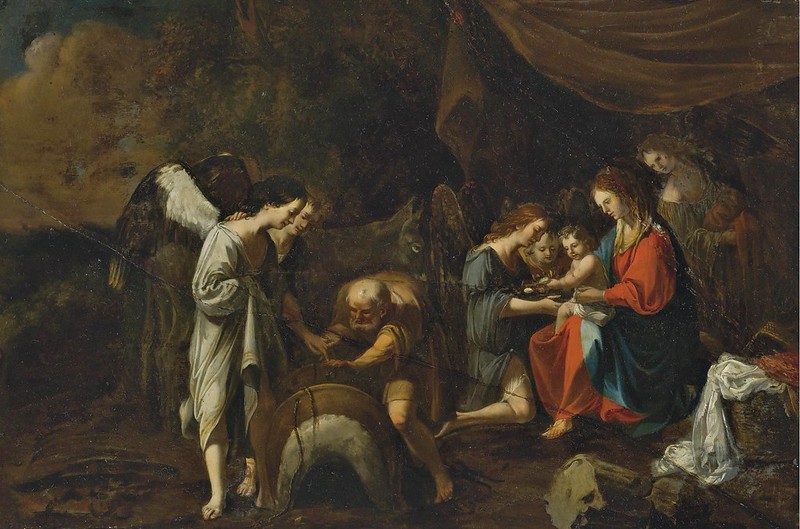
Attributed to Jean Tassel - Rest on the Flight into Egypt
Obra de Jean Tassel (1608-1667), pintor francès (1)


- Recordatori de Johann Kuhnau -
En el dia de la celebració del seu 356è aniversari de naixement


Parlem de Pintura...

Jean Tassel (Langres, c.1608 - Langres, 6 d’abril de 1667) va ser un pintor francès. Va estudiar a Itàlia, on va rebre la influència dels mestres italians, i molt especialment de l'obra de Caravaggio. Al tornar a França, va treballar a Dijon, Troyes i Langres, on es troben molts dels seus quadres, als quals recentment s'ha afegit una gran part de l’obra atribuïda fins ara al seu pare, Richard Tassel. D’entre la seva obra van destacar Caterina de Montholon (Musée des Beaux-Arts, Dijon), L’arbre de Jessè (Musée des Beaux-Arts, Troyes) i Els serradors (Musée des Beaux-Arts, Estrasburg). Va morir a Langres l’abril de 1667.

Font: En català: Jean Tassel (1608-1667) - En castellano: Jean Tassel (1608-1667) - In english: No disponible - Altres: Jean Tassel (1608-1667)


Parlem de Música...

Johann Kuhnau (Geising, 6 d'abril de 1660 - Leipzig, 5 de juny de 1722) va ser un organista i compositor alemany. De ben petit va mostrar un gran talent vocal i un profund interès musical. El 1669 va ser matriculat a la Kreuzschule de Dresden, on va assolir la condició de Rathsdiscantist, i va obtenir instrucció regular en música. En canviar la veu va haver de treballar més dur i a més de la seva música va aprendre italià. La plaga de 1680 el va obligar a tornar a casa però ben aviat es va decantar per viatjar a Zittau on va ser professor abans de rebre l'encàrrec de Kantor de la ciutat. El 1682 va viatjar a Leipzig, ciutat on va viure la resta de la seva vida. Allà va succeir, el 1684, a Kühnel com a organista de l’església de Sant Tomàs on també va treballar com a professor amb alumnes com Johann David Heinichen i Christoph Graupner. El 1688 va fundar el 'Collegium Musicum' de la ciutat. Paral·lelament, es va graduar en Jurisprudència a la Universitat de Leipzig i el 1700 es va convertir en director musical de la mateixa universitat i d’un parell d’esglésies de la ciutat. El 1701 va ser nomenat Kantor, el càrrec més important de Leipzig. A banda de la seva labor musical, també va escriure tractats i traduccions diverses així com obra poètica de temàtica profana i satírica. Com a compositor, van destacar les nombroses partitures religioses així com obra secular la majoria de la qual es va perdre posteriorment. Kuhnau va morir a Leipzig el juny de 1722 sent Johann Sebastian Bach el seu substitut com a Kantor de la ciutat.

OBRA:

Vocal secular:

Stage:
Orpheus, opera, lost (mentioned in Der musicalische Quack-Salber) [probably for Weissenfels]
Singspiel, lost (according to Scheibe)
Music for school plays by C. Weise, lost
Dramma per musica, lost [for welcome of Elector-Prince Johann Georg, Michaelmas 1683]

Vocal religiosa:

German:
Ach dass Hülfe aus Zion käme (I Christmas), 25 Dec 1709, D-LEm (text only);
Ach Herr, wie sind meiner Feinde so viel, 2vv, 2 clarinos, trbn, 2 vn, bc, Bsb;
Also hat Gott die Welt geliebet (Whit Monday), 25 May 1711, LEm (text only);
Also werden die letzten die ersten sein (Septuagesima), 16 Feb 1710, LEm (text only);
Christ lag in Todesbanden, 4vv, 2 vn, 2 va, vle, 2 cornetts (ad lib), org, 1693 or earlier, Bsb, ed. H. Fishback (Glen Rock, NJ, n.d.);
Daran erkennen wir, dass wir in ihm verbleiben (Whit Sunday), 5vv, 2 ob, bn, 2 clarinos, timp, 2 vn, 2 va, org, Bsb;
Das Alte ist vergangen, 4vv, 2 clarinos, bn, timp, 2 vn, va, bc, B-Bc;
Der Herr, dein Gott wird selber mit dir wandeln (II Easter), 6 April 1711, D-LEm (text only);
Dies ist der Tag der heiligen Dreyfaltigkeit (Trinity Sunday), 31 May 1711, LEm (text only);
Du Arzt in Israel (Trinity XVII), Leipzig Nikolaikirche Archive (text only); Du weisst, mein Gott, dass ich dich liebe, III Christmas, 27 Dec 1710, LEm (text only);
Du wirst, mein Heyland, aufgenommen (Ascension), 14 May 1711, Bibliothek des Vereins für die Geschichte Leipzigs (text only)
Ende gut und alles gut (Trinity XXVII), date unknown, LUC;
Erschrick mein Hertz vor dir (Trinity XIV), 1v, chorus 4vv, 2 vn, violetta, org, before 1712, LEm;
Es steh Gott auf (Easter), 5vv, chorus 5vv, 2 clarinos, tamburi, 3 trbn, 2 va, bc, 1703, Dl (doubtful);
Fleuch, mein Freund, und sei gleich einem Reh (Sunday after New Year), 5 Jan 1710, LEm (text only);
Flöss mir von deinen süssen Lehren (Epiphany I), 11 Jan 1711, LEm (text only);
Fürchtet euch nicht für denen, die den Leib tödten (II Christmas), 26 Dec 1709, LEm (text only);
Für uns ein Mensch gebohren (III Christmas), 27 Dec 1720, Bibliothek des Vereins für die Geschichte Leipzigs (text only);
Gott der Vater, Jesus Christus, der Heil'ge Geist wohn uns bey, 4vv, ob (tromba da tirarsi), 2 vn, va, bc, Bsb;
Gott sei mir gnädig (Quinquagesima), 4vv, chorus 4vv, 2 vn, 2 va, bn, bc, 22 Feb 1705, Dl, ed. in DDT, lviii–lix (1918/R);
Himmel, bricht der Abgrund auf? (pts.i–iii) (I–III Easter), 1717, Leipzig Nikolaikirche Archive (text only)
Ich freue mich im Herrn (Epiphany II), 4vv, 2 vn, va, bc, 17 Jan 1712, Dl, ed. in DDT, lviii–lix (1918/R);
Ich habe Lust abzuscheiden (Purification), 4vv, chorus 4vv, ob, bn, 2 vn, va, vc, bc, lost (doubtful), ed. in Organum, i/14 (Leipzig, 1928);
Ich hebe meine Augen auff, 1v, 2 vn, vle, org, LEm (text only) (also attrib. Telemann);
Ich ruf zu dir Herr Jesu, 4vv (St Matthew), 10 insts, lost;
Ich unterrede mich mit deinem Hertzen (III Easter) 1711, LEm (text only);
Ich will aufstehen und in der Stadt umhergehen (Epiphany I), 12 Jan 1710, LEm (text only);
Ich will dich erhöhen, mein Gott (Circumcision), 1 Jan 1711, LEm (text only);
Ihr Himmel jubilirt von oben (Ascension), 5vv, 2 fl, 3 clarinos, 2 vn, va, bc, 6 May 1717, LEm;
Ist denn keine Salbe in Gilead? (Epiphany III), 26 Jan 1710, LEm (text only); Jesu, hier ist deine Stadt (Trinity XIX), Leipzig Nikolaikirche Archive (text only)
Kommt her und sehet an die Werke des Herrn (Sunday after Christmas), 28 Dec 1710, LEm (text only);
Kündlich gross ist das gottseelige. Geheimnis (New Year), 1 Jan 1721, Bibliothek des Vereins für die Geschichte Leipzigs (text only);
Leite mich in Liebesseilen (Trinity XVIII), Leipzig Nikolaikirche Archive (text only);
Lobe den Herrn meine Seele (Trinity VII), 2vv, vn, ob, org, 19 July 1722, Dl;
Lobe den Herrn meine Seele, 5vv, 2 cornetts, 3 trbn, bn, 2 vn, 2 va, bc, Bsb;
Lobet, ihr Himmel, den Herrn (Ascension), 4vv, 2 ob, 2 clarinos, timp, 2 vn, 2 va, org, Bsb;
Mache dich auff, werde Licht (Epiphany), 6 Jan 1710, LEm (text only);
Mein Alter kommt, ich kann nicht sterben, 5vv, 2 vn, 2 va, bn, bc, 1696, Dl;
Michael, wer ist wie Gott? (St Michael), Leipzig Nikolaikirche Archive (text only);
Muss nicht der Mensch auf dieser Erden, 1v, clarino, bn, vn, org, 1715, LUC
Nicht nur allein am frohen Morgen (II Christmas), 4vv, 2 clarinos, 2 hn, timp, 2 vn, va, bc, 26 Dec 1718, LEm;
O heilige Zeit, wo Himmel, Erd und Lufft, 2vv, 2 ob, 2 vn, va, bc, LEm (doubtful);
O heilige Zeit, wo Himmel, Erd und Luft, 4vv, 2 vn, 2 va, bc, Bsb;
O mehr als englisches Gesichte (I Christmas), 25 Dec 1710, LEm (text only);
O süssester Jesu, o freundliches Kind (Epiphany I), Bibliothek des Vereins für die Geschichte Leipzigs (text only);
Passion according to St Mark (Good Friday), 11 April 1721, lost, formerly RUS-KA (inc.);
Redet unter einander von Psalmen und Lobgesängen (New Year), 1 Jan 1721, Bibliothek des Vereins für die Geschichte Leipzigs (text only);
Sammle dir, getreue Seele (I Easter), 5 April 1711, D-LEm (text only);
Sanffter Wind, beliebtes Brausen (Whit Sunday), 24 May 1711, LEm (text only);
Schmücket das Fest mit Meyen, 4vv, 2 rec, 4 vn, violetta, bc, Bsb; Seyd willkommen, frohe Stunden (Sunday after New Year), 5 Jan 1721, Bibliothek des Vereins für die Geschichte Leipzigs (text only)
Siehe da, ich lege einen auserwehlten, köstlichen Edelstein (Sunday after Christmas), 29 Dec 1709, LEm (text only);
Siehe, es kommt ein Tag, der brennen soll (Epiphany V), 9 Feb 1710, LEm (text only);
Siehe, ich komme, im Buch ist von mir geschrieben (Quinquagesima), 2 March 1710, LEm (text only);
Siehe, ich will meinen Engel senden (Purification), 2 Feb 1710, LEm (text only);
Siehe, ich will mich meiner Heerde selbst annehmen (Whit Tuesday), 26 May 1711, LEm (text only);
Singet dem Herrn ein neues Lied, 4vv, 2 tpt, bn, 2 vn, va, org, Bsb;
Thue mir auff, liebe Freundin (1st Sunday in Advent), 1 Dec 1709, LEm (text only);
Träum ich nicht, so spricht mein Jesus (Sunday after New Year), 4 Jan 1711, LEm (text only);
Um deines Tempels Willen zu Jerusalem (Epiphany), 6 Jan 1711, LEm (text only);
Und ist ein Kind geboren (I Christmas), 25 Dec 1720, Bibliothek des Vereins für die Geschichte Leipzigs (text only);
Und ob die Feinde Tag und Nacht (Trinity XXIII), 1v, vn, org, LEm
Vermischte Traurigkeit und Freude (Easter III), 26 April 1711, LEm (text only);
Vom Himmel hoch, da komm ich her, 4vv, 2 clarinos, timp, 2 vn, va, bc, LEm;
Was betrübst du dich meine Seele (Epiphany I), 12 Jan 1710, LEm (text only);
Weicht ihr Sorgen aus dem Hertzen (Trinity VII/XV), 1v, 2 vn, 2 va, org, LUC;
Welt adieu, ich bin dein müde (Trinity XXIV), 5vv, fl, ob, 2 hn, 2 vn, 2 va, bc, LEm (inc.);
Wenn ihr fröhlich seid an euren Festen (Easter), 5vv, chorus 5vv, 2 clarinos, ‘principale’, trbn, tamburi, bn, 2 vn, 2 va, org, 1716, Dl, ed. in DDT, lviii–lix (1918/R);
Wer Ohren hat zu hören (Sexagesima), 23 Feb 1710, LEm (text only);
Wie gross ist deine Güte, Gott (Easter IV), 3 May 1711, LEm (text only);
Wie schön leuchtet der Morgenstern, 5vv, 2 vn, 2 va, 2 hn, bc, Bsb, ed. in DDT, lviii–lix (1918/R);
Wiltu, mein Gott, diss Hertz verlassen (II Christmas), 26 Dec 1710, LEm (text only);
Zeuch mich nach dir, so laufen wir (III Christmas), 27 Dec 1709, LEm (text only)

Latin:
Missa, 4vv, lost, formerly D-MÜG
Missa, lost, formerly MY
Magnificat, 5vv, 2 ob, 3 clarinos, timp, 2 vn, 2 va, bc, Bsb
Bone Jesu, chare Jesu (13th Sunday after Trinity), 1v, 2 vn, bc, 6 Aug 1690, Dl;
In dulci jubilo (Sunday after Christmas), 29 Dec 1720, LEm (text only);
In te Domine speravi (23rd Sunday after Trinity), 1v, 2 vn, 2 va, bn, bc, Dl;
Laudate pueri, 1v, 2 vn, trbn (va da gamba/vc), bc, Bsb;
Spirate clementes, 3vv, 2 vn, bc, Bsb;
Tristis est anima mea, 5vv, Bsb

Other:
German; some edited in Rimbach
Ach Gott, wie lästu mich erstarren, aria, 5vv, bc, D-ZI [for burial of Rektor Titius, Zittau, 19 May 1681]; Der Herr erhöre dich in der Not, with Verleih uns Frieden, 2 choirs, lost [for election of Zittau town council, 1682];
Der Herr hat Zion erwehlet, LEm (text only) [for Leipzig University jubilee, 4 Dec 1709];
Der Herr ist Gott, der uns erleuchtet, lost [for dedication of new altar in Leipzig Thomaskirche, 25 Dec 1721];
Deutsches Te Deum, 3 choirs, tpts, timp, lost (probably by Kuhnau) [for Reformation Jubilee, 1717];
Dies ist der Tag, den der Herr gemacht hat, LEm (text only) [for Leipzig University jubilee, 4 Dec 1709];
Erschallt, Gott zu loben, lost [for investiture of Superintendent Deyling, Leipzig Nikolaikirche, 13 Aug 1721];
Herr, der Feinde sind zu viel, Leipzig Nikolaikirche Archive (text only) [for Leipzig Evangelische Kirche jubilee, 2 Nov 1717];
Tobet, ihr Pforten der Hölle, LEm (text only) [for Leipzig Evangelische Kirche jubilee, 1717];
Trauerkantate, lost [on the death of Rektor Titius, 18 April 1714];
Zion auf ermuntre dich, Leipzig Nikolaikirche Archive [text only) (for Leipzig Evangelische Kirche jubilee, 1717]

Latin
Confitebor tibi, lost [for ded. of new anatomical theatre, 10 Sept 1704];
Ecce quam bonum et iucundum, lost (probably by Kuhnau) [for performance before the oration of Prof. B. Mencke, 6 Aug 1707];
Hodie collaetantur coeli cives (Christmas Day), 25 Dec 1709, LEm (text only) [for performance after the oration];
I, Fama, pennas indice praepetes, ode, lost [for performance after the oration of Prof. B. Mencke, 6 Aug 1707];
Non mortui laudabunt te, lost [for performance after the oration at the dedication of new anatomical theatre, 10 Sept 1704];
Oda secularis, tibi litamus, lost (probably by Kuhnau) [for Leipzig University jubilee, 4 Dec 1709];
Ode, 3 choirs, lost (probably by Kuhnau) [for wedding celebration of Elector-Prince Friedrich August and Maria Josepha of Austria, 8 Sept 1719];
Salve, theatrum, splendida funerum, ode, lost [for dedication of new anatomical theatre, 10 Sept 1704];
Summe terrarum moderator, ode, lost [for dedication of new anatomical theatre, 10 Sept 1704];
Verbum caro factum est (Christmas Day), 25 Dec 1709, LEm (text only) [for performance before the oration]

Instrumental:

Keyboard:
Neuer Clavier-Übung, erster Theil (7 suites) (Leipzig, 1689); ed. in DDT, iv (1901/R)
Neuer Clavier-Übung, anderer Theil (7 suites, 1 sonata) (Leipzig, 1692); ed. in DDT, iv (1901/R)
Frische Clavier Früchte (7 sonatas) (Leipzig, 1696); ed. in DDT, iv (1901/R)
Musicalische Vorstellung einiger biblischer Historien (6 programme sonatas) (Leipzig, 1700/R); ed. in DDT, iv (1901/R)
Prelude, G, US-NH;
Praeludium alla breve, NH;
Fugue, C, NH (orig. version of 2nd movt, Sonata, B , 1692);
Fugue, G, D-MY, tablature book, 1750;
Toccata, Bsb: ed. in Organum, iv/19 (Leipzig, n.d.)

Literatura:

Divini numinis assistentia, illustrisque jure consultorum in florentissima academia Lipsiensi (Leipzig, 1688)
Der musicalische Quack-Salber, novel (Dresden,1700); ed. K. Benndorf (Berlin, 1900/R)
Letter, 8 Dec 1717, in J. Mattheson: Critica musica, ii (Hamburg, 1725/R) [on solmization etc.]
Fundamenta compositionis, 1703, D-Bsb
Tractatus de tetrachordo seu musica antiqua ac hodierna, lost
De triade harmonica, lost 
Font: En català: Johann Kuhnau (1660-1722) - En castellano: Johann Kuhnau (1660-1722) - In english: Johann Kuhnau (1660-1722) - Altres: Johann Kuhnau (1660-1722)


Parlem en veu pròpia o en veu d'altri...

Kuhnau's surviving music belongs to two categories: keyboard music, nearly all published by 1700, and sacred music, mostly cantatas and all of it unpublished. His secular vocal works are all lost. His reputation as a composer rests almost entirely on the four printed sets of keyboard pieces, especially the last of them, the Biblische Historien. This consists of six multi-movement ‘sonatas’, each prefaced by a prose description of a particular incident from the Old Testament illustrated in the music: The Fight between David and Goliath; Saul cured by David through Music; Jacob's Wedding; Hezekiah, Sick unto Death and Restored to Health; Gideon, Saviour of Israel; Jacob's Death and Burial. Kuhnau emphasized in a learned and valuable preface that this type of programme music was not new, and he referred to models by Froberger and ‘other excellent authors’. His purpose was to demonstrate, among other things, how keyboard music, without the benefit of a poetic text, could capture the emotional states emanating from an action or the description of a character. The various sections of each sonata bear Italian subtitles as clues to the particular emotional state or action being described by the music. For example, the second sonata begins with ‘The sadness and the fury of the king’, which is followed first by ‘The calming song from David's harp’ and finally by ‘The tranquil and contented soul of Saul’. As with other keyboard works by Kuhnau, these sonatas are quite simple both melodically and, on the whole, harmonically. The rather naive programmatic details are, however, sustained by a rich variety of rhythms and especially textures: massive chords, often in both hands, motivic interplay in the manner of the style brisé, poignant dissonances, rapid toccata-like passages, and fugal sections. 

Each of the two parts of the Neue Clavier-Übung contains seven suites, those in the first in major keys, those in the second in minor keys. The suites have the same basic series of movements. They usually begin with a prelude and continue with an allemande, courante, sarabande and gigue; in a few the gigue is omitted entirely or replaced by another dance or an aria, and no.4 of the second set begins with a ciacona. A particularly interesting work is the Sonata in B  appended to the second part. Becker claimed that this was the first ever keyboard sonata, but, as more recent research has shown (see especially Newman, 1953–4), Kuhnau was simply following a tradition, already established in the keyboard music of other countries, in which composers used the styles and forms of the instrumental ensemble sonata. His sonata is, however, the earliest known work of its type published in Germany.  More than half of Kuhnau's known vocal compositions, of which there were originally over 100, have been lost, and of those known to be extant only a handful have been published in modern editions (see Rimbach, however, for transcriptions of almost all the church cantatas). Critical opinion has generally dismissed the cantatas as routine and uninspired, though competently composed. Such judgments are not borne out by the music itself. While Kuhnau's cantatas are to some extent modelled on those of Knüpfer and Schelle, his predecessors at the Thomaskirche, they are on the whole simpler in style, at least in their melodic and harmonic elements. 

But they are far from mediocre; on the contrary, most of them are strikingly beautiful and often dramatic. They show a stability of formal structure previously unknown in German cantatas that strongly anticipates the Leipzig cantatas of Bach (Kuhnau's successor as Thomaskantor). The cantatas usually begin with an instrumental introduction (designated ‘sonata’) followed by an alternation, in the solo works, of aria and recitative or, in the choral works, of chorus, aria and recitative in various orders. Many of the arias, though brief, have a da capo structure and are markedly more lyrical than the songlike movements found in earlier German cantatas. Some of the cantatas open and close with chorales, a few of which are given instrumental concertato settings. The chorale, however, plays only a minor role in Kuhnau's conception of the cantata, and only two of the extant works are true chorale cantatas. The most impressive elements in the cantatas with chorus are the elaborately constructed choral movements, which include frequent dramatic shifts between homophonic sections and powerful, often complex fugues; such a structure gives various kinds of rhetorical emphasis to the poetic texts (a number of which are by Neumeister). In these works Kuhnau created a musical oratory which, according to his own detailed comments regarding cantata texts (see Richter: ‘Eine Abhandlung’), was uppermost in his mind in his efforts to write church music that was untainted by the tendency towards the secularism arising from the growing popularity of opera.

GROVE MUSIC ONLINE (source/font: aquí)

Gaudiu i compartiu! 


Informació addicional... 

dissabte, 6 d’abril del 2013

KUHNAU, Johann (1660-1722) - La Battaglia "Biblical Sonata No.1"

Jan van Huchtenburg - De slag aan de Boyne
Obra de Jan van Huchtenburg (1647-1733), pintor holandès.


- En record del 353è aniversari del naixement de Johann Kuhnau -


Johann Kuhnau (1660-1722) compositor i organista alemany nascut a Geising. Seguim sumant autors i constel·lacions musicals relacionades amb la geografia germànica perquè avui dissabte, sant tornem-hi. Abans que res, si fem una ullada a la prehistòria d'aquest espai observarem, amb deleix, que Kuhnau, el mestre que avui celebra el seu 353è aniversari, ja va fer acte de presència amb un magnífic Magnificat, valgui la redundància. Avui, situarem el nostre centre d'interès en la seva música organística ja que, tot i ser un dels tants contemporanis de Bach i en tant que va dedicar bona part de la seva existència i del seu treball a la música religiosa, també va tenir temps per a la literatura i el vocabulari estrictament instrumental. I ja que parlem de Bach hem de dir que Kuhnau va ser un dels principals referents del mestre d'Eisenach ja que ocupava el càrrec de Kantor de l'Església Sant Tomàs de Leipzig abans que aquest fos adjudicat al Déu alemany. Escoltant a Kuhnau un pot percebre, perfectament, l'essència bachiana i l'estil tant característic de l'escola germànica de finals del XVII i principis del XVIII. És extraordinari poder contextualitzar la demografia musical d'aleshores ja que el fet de poder cartografiar-la ens ajuda a situar els esdeveniments d'una forma més clara, nítida i precisa. Des d'un punt de vista històric, és de gran valor fer-ho ja que dimensiona la importància d'un o altre compositor i Kuhnau fou, sens dubte, un dels actors clau del seu temps. I Kuhnau, com va fer posteriorment el gran mestre Bach, va dedicar gran part del seu univers creatiu a la composició i a l'estudi teòric de l'orgue i de les múltiples possibilitats que aquest ofereix. En aquest sentit, va compondre tota una sèrie d'històries bíbliques per nom Sechs Musikalische Vorstellugen einiger Biblische Historien, de 1700 i que representen, en sí mateixes, la primera aproximació a allò que anomenem Música programàtica. D'aquest relat extrauré les partitures del dia d'avui. D'entrada, la Sonata Bíblica No.5 per a orgue i en què s'explica, musicalment, la història de Gedeó, el salvador del poble d'Israel. Preludi de l'espectacular Batalla corresponent a la Sonata Bíblica No.1 i en aquest cas transcrita per a conjunt d'instruments de vent. Fa referència a la història de la lluita entre David i Goliath. En definitiva, una forma singular de celebrar a Kuhnau en aquest dissabte fresc i primaveral. Els passatges musicals pictòrics i al·legòrics d'una història de llegenda d'aquestes sonates són el testimoni d'un temps en què la música formava part de forma efectiva de la vida d'unes societats que van fer de la cultura un dels seus motors de renovació i, el que és més important, de profunda evolució. Kuhnau, mestre de Heinichen i de Graupner, ambdós grandíssims compositors, és encara a dia d'avui un desconegut ja que el seu mercat és escàs i resulta poc explorat... de moment. Des d'aquí, el nostre petit homenatge a Kuhnau qui amb el seu art va influenciar, de forma determinant, al seu col·lega Johann Sebastian Bach. Felicitem-lo i felicitem-nos ja que poder gaudir-ne és un privilegi i una fortuna tot i el soroll estrident del nostre temps que sembla voler, tot i que no podrà, apaivagar definitivament la veu d'una història tant potent i tant fascinant que, per sempre, romandrà amb nosaltres!

A la interpretació de la Sonata No.5, la organista del Mozarteum de Salzburg, Elisabeth Ullmann.

La Sonata No.1 interpretada pel conjunt Phil Jones Brass Ensemble.

Gaudiu i compartiu!


Font (on trobareu informació addicional així com dels discs on podeu trobar aquestes obres):


Tant si us ha agradat com si no, opineu, és lliure i fàcil!

dimecres, 23 de novembre del 2011

KUHNAU, Johann (1660-1722) - Magnificat

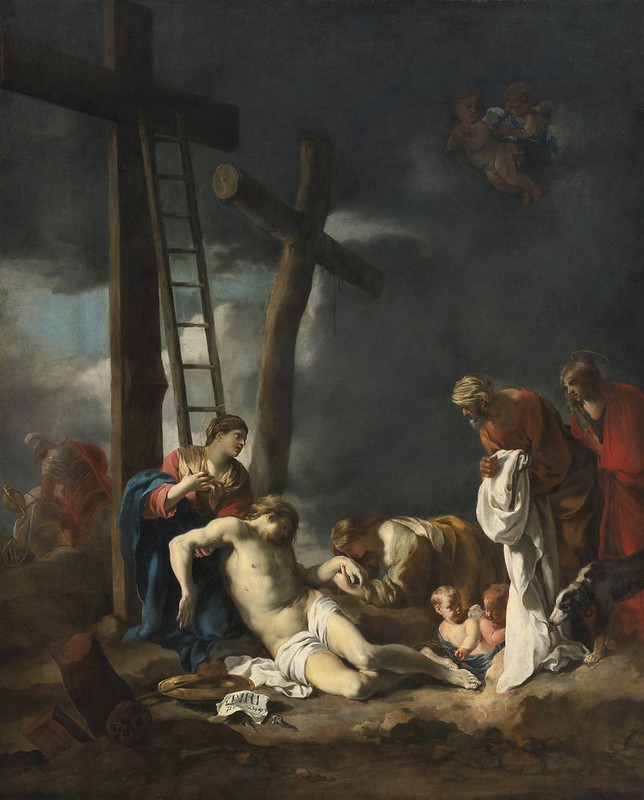
Sébastien Bourdon - The deposition from the cross
Obra de Sébastian Bourdon, pintor francès (1)


Johann Kuhnau (1660-1722). Viatgem al barroc de la mà d'aquest compositor i organista alemany nascut a Geising. Tot i no tenir una vida gaire coneguda o notòria, sabem que la va passar, quasi en la seva totalitat, a Leipzig, ciutat que coneixem prou bé gràcies al gran mestre J.S. Bach. Allà va desenvolupar tota la seva vida musical. Primer com a cantor de l'església Sant Tomàs, la mateixa on Bach va destacar i de quina manera, i després com a director musical de l'església de Sant Pau de Leipzig. Mestre del teclat, va tenir com alumnes a J.D. Heinichen i C. Graupner, destacats compositors del segle XVIII. La seva principal contribució a la història musical alemanya van ser les seves obres per a clavicèmbal o orgue. Ara bé, també va escriure gran quantitat de música religiosa pròpia i característica de l'època, entre ella, la obra que avui recuperaré d'aquest compositor alemany. És un Magnificat, himne cristià molt versionat al llarg de la història de la música i que ja hem tingut la ocasió d'escoltar anteriorment en el bloc amb el Magnificat de C.P.E. Bach i el Magnificat de N. Jommelli. Aquesta versió ens recordarà, inevitablement, l'esplèndida obra que J.S. Bach va escriure l'any 1723.

Ens l'interpreta el Suzuki Bach Collegium Japan sota la direcció de Masaaki Suzuki i té una durada total de 20:49 minuts.

Gaudiu i compartiu!


Font (on trobareu informació addicional així com dels discs on podeu trobar aquestes obres):

BIOGRAFIA: Johann Kuhnau (Geising, 6 d'abril de 1660 - Leipzig, 5 de juny de 1722)
AMAZON: Magnificat Kuhnau, Zelenka, Bach
SPOTIFY: Miah Persson – Kuhnau/Zelenka/Bach: Magnificat


Tant si us ha agradat, com si no, opineu, és lliure i fàcil!