Es mostren els missatges amb l'etiqueta de comentaris Stamic J.V.A.. Mostrar tots els missatges

divendres, 19 de juny del 2026

STAMIC, Jan Václav Antonín (1717-1757) - Sinfonia in D-Dur

Jan Punt (1711-1779) - Lijkstatie van Willem IV (1752)


Jan Václav Antonín Stamic (1717-1757) - Sinfonia in D-Dur
Performers: Die Prager Virtuosen; Oldrich Vlcek (conductor)
Further info: Die Prager Virtuosen

---


Bohemian composer, violinist and teacher. He received his early schooling in Německý Brod, though his first musical instruction doubtless came from his father. From 1728 to 1734 he attended the Jesuit Gymnasium in Jihlava; the Jesuits of Bohemia, whose pupils included the foremost musicians in Europe, maintained high standards of musical education during this period. Stamitz is known to have spent the following academic year, 1734-35, at Prague University. His activities during the next six years, however, remain a mystery. It seems logical to assume that his decision to leave the university was prompted by a desire to establish himself as a violin virtuoso, a goal that could be pursued in Prague, Vienna or countless other centres. The precise circumstances surrounding Stamitz’s engagement by the Mannheim court are unclear. The date of his appointment was probably 1741, for he remarked in a letter of 29 February 1748 to Baron von Wallbrunn in Stuttgart that he was in his eighth year of service to the elector. The most likely hypothesis is perhaps that Stamitz’s engagement resulted from contacts made late in 1741 during the Bohemian campaign and coronation in Prague of the Bavarian Elector Carl Albert (later Carl VII), one of whose closest allies was the Elector Palatine. In January 1742 Stamitz no doubt performed at Mannheim as part of the festivities surrounding the marriage of Carl Theodor. At Mannheim Stamitz advanced rapidly: in 1743, when he was first violinist at the court, he was granted an increase in salary of 200 gulden; in payment lists from 1744 and 1745 his salary is given as 900 gulden, the highest of any instrumentalist at Mannheim; in 1745 or early 1746 he was awarded the title of Konzertmeister; and in 1750 he was appointed to the newly created post of director of instrumental music. 

The latter promotion came almost two years after the offer of a position at the court of Duke Carl Eugen in Stuttgart with an annual salary of 1500 gulden, an offer that the Elector Palatine probably saw fit to match, as Stamitz remained in Mannheim. In court almanacs for 1751 and 1752 Stamitz is also listed as one of the two Kapellmeisters, but after the arrival of Ignaz Holzbauer in 1753 he appears as director of instrumental music alone. Stamitz’s principal responsibilities at court were the composition and performance of orchestral and chamber music, although he seems also to have composed some sacred music for the court chapel. As leader of the band and conductor Stamitz developed the Mannheim orchestra into the most renowned ensemble of the time, famous for its precision and its ability to render novel dynamic effects. Stamitz was also influential as a teacher; in addition to his sons Carl and Anton, he taught such outstanding violinists and composers as Christian Cannabich, the Toeschi brothers, Ignaz Fränzl and Wilhelm Cramer. In 1744 Stamitz married Maria Antonia Lüneborn. They had five children: the composers Carl and Anton, a daughter Maria Francisca (1746-1799) and two children who died in infancy. In 1749 Stamitz and his wife journeyed to Německý Brod to attend the installation of Stamitz’s younger brother Antonín Tadeáš as dean of the Dean’s church. In February 1750, while the family was still in Bohemia, Stamitz’s brother Václav Jan or Wenzel Johann (1724-after 1771), also a musician, was in Mannheim. Johann Stamitz returned to Mannheim in March 1750, but his wife remained temporarily in Německý Brod, where Anton Stamitz was born on 27 November 1750. Probably in late summer 1754 Stamitz undertook a year-long journey to Paris, appearing there for the first time at the Concert Spirituel on 8 September 1754. He presumably returned to Mannheim in autumn 1755, dying there less than two years later at the age of 39.

dilluns, 8 de maig del 2023

STAMITZ, Johann (1717-1757) - Sinfonia in Dis à 8

Georg Balthasar Probst (1732-1801) - Der Parade-Platz zu Mannheim


Johann Stamitz (1717-1757) - Sinfonia in Dis à 8
Performers: Cаmerаtа Romаnа

---


Composer, violinist and teacher. He ranks among the most important early Classical symphonists and was influential in making the court of the Elector Palatine at Mannheim a leading centre of orchestral performance and composition. He received his early schooling in Německý Brod, though his first musical instruction doubtless came from his father. From 1728 to 1734 he attended the Jesuit Gymnasium in Jihlava; the Jesuits of Bohemia, whose pupils included the foremost musicians in Europe, maintained high standards of musical education during this period. Stamitz is known to have spent the following academic year, 1734-35, at Prague University. His activities during the next six years, however, remain a mystery. It seems logical to assume that his decision to leave the university was prompted by a desire to establish himself as a violin virtuoso, a goal that could be pursued in Prague, Vienna or countless other centres. The precise circumstances surrounding Stamitz’s engagement by the Mannheim court are unclear. The date of his appointment was probably 1741, for he remarked in a letter of 29 February 1748 to Baron von Wallbrunn in Stuttgart that he was in his eighth year of service to the elector. The most likely hypothesis is perhaps that Stamitz’s engagement resulted from contacts made late in 1741 during the Bohemian campaign and coronation in Prague of the Bavarian Elector Carl Albert (later Carl VII), one of whose closest allies was the Elector Palatine. In January 1742 Stamitz no doubt performed at Mannheim as part of the festivities surrounding the marriage of Carl Theodor. At Mannheim Stamitz advanced rapidly: in 1743, when he was first violinist at the court, he was granted an increase in salary of 200 gulden; in payment lists from 1744 and 1745 his salary is given as 900 gulden, the highest of any instrumentalist at Mannheim; in 1745 or early 1746 he was awarded the title of Konzertmeister; and in 1750 he was appointed to the newly created post of director of instrumental music. 

The latter promotion came almost two years after the offer of a position at the court of Duke Carl Eugen in Stuttgart with an annual salary of 1500 gulden, an offer that the Elector Palatine probably saw fit to match, as Stamitz remained in Mannheim. In court almanacs for 1751 and 1752 Stamitz is also listed as one of the two Kapellmeisters, but after the arrival of Ignaz Holzbauer in 1753 he appears as director of instrumental music alone. Stamitz’s principal responsibilities at court were the composition and performance of orchestral and chamber music, although he seems also to have composed some sacred music for the court chapel. As leader of the band and conductor Stamitz developed the Mannheim orchestra into the most renowned ensemble of the time, famous for its precision and its ability to render novel dynamic effects. Stamitz was also influential as a teacher; in addition to his sons Carl and Anton, he taught such outstanding violinists and composers as Christian Cannabich, the Toeschi brothers, Ignaz Fränzl and Wilhelm Cramer. In 1744 Stamitz married Maria Antonia Lüneborn. They had five children: the composers Carl and Anton, a daughter Maria Francisca (1746-1799) and two children who died in infancy. In 1749 Stamitz and his wife journeyed to Německý Brod to attend the installation of Stamitz’s younger brother Antonín Tadeáš as dean of the Dean’s church. In February 1750, while the family was still in Bohemia, Stamitz’s brother Václav Jan or Wenzel Johann (1724-after 1771), also a musician, was in Mannheim. Johann Stamitz returned to Mannheim in March 1750, but his wife remained temporarily in Německý Brod, where Anton Stamitz was born on 27 November 1750. Probably in late summer 1754 Stamitz undertook a year-long journey to Paris, appearing there for the first time at the Concert Spirituel on 8 September 1754. He presumably returned to Mannheim in autumn 1755, dying there less than two years later at the age of 39.

divendres, 17 de juny del 2022

STAMIC, Jan Václav Antonín (1717-1757) - Simphonia [D] a più strumenti

Jacques Louis Bance (1761-1847) - La Milice Anglaise


Jan Václav Antonín Stamic (1717-1757) - Simphonia [D] a più strumenti obligati
Performers: Kοmοrní filharmonie Pаrdubice; Lеoš Svárοvský (conductor)

---


Bohemian composer, violinist and teacher. He ranks among the most important early Classical symphonists and was influential in making the court of the Elector Palatine at Mannheim a leading centre of orchestral performance and composition. He received his early schooling in Německý Brod, though his first musical instruction doubtless came from his father. From 1728 to 1734 he attended the Jesuit Gymnasium in Jihlava; the Jesuits of Bohemia, whose pupils included the foremost musicians in Europe, maintained high standards of musical education during this period. Stamitz is known to have spent the following academic year, 1734-35, at Prague University. His activities during the next six years, however, remain a mystery. It seems logical to assume that his decision to leave the university was prompted by a desire to establish himself as a violin virtuoso, a goal that could be pursued in Prague, Vienna or countless other centres. The precise circumstances surrounding Stamitz’s engagement by the Mannheim court are unclear. The date of his appointment was probably 1741, for he remarked in a letter of 29 February 1748 to Baron von Wallbrunn in Stuttgart that he was in his eighth year of service to the elector. The most likely hypothesis is perhaps that Stamitz’s engagement resulted from contacts made late in 1741 during the Bohemian campaign and coronation in Prague of the Bavarian Elector Carl Albert (later Carl VII), one of whose closest allies was the Elector Palatine. In January 1742 Stamitz no doubt performed at Mannheim as part of the festivities surrounding the marriage of Carl Theodor. At Mannheim Stamitz advanced rapidly: in 1743, when he was first violinist at the court, he was granted an increase in salary of 200 gulden; in payment lists from 1744 and 1745 his salary is given as 900 gulden, the highest of any instrumentalist at Mannheim; in 1745 or early 1746 he was awarded the title of Konzertmeister; and in 1750 he was appointed to the newly created post of director of instrumental music. 

The latter promotion came almost two years after the offer of a position at the court of Duke Carl Eugen in Stuttgart with an annual salary of 1500 gulden, an offer that the Elector Palatine probably saw fit to match, as Stamitz remained in Mannheim. In court almanacs for 1751 and 1752 Stamitz is also listed as one of the two Kapellmeisters, but after the arrival of Ignaz Holzbauer in 1753 he appears as director of instrumental music alone. Stamitz’s principal responsibilities at court were the composition and performance of orchestral and chamber music, although he seems also to have composed some sacred music for the court chapel. As leader of the band and conductor Stamitz developed the Mannheim orchestra into the most renowned ensemble of the time, famous for its precision and its ability to render novel dynamic effects. Stamitz was also influential as a teacher; in addition to his sons Carl and Anton, he taught such outstanding violinists and composers as Christian Cannabich, the Toeschi brothers, Ignaz Fränzl and Wilhelm Cramer. In 1744 Stamitz married Maria Antonia Lüneborn. They had five children: the composers Carl and Anton, a daughter Maria Francisca (1746-1799) and two children who died in infancy. In 1749 Stamitz and his wife journeyed to Německý Brod to attend the installation of Stamitz’s younger brother Antonín Tadeáš as dean of the Dean’s church. In February 1750, while the family was still in Bohemia, Stamitz’s brother Václav Jan or Wenzel Johann (1724-after 1771), also a musician, was in Mannheim. Johann Stamitz returned to Mannheim in March 1750, but his wife remained temporarily in Německý Brod, where Anton Stamitz was born on 27 November 1750. Probably in late summer 1754 Stamitz undertook a year-long journey to Paris, appearing there for the first time at the Concert Spirituel on 8 September 1754. He presumably returned to Mannheim in autumn 1755, dying there less than two years later at the age of 39.

dimecres, 31 de març del 2021

STAMIC, Jan Václav Antonín (1717-1757) - Lytaniae Lauretane

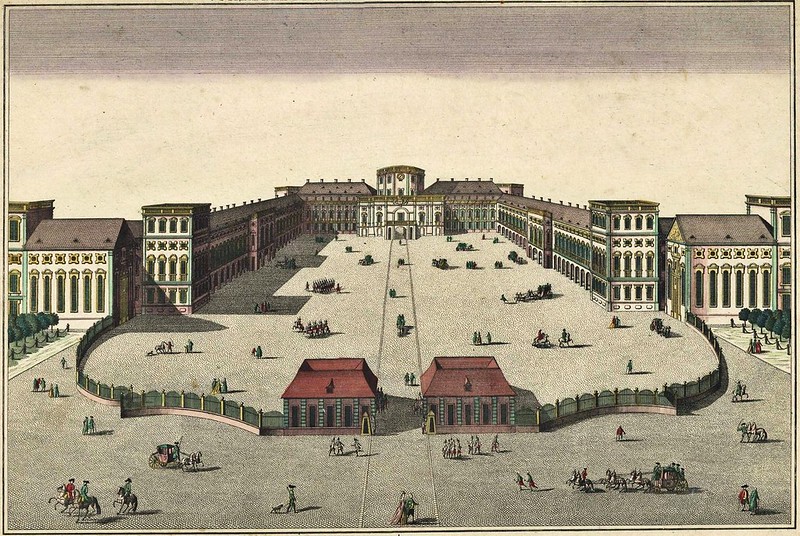
Georg Balthasar Probst (1732-1801) - Prospect des Churfürstl. Schloß zu Mannheim (1780)


Jan Václav Antonín Stamic (1717-1757) - Lytaniae Lauretane et De Nomine Jesu
Performers: Monika Frimmer (soprano); Sylvia Schlüter (alto); Harry van Berne (tenor); Tom Sol (bass);
Alsfelder Vokalensemble; Barockorchester Bremen; Wolfgang Helbich (1943-2013, conductor)

---


Composer, violinist and teacher. He ranks among the most important early Classical symphonists and was influential in making the court of the Elector Palatine at Mannheim a leading centre of orchestral performance and composition. He received his early schooling in Německý Brod, though his first musical instruction doubtless came from his father. From 1728 to 1734 he attended the Jesuit Gymnasium in Jihlava; the Jesuits of Bohemia, whose pupils included the foremost musicians in Europe, maintained high standards of musical education during this period. Stamitz is known to have spent the following academic year, 1734-35, at Prague University. His activities during the next six years, however, remain a mystery. It seems logical to assume that his decision to leave the university was prompted by a desire to establish himself as a violin virtuoso, a goal that could be pursued in Prague, Vienna or countless other centres. The precise circumstances surrounding Stamitz’s engagement by the Mannheim court are unclear. The date of his appointment was probably 1741, for he remarked in a letter of 29 February 1748 to Baron von Wallbrunn in Stuttgart that he was in his eighth year of service to the elector. The most likely hypothesis is perhaps that Stamitz’s engagement resulted from contacts made late in 1741 during the Bohemian campaign and coronation in Prague of the Bavarian Elector Carl Albert (later Carl VII), one of whose closest allies was the Elector Palatine. In January 1742 Stamitz no doubt performed at Mannheim as part of the festivities surrounding the marriage of Carl Theodor. At Mannheim Stamitz advanced rapidly: in 1743, when he was first violinist at the court, he was granted an increase in salary of 200 gulden; in payment lists from 1744 and 1745 his salary is given as 900 gulden, the highest of any instrumentalist at Mannheim; in 1745 or early 1746 he was awarded the title of Konzertmeister; and in 1750 he was appointed to the newly created post of director of instrumental music. 

The latter promotion came almost two years after the offer of a position at the court of Duke Carl Eugen in Stuttgart with an annual salary of 1500 gulden, an offer that the Elector Palatine probably saw fit to match, as Stamitz remained in Mannheim. In court almanacs for 1751 and 1752 Stamitz is also listed as one of the two Kapellmeisters, but after the arrival of Ignaz Holzbauer in 1753 he appears as director of instrumental music alone. Stamitz’s principal responsibilities at court were the composition and performance of orchestral and chamber music, although he seems also to have composed some sacred music for the court chapel. As leader of the band and conductor Stamitz developed the Mannheim orchestra into the most renowned ensemble of the time, famous for its precision and its ability to render novel dynamic effects. Stamitz was also influential as a teacher; in addition to his sons Carl and Anton, he taught such outstanding violinists and composers as Christian Cannabich, the Toeschi brothers, Ignaz Fränzl and Wilhelm Cramer. In 1744 Stamitz married Maria Antonia Lüneborn. They had five children: the composers Carl and Anton, a daughter Maria Francisca (1746-1799) and two children who died in infancy. In 1749 Stamitz and his wife journeyed to Německý Brod to attend the installation of Stamitz’s younger brother Antonín Tadeáš as dean of the Dean’s church. In February 1750, while the family was still in Bohemia, Stamitz’s brother Václav Jan or Wenzel Johann (1724-after 1771), also a musician, was in Mannheim. Johann Stamitz returned to Mannheim in March 1750, but his wife remained temporarily in Německý Brod, where Anton Stamitz was born on 27 November 1750. Probably in late summer 1754 Stamitz undertook a year-long journey to Paris, appearing there for the first time at the Concert Spirituel on 8 September 1754. He presumably returned to Mannheim in autumn 1755, dying there less than two years later at the age of 39.
dissabte, 17 de juny del 2017

STAMIC, Jan Vàclav Antonín (1717-1757) - Organ concertos

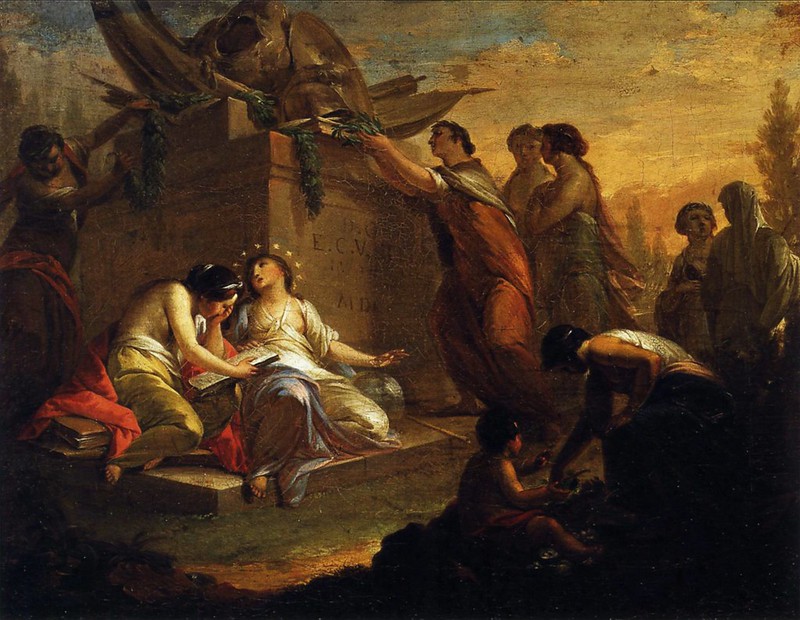
Adam Friedrich Oeser - Denkmal für Ewald Christian von Kleist, 1761
Obra d'Adam Friedrich Oeser (1717-1799), pintor alemany (1)


- Recordatori de Jan Vàclav Antonín Stamic -
En el dia de la celebració del seu 300è aniversari de naixement


Parlem de Pintura...

Adam Friedrich Oeser (Pressburg, 17 de febrer de 1717 - Leipzig, 18 de març de 1799) va ser un escultor i pintor alemany. Es va formar a Pressburg en escultura, amb Georg Raphael Donner, i a Viena en pintura, amb Jacob van Schuppen i Daniel Grau. El 1739 es va traslladar a Dresden on va estudiar amb Mengs i amb Christian Wilhelm Ernst Dietrich. Allà va començar a treballar com a pintor realitzant alguns retrats i escenografies per a l'Opera Reial de la ciutat. El 1759 es va traslladar a Leipzig on va ser nomenat, el 1764, director de l'Acadèmia de Belles Arts. Allà també va treballar com a professor amb alumnes com Goethe, amb qui va mantenir l'amistat posteriorment, i Johann Carl Friedrich Dauthe. A Leipzig va realitzar la majoria de les seves composicions, principalment frescs i pintures de temàtica mitològica i religiosa. Va morir a Leipzig el març de 1799.

Font: En català: No disponible - En castellano: No disponible - In english: Adam Friedrich Oeser (1717-1799) - Altres: Adam Friedrich Oeser (1717-1799)


Parlem de Música...

Jan Vàclav Antonín Stamic (Německý Brod [ara Havlíčkův Brod], bap. 19 de juny de 1717 - Mannheim, bur. 30 de març de 1757) va ser un director, violinista, professor i compositor bohemi. Va estudiar a Iglau i Praga abans d'entrar, el 1741, com a violinista de la capella de l'elector palatí de Mannheim, on el 1744 va assolir el càrrec de Konzertmeister i, anys després, el de mestre de capella de l'església i de la cort, amb el títol de Director de Música Instrumental. El 1751, i el 1754-1755, va viatjar a París, on van ser interpretades diverses de les seves obres i una gran missa solemne. Poc després va tornar a Mannheim, ciutat on va revolucionar el panorama musical europeu gràcies a la direcció de la seva orquestra. Com a compositor, es va caracteritzar per la síntesi dels elements alemanys i italians, i per la innovadora simfonia de Mannheim, sovint de quatre moviments i amb un estil melòdic i popular creant la que seria la simfonia tipus del classicisme, posteriorment adoptada per nombrosos compositors. Com a director d'orquestra va experimentar diverses novetats en les seves obres, com per exemple l'ús dels crescendos, d'efectes sorprenents i amb diverses maneres d'interpretació. Però especialment es va caracteritzar per la seva precisió, poc comuna en les actuacions de conjunt. Els seus fills Karl Stamitz i Anton Stamitz van ser reputats compositors. Jan Vàclav Antonín Stamic va morir a Mannheim el març de 1757.

OBRA:

Vocal religiosa:

Mass, D, 4vv, chorus, orch, org, A-Gd, D-Bsb, I-MOe, ed. in DTB, new ser., iii (1980);
Kyrie–Gloria, 4vv, orch, org, CZ-ME;
Litanie lauretanae, D, 4vv, 2 vn, 2 clarini, b, org, Pnm;
Lytaniae lauretanae (Solenne), C, 4vv, 2 vn, b, org, CZ-ME, Pnm, SK-Mms;
Offertorium [Motetto] de venerabili sacramento, 4vv, orch, org, CZ-Pak, Psj, SK-Mms, ed. in DTB, new ser., iii (1980)

Other vocal:
Cantata, B solo, orch, D-F;
Aria de omni tempore, S, orch, CZ-Pnm

Instrumental:

Orch.:
Syms.:
6 as op.2 (1757), reissued as op.3 (1757), 2 ed. in DTB, iv, Jg.iii/1 (1902), 5 ed. A. Badley (Wellington, 1996);
4 [and 2 orch trios] as op.4 (1758), ed. A. Badley (Wellington, 1995), 1 ed. in DTB, xiii, Jg.vii/2 (1906), 3 ed. in The Symphony 1720–1840, ser. C, iii (New York, 1984), 1 ed. W. Upmeyer (Berlin-Lichterfelde, n.d.);
2 [and orch trio] in Six symphonies … de différents auteurs, op.5 (1759), 1 ed. in DTB, xiii, Jg.vii/2 (1906), 1 ed. A. Badley (Wellington, 1998);
6 as op.7 (1763), 3 ed. A. Badley (Wellington, 1997–8);
6 as op.8 (1763), 2 ed. in The Symphony 1720–1840, ser. C, iii (New York, 1984), 5 ed. A. Badley (Wellington, 1997) [1 by F.X. Richter, ed. in DTB, iv, Jg.iii/1 (1902)];
3 as op.11 (c1771–2) [first pubd in VI sinfonie … intitolate La melodia germanica … da vari autori, op.11 (1758)], 1 ed. in DTB, iv, Jg.iii/1 (1902), 1 ed. in DTB, xiii, Jg.vii/2 (1906);
1 as Simphonie périodique, pubd La Chevardière no.12 (1760);
1 as Simphonia, pubd Huberty no.9 (1762);
30 in MS, incl. A-LA, ST, Wgm, B-Bc, CH-Bu, CZ-Pnm, D-Bsb, DO, DS, HR, Rtt, RUl, SWl, F-CSM, S-Skma, US-Wc, 2 ed. in Corona, xxxviii (1957), nos.2–3 [no.1 by A. Mahaut]
10 orch trios (all ed. A. Badley, Wellington, 1995):
6 sonates à 3 parties concertantes, 2 vn, bc, op.1 (1755), ed. in Collegium musicum, i–vi (Leipzig, 1903), 1 ed. in DTB, iv, Jg.iii/1 (1902), 2 ed. C. Döbereiner (Mainz, 1936–7);
1 in VI sinfonie … da vari autori, op.9 (1757), ed. in Collegium musicum, xlix (Leipzig, 1911);
2 in Six symphonies, op.4 (1758), 1 ed. in Collegium musicum, xlviii (Leipzig, 1911);
1 in Six symphonies … de différents auteurs, op.5 (1759), ed. in Collegium musicum, vii (Leipzig, 1904)

Concs.:
6 for vn (Paris, 1763–4), nos.3–5 lost, but probably preserved in MSS in CZ-K, S-Skma;
8 for vn, A-ST, CZ-K, Pnm, D-Dlb, DO, S-Skma, US-Wc, 1 ed. in Concertino (1964), 1 ed. W. Lebermann (Locarno, 1965);
4 for vn extant only in alternate versions, incl. 3 for fl (1 of which also arr. for va D-EB), 1 for ob [see below];
1 for fl (London, c1770), ed. W. Lebermann (London, 1961);
3 for fl, D-KA, Rtt, F-Pc [also listed as vn concs. in Breitkopf catalogue (1762)], 1 ed. in EDM, 1st ser., li (1964);
8 for fl, A-LA, CH-EN, D-KA, Rtt, RH, 1 ed. H. Kölbel (Zürich, 1966);
1 for ob [also listed as vn and fl concs. in Breitkopf catalogues (1762–3)], ed. H. Töttcher and H.F. Hartig (Hamburg, 1957);
1 for cl, Rtt, ed. in Concertino (1967);
?4 for kbd in Six Concertos … by J. Stamitz (London, c1775) [no.4 by J.J. Agrell, no.6 by J.G. Lang; probably incl. 2 hpd concs. listed in catalogues of La Chevardière (c1763–4)], 1 (also pubd The Hague, c1767) ed. K. Schultz-Hauser (Mainz, 1981) and R. Walter (Vienna, 1986)

Other orch:
2 pastorellas, Rtt;
12 minuets, 13 polonaises, A-Wn, SK-TR, doubtful

---

Chbr.:
Trios:
6 for vn, fl, bc (n.d.);
1 for vn, fl, bc, B-Bc;
4 for 2 vn, bc, CZ-Pnm, D-DS, KA, S-Skma;
2 for 2 fl, bc, B-Bc, D-HR;
1 for ob, vn, bc, US-Wc

Sonatas:
6 sonate da camera, vn, bc, op.6 (c1759), facs. in ECCS, v (1991) [also as 6 Solos (London, c1767)], 1 ed. in DTB, xxviii, Jg.xvi (1915), 1 ed. in MAB, xxviii (1956), 1 ed. in Böhmische Violinsonaten, ed. S. Gerlach and Z. Pilková, i (Munich, 1982);
5 for vn, bc, B-Bc, F-Pc;
?6 for vc, bc, D-SWl, doubtful;
?1 for vn, hpd (London, c1770) [also attrib. C.H. Graun, J.G. Neruda]

Other chbr:
2 divertissements en duo, vn solo (1762), ed. E. Zetlin (New York, 1949);
6 fl duets (London, c1775);
caprices, vn solo, A-Wgm, Wn, D-Bsb, Rome, Fondo Monachesi, doubtful;
8 minuets, 1 polonaise, D-DS, doubtful

---

Lost works incl. at least 10 syms.;
5 partitas;
1 pastorella, vn obbl;
?7 vn concs.;
fl conc.;
?1 hpd conc.;
3 vn sonatas;
vn sonata, hpd obbl, doubtful;
Omni die, aria, B solo, orch

Font: En català: Jan Vàclav Antonín Stamic (1717-1757) - En castellano: Jan Vàclav Antonín Stamic (1717-1757) - In english: Jan Vàclav Antonín Stamic (1717-1757) - Altres: Jan Vàclav Antonín Stamic (1717-1757)


Informació addicional... 

INTERPRETS: Alena Veselá (organ); Komorní Orchestr Bohuslava Martinu; František Jílek (1913-1993, conductor)
RECICLASSICAT: STAMIC, Jan Vàclav Antonín (1717-1757)
APESOUND: STAMITZ, J. - Organ Concertos
CPDL: No disponible
SPOTIFY: STAMITZ, J. - Organ Concertos


Tant si us ha agradat, com si no, opineu, és lliure i fàcil!

dimecres, 27 de març del 2013

STAMIC, Jan Václav Antonín (1717-1757) - Early String Symphonies

Claude-Joseph Vernet - The four times of day Midday
Obra de Claude Joseph Vernet (1714-1789), pintor francès. 

- En record del 256è aniversari del decés de Jan Václav Antonín Stamic -


Jan Václav Antonín Stamic (1717-1757) compositor i violinista txec nascut a Havlíčkův Brod. Encara amb la commoció al cos l'endemà de l'estocada definitiva de Gardiner i de Bach, de qui en faré una breu ressenya al final, despertem del somni i afrontem un nou dia amb els sentits, encara, trastocats pel nirvana d'ahir a Barcelona. Perquè el temps no s'atura i la història tampoc, viatgem a la República Txeca per a conèixer un dels seus il·lustres, o il·lustríssim segons el cas, ciutadans i ambaixador de l'antiga Bohèmia. Efectivament, i per fi, avui parlarem del principal inductor, gerent i promotor de la reconegudíssima Orquestra de Mannheim i fundador de l'Escola que porta el mateix nom. Stamic, pare del reconegut Carl Stamitz, va estudiar música amb el seu pare, organista local per, posteriorment, traslladar-se a viure Jihlava on seria ben rebut pels Jesuïtes comunitat, aquesta, íntegrament compromesa amb la música i el seu ensenyament. La següent etapa seria a Praga, concretament a la Universitat Carolina. Des d'allà faria el salt definitiu a Mannheim, ciutat alemanya d'uns 25000 habitants en aquell temps, i a on l'any 1743 seria nomenat violinista de la modesta orquestra de la ciutat. Poc s'imaginarien els incrèduls ciutadans mannhenians que en pocs anys la seva ciutat estaria en boca dels virtuosos cercles culturals europeus i que, entre altres, els seus carrers serien trepitjats pels Mozart i companyia. No hi ha dubte que si ens demanen situar en un temps l'edat d'or de Mannheim es correspondrà, sense discussió, durant la segona meitat del segle XVIII. 

Musicalment parlant, Johann Stamitz va ser el primer compositor que sistemàticament va escriure simfonies de quatre moviments afegint-hi un minuet als tradicionals tres moviments en què s'estructuraven fins aleshores les simfonies. Avui tanmateix ens fixarem, d'un repertori molt extens i instrumentalment ben conservat i editat, en els primers treballs de Stamitz que porten per títol Primeres simfonies de corda les quals, com ens indica el seu nom, estan pensades per a instruments de corda. Violins, violes, violoncels, contrabaix, tiorbes i clavicèmbal. En un temps en què els instruments de vent prenien un protagonisme evident, les simfonies de corda començaven a ser una raresa. No obstant, aquestes són i representen un exemple clarivident i lluminós d'un classicisme que s'expandia exponencialment. Recuperaré dues d'elles, la Simfonia a 4 en Fa major i la Simfonia a 4 en Re major. De tres moviments, molt ràpid-lent-molt ràpid o minuet, segons el cas, són la continuació i l'evolució musical de les simfonies de cordes. En relació a Mannheim i a la seva potent orquestra, molt valorada per la qualitat interpretativa, em quedaré amb les paraules que Leopold Mozart va dir al respecte l'any 1777:
"Mannheim, aquesta famosa Cort on els raigs, com els del Sol, il·luminen el conjunt d'Alemanya, més encara, fins i tot, el conjunt d'Europa"
De tornada a casa nostra i com deia al principi, ahir a l'Auditori, tots aquells que vam tenir la fortuna, induïda o fortuïta, d'assistir a una classe magistral d'interpretació de Gardiner i dels seus pupils extraordinaris del Cor Monteverdi i de la English Baroque Solists, ens vam quedar embadalits, sense paraules, hipnotitzats per la música divina de Bach però també per la solvència d'un Gardiner tan expressiu a l'escenari com efectiu i contundent a l'hora de posar ordre, èmfasi, delicadesa o solemnitat a una obra de per si antològica com és la gran Missa en Si menor. Dues hores de concert, en un auditori captivat i en un silenci inaudit trencat per una ovació sense però(s) possibles. Les expectatives eren molt altes, coneixent d'avançada la trajectòria de Gardiner, no només amb la música de Bach i la recent (darrers 10 anys) edició de luxe de les seves cantates d'una qualitat excepcional, sinó també per produccions com la integral de les Simfonies de Beethoven. Un acostuma a pensar que el directe no pot ser, ni per aproximació, com en un estudi de gravació. Ahir, simplement, no només ho semblava sinó que el conjunt, amb la càrrega emocional de viure-ho, escoltar-ho i gaudir-ho en directe, va trencar registres i va situar la gran missa de Bach en el Cel, el lloc que, evidentment, l'hi correspon!

A la interpretació de les simfonies la New Dutch Academy Chamber Orchestra amb Simon Murphy a la batuta.

Gaudiu i compartiu!


Font (on trobareu informació addicional així com dels discs on podeu trobar aquestes obres):


Tant si us ha agradat com si no, opineu, és lliure i fàcil!