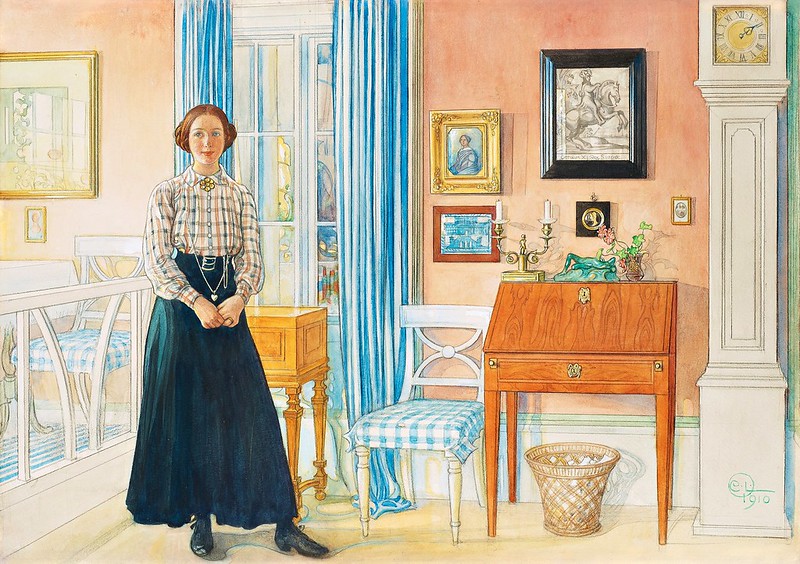
Obra d'Aelbert Cuyp (1620-1691), pintor holandès (1)
Johann Baptist Dolar (1620-1673) - Sonata a 10
Berthold Hipp (1620-1685) - Si quaeris miracula
Fabrizio Fontana (1620-1695) - Ricercare
Carl Luython (1557-1620) - Missa basim Caesar Vive! a 7
Adam Drese (1620-1701) - Sonata à 6 in C
Andrea Mattioli (1620-1679) - Ave Regina coelorum
Domenico Pellegrini (1620-1662) - Chiaconna
Martin Koler (1620-1703) - Herr wie lange
Valentine Oldis (1620-1685) - Suite in G
Joachim van den Hove (1567-1620) - Windeken
Petrus Hurtado (1620-1671) - Illibata ter beata
Francisco Martins (1620-1680) - Caligaverunt
Riccardo Rognoni (c.1550-1620) - Pulchra es amica mea
Vittoria Aleotti (1573-1620) - Se del tuo corpo
Johannes Nucius (1556-1620) - Tu es Petrus
Jean Colin (1620-1694) - Missa pro defunctis a six voix (1688)
Cyriacus Wilche (1620-1667) - 'Battaglia -anno 1659 composita'
Francesco Sabino (1620-1660) - Scitote quoniam Dominus
- 400è aniversari de compositors a qui difícilment escoltarem -
(1620-2020)
Portraits source: ©Tassos Dimitriadis
(1620-2020)
Portraits source: ©Tassos Dimitriadis
Parlem de Pintura...
Aelbert Jacobsz Cuyp (Dordrecht, octubre de 1620 - Dordrecht, 15 de novembre de 1691) va ser un pintor holandès. De família d'artistes, el seu avi Gerrit Gerritsz Cuyp va ser un notable artesà, i el seu pare Jacob Gerritsz Cuyp i el seu oncle Benjamin Gerritsz Cuyp van ser pintors. Cuyp va ser el sobrenom que Jacob Gerritsz va començar a utilitzar a partir de 1617, i el seu ús es va estendre a la resta de la família. Es va formar inicialment amb el seu pare i durant els primers anys de la dècada de 1640 ambdós van col·laborar estretament en obres en les quals Aelbert pintava l'escenari paisatgístic i el seu pare les figures. En aquest període inicial va viatjar per Holanda i el Rhin, realitzant dibuixos de Rhenen, Arnhem, Amersfoort, Utrecht, Leiden i La Haia. Els seus primers quadres es van inspirar en la pintura 'tonal' de Jan van Goyen, Salomon van Ruysdael i Herman Saftleven II, però mostrant una preferència per les gammes monocromàtiques de grocs a diferència de les tonalitats de grisos i marrons característiques dels pintors tonals. A partir de 1645 la seva obra va mostrar influències dels paisatgistes italianitzants, especialment de Jan Both i Herman van Swanevelt. En aquest període va introduir una il·luminació més daurada, vistes escarpades i arbres alts i allargats; tots ells elements típics de l'escola d'Utrecht. El 1652 va fer un nou viatge pel Rin i el Waal, arribant fins a Cleve, Elten i Emmerich, i en el transcurs del qual va realitzar nombrosos dibuixos els quals posteriorment van ser una profunda font d'inspiració. El 1658 es va casar amb Cornelia Boschman (1617-1687), vídua adinerada d'un governador local i neta del teòleg Franciscus Gomarus. A partir d'aleshores, va abandonar la pintura en favor dels negocis familiars i per participar activament en la vida de la ciutat. En aquest sentit, va ser diaca i oficial de l'església Reformada, governador de la institució de caritat més important de Dordrecht i, el 1679, es va convertir en membre del Tribunal del Sud d'Holanda. El seu principal deixeble va ser Abraham van Calraet, moltes de les obres del qual han estat habitualment atribuïdes al seu mestre. Aelbert Jacobsz Cuyp va morir a Dordrecht el novembre de 1691.
Parlem de Música...
Vittoria Aleotti (1573-1620)
Italian composer, possibly identical with Raffaella Aleotti. Daughter of Ferrarese architect Giovanni Battista Aleotti, she first learned music by overhearing lessons intended for an older sister. Astonishing her parents and her sister’s teacher, Alessandro Milleville, by her harpsichord performance at about age six, she was taught directly by Milleville for at least two years before he recommended that she be educated at the musically renowned convent of S Vito, Ferrara. According to her father, Vittoria ‘chose to dedicate herself … to the service of God’ when she was 14. Sometime after that her father obtained madrigals from G.B. Guarini for her to set to music. He gave the results to Count del Zaffo, who had the music printed by Vincenti in Venice, as Ghirlanda de madrigali a quattro voci, in 1593. They represent a range of late 16th-century styles, from simple canzonettas to serious efforts at exploiting dissonance to express images of amorous longing or distress. Occasional awkward handlings of imitation or of text declamation suggest that the madrigals of Ghirlanda were still student works. Nothing more is known about Vittoria Aleotti. Carruthers-Clement, Bridges and Ossi believe that she took the name Raffaella when she professed vows as a nun at S Vito, because there is no record of a Vittoria at S Vito, and because her father’s will mentions a daughter named Raffaella but not one named Vittoria.
Thomas Blagrave (1620-1688)

English composer, cornett player, violinist and singer. He was the son of Richard Blagrave, wind player at Charles I's court, and joined his father in the cornett and sackbut consort in 1637, inheriting his place in 1641. He shared the role of Mustapha with Henry Purcell the elder in Davenant's The Siege of Rhodes (1656), and was one of Cromwell's musicians (probably 1657–8). At the Restoration, Blagrave took up his former post as a court wind player, also receiving a place in the Twenty-Four Violins; his nephew Robert served alongside him in this dual capacity. Thomas was also a member of the revived Chapel Royal, was made Clerk of the Cheque in 1662, and Master of the Choristers of Westminster Abbey (where he was buried) in 1664, though according to Anthony Wood he was ‘a player for the most part on the cornet’ in the Chapel Royal. Wood thought him ‘a gentile and honest man’, and Pepys often mentioned him in his diary. His portrait is in the Oxford Music Faculty, and two songs of his survive: What conscience say is it in thee (RISM 16695) and an attractive setting of Sir Robert Ayton's What means this strangeness now of late (ed. in MB, xxxiii, 1971).
Jean Colin (1620-1694)
French composer, Cantor, then chapel master and conductor. Priest and canon of the cathedral of Soissons.
Michael de Ronghe (1620-1696)
Flemish composer. He entered the Cistercian abbey of St Bernard at Hemiksem on 5 August 1640 and was ordained on 17 March 1646. For much of his life he was choir director (‘cantor perpetuus’) of the abbey and in this capacity compiled several choirbooks after a fire in 1672. He was probably the composer of a lost volume of five-part pieces for voices and instruments, Nardus odorifera, harmonica, dorica, fugata, opus integrum musicum (Antwerp, 1663), which (following Bouvaert) has traditionally been attributed to Albericus de Ronghe (1615-66), a sometime colleague at St Bernard who published two devotional works; in one of them he is referred to as an able organist.
Janez Krstnik Dolar (1620-1673)
Slovenian composer. He studied at the Jesuit college in Ljubljana until 1639, when he was accepted as a novice in Vienna, where he studied philosophy. After 1645 he taught at the Jesuit high school in Ljubljana before continuing his theological studies in Vienna. He was ordained in 1652. From 1656 to 1658 he was musical director at the Jesuit college, Ljubljana, after which he was called to Passau. In 1659 he was listed as a regens chori in Györ, Hungary. In 1661 or 1662 he became director of the Jesuit seminary of St Ignites and Pancraties, Vienna, as well as musical director of the Kirche Am Hof. He held this post until his death. Dolar’s music apparently appeared in two printed editions, Musicalia varia (1665) and Drammata seu Miserere mei Deus (1666), but these have not survived. Transcriptions of his works are mentioned in the musical registers of monasteries in Bohemia and Moravia (Osek, Slaný, Česky Krumlov, Kroměříž), Hungary and Austria (St Paul im Lavanttal, Eisenstadt, Kremsmünster), and in the register of a court chapel in Rudolstadt, Thuringia. The archives of the Prince-Bishop of Olomouc, Karl Lichtenstein-Castelcorn, preserve 13 compositions by Dolar, probably transcribed by Josef Vejvanovski: two masses, five psalms, an antiphon, two sonatas and three ballettos. The archive of the Benedictine abbey in Kremsmünster preserves the monumental Missa Viennensis, transcribed by Theophil Schrenk. The masses, psalms and antiphon are for four to 16 voices with instruments. The sonatas were undoubtedly written for church services, but the ballettos would have been used in seminary and monastery refectories. Dolar’s works all exhibit elements of Italian musical style, popular among Viennese court musicians in the second half of the 17th century.
Adam Drese (1620-1701)
German composer, viol player and teacher. He was the outstanding member of a dynasty of Thuringian musicians. Drese is first heard of in Merseburg as collaborator and cathedral musician. By 1648 he was serving as director of music to Duke Wilhelm IV of Saxe-Weimar at Weimar and played a major part in rebuilding the court musical establishment there after the ravages of the Thirty Years War. The musical life at the court benefited from his visits to Warsaw before 1649 to study with Marco Scacchi (returning via Jena), to Dresden in 1652 and 1656 to study with Schütz and to examine the court musical establishment and in 1653 to Regensburg and Coburg. An inventory of the Weimar court music that he compiled in 1662 shows that he played an important part in transmitting Italian musical traditions in particular from region to region. Duke Wilhelm’s death the same year led to the dismissal of the court musicians and after applying unsuccessfully for a post to the Landgrave of Hesse-Darmstadt, Drese referred to himself as being ‘without a position for some time’. But already by 1663, he went, possibly via Darmstadt, to Jena, where he served the court of Duke Bernhard as Kapellmeister and private secretary and the town as mayor. He strengthened the court musical establishment with some of the musicians who had previously served under his direction at Weimar. He also maintained his connections with Weimar by working there as well as at Jena as a director of operatic and other theatre music. He also had connections with Jena University: for example, he wrote a work to celebrate the duke’s installation as rector of the university, and in 1677 a ‘sacred comedy’ by him on Christ’s resurrection caused a scandal at a student performance; both works are now lost. He was also active as a teacher; Christian Demelius was one of his numerous pupils.
After Duke Bernhard’s death in 1678, Drese moved to Arnstadt to become Kapellmeister to the Count of Schwarzburg and he remained there until his death. There he came into close contact with musicians of the Bach family and others who, like himself, were outstanding viol players. This move caused a decisive change in his life. Whereas he had previously been concerned chiefly with secular music-making, including uninhibited theatre music, he now became a devout advocate of the Pietism of Philipp Jakob Spener. The conventicles of Pietist sympathizers that met in his house aroused the disfavour of their intolerant opponents, and so Drese (who described himself in 1697 as ‘a loyal old Saxon servant approaching the grave’) found that his last years were tinged with bitterness. Most of Drese’s music is lost, including many works listed in his inventory of 1662 (D-WRtl) and in the Erlebach catalogue (D-RUl). Most of his surviving music awaits proper investigation, as does his influence on his contemporaries; in this respect it is unfortunate that among his lost works is a treatise on music. The motet Wie seelig sind die Toten was composed ‘as the result of Invention having given advantage to Music and to the Trumpet’ (title-page). The trumpet invention was (according to Downey) the development of the single Slide trumpet. The musical invention was a form of dramatic dialogue that radically expanded techniques found in Schütz’s Musicalische Exequien (1636). The Pietism of his last years is foreshadowed to some extent in the melodies that he contributed to collections of sacred verse in the 1650s. His chorale Seelenbräutigam, which was printed in a Darmstadt songbook of 1698, is very well known as Jesu, geh’ voran: this text was later written to it by Zinzendorf.
Fabrizio Fontana (1620-1695)
Italian organist and composer. He was organist of Turin Cathedral in 1632 but spent much of his working life in Rome. In 1651 he was a member of the Congregazione di S Cecilia. He became organist of S Maria in Vallicella and continued to hold this post while acting as Alessandro Costantini's substitute at S Pietro from 24 September 1657. After Costantini's death on 20 October 1657, he was appointed organist of S Pietro. On 7 March 1664 he was organist of the second choir at the first oratorio in S Marcello, and he played the ‘violone’ (probably cello) at similar oratorios from 1674 to 1678. In 1653 and 1688 he was guardiano of the organists' section of the Congregazione di S Cecilia. On 13 August 1691 he retired from S Pietro and received a pension ‘on account of his old age and in recognition of his outstanding service’.
Giovanni Battista Granata (1620-1687)

Italian guitarist and composer. He moved to Bologna some time before 1646 and remained there for the rest of his life. From 1651 to 1653 he is listed as a liutista sopranumerario in the Concerto Palatino at Bologna. By 1659 he had become a licensed barber-surgeon, and records indicate that he ran a bottega di barbitonsore from 1661 to 1668. He appears to have maintained his career as a guitar teacher and composer throughout his life; in his op.6 he even invited those interested in his music to come to Bologna for personal instruction. Granata was the most prolific guitarist of the 17th century, with seven published books. Five were issued by Giacomo Monti, the only printer of the period to use movable type instead of engraving for the battute and pizzicate (strummed and plucked) styles, and Granata's Capricci armonici was the first large-scale work to use this process. The complexity of the notation led to numerous typographical errors, but, after a reversion to engraving for the Nuove suonate and the Nuova scielta di capricci, Granata's final four tablatures were all printed with movable type, often with handwritten corrections made at the print shop. Granata's style changed and evolved a great deal between 1646 and 1684; his earliest works are closely related to those of Foscarini and are noticeably French in their organization of dance suites (allemande, courante and saraband), while his last four books are his most ambitious and complex, with pieces for one or two violins, guitar and continuo, as well as some of the most virtuoso guitar music published up to that time. Op.4, with 168 pages, is one of the longest guitar tablatures of the period and also one of the most varied: it includes pieces for five different scordaturas, a sonata for violin, guitar and continuo, pieces for chitarra attiorbata (a guitar with extended bass strings) and a continuo treatise. Granata's later style, from op.5 onwards, includes extensive use of campanelas, the upper registers of the instrument, violinistic figuration and complex rhythms. He composed in the standard dance genres of the day, but also showed an unusually keen interest in toccatas, preludes, chaconnes and other genres.
Berthold Hipp (1620-1685)
Compositor suís. Es desconeix la quasi totalitat de la seva vida. La única certesa va ser la relativa al seu treball com a organista i compositor en el monestir franciscà de Solothurn. Allà es creu va escriure obra religiosa de la qual en va destacar una col·lecció de vespres i el llibre Heliotropium Mysticum (1671). Berthold Hipp va morir a Solothurn l'octubre de 1685.
Petrus Hurtado (1620-1671)
Compositeur et maître de chant de la cathédrale Saint-Bavon de Gand au milieu du XVIIe siècle. Bien que son nom de famille indique sans doute une origine ibérique, il peut être né aux Pays-Bas méridionaux. Pendant dix ans, Hurtado remplit les fonctions d'enfant de chœur à la chapelle royale de Bruxelles. Ayant perdu successivement son père, qui fut lieutenant de cavalerie dans l'armée du roi d'Espagne, et son beau-frère, Laurent Wilmetz, qui servit en qualité de capitaine dans la même armée, il se vit obligé de pourvoir à l'existence de sa mère et de cinq orphelins de son frère. Ses ressources ne lui permettant pas de faire face à leurs besoins, il attendit une occasion favorable pour améliorer sa position, et la mort de Van Biervliet, chanoine de la collégiale Sainte-Pharaïlde de Gand, ne tarda pas à la lui fournir. Pierre Hurtado y de Avalos, « prebstre » et « maistre de chant », s'adressa donc au gouverneur des Pays-Bas pour l'obtention de cette prébende, et nous supposons qu'elle lui fut octroyée sans la moindre opposition. Sa requête, que l'on conserve aux Archives du royaume, ne porte pas de date. Mais les mots « dernier siège d'Arras » indiquent clairement un événement tout récent, sans doute le siège d'Arras de 1654. D'après Hellin, la cathédrale Saint-Bavon avait jadis un maître de musique, douze musiciens, non compris l'organiste et les instrumentistes. Pour être placé à la tête d'un tel ensemble, Hurtado devait avoir un mérite sérieux.
Martin Köler (1620-1703)
German composer. By 1661 he belonged, under the name ‘Musophilus’, to the well-known poetic academy, the Elbschwanenorden. On 2 May 1663 he succeeded Johann Jakob Löwe von Eisenach as Kapellmeister at the court in Wolfenbüttel, but in April 1667 the chapel was dissolved. He may have been the Coler who was Kapellmeister in Bayreuth in May 1671 and who was succeeded by Johann Philipp Krieger a short time later. In 1675 he was temporary head of the court chapel at Gottorf, Schleswig, following the dismissal of Theile, and he remained in Schleswig until 1681. He possibly served also as Kapellmeister in Brunswick and Lüneburg. Köler was one of the many minor composers in the Hamburg area who wrote songs to texts by Johann Rist and his disciples. He composed all the music for Rist's Neue hochheilige Passions-Andachten and contributed music to Georg Heinrich Weber's Abgewechselte Liebesflammen. He may well be the ‘M.C.’ who composed songs for Caspar von Stieler's Die geharnschte Venus; but Vetter thought it possible that two different composers with the initials ‘M.C.’, one of them Köler, contributed to this work, since while some pieces are subtle, expressive lieder blending text and music satisfactorily, others are simply mechanical declamations. The sacred concertos in Exercitia vocis (RISM 16677) are his most important works.
Carl Luython (1557-1620)
Flemish composer and organist. He spent nearly all his life in the service of the Habsburg imperial chapel in Vienna and Prague. In 1566 he was recruited as a chorister for the court of the Emperor Maximilian II in Vienna; his music teachers there may have been Jacobus Vaet, Alard du Gaucquier and Philippe de Monte, while he must have studied the organ either with the first court organist Wilhelmus Formellis or with one of the sub-organists, Wilhelm von Mülin or Paul van Winde. On leaving the chapel on 30 July 1571 after his voice changed, Luython was given the usual honorarium of 50 guilders. He travelled to Italy to work and further his education, as had other imperial court singers such as Jacob Regnart. On 18 May 1576 he returned to the employ of the imperial court as a ‘chamber musician’ (probably as organist rather than singer) with a salary of 10 guilders a month. He was one of the first members of the newly founded Kammermusik, a parallel establishment to the court chapel and the military band. In 1577 Luython was retained as a chamber organist in the newly established court of Maximilian's successor Rudolf II, which was transferred to Prague. Between 25 February 1580 and 28 February 1581 he augmented his meagre salary with that of a junior official in the imperial wardrobe (unndergwardaroba). When the first court organist Formellis died on 4 January 1582, Luython was retroactively appointed third court organist as from 1 January 1577, with a monthly salary of 25 guilders. Later in 1582 he accompanied Rudolf to the Diet at Augsburg as second court organist, and at that time he published in Venice his first and only book of madrigals, dedicated to the Augsburg magnate Johann Fugger. This excursion began the rise of Luython's reputation.
Luython collaborated with the organ builder Albrecht Rudner on the reconstruction of the organ in Prague Cathedral. The two disagreed on several matters, and in court records between April 1581 and 22 December 1590 Luthon's objections are spelt out in great detail. His first collection of motets, Popularis anni jubilus, was published in Prague in 1587, with a dedication to Rudolf II's brother Archduke Ernst on the occasion of his consecration as bishop. On 1 April the same year Luython was granted a minor coat of arms (Wappen mit Lehenart) in recognition of his services as court organist. He probably served in effect as first court organist from 1594, when Paul van Winde left for the Netherlands; he was officially appointed to the post when van Winde died in 1596. When Monte died on 4 July 1603, Luython succeeded him as court composer, with an increase in salary of 10 guilders a month. He published in Prague another volume of motets in 1603, a book of Lamentations in 1604, and a collection of masses in 1609 (twice reprinted in Frankfurt). The dedication of the masses to Rudolf II brought Luython a gift of 500 guilders. On 16 May 1611 he was awarded a yearly pension of 200 guilders in recognition of 35 years of loyal service to the imperial court. But like many of Rudolf's employees, Luython had trouble collecting what was owed him; his salary had been 1600 guilders in arrears in 1591, and during Rudolf's lifetime he was hard pressed to collect his pension. After Rudolf's death in 1612, his brother and successor Matthias disbanded the court chapel and disclaimed responsibility for debts to its members. Luython, who had never married or taken holy orders, died a pauper in 1620, leaving 2400 guilders in arrears of salary and pension to his brother Claude and sisters Clara and Sibella; his will was never executed.
Francisco Martins (1620-1680)
Portuguese composer. On 20 June 1629 (Barbosa Machado) or 16 August 1634 (Alegria, História) he became a choirboy at Évora Cathedral, where his uncle Domingos Martins de Almeida had been master of the choirboys from 1608 to about 1618, and where he studied with either Manuel Rebello or António Rodrigues Vilalva, depending on his date of entry. By 27 December 1650 he had entered the priesthood and was mestre de capela of Elvas Cathedral, a post that he held for the rest of his life at an annual salary of 37,500 réis. His expressive, chromatically inflected works demonstrate the high quality of musical practice even at the lesser Portuguese cathedrals in the 17th century.
Andrea Mattioli (1620-1679)
Italian composer. The designation of his op.1 as ‘immature first fruits’ suggests a birthdate not much before 1620. He was a beneficed priest and maestro di cappella of Imola Cathedral in 1646. In 1649 (or possibly 1656) he was described as a vicar of S Romano, Ferrara. By early 1650 he was maestro di cappella of the Accademia dello Spirito Santo at Ferrara, the city for which he composed most of his operas; he was succeeded late in 1654 by Tricarico. From at least 1656 until his death he served as court maestro di cappella to the Duke of Mantua; in 1658 he was listed among the foreigners living in the parish of S Pietro, Rome. According to Schmidl he was a Franciscan friar. Little of his secular music survives; his sacred works range from concerted solo motets in several contrasting sections to psalm settings ‘alla moderna’ for two choirs.
Johannes Nucius (1556-1620)
German composer and theorist. His Musices poeticae is a major treatise about compositional practices in the early 17th century. Nucius was a private pupil in composition of Johannes Winckler, who became Kantor at the Gymnasium at Görlitz in 1573. Even after 40 years he prized Winckler's instruction, the principles of which, as he said in the introduction, were the basis of his Musices poeticae. About 1586 he took his vows as a Cistercian monk at the monastery of Rauden, Upper Silesia, where he probably received the broad humanist education that appears to have influenced his later writing. By 1591 he had become deacon at Rauden and in that year published the first of his two books of motets, which he dedicated to his abbot. Also in 1591 he was made abbot of the small monastery of Himmelwitz. In 1598, in order to devote more time to composition and writing, he delegated many of his administrative tasks to one of the priors. In the last two years or so of his life, however, he was much involved in directing the rebuilding of the monastery and church after a disastrous fire on 22 June 1617, which destroyed more than half of the buildings. His death followed a crippling illness and blindness.
Valentine Oldis (1620-1685)
English apothecary, poet and amateur composer. His father, also Valentine, had him educated at Cambridge. According to Anthony Wood he was ‘an Apothecary in the Blackfriars in London in the time of the rebellion’. He published a poem in praise of the Restoration, and contributed to other collections, including Alexander Brome's Songs and other Poems (London, 1664). He was made a Cambridge Doctor of Medicine by the king's warrant on 6 October 1671, and became an honorary member of the College of Physicians in 1680. He was buried in St Helen Bishopsgate. Apart from two two-part suites in Playford's Court Ayres (RISM 16555), all of his music is found in a Bodleian Library manuscript (GB-Ob Mus.Sch.G.612; for details see DoddI), which Edward Lowe noted was ‘given mee by the Author 24th march 1659 [?1660] at ye Legge in Kings-Street Westminster’. It contains four suites for two trebles and bass, a fifth for three trebles and bass, the bass part of a sixth, and a seventh suite of three-part ‘ayres alamode made in ye yeare 1674’ added later by Lowe. Lowe copied the first six suites into another manuscript (Och Mus.382–4), and the 1674 suite also appears elsewhere (Ob Mus.Sch.C.44 and E.451). Oldis's music is fluent and attractive in an old-fashioned idiom reminiscent of Jenkins's lighter middle-period works.
Domenico Pellegrini (1620-1662)

Italian guitarist and composer. He was a member of the Accademia dei Filomusi, a performer in the Concerto Palatino (both in Bologna) and one of several guitarists whose works were published by Giacomo Monti. His Armoniosi concerti contains guitar pieces combining the battute and pizzicato styles, in the manner of Foscarini, Corbetta and Granata; many of them are dedicated to fellow members of the Accademia. Pellegrini's style is conservative by mid-17th century standards, with almost no use of campanelas passages or the upper octaves of the bass strings; some of the pieces do not even include strummed chords, like Foscarini's early lute-style pieces. The preface contains important pedagogical information on arpeggiation, dynamics, slurs and ornaments. Three of the five surviving copies also contain an engraved frontispiece of the composer, clearly showing long fingernails on his right hand. The pieces include a battaglia francese, using motifs from French lute tablature, and a series of passacaglias ‘per tutte le lettere, e per diversi altri tuoni cromatici’, which modulate through all 24 major and minor keys before returning to the original tonality.
Tobias Richter (1620-1682)
Sänger, Organist, Kapellmeister und Komponist. Richter erhielt seine musikalische Ausbildung am Münchner Hof und trat zuerst als Diskantist in Erscheinung. Orgel- und Kompositionsunterricht erhielt er seit 1631 durch Hoforganist Anton Holzner. Ein Gesuch vom 22. Oktober 1636 um eine Zulage wegen der „durch das studio Componendi und ergreifung des Orgelschlagenß und Singenß“ (KirschL, S.165) entstandenen Kosten belegt, dass die Unterweisung im Orgelspiel damals noch nicht abgeschlossen war. Vermutlich vertrat Richter zu diesem Zeitpunkt die durch den Tod seines 1635 verstorbenen Lehrers Holzner vakant gewordene Organistenstelle. 1637 oder bald danach dürfte Richter die Münchner Residenz mit der kurmainzischen vertauscht haben. Unter den im Würzburger Standbuch verzeichneten neu verpflichteten Hofmusikern am Mainzer Hof ist Tobias Richters Name bis 1644 allerdings nicht genannt; jedoch wurde 1642 die vakante Stelle des Altisten durch einen gewissen Tobias Ritter besetzt. Seit wann genau Richter die Stelle eines „Vice Majestro di Capella“ (so im Titel seiner 1656 veröffentlichten Messe) innehatte, ist ebenso wenig bekannt wie der Zeitpunkt, an dem er Philipp Friedrich Buchner († 1669) als Hofkapellmeister nachfolgte. Die Formulierung des Sterbeeintrags „D: Tobias Richter quondam in aulâ Electorali Capellæ Magister“ scheint darauf hinzudeuten, dass er das Kapellmeisteramt in seinen letzten Lebensjahren nicht mehr ausübte.
Riccardo Rognoni (c.1550-1620)
Italian musician and composer. In 1586 his Canzonette alla napolitana, for three and four voices, now lost, was published in Venice. After this début as a composer of secular vocal music, he concentrated mostly on instrumental music. He was banished from Val Taleggio before 1592, possibly for political reasons (see Barblan). The frontispiece of his Passaggi, published in Venice in 1592, states that he was working as a musician for the Duke of Terranova, Governor of Milan (this work was thought to have been lost in World War II but a copy does, in fact, survive in D-Bs). From this date on he is recorded as living in Milan, where in 1595 he was considered one of the best viol players (Morigi). In 1598 two of his instrumental pieces were included in a collection of duets by G.G. Gastoldi and other leading musicians in Milan. In 1603 Rognoni published in Milan a book of instrumental works in four and five parts, now lost, mentioned as ‘Libro I’ in Giunta’s catalogue. In 1608 one of his instrumental canzonas was included in his son Francesco’s Canzoni francese. Another of Francesco’s collections, Il primo libro de madrigali (Venice, 1613), includes two of Riccardo’s madrigals, the only vocal compositions by him to have survived. In 1619 Borsieri mentions him as the father of Giovanni Domenico and Francesco, without indicating whether he is still alive, but from a letter signed by Francesco Lomazzo (Filippo’s son) and included in the second part of Francesco’s Selva de varii passaggi (1620), we learn that Rognoni senior was already dead. Picinelli remembers him as an excellent player of the violin, other string instruments and wind instruments, but is remembered chiefly for his Passaggi, a treatise on diminution which can be compared with other works of the period on the same subject by Sylvestro di Ganassi dal Fontego, Diego Ortiz, Girolamo Dalla Casa and Giovanni Bassano. Intended as a teaching work, it is divided into two parts, the first of which includes a series of exercises notated in two clefs and arranged in order of increasing difficulty. While the exercises can be used by singers, they are principally for instruments, which can more easily perform the leaps and rapid passages. As in Dalla Casa’s work, the preface tackles the differences between strings and wind instruments, stressing the difficulties of bowing in the former and of tonguing in the latter. The violino da brazzo is mentioned for the first time. The second part opens with a recommendation to observe as far as possible the rules of counterpoint and to play passages in time, and includes ornamented versions of famous compositions (Ung gay bergier, among others).
Francesco Sabino (1620-1660)
Teacher and composer, nephew of Giovanni Maria Sabino and Donato Antonio Sabino. He spent his entire life in Naples and after receiving his musical education at home, his name first appears in connection with musical performances at the Casa Professa del Gesù in September 1645. On 29 December 1646 he signed a contract to teach Alessio D'Angelo, aged 16, singing, playing and counterpoint. He was one of the founders, on 23 January 1655, and governors of the Congregatione de musici di Napoli in S Giorgio Maggiore. His surviving motets (in I-Nf and Mdina, Malta) demonstrate a more forward-looking musical style than found in the work of his uncles, particularly in his use of instruments and imitation. One such motet in the Biblioteca Oratoriana dei Filippini, Naples, is attributed to ‘Sabino III’, probably Francesco given that other works in the same manuscript are attributed to ‘Sabino I’ (? Giovanni Maria) and Sabino II (? Donato Antonio). There is no known evidence of a family connection with Nicola Sabino (d Naples, 1705), maestro di cappella of the Conservatorio di S Onofrio and composer of oratorios and cantatas in Neapolitan dialect.
Gerbrant Quirijnszoon van Blankenburg (1620-1707)
Organiste et carillonneur. Père de Quirinus Gerbrandszoon van Blankenburg (1654-1739). Entre 1641 et 1648, il officie près de Breda, puis à l'église St. Jans à Gouda. Son ouvrage est un traité de déchant. Voir : Quirinus Gerbrandszoon van Blankenburg (1654-1739)
Joachim van den Hove (1567-1620)
Flemish lutenist, composer, intabulator and teacher. His father, Peeter Reynierszoon van Hove, came from Diest and joined the corporation of musicians in Antwerp in 1563. Joachim was put in charge of the corporation in place of his brother Cornelius after the latter’s death in 1581. In 1594 he married Anna Rodius d’Utrecht and settled in Leiden, becoming established as a lutenist and teacher later the same year. His pupils included Frederick Henry, Prince of Orange, and Count Johan Maurits of Nassau, to whom he dedicated his Florida (1601) and Delitiae musicae (1612) respectively. He played the lute at several civic occasions, including a banquet in honour of the Venetian ambassador in May 1610, and composed lute solos in honour of his friend and patron Adam Leenaerts, and of various students at Leiden University between 1611 and 1613. His pieces in the Schele Lute Book bear dates and the place names – Angers, Paris, Frankfurt, Venice and Naples – suggesting that he travelled widely during 1614–16. His fortunes rapidly changed, however, and a move to The Hague coincided with financial difficulties leading to the confiscation of his property in 1616 and the compulsory sale of his house in 1620. He was destitute when he died later the same year. Florida and Delitiae musicae are large lute anthologies of vocal settings and dances originating from across Europe, intabulated or arranged by Hove. They show a bias towards Italian composers such as Marenzio, and include also many English pieces. His own compositions in the printed books are limited to seven fantasias, one a parody of Giovanni Gabrieli’s canzona La spiritata, and probably the madrigal Pero più fermo del autore in Florida and six preludes, two pavans, five passamezzos with galliards, six almains, eight courantes, two other dances and the madrigals Donna gentil and Amor deh dimmi come in Delitiae musicae, and he presumably intabulated the remaining 98 vocal settings. All 22 compositions in Praeludia testudinis (1616) are by Hove and were probably intended for accompaniment by the ‘2 voices or 2 violes’ of the title, but additional partbooks are not known. It has been claimed, without any direct evidence, that he copied both the Schele and Berlin manuscripts, but the two hands are not similar and it remains to be established whether he copied either. Hove’s music is for a Renaissance lute, except for seven pieces in Baroque transitional tunings. His obviously fine playing skill is matched by the large amount of often elaborate music he composed, which demonstrates technical mastery without showing much evidence of originality. His style developed little in the two decades or so separating the sources.
Giovanni Battista Volpe (1620-1691)
Italian organist and composer. He was the nephew of Giovanni Rovetta and is sometimes referred to as ‘Rovettino’ or ‘Ruettino’ and in documentary sources as ‘G.B. Rovetta’, though Volpe was his family name. He rose through the musical ranks at the basilica of S Marco, Venice, to become maestro di cappella in August 1690. He was first retained in 1645 to play one of the basilica’s two positive organs. He substituted at the second principal organ during Cavalli’s absence, 1660–62, and served as official second organist from January 1665 until January 1678, when he was named first organist. He was also a priest and held various clerical positions at S Marco. He was associated too with the orphanage-conservatory of the Mendicanti and the S Cecilia Society (a musicians’ fraternity). Reports that he taught Benedetto Marcello are unlikely to be true. He was noted as a harpsichord player and in 1675 appears to have been the first S Marco musician regularly engaged to play the instrument, described as a spinetta, for lessons during Holy Week. His treatise Il prattico al cembalo, admired by Francesco Gasparini, cannot now be traced. Volpe composed the music for three operas – La costanza di Rosimonda (Venice, 1659; Milan, 1675), Gli amori di Apollo e di Leucotoe (Venice, 1663; score in I-Vnm; excerpt in Rosand, 665–7) and La Rosilena (Venice, 1664) – all to librettos by Aureli and all originally presented at the Teatro di SS Giovanni e Paolo. He has sometimes also been credited with Argiope (Venice, 1649), otherwise attributed to Rovetta and Leardini, and in 1665 he was entrusted with conducting rehearsals of Antonio Cesti’s Tito. He also brought out, no later than 1649, a volume of eight-part Vesperi, now lost. Motets by him appeared in Bartolomeo Marcesso’s Sacra corona (1656) and Marino Silvani’s Sacri concerti (1668). He oversaw the publication of madrigals (op.9, 1646) and motets (op.10, 1647) by Rovetta. Volpe was similarly instrumental in arranging the reprinting by Phalèse of Rovetta’s Manipule e messe musicus (op.10) and Bicinia sacra (op.3, duets only) in 1648 and Gemma musicalis (the remainder of op.3) in 1649. In the dedication of Rovetta’s op.10, Volpe praised performances of Cavalli’s music for their texts, singing and accompaniment.
Johann Weichmann (1620-1652)
German composer. After musical studies in Wolgast and Hameln, Weichmann spent three years in Danzig, where he was an organist at St Peter in 1639 and 1640. From 1640 to 1643 he studied in Königsberg and then went to Wehlau for his first regular appointment as organist. He returned to Königsberg in 1647 as Kantor and director of music at the Altstadt church, where he remained until his death. Weichmann was a prolific composer of vocal and instrumental music, both sacred and secular. While a member of the distinguished Königsberg school of song composers that included Albert and Neumark, he composed his most important collection of songs, Sorgen-Lägerin, which consists of 65 strophic lieder, sacred and secular; here and elsewhere he set texts by Opitz and Johann Franck among others. His requirements for the performance of his songs are a good voice, clear diction and an instrument capable of chordal realization of the figured bass. Among his sacred works, most of them now lost, his lost setting of Psalm cxxxiii was a specially impressive cantata for five soloists, four-part choir, trombones or bassoons, clarinos or cornetts, violins and organ, beginning with an orchestral sinfonia followed by sections for various combinations of voices and orchestra.
Cyriacus Wilche (1620-1667)
German composer of the Baroque period. Cyriacus Wilche worked as a musician at the court of Weimar until 1662. From 1662 until his death in 1667, he was employed as a musician in Jena. The godfather of one of his children was Bernhard II, Duke of Saxe-Jena. He is best known today for his Battalia for 2 violins, 3 violas and continuo. Possibly his only surviving work, it has survived in manuscript form as part of the Rost Codex. Wilche was possibly the grandfather of Anna Magdalena Bach, the second wife of Johann Sebastian Bach.
Italian composer, possibly identical with Raffaella Aleotti. Daughter of Ferrarese architect Giovanni Battista Aleotti, she first learned music by overhearing lessons intended for an older sister. Astonishing her parents and her sister’s teacher, Alessandro Milleville, by her harpsichord performance at about age six, she was taught directly by Milleville for at least two years before he recommended that she be educated at the musically renowned convent of S Vito, Ferrara. According to her father, Vittoria ‘chose to dedicate herself … to the service of God’ when she was 14. Sometime after that her father obtained madrigals from G.B. Guarini for her to set to music. He gave the results to Count del Zaffo, who had the music printed by Vincenti in Venice, as Ghirlanda de madrigali a quattro voci, in 1593. They represent a range of late 16th-century styles, from simple canzonettas to serious efforts at exploiting dissonance to express images of amorous longing or distress. Occasional awkward handlings of imitation or of text declamation suggest that the madrigals of Ghirlanda were still student works. Nothing more is known about Vittoria Aleotti. Carruthers-Clement, Bridges and Ossi believe that she took the name Raffaella when she professed vows as a nun at S Vito, because there is no record of a Vittoria at S Vito, and because her father’s will mentions a daughter named Raffaella but not one named Vittoria.
Thomas Blagrave (1620-1688)
English composer, cornett player, violinist and singer. He was the son of Richard Blagrave, wind player at Charles I's court, and joined his father in the cornett and sackbut consort in 1637, inheriting his place in 1641. He shared the role of Mustapha with Henry Purcell the elder in Davenant's The Siege of Rhodes (1656), and was one of Cromwell's musicians (probably 1657–8). At the Restoration, Blagrave took up his former post as a court wind player, also receiving a place in the Twenty-Four Violins; his nephew Robert served alongside him in this dual capacity. Thomas was also a member of the revived Chapel Royal, was made Clerk of the Cheque in 1662, and Master of the Choristers of Westminster Abbey (where he was buried) in 1664, though according to Anthony Wood he was ‘a player for the most part on the cornet’ in the Chapel Royal. Wood thought him ‘a gentile and honest man’, and Pepys often mentioned him in his diary. His portrait is in the Oxford Music Faculty, and two songs of his survive: What conscience say is it in thee (RISM 16695) and an attractive setting of Sir Robert Ayton's What means this strangeness now of late (ed. in MB, xxxiii, 1971).
Jean Colin (1620-1694)
French composer, Cantor, then chapel master and conductor. Priest and canon of the cathedral of Soissons.
Michael de Ronghe (1620-1696)
Flemish composer. He entered the Cistercian abbey of St Bernard at Hemiksem on 5 August 1640 and was ordained on 17 March 1646. For much of his life he was choir director (‘cantor perpetuus’) of the abbey and in this capacity compiled several choirbooks after a fire in 1672. He was probably the composer of a lost volume of five-part pieces for voices and instruments, Nardus odorifera, harmonica, dorica, fugata, opus integrum musicum (Antwerp, 1663), which (following Bouvaert) has traditionally been attributed to Albericus de Ronghe (1615-66), a sometime colleague at St Bernard who published two devotional works; in one of them he is referred to as an able organist.
Janez Krstnik Dolar (1620-1673)
Slovenian composer. He studied at the Jesuit college in Ljubljana until 1639, when he was accepted as a novice in Vienna, where he studied philosophy. After 1645 he taught at the Jesuit high school in Ljubljana before continuing his theological studies in Vienna. He was ordained in 1652. From 1656 to 1658 he was musical director at the Jesuit college, Ljubljana, after which he was called to Passau. In 1659 he was listed as a regens chori in Györ, Hungary. In 1661 or 1662 he became director of the Jesuit seminary of St Ignites and Pancraties, Vienna, as well as musical director of the Kirche Am Hof. He held this post until his death. Dolar’s music apparently appeared in two printed editions, Musicalia varia (1665) and Drammata seu Miserere mei Deus (1666), but these have not survived. Transcriptions of his works are mentioned in the musical registers of monasteries in Bohemia and Moravia (Osek, Slaný, Česky Krumlov, Kroměříž), Hungary and Austria (St Paul im Lavanttal, Eisenstadt, Kremsmünster), and in the register of a court chapel in Rudolstadt, Thuringia. The archives of the Prince-Bishop of Olomouc, Karl Lichtenstein-Castelcorn, preserve 13 compositions by Dolar, probably transcribed by Josef Vejvanovski: two masses, five psalms, an antiphon, two sonatas and three ballettos. The archive of the Benedictine abbey in Kremsmünster preserves the monumental Missa Viennensis, transcribed by Theophil Schrenk. The masses, psalms and antiphon are for four to 16 voices with instruments. The sonatas were undoubtedly written for church services, but the ballettos would have been used in seminary and monastery refectories. Dolar’s works all exhibit elements of Italian musical style, popular among Viennese court musicians in the second half of the 17th century.
Adam Drese (1620-1701)
German composer, viol player and teacher. He was the outstanding member of a dynasty of Thuringian musicians. Drese is first heard of in Merseburg as collaborator and cathedral musician. By 1648 he was serving as director of music to Duke Wilhelm IV of Saxe-Weimar at Weimar and played a major part in rebuilding the court musical establishment there after the ravages of the Thirty Years War. The musical life at the court benefited from his visits to Warsaw before 1649 to study with Marco Scacchi (returning via Jena), to Dresden in 1652 and 1656 to study with Schütz and to examine the court musical establishment and in 1653 to Regensburg and Coburg. An inventory of the Weimar court music that he compiled in 1662 shows that he played an important part in transmitting Italian musical traditions in particular from region to region. Duke Wilhelm’s death the same year led to the dismissal of the court musicians and after applying unsuccessfully for a post to the Landgrave of Hesse-Darmstadt, Drese referred to himself as being ‘without a position for some time’. But already by 1663, he went, possibly via Darmstadt, to Jena, where he served the court of Duke Bernhard as Kapellmeister and private secretary and the town as mayor. He strengthened the court musical establishment with some of the musicians who had previously served under his direction at Weimar. He also maintained his connections with Weimar by working there as well as at Jena as a director of operatic and other theatre music. He also had connections with Jena University: for example, he wrote a work to celebrate the duke’s installation as rector of the university, and in 1677 a ‘sacred comedy’ by him on Christ’s resurrection caused a scandal at a student performance; both works are now lost. He was also active as a teacher; Christian Demelius was one of his numerous pupils.
After Duke Bernhard’s death in 1678, Drese moved to Arnstadt to become Kapellmeister to the Count of Schwarzburg and he remained there until his death. There he came into close contact with musicians of the Bach family and others who, like himself, were outstanding viol players. This move caused a decisive change in his life. Whereas he had previously been concerned chiefly with secular music-making, including uninhibited theatre music, he now became a devout advocate of the Pietism of Philipp Jakob Spener. The conventicles of Pietist sympathizers that met in his house aroused the disfavour of their intolerant opponents, and so Drese (who described himself in 1697 as ‘a loyal old Saxon servant approaching the grave’) found that his last years were tinged with bitterness. Most of Drese’s music is lost, including many works listed in his inventory of 1662 (D-WRtl) and in the Erlebach catalogue (D-RUl). Most of his surviving music awaits proper investigation, as does his influence on his contemporaries; in this respect it is unfortunate that among his lost works is a treatise on music. The motet Wie seelig sind die Toten was composed ‘as the result of Invention having given advantage to Music and to the Trumpet’ (title-page). The trumpet invention was (according to Downey) the development of the single Slide trumpet. The musical invention was a form of dramatic dialogue that radically expanded techniques found in Schütz’s Musicalische Exequien (1636). The Pietism of his last years is foreshadowed to some extent in the melodies that he contributed to collections of sacred verse in the 1650s. His chorale Seelenbräutigam, which was printed in a Darmstadt songbook of 1698, is very well known as Jesu, geh’ voran: this text was later written to it by Zinzendorf.
Fabrizio Fontana (1620-1695)
Italian organist and composer. He was organist of Turin Cathedral in 1632 but spent much of his working life in Rome. In 1651 he was a member of the Congregazione di S Cecilia. He became organist of S Maria in Vallicella and continued to hold this post while acting as Alessandro Costantini's substitute at S Pietro from 24 September 1657. After Costantini's death on 20 October 1657, he was appointed organist of S Pietro. On 7 March 1664 he was organist of the second choir at the first oratorio in S Marcello, and he played the ‘violone’ (probably cello) at similar oratorios from 1674 to 1678. In 1653 and 1688 he was guardiano of the organists' section of the Congregazione di S Cecilia. On 13 August 1691 he retired from S Pietro and received a pension ‘on account of his old age and in recognition of his outstanding service’.
Giovanni Battista Granata (1620-1687)

Italian guitarist and composer. He moved to Bologna some time before 1646 and remained there for the rest of his life. From 1651 to 1653 he is listed as a liutista sopranumerario in the Concerto Palatino at Bologna. By 1659 he had become a licensed barber-surgeon, and records indicate that he ran a bottega di barbitonsore from 1661 to 1668. He appears to have maintained his career as a guitar teacher and composer throughout his life; in his op.6 he even invited those interested in his music to come to Bologna for personal instruction. Granata was the most prolific guitarist of the 17th century, with seven published books. Five were issued by Giacomo Monti, the only printer of the period to use movable type instead of engraving for the battute and pizzicate (strummed and plucked) styles, and Granata's Capricci armonici was the first large-scale work to use this process. The complexity of the notation led to numerous typographical errors, but, after a reversion to engraving for the Nuove suonate and the Nuova scielta di capricci, Granata's final four tablatures were all printed with movable type, often with handwritten corrections made at the print shop. Granata's style changed and evolved a great deal between 1646 and 1684; his earliest works are closely related to those of Foscarini and are noticeably French in their organization of dance suites (allemande, courante and saraband), while his last four books are his most ambitious and complex, with pieces for one or two violins, guitar and continuo, as well as some of the most virtuoso guitar music published up to that time. Op.4, with 168 pages, is one of the longest guitar tablatures of the period and also one of the most varied: it includes pieces for five different scordaturas, a sonata for violin, guitar and continuo, pieces for chitarra attiorbata (a guitar with extended bass strings) and a continuo treatise. Granata's later style, from op.5 onwards, includes extensive use of campanelas, the upper registers of the instrument, violinistic figuration and complex rhythms. He composed in the standard dance genres of the day, but also showed an unusually keen interest in toccatas, preludes, chaconnes and other genres.
Berthold Hipp (1620-1685)
Compositor suís. Es desconeix la quasi totalitat de la seva vida. La única certesa va ser la relativa al seu treball com a organista i compositor en el monestir franciscà de Solothurn. Allà es creu va escriure obra religiosa de la qual en va destacar una col·lecció de vespres i el llibre Heliotropium Mysticum (1671). Berthold Hipp va morir a Solothurn l'octubre de 1685.
Petrus Hurtado (1620-1671)
Compositeur et maître de chant de la cathédrale Saint-Bavon de Gand au milieu du XVIIe siècle. Bien que son nom de famille indique sans doute une origine ibérique, il peut être né aux Pays-Bas méridionaux. Pendant dix ans, Hurtado remplit les fonctions d'enfant de chœur à la chapelle royale de Bruxelles. Ayant perdu successivement son père, qui fut lieutenant de cavalerie dans l'armée du roi d'Espagne, et son beau-frère, Laurent Wilmetz, qui servit en qualité de capitaine dans la même armée, il se vit obligé de pourvoir à l'existence de sa mère et de cinq orphelins de son frère. Ses ressources ne lui permettant pas de faire face à leurs besoins, il attendit une occasion favorable pour améliorer sa position, et la mort de Van Biervliet, chanoine de la collégiale Sainte-Pharaïlde de Gand, ne tarda pas à la lui fournir. Pierre Hurtado y de Avalos, « prebstre » et « maistre de chant », s'adressa donc au gouverneur des Pays-Bas pour l'obtention de cette prébende, et nous supposons qu'elle lui fut octroyée sans la moindre opposition. Sa requête, que l'on conserve aux Archives du royaume, ne porte pas de date. Mais les mots « dernier siège d'Arras » indiquent clairement un événement tout récent, sans doute le siège d'Arras de 1654. D'après Hellin, la cathédrale Saint-Bavon avait jadis un maître de musique, douze musiciens, non compris l'organiste et les instrumentistes. Pour être placé à la tête d'un tel ensemble, Hurtado devait avoir un mérite sérieux.
Martin Köler (1620-1703)
German composer. By 1661 he belonged, under the name ‘Musophilus’, to the well-known poetic academy, the Elbschwanenorden. On 2 May 1663 he succeeded Johann Jakob Löwe von Eisenach as Kapellmeister at the court in Wolfenbüttel, but in April 1667 the chapel was dissolved. He may have been the Coler who was Kapellmeister in Bayreuth in May 1671 and who was succeeded by Johann Philipp Krieger a short time later. In 1675 he was temporary head of the court chapel at Gottorf, Schleswig, following the dismissal of Theile, and he remained in Schleswig until 1681. He possibly served also as Kapellmeister in Brunswick and Lüneburg. Köler was one of the many minor composers in the Hamburg area who wrote songs to texts by Johann Rist and his disciples. He composed all the music for Rist's Neue hochheilige Passions-Andachten and contributed music to Georg Heinrich Weber's Abgewechselte Liebesflammen. He may well be the ‘M.C.’ who composed songs for Caspar von Stieler's Die geharnschte Venus; but Vetter thought it possible that two different composers with the initials ‘M.C.’, one of them Köler, contributed to this work, since while some pieces are subtle, expressive lieder blending text and music satisfactorily, others are simply mechanical declamations. The sacred concertos in Exercitia vocis (RISM 16677) are his most important works.
Carl Luython (1557-1620)
Flemish composer and organist. He spent nearly all his life in the service of the Habsburg imperial chapel in Vienna and Prague. In 1566 he was recruited as a chorister for the court of the Emperor Maximilian II in Vienna; his music teachers there may have been Jacobus Vaet, Alard du Gaucquier and Philippe de Monte, while he must have studied the organ either with the first court organist Wilhelmus Formellis or with one of the sub-organists, Wilhelm von Mülin or Paul van Winde. On leaving the chapel on 30 July 1571 after his voice changed, Luython was given the usual honorarium of 50 guilders. He travelled to Italy to work and further his education, as had other imperial court singers such as Jacob Regnart. On 18 May 1576 he returned to the employ of the imperial court as a ‘chamber musician’ (probably as organist rather than singer) with a salary of 10 guilders a month. He was one of the first members of the newly founded Kammermusik, a parallel establishment to the court chapel and the military band. In 1577 Luython was retained as a chamber organist in the newly established court of Maximilian's successor Rudolf II, which was transferred to Prague. Between 25 February 1580 and 28 February 1581 he augmented his meagre salary with that of a junior official in the imperial wardrobe (unndergwardaroba). When the first court organist Formellis died on 4 January 1582, Luython was retroactively appointed third court organist as from 1 January 1577, with a monthly salary of 25 guilders. Later in 1582 he accompanied Rudolf to the Diet at Augsburg as second court organist, and at that time he published in Venice his first and only book of madrigals, dedicated to the Augsburg magnate Johann Fugger. This excursion began the rise of Luython's reputation.
Luython collaborated with the organ builder Albrecht Rudner on the reconstruction of the organ in Prague Cathedral. The two disagreed on several matters, and in court records between April 1581 and 22 December 1590 Luthon's objections are spelt out in great detail. His first collection of motets, Popularis anni jubilus, was published in Prague in 1587, with a dedication to Rudolf II's brother Archduke Ernst on the occasion of his consecration as bishop. On 1 April the same year Luython was granted a minor coat of arms (Wappen mit Lehenart) in recognition of his services as court organist. He probably served in effect as first court organist from 1594, when Paul van Winde left for the Netherlands; he was officially appointed to the post when van Winde died in 1596. When Monte died on 4 July 1603, Luython succeeded him as court composer, with an increase in salary of 10 guilders a month. He published in Prague another volume of motets in 1603, a book of Lamentations in 1604, and a collection of masses in 1609 (twice reprinted in Frankfurt). The dedication of the masses to Rudolf II brought Luython a gift of 500 guilders. On 16 May 1611 he was awarded a yearly pension of 200 guilders in recognition of 35 years of loyal service to the imperial court. But like many of Rudolf's employees, Luython had trouble collecting what was owed him; his salary had been 1600 guilders in arrears in 1591, and during Rudolf's lifetime he was hard pressed to collect his pension. After Rudolf's death in 1612, his brother and successor Matthias disbanded the court chapel and disclaimed responsibility for debts to its members. Luython, who had never married or taken holy orders, died a pauper in 1620, leaving 2400 guilders in arrears of salary and pension to his brother Claude and sisters Clara and Sibella; his will was never executed.
Francisco Martins (1620-1680)
Portuguese composer. On 20 June 1629 (Barbosa Machado) or 16 August 1634 (Alegria, História) he became a choirboy at Évora Cathedral, where his uncle Domingos Martins de Almeida had been master of the choirboys from 1608 to about 1618, and where he studied with either Manuel Rebello or António Rodrigues Vilalva, depending on his date of entry. By 27 December 1650 he had entered the priesthood and was mestre de capela of Elvas Cathedral, a post that he held for the rest of his life at an annual salary of 37,500 réis. His expressive, chromatically inflected works demonstrate the high quality of musical practice even at the lesser Portuguese cathedrals in the 17th century.
Andrea Mattioli (1620-1679)
Italian composer. The designation of his op.1 as ‘immature first fruits’ suggests a birthdate not much before 1620. He was a beneficed priest and maestro di cappella of Imola Cathedral in 1646. In 1649 (or possibly 1656) he was described as a vicar of S Romano, Ferrara. By early 1650 he was maestro di cappella of the Accademia dello Spirito Santo at Ferrara, the city for which he composed most of his operas; he was succeeded late in 1654 by Tricarico. From at least 1656 until his death he served as court maestro di cappella to the Duke of Mantua; in 1658 he was listed among the foreigners living in the parish of S Pietro, Rome. According to Schmidl he was a Franciscan friar. Little of his secular music survives; his sacred works range from concerted solo motets in several contrasting sections to psalm settings ‘alla moderna’ for two choirs.
Johannes Nucius (1556-1620)
German composer and theorist. His Musices poeticae is a major treatise about compositional practices in the early 17th century. Nucius was a private pupil in composition of Johannes Winckler, who became Kantor at the Gymnasium at Görlitz in 1573. Even after 40 years he prized Winckler's instruction, the principles of which, as he said in the introduction, were the basis of his Musices poeticae. About 1586 he took his vows as a Cistercian monk at the monastery of Rauden, Upper Silesia, where he probably received the broad humanist education that appears to have influenced his later writing. By 1591 he had become deacon at Rauden and in that year published the first of his two books of motets, which he dedicated to his abbot. Also in 1591 he was made abbot of the small monastery of Himmelwitz. In 1598, in order to devote more time to composition and writing, he delegated many of his administrative tasks to one of the priors. In the last two years or so of his life, however, he was much involved in directing the rebuilding of the monastery and church after a disastrous fire on 22 June 1617, which destroyed more than half of the buildings. His death followed a crippling illness and blindness.
Valentine Oldis (1620-1685)
English apothecary, poet and amateur composer. His father, also Valentine, had him educated at Cambridge. According to Anthony Wood he was ‘an Apothecary in the Blackfriars in London in the time of the rebellion’. He published a poem in praise of the Restoration, and contributed to other collections, including Alexander Brome's Songs and other Poems (London, 1664). He was made a Cambridge Doctor of Medicine by the king's warrant on 6 October 1671, and became an honorary member of the College of Physicians in 1680. He was buried in St Helen Bishopsgate. Apart from two two-part suites in Playford's Court Ayres (RISM 16555), all of his music is found in a Bodleian Library manuscript (GB-Ob Mus.Sch.G.612; for details see DoddI), which Edward Lowe noted was ‘given mee by the Author 24th march 1659 [?1660] at ye Legge in Kings-Street Westminster’. It contains four suites for two trebles and bass, a fifth for three trebles and bass, the bass part of a sixth, and a seventh suite of three-part ‘ayres alamode made in ye yeare 1674’ added later by Lowe. Lowe copied the first six suites into another manuscript (Och Mus.382–4), and the 1674 suite also appears elsewhere (Ob Mus.Sch.C.44 and E.451). Oldis's music is fluent and attractive in an old-fashioned idiom reminiscent of Jenkins's lighter middle-period works.
Domenico Pellegrini (1620-1662)
Italian guitarist and composer. He was a member of the Accademia dei Filomusi, a performer in the Concerto Palatino (both in Bologna) and one of several guitarists whose works were published by Giacomo Monti. His Armoniosi concerti contains guitar pieces combining the battute and pizzicato styles, in the manner of Foscarini, Corbetta and Granata; many of them are dedicated to fellow members of the Accademia. Pellegrini's style is conservative by mid-17th century standards, with almost no use of campanelas passages or the upper octaves of the bass strings; some of the pieces do not even include strummed chords, like Foscarini's early lute-style pieces. The preface contains important pedagogical information on arpeggiation, dynamics, slurs and ornaments. Three of the five surviving copies also contain an engraved frontispiece of the composer, clearly showing long fingernails on his right hand. The pieces include a battaglia francese, using motifs from French lute tablature, and a series of passacaglias ‘per tutte le lettere, e per diversi altri tuoni cromatici’, which modulate through all 24 major and minor keys before returning to the original tonality.
Tobias Richter (1620-1682)
Sänger, Organist, Kapellmeister und Komponist. Richter erhielt seine musikalische Ausbildung am Münchner Hof und trat zuerst als Diskantist in Erscheinung. Orgel- und Kompositionsunterricht erhielt er seit 1631 durch Hoforganist Anton Holzner. Ein Gesuch vom 22. Oktober 1636 um eine Zulage wegen der „durch das studio Componendi und ergreifung des Orgelschlagenß und Singenß“ (KirschL, S.165) entstandenen Kosten belegt, dass die Unterweisung im Orgelspiel damals noch nicht abgeschlossen war. Vermutlich vertrat Richter zu diesem Zeitpunkt die durch den Tod seines 1635 verstorbenen Lehrers Holzner vakant gewordene Organistenstelle. 1637 oder bald danach dürfte Richter die Münchner Residenz mit der kurmainzischen vertauscht haben. Unter den im Würzburger Standbuch verzeichneten neu verpflichteten Hofmusikern am Mainzer Hof ist Tobias Richters Name bis 1644 allerdings nicht genannt; jedoch wurde 1642 die vakante Stelle des Altisten durch einen gewissen Tobias Ritter besetzt. Seit wann genau Richter die Stelle eines „Vice Majestro di Capella“ (so im Titel seiner 1656 veröffentlichten Messe) innehatte, ist ebenso wenig bekannt wie der Zeitpunkt, an dem er Philipp Friedrich Buchner († 1669) als Hofkapellmeister nachfolgte. Die Formulierung des Sterbeeintrags „D: Tobias Richter quondam in aulâ Electorali Capellæ Magister“ scheint darauf hinzudeuten, dass er das Kapellmeisteramt in seinen letzten Lebensjahren nicht mehr ausübte.
Riccardo Rognoni (c.1550-1620)
Italian musician and composer. In 1586 his Canzonette alla napolitana, for three and four voices, now lost, was published in Venice. After this début as a composer of secular vocal music, he concentrated mostly on instrumental music. He was banished from Val Taleggio before 1592, possibly for political reasons (see Barblan). The frontispiece of his Passaggi, published in Venice in 1592, states that he was working as a musician for the Duke of Terranova, Governor of Milan (this work was thought to have been lost in World War II but a copy does, in fact, survive in D-Bs). From this date on he is recorded as living in Milan, where in 1595 he was considered one of the best viol players (Morigi). In 1598 two of his instrumental pieces were included in a collection of duets by G.G. Gastoldi and other leading musicians in Milan. In 1603 Rognoni published in Milan a book of instrumental works in four and five parts, now lost, mentioned as ‘Libro I’ in Giunta’s catalogue. In 1608 one of his instrumental canzonas was included in his son Francesco’s Canzoni francese. Another of Francesco’s collections, Il primo libro de madrigali (Venice, 1613), includes two of Riccardo’s madrigals, the only vocal compositions by him to have survived. In 1619 Borsieri mentions him as the father of Giovanni Domenico and Francesco, without indicating whether he is still alive, but from a letter signed by Francesco Lomazzo (Filippo’s son) and included in the second part of Francesco’s Selva de varii passaggi (1620), we learn that Rognoni senior was already dead. Picinelli remembers him as an excellent player of the violin, other string instruments and wind instruments, but is remembered chiefly for his Passaggi, a treatise on diminution which can be compared with other works of the period on the same subject by Sylvestro di Ganassi dal Fontego, Diego Ortiz, Girolamo Dalla Casa and Giovanni Bassano. Intended as a teaching work, it is divided into two parts, the first of which includes a series of exercises notated in two clefs and arranged in order of increasing difficulty. While the exercises can be used by singers, they are principally for instruments, which can more easily perform the leaps and rapid passages. As in Dalla Casa’s work, the preface tackles the differences between strings and wind instruments, stressing the difficulties of bowing in the former and of tonguing in the latter. The violino da brazzo is mentioned for the first time. The second part opens with a recommendation to observe as far as possible the rules of counterpoint and to play passages in time, and includes ornamented versions of famous compositions (Ung gay bergier, among others).
Teacher and composer, nephew of Giovanni Maria Sabino and Donato Antonio Sabino. He spent his entire life in Naples and after receiving his musical education at home, his name first appears in connection with musical performances at the Casa Professa del Gesù in September 1645. On 29 December 1646 he signed a contract to teach Alessio D'Angelo, aged 16, singing, playing and counterpoint. He was one of the founders, on 23 January 1655, and governors of the Congregatione de musici di Napoli in S Giorgio Maggiore. His surviving motets (in I-Nf and Mdina, Malta) demonstrate a more forward-looking musical style than found in the work of his uncles, particularly in his use of instruments and imitation. One such motet in the Biblioteca Oratoriana dei Filippini, Naples, is attributed to ‘Sabino III’, probably Francesco given that other works in the same manuscript are attributed to ‘Sabino I’ (? Giovanni Maria) and Sabino II (? Donato Antonio). There is no known evidence of a family connection with Nicola Sabino (d Naples, 1705), maestro di cappella of the Conservatorio di S Onofrio and composer of oratorios and cantatas in Neapolitan dialect.
Organiste et carillonneur. Père de Quirinus Gerbrandszoon van Blankenburg (1654-1739). Entre 1641 et 1648, il officie près de Breda, puis à l'église St. Jans à Gouda. Son ouvrage est un traité de déchant. Voir : Quirinus Gerbrandszoon van Blankenburg (1654-1739)
Joachim van den Hove (1567-1620)
Flemish lutenist, composer, intabulator and teacher. His father, Peeter Reynierszoon van Hove, came from Diest and joined the corporation of musicians in Antwerp in 1563. Joachim was put in charge of the corporation in place of his brother Cornelius after the latter’s death in 1581. In 1594 he married Anna Rodius d’Utrecht and settled in Leiden, becoming established as a lutenist and teacher later the same year. His pupils included Frederick Henry, Prince of Orange, and Count Johan Maurits of Nassau, to whom he dedicated his Florida (1601) and Delitiae musicae (1612) respectively. He played the lute at several civic occasions, including a banquet in honour of the Venetian ambassador in May 1610, and composed lute solos in honour of his friend and patron Adam Leenaerts, and of various students at Leiden University between 1611 and 1613. His pieces in the Schele Lute Book bear dates and the place names – Angers, Paris, Frankfurt, Venice and Naples – suggesting that he travelled widely during 1614–16. His fortunes rapidly changed, however, and a move to The Hague coincided with financial difficulties leading to the confiscation of his property in 1616 and the compulsory sale of his house in 1620. He was destitute when he died later the same year. Florida and Delitiae musicae are large lute anthologies of vocal settings and dances originating from across Europe, intabulated or arranged by Hove. They show a bias towards Italian composers such as Marenzio, and include also many English pieces. His own compositions in the printed books are limited to seven fantasias, one a parody of Giovanni Gabrieli’s canzona La spiritata, and probably the madrigal Pero più fermo del autore in Florida and six preludes, two pavans, five passamezzos with galliards, six almains, eight courantes, two other dances and the madrigals Donna gentil and Amor deh dimmi come in Delitiae musicae, and he presumably intabulated the remaining 98 vocal settings. All 22 compositions in Praeludia testudinis (1616) are by Hove and were probably intended for accompaniment by the ‘2 voices or 2 violes’ of the title, but additional partbooks are not known. It has been claimed, without any direct evidence, that he copied both the Schele and Berlin manuscripts, but the two hands are not similar and it remains to be established whether he copied either. Hove’s music is for a Renaissance lute, except for seven pieces in Baroque transitional tunings. His obviously fine playing skill is matched by the large amount of often elaborate music he composed, which demonstrates technical mastery without showing much evidence of originality. His style developed little in the two decades or so separating the sources.
Giovanni Battista Volpe (1620-1691)
Italian organist and composer. He was the nephew of Giovanni Rovetta and is sometimes referred to as ‘Rovettino’ or ‘Ruettino’ and in documentary sources as ‘G.B. Rovetta’, though Volpe was his family name. He rose through the musical ranks at the basilica of S Marco, Venice, to become maestro di cappella in August 1690. He was first retained in 1645 to play one of the basilica’s two positive organs. He substituted at the second principal organ during Cavalli’s absence, 1660–62, and served as official second organist from January 1665 until January 1678, when he was named first organist. He was also a priest and held various clerical positions at S Marco. He was associated too with the orphanage-conservatory of the Mendicanti and the S Cecilia Society (a musicians’ fraternity). Reports that he taught Benedetto Marcello are unlikely to be true. He was noted as a harpsichord player and in 1675 appears to have been the first S Marco musician regularly engaged to play the instrument, described as a spinetta, for lessons during Holy Week. His treatise Il prattico al cembalo, admired by Francesco Gasparini, cannot now be traced. Volpe composed the music for three operas – La costanza di Rosimonda (Venice, 1659; Milan, 1675), Gli amori di Apollo e di Leucotoe (Venice, 1663; score in I-Vnm; excerpt in Rosand, 665–7) and La Rosilena (Venice, 1664) – all to librettos by Aureli and all originally presented at the Teatro di SS Giovanni e Paolo. He has sometimes also been credited with Argiope (Venice, 1649), otherwise attributed to Rovetta and Leardini, and in 1665 he was entrusted with conducting rehearsals of Antonio Cesti’s Tito. He also brought out, no later than 1649, a volume of eight-part Vesperi, now lost. Motets by him appeared in Bartolomeo Marcesso’s Sacra corona (1656) and Marino Silvani’s Sacri concerti (1668). He oversaw the publication of madrigals (op.9, 1646) and motets (op.10, 1647) by Rovetta. Volpe was similarly instrumental in arranging the reprinting by Phalèse of Rovetta’s Manipule e messe musicus (op.10) and Bicinia sacra (op.3, duets only) in 1648 and Gemma musicalis (the remainder of op.3) in 1649. In the dedication of Rovetta’s op.10, Volpe praised performances of Cavalli’s music for their texts, singing and accompaniment.
Johann Weichmann (1620-1652)
German composer. After musical studies in Wolgast and Hameln, Weichmann spent three years in Danzig, where he was an organist at St Peter in 1639 and 1640. From 1640 to 1643 he studied in Königsberg and then went to Wehlau for his first regular appointment as organist. He returned to Königsberg in 1647 as Kantor and director of music at the Altstadt church, where he remained until his death. Weichmann was a prolific composer of vocal and instrumental music, both sacred and secular. While a member of the distinguished Königsberg school of song composers that included Albert and Neumark, he composed his most important collection of songs, Sorgen-Lägerin, which consists of 65 strophic lieder, sacred and secular; here and elsewhere he set texts by Opitz and Johann Franck among others. His requirements for the performance of his songs are a good voice, clear diction and an instrument capable of chordal realization of the figured bass. Among his sacred works, most of them now lost, his lost setting of Psalm cxxxiii was a specially impressive cantata for five soloists, four-part choir, trombones or bassoons, clarinos or cornetts, violins and organ, beginning with an orchestral sinfonia followed by sections for various combinations of voices and orchestra.
Cyriacus Wilche (1620-1667)
German composer of the Baroque period. Cyriacus Wilche worked as a musician at the court of Weimar until 1662. From 1662 until his death in 1667, he was employed as a musician in Jena. The godfather of one of his children was Bernhard II, Duke of Saxe-Jena. He is best known today for his Battalia for 2 violins, 3 violas and continuo. Possibly his only surviving work, it has survived in manuscript form as part of the Rost Codex. Wilche was possibly the grandfather of Anna Magdalena Bach, the second wife of Johann Sebastian Bach.