divendres, 17 de juny del 2022

STAMIC, Jan Václav Antonín (1717-1757) - Simphonia [D] a più strumenti

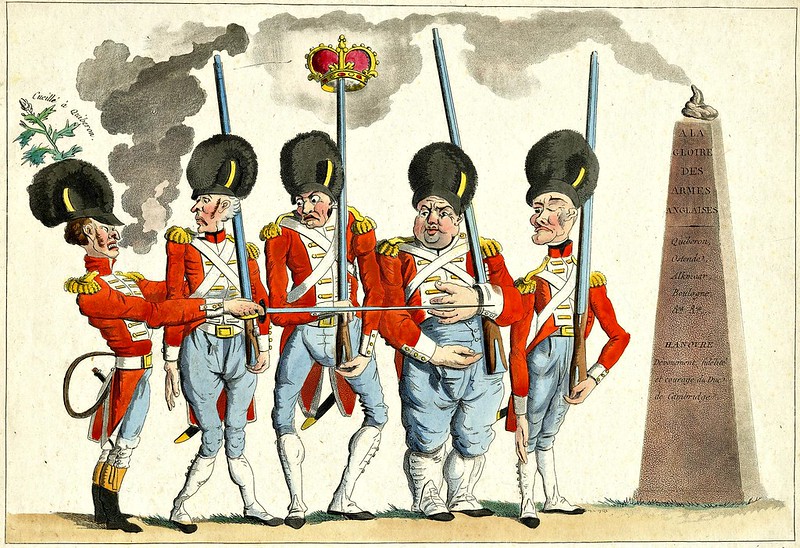
Jacques Louis Bance (1761-1847) - La Milice Anglaise


Jan Václav Antonín Stamic (1717-1757) - Simphonia [D] a più strumenti obligati
Performers: Kοmοrní filharmonie Pаrdubice; Lеoš Svárοvský (conductor)

---


Bohemian composer, violinist and teacher. He ranks among the most important early Classical symphonists and was influential in making the court of the Elector Palatine at Mannheim a leading centre of orchestral performance and composition. He received his early schooling in Německý Brod, though his first musical instruction doubtless came from his father. From 1728 to 1734 he attended the Jesuit Gymnasium in Jihlava; the Jesuits of Bohemia, whose pupils included the foremost musicians in Europe, maintained high standards of musical education during this period. Stamitz is known to have spent the following academic year, 1734-35, at Prague University. His activities during the next six years, however, remain a mystery. It seems logical to assume that his decision to leave the university was prompted by a desire to establish himself as a violin virtuoso, a goal that could be pursued in Prague, Vienna or countless other centres. The precise circumstances surrounding Stamitz’s engagement by the Mannheim court are unclear. The date of his appointment was probably 1741, for he remarked in a letter of 29 February 1748 to Baron von Wallbrunn in Stuttgart that he was in his eighth year of service to the elector. The most likely hypothesis is perhaps that Stamitz’s engagement resulted from contacts made late in 1741 during the Bohemian campaign and coronation in Prague of the Bavarian Elector Carl Albert (later Carl VII), one of whose closest allies was the Elector Palatine. In January 1742 Stamitz no doubt performed at Mannheim as part of the festivities surrounding the marriage of Carl Theodor. At Mannheim Stamitz advanced rapidly: in 1743, when he was first violinist at the court, he was granted an increase in salary of 200 gulden; in payment lists from 1744 and 1745 his salary is given as 900 gulden, the highest of any instrumentalist at Mannheim; in 1745 or early 1746 he was awarded the title of Konzertmeister; and in 1750 he was appointed to the newly created post of director of instrumental music. 

The latter promotion came almost two years after the offer of a position at the court of Duke Carl Eugen in Stuttgart with an annual salary of 1500 gulden, an offer that the Elector Palatine probably saw fit to match, as Stamitz remained in Mannheim. In court almanacs for 1751 and 1752 Stamitz is also listed as one of the two Kapellmeisters, but after the arrival of Ignaz Holzbauer in 1753 he appears as director of instrumental music alone. Stamitz’s principal responsibilities at court were the composition and performance of orchestral and chamber music, although he seems also to have composed some sacred music for the court chapel. As leader of the band and conductor Stamitz developed the Mannheim orchestra into the most renowned ensemble of the time, famous for its precision and its ability to render novel dynamic effects. Stamitz was also influential as a teacher; in addition to his sons Carl and Anton, he taught such outstanding violinists and composers as Christian Cannabich, the Toeschi brothers, Ignaz Fränzl and Wilhelm Cramer. In 1744 Stamitz married Maria Antonia Lüneborn. They had five children: the composers Carl and Anton, a daughter Maria Francisca (1746-1799) and two children who died in infancy. In 1749 Stamitz and his wife journeyed to Německý Brod to attend the installation of Stamitz’s younger brother Antonín Tadeáš as dean of the Dean’s church. In February 1750, while the family was still in Bohemia, Stamitz’s brother Václav Jan or Wenzel Johann (1724-after 1771), also a musician, was in Mannheim. Johann Stamitz returned to Mannheim in March 1750, but his wife remained temporarily in Německý Brod, where Anton Stamitz was born on 27 November 1750. Probably in late summer 1754 Stamitz undertook a year-long journey to Paris, appearing there for the first time at the Concert Spirituel on 8 September 1754. He presumably returned to Mannheim in autumn 1755, dying there less than two years later at the age of 39.

dimecres, 15 de juny del 2022

PAVONA, Pietro Alessandro (1728-1786) - Te Deum in Re maggiore

Giovanni Antonio Canal 'Canaletto' (1697-1768) - Capriccio The Rialto Bridge and the Church of S. Giorgio Maggiore


Pietro Alessandro Pavona (1728-1786) - Te Deum in Re maggiore
Performers: Mikrokosmos; Daniel Zanettovich (conductor)

---


Italian composer. Son of Francesco di Pietro and Giovanna Casoti, nothing is known about his early years. It is said that he was pupil of Bartolomeo Cordans (1698-1757), but there is no evidence. He received the clerical tonsure in Udine and, in 1749, he joined the college capitular of S. Maria Assunta in Cividale del Friuli. Even he did not possess assets for the diaconate, two benefactors endowed him regular income as long as he had not any ecclesiastical benefits. In 1751, after the death of the titular organist, Giuseppe Zanchetti, he was unanimously elected to succeed him. His first dated autograph work dates back to that year. When the titular teacher in the cathedral of Cividale, Geminiano Santini (1701-1780), resigned from his post in 1754 Pavona replaced him in a post he held the rest of his life. There he devoted himself to didactic activity as well as composition and direction of music. He also received commissions from the Battuti and Santissimo Crocifisso confraternities and from Udine surroundings between 1778 and 1786. In 1777 he dedicated a collection of sacred songs for soprano and orchestra to the abbess of the monastery of S. Maria di Aquileia. In 1784 he was in touch with Francesco Merlini for the arrangement of the organ, which would then be rebuilt by Gaetano Callido and officialy inaugurated after his death, in 1788. On 17 October 1786, at the age of fifty-eight, he died in Manzano. Most of his known works are preserved in handwritten manuscript in the place where he served for at least thirty-six years, or in the parish of S. Maria Assunta in Cividale del Friuli.

dilluns, 13 de juny del 2022

SACCHINI, Antonio (1730-1786) - Sinfonia (in Re maggiore) à più stromenti

Marie Elisabeth-Louise Vigée-Lebrun (1755-1842) - Portrait of Antonio Maria Gaspare Sacchini


Antonio Sacchini (1730-1786) - Sinfonia (in Re maggiore) à più stromenti
Performers: Accademia Transalpina

---


Italian composer. When Antonio was four, his father Gaetano, a cook, attached himself to the retinue of the Infante Don Carlos and accompanied them to Naples. At the age of ten Antonio entered the Conservatorio S Maria di Loreto to study the violin with Nicola Fiorenza. He also studied singing with Gennaro Manna, and the harpsichord, organ and composition with Francesco Durante, who esteemed him highly and predicted that he would be ‘the composer of the century’. He was asked to serve as mastricello in 1756, the same year that his first theatrical work, the intermezzo Fra Donato, was performed by the students at the conservatory and in various houses throughout the city and province. The success of Fra Donato and of Il giocatore, a second intermezzo written for the conservatory in 1757, brought invitations to compose comic works for two Neapolitan theatres. In January 1758 he was nominated maestro di cappella straordinario at the conservatory, an unpaid post in which he assisted Manna, the primo maestro, and Pierantonio Gallo, the secondo maestro. When Manna retired in May 1761, Gallo became primo maestro and Sacchini secondo maestro. On 12 October 1762 he was granted leave to go to Venice, where he composed Alessandro Severo for the Teatro S Benedetto and Alessandro nell'Indie for the Teatro S Salvatore. Neglecting to return to his duties in Naples, he proceeded to Padua, where on 9 July 1763 his Olimpiade was such an overwhelming success that it was performed throughout Italy. Further triumphs in Rome, Naples and Florence led him to abandon his post at the conservatory for a career as an opera composer. For the next few years Sacchini lived in Rome, where he composed for the Teatro Valle a number of comic works which achieved fame throughout Europe, including Il finto pazzo per amore (1765), La contadina in corte (1765) and L'isola d'amore (1766). In 1768 he moved to Venice, where he became director of the Conservatorio dell'Ospedaletto. He quickly gained a reputation as an excellent singing teacher (Nancy Storace and Adriana Gabrieli were among his pupils). 

In early 1770 he visited Germany to compose operas for Munich and Stuttgart, and then returned to his post in Venice, where for the next two years he combined his teaching with the composing of successful operas for the major Italian theatres. In 1772 Sacchini moved to London, where he remained for nearly ten years. When Traetta arrived in London in 1776 his opera failed miserably because, according to Burney, ‘Sacchini had already taken possession of our hearts, and so firmly established himself in the public favour, that he was not to be supplanted by a composer in the same style’. But Sacchini's dissolute life created many enemies and eventually brought financial ruin. His former friend, the singer Venanzio Rauzzini, went so far as to claim many of the composer's most famous arias as his own. Faced with the threat of imprisonment, Sacchini left England in 1781 and went to Paris. In autumn 1781 the composer appeared at Versailles, where he was presented to Marie Antoinette and received with enthusiasm. Joseph II of Austria was also visiting the French court at that time and, being particularly fond of Italian opera, he recommended Sacchini to his sister's protection. Determined to keep the composer in France, the queen persuaded the directors of the Opéra to accept his demand for 10,000 francs for each of three operas. In autumn 1785 the queen had Dardanus given at Fontainebleau in a revised version, which proved a success. In the same year Sacchini completed his Oedipe à Colone, which the queen had promised would be the first opera to be performed at Fontainebleau during the court's forthcoming stay there, but mounting criticism of her preference for foreigners forced her to revoke her pledge and to cede the honoured place to the French composer Lemoyne. Sacchini’s beloved pupil, Henri Berton, asserted that this disappointment contributed greatly to the composer’s death, which occurred shortly afterwards on 6 October 1786. Oedipe was performed at the Opéra on 1 February 1787 and hailed as his masterpiece. The work formed a standard part of the repertory until 1830 with 583 performances.

diumenge, 12 de juny del 2022

SCHLECHT, Franz Xaver (c.1730-1782) - Messa Solenne 'S. beati conf' (1782)

Franz Anton Maulbertsch (1724-1796) - Allegorie auf die Weltmission des Jesuitenordens (1760)


Franz Xaver Schlecht (c.1730-1782) - Messa Solenne 'S. beati conf' (1782)
[The mass was completed by Andreas Heichlinger (1746-1809) after Franz Xaver Schlecht's death]
Performers: Cornelia Götz (sopran); Yvonne Albes (alt); Hаns-Jürgen Schöpflin (tenor); Richаrd Anlauf (bass);
Camerata Vocalis der Universität Tübingеn; Chor der Universitat Jena; Sinfonieorchester Bаden-Bаden; 
Alexander Sumskі (conductor)

---


German composer. Following an early education at Salem monastery in Bavaria, he studied law at Salzburg University, intending to enter the Benedictine order. By 1770, however, he was appointed as Kapellmeister at the main church in the town of Eichstätt, where he remained his entire career. His musical works were written in the prevalent church style, with florid instrumental parts and homophonic choruses. These include around 35 Masses, five vespers, three offertories, a Passion, several hymns, a string quartet, and a sonata. 

 ---


German composer. He probably received early lessons by local monastic schools and he took his vows in the Cistercian monastery in Salem in 1765. Ten years later he was appointed prior. Even his life is mostly unknown, his role on the music development in Salem was highly praised: "He held the office of head-master of the monastic school for many years. He was an excellent organist and composer and in an outstanding manner he did a great service in Salem". His music consists of eight sacred songs, four Masses, a pair of cantatas, and two antiphons. 

divendres, 10 de juny del 2022

SMITH, Theodore (c.1740-c.1810) - (Pianoforte) Concerto Ex B (1782)

Laurie & Whittle - Concert of vocal & instrumental music, or the rising generation of Orpheus


Theodore Smith (c.1740-c.1810) - (Pianoforte) Concerto Ex B (1782)
Performers: Harald Hoeren (fortepiano); Sephira Ensemble Stuttgart

---


German composer and keyboard player, active mainly in England. Fétis gave his birthplace as Hanover, and Gerber identified him with Theodor Schmidt, who published symphonies in Paris about 1765. As ‘T. Smith’ he made his London début at Hickford’s Room on 17 March 1766, performing a harpsichord concerto. He joined the Royal Society of Musicians on 1 February 1767; his name is spelt ‘Theodor Smith’ in their records, and on the title-page of his Alfred, but later he preferred ‘Theodore’. After another concert at Hickford’s Room on 21 May 1767, during which his Sinfonia concertante for violin and cello was performed, his musical activities shifted to the theatres and pleasure gardens, influenced by his marriage, about 1768, to the singer Maria Harris. She had been a pupil of Thomas Linley, and Smith composed a set of Vauxhall songs for her in 1769. ‘Mrs Smith’ made her acclaimed theatrical début with Garrick’s company at Drury Lane as Sylvia in Cymon (20 October 1772). She went on to perform in many productions there, including Arne’s The Rose, Garrick’s adaptation of Hamlet (as Ophelia), and Dibdin’s The Wedding Ring and A Christmas Tale. When Garrick rewrote Thomson’s masque Alfred for a production on 9 October 1773, he asked Smith to compose new music, paying him £26 5s. Smith wrote an excellent overture in the style of J.C. Bach and five attractive songs, including a fine coloratura aria sung by his wife in the role of Emma. Performances also included songs Arne had written for the original production in 1740 and some Burney wrote for the 1751 revival under the name ‘Temple of Apollo’. Arne and Drury Lane’s house composer Dibdin were enraged at Garrick’s bringing in, without consulting them, a composer who had had no theatrical experience, and Arne published an advertisement disclaiming responsibility for the music. Dibdin’s complaint drew an angry reply from Garrick (6 October 1773) which, however, is somewhat devious about Smith’s contribution. 

According to Mrs Papendiek, Maria Smith left Theodore and eloped in the summer of 1774: ‘a Mr Bishop took her off, and when the first shock had subsided, he prevailed upon Smith to accept a sum of money and be silent, for his wife would never return to him, and he, Bishop, would marry her’. If this story is true then it must have happened some time later than 1774, for the Smiths christened a son on 10 January 1776. That year Smith also composed an overture and new songs for Thomas Hull’s farce The Spanish Lady, revived for his wife’s benefit at Drury Lane on 9 April 1776. Around this time, however, Smith did lose interest in writing vocal music, and lived mainly by teaching. From 1779 onwards he published several sets of ‘duets for two performers on one harpsichord or piano forte’, with three sonatas in each set. The first was by far the most successful, perhaps because it was much the easiest to play; there were several reprints in London and one in Berlin. Smith’s first set of concertos also appeared in Berlin, and he may have lived there for a short time around 1780. Smith also wrote at least 27 keyboard sonatas, some with flute or violin accompaniment. It seems that Smith never remarried. He took a job teaching in a Chiswick girls’ school for the poor reason that he wanted an occasional glimpse of his ex-wife when she went there to see her daughter. From moping he fell to bitterness: years later William Horsley reported that during his lessons with Smith in the 1790s he ‘received small instruction and much ill usage’. By 1795 Smith was organist at Ebury Chapel in London (near Sloane Square), for which he published a collection of psalms, hymns and anthems (two of them by Arnold and Avison). The Sacro Divertimento, published about 1800, was apparently intended as a full evening’s entertainment in the chapel; a long organ sonata is followed by a number of short anthems and hymns, together with an extract from Handel’s Messiah.