dimecres, 8 de juny del 2022

ALBINONI, Tomaso (1671-1751) - Concerto (III) a cinque (1722)

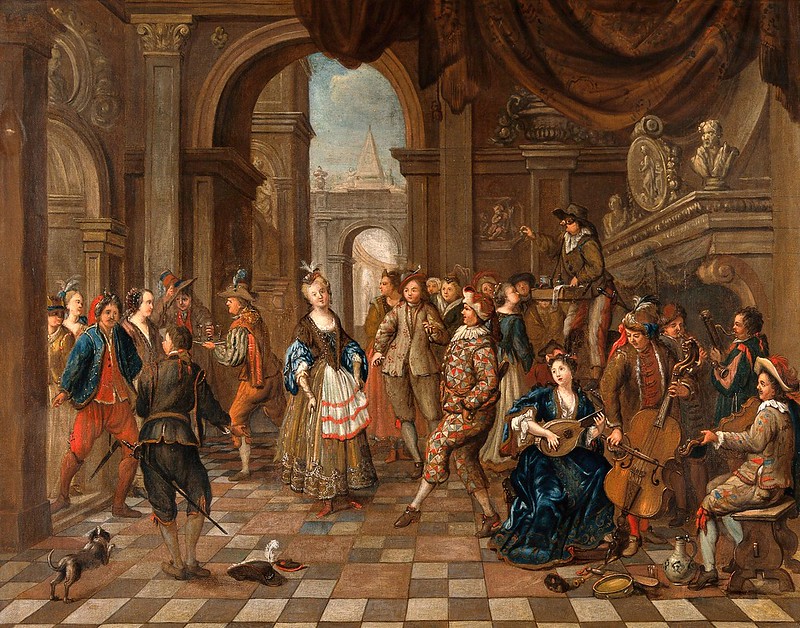
Hendrick Goovaerts (1669-1720) - A party with music and actors entertaining the company (c.1710)


Tomaso Albinoni (1671-1751) - Concerto (III) a cinque in Fa maggiore, Opera Nona (1722)
Performers: Zеfіro ensemble

---


Italian composer. His father, Antonio Albinoni, was a stationer and manufacturer of playing cards who owned several shops in Venice and some landed property. As well as completing his apprenticeship as a stationer, Tomaso, the eldest son, learnt the violin and took singing lessons; his teachers are not known. Despite his talent he was not tempted on reaching adulthood to seek a post in church or court, preferring to remain a dilettante – a man of independent means who delighted himself (and others) through music. As a composer he first had an unsuccessful flirtation with church music. A mass for three unaccompanied male voices is the sole survivor of this episode; juvenile infelicities abound, yet it clearly shows his penchant for contrapuntal pattern-weaving. In 1694 Albinoni had two successes in fields for which his musical training had probably better prepared him: an opera (Zenobia, regina de' Palmireni) was staged at the Teatro di SS Giovanni e Paolo at the beginning of 1694, and his op.1, 12 trio sonatas, was published by Sala. Instrumental ensemble music (sonatas and concertos) and secular vocal music (operas and solo cantatas) were to be his two areas of activity in a remarkably long career as a composer which terminated 47 years later with a prematurely entitled ‘oeuvre posthume’ (six violin sonatas, c.1740) and the opera Artamene (1741). It has been suggested that Albinoni briefly served Ferdinando Carlo di Gonzaga, Duke of Mantua, as a chamber musician immediately before 1700, but the only biographical evidence is Albinoni's description of himself on the title-page of his Sinfonie e concerti a cinque op.2 (1700) as ‘servo’ of the duke, the work's dedicatee. Albinoni more probably used the word for an honorary or even merely idealized attachment; he may have met Ferdinando Carlo on one of the duke's frequent visits to the Venetian opera houses. Albinoni's theatrical works soon began to be staged in other Italian cities, the first being Rodrigo in Algeri (Naples, 1702). 

He visited Florence to direct performances, as leader of the orchestra, of a new opera, Griselda, in 1703, and may have stayed there for a time, as another opera, Aminta, followed later in the year. In 1705 Albinoni married in Milan the operatic soprano Margherita Raimondi. In 1699, when she was about 15, she had appeared in Draghi's Amor per vita at S Salvatore, Venice. After her marriage she continued to appear intermittently on the stage (despite raising six children) and travelled as far as Munich, where she sang in Torri's Lucio Vero in 1720. She died in 1721. In 1709 Antonio Albinoni died. Under the terms of his will (1705), Tomaso inherited a token share of the family business (one shop), the principal management being left to two younger brothers, who had to give him a third of the revenue. This renunciation of an elder son's normal rights and responsibilities reflects Tomaso's total commitment to music by this date. From c.1710 Albinoni styled himself ‘musico di violino’, as if to emphasize his independence. In 1722 Albinoni's career reached its zenith. He had just composed a set of 12 concertos – his most imposing to date – and had dedicated them to the Elector of Bavaria, Maximilian II Emanuel. Now he was invited to Munich to superintend performances of his opera I veri amici and a smaller stage work, Il trionfo d'amore, both in celebration of the marriage of Karl Albrecht, the electoral prince, to Maria Amalia, younger daughter of the late Emperor Joseph I. From the 1720s Albinoni's operas were frequently performed outside Italy, though in many cases they were adapted or supplemented to suit local needs. Pimpinone, a set of comic intermezzos which had originally appeared with Astarto in 1708, was especially popular. However, Albinoni gradually composed fewer new works in both operatic and instrumental fields. He seems to have retired after 1741. His death notice dated 17 January 1751.

dilluns, 6 de juny del 2022

SCHWEITZER, Anton (1735-1787) - Sinfonia (D-Dur) à 6 voci (c.1782)

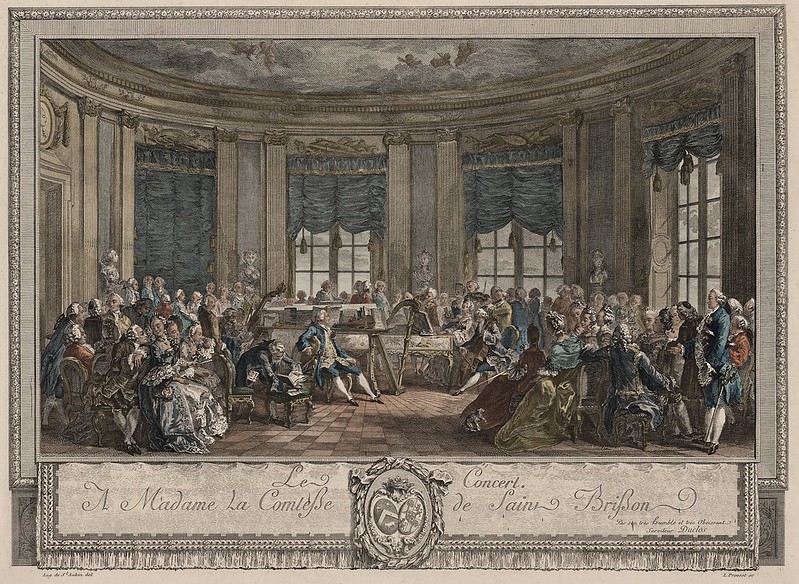
Augustin de Saint-Aubin (1736-1807) - Le Concert


Anton Schweitzer (1735-1787) - Sinfonia (D-Dur) à 6 voci (c.1782)
Performers: Thüringen PhiIharmonie; Hermann Breuer (conductor)

---


German composer. As a young man he served the Duke of Hildburghausen as chamber musician. To groom him in composition, the duke sent him to Bayreuth (1758) and later Italy (1764-66), after which he promoted him to Kapellmeister. When financial pressures forced the duke to dissolve his opera company in 1769, Schweitzer found employment as music director of the itinerant theatrical company of Abel Seyler, which was just beginning to add German operas to its spoken offerings. Schweitzer’s first work for the Seyler company, the one-act occasional piece Elysium (1770), gained considerable popularity as a musical afterpiece and was published in vocal score in 1774. He composed other celebratory pieces on mythological themes, but also comic operas. Seyler sent his music director on an expedition to recruit new singers in order to expand and elevate his musical productions in directions towards which Schweitzer’s music clearly pointed. By a stroke of good fortune, the music-loving Duchess Anna Amalia of Saxe-Weimar engaged Seyler’s company at this time (1771), and Schweitzer’s ambitions were at last given full rein. A heated rivalry with the duchess’s leading musician (later Kapellmeister), Ernst Wilhelm Wolf, flared up immediately. Through a series of bold new works composed in collaboration with major writers, Schweitzer quickly established himself as the superior figure. While Wolf continued composing the Hillerian comic operas in which the duchess delighted, Schweitzer turned to the witty, more urbane tone of F.W. Gotter’s farce Die Dorfgala (1772). On a more elevated plane, he composed not only celebratory dramas but also several dramatic ballets for the birthdays of the duchess and her sons, Karl Eugen and Konstantin. Two other experiments at Weimar opened new vistas for the German theatre. In May 1772 the Seyler company gave the première of the first German melodrama, Schweitzer’s setting of a translation of Rousseau’s Pygmalion.

A year later it was able to mount a serious five-act opera in German, Christoph Martin Wieland’s Alceste, the achievement for which Schweitzer is chiefly remembered. Theatrical collaboration between Schweitzer and Wieland had begun in mid-1772 with the dramatic ballet Idris und Zenide and continued that year with two dramatic prologues of Metastasian stamp, Aurora and Die Wahl des Herkules. When Wieland proposed the Alceste project to the duchess, he insisted that Schweitzer and not Wolf compose it. A brilliant success at Weimar, Alceste made its way quickly to many other German stages, establishing at a stroke seria-style opera in German as a musical reality. After Alceste Schweitzer began work on a new melodrama, Ariadne auf Naxos, adapted from a cantata text by H.W. von Gerstenberg by a member of the Seyler company, Johann Christian Brandes, in order to display the talents of his wife Charlotte. The work was only partly complete when a fire destroyed the Hoftheater at Weimar in May 1774. The Seyler troupe, by now one of the most respected in Germany, was immediately engaged by Duke Ernst II at the nearby court of Gotha. There Schweitzer found a far more formidable rival than Wolf in the court Kapellmeister Georg Benda. Benda supplanted Schweitzer almost immediately as the chief purveyor of important new dramatic compositions. Schweitzer’s main compositional challenge during these years came from elsewhere. The success of Alceste in 1775 at Schwetzingen and Mannheim prompted the Palatine court to commission another serious opera from Wieland and Schweitzer in 1777. He remained in Gotha as Benda’s successor after the latter resigned as the duke’s Kapellmeister in 1778. The Hoftheater was disbanded in September of the following year. Early in 1780 Benda remarked acidly in a letter to the composer F.W. Rust: ‘For the labours one now demands of a Kapellmeister here my successor Schweitzer is quite good, for he has nothing to do and does just that’.

diumenge, 5 de juny del 2022

DE JERUSALEM, Ignacio (1707-1769) - Cantata 'Al Combate' (1760)

Johann Baptist Homann (1663-1724) - Regni Mexicani Novae Hispaniae Ludoviciana, N. Angliae. (1720)


Ignacio de Jerusalem (1707-1769) - Cantata 'Al Combate' (1760)
Performers: Elda Peralta (mezzo-soprano); Eleanor Ranney-Mendoza (soprano); Sandro Naglia (tenor); Alexander Edgemon (counter-tenor); Vince Wallace (bass); Choir and Orchestra Chicago Arts; Javier José Mendoza (conductor)

---


Mexican composer and violinist of Italian birth. His father, Matteo Martino Gerusalemme, was a violinist at the Jesuit church in Lecce. In 1742, while active as a theatre musician in Cádiz, Ignazio was persuaded to leave for Mexico City by Josef Cárdenas, the administrator of the Real Hospital de Naturales. Jerusalem and his companions, who included singers, dancers and instrumentalists, began arriving at Mexico City at the end of 1743. Jerusalem became director of the Coliseo, where he established a reputation as a gifted composer. In June 1746 he entered the service of Mexico City Cathedral, composing villancicos and teaching at the Colegio de Infantes. Jerusalem found himself at loggerheads with Domingo Dutra, an indifferent musician who had been the cathedral’s interim maestro de capilla since 1739, when Zumaya left. Dutra had proved inept as both composer and choir director, and in 1749 the chapter moved to force him into retirement. In April 1750 Jerusalem applied for the post and after a rigorous examination was appointed maestro de capilla on 3 November 1750. The capilla flourished under his guidance. According to Juan de Viera, writing in 1777, Jerusalem directed the orchestra and choir in musical performances nearly every day, and ‘the Music Chapel [was] the most select, skilful and knowledgeable of the chapels in America’. Viera overheard a group of Europeans saying that ‘such magnificence is not to be found in Toledo or Seville’, and that ‘they seemed to be more like a choir of angels than of humans’. Soon after Jerusalem’s appointment as maestro de capilla his health failed, and he also had to confront a threat to his economic security in the early 1750s, when he complained that musicians from other parishes and churches were usurping fees that previously he had received for funerals, processions and other special occasions.

Jerusalem’s Matins service for Maundy Thursday 1753 scored a success that was still remembered decades later, but during the next couple of years he faced three major crises. The first was at the Coliseo. As he ascended in the cathedral hierarchy Jerusalem shed his obligations to the Coliseo, until he finally resigned altogether. Simultaneously he was brought before the cathedral chapter on yet another charge. His wife Antonia had gone to live with her brother and was asking that the chapter pay him some of her husband’s wages. Jerusalem defended himself, saying that much of the debt owed to the Coliseo had been incurred by his wife; he pleaded with the chapter not to withhold his wages and entreated them to help with professional expenses, observing that he personally had been paying the poet and copyist for his major compositions. The third scandal of this period concerned Tollis de la Roca’s appointment at the cathedral, to which Jerusalem strongly objected. Jerusalem went to great lengths to ensure the establishment of Tollis’s second-class status in the cathedral hierarchy. In spite of a life marked by turmoil and questionable decisions, Jerusalem made a series of clear-headed musical reforms that influenced Mexican music for the rest of the century. He advocated the sole use of modern notation and the abandonment of white notation still employed in New World cathedrals. He insisted on a measure of literary reform, expressing particular displeasure in 1753 with the obtuse poetry of Francisco de Selma, who had been supplying texts in the New World for 33 years after leaving his native Segovia. The last ten years of Jerusalem’s life were extremely productive and tranquil. On his death the cathedral chapter acknowledged Jerusalem’s faithful service and compiled an inventory of the music he had composed. His works continued to be used in Mexico City for many years.

divendres, 3 de juny del 2022

HOOK, James (1746-1827) - Concerto (in D) for the Organ (1771)

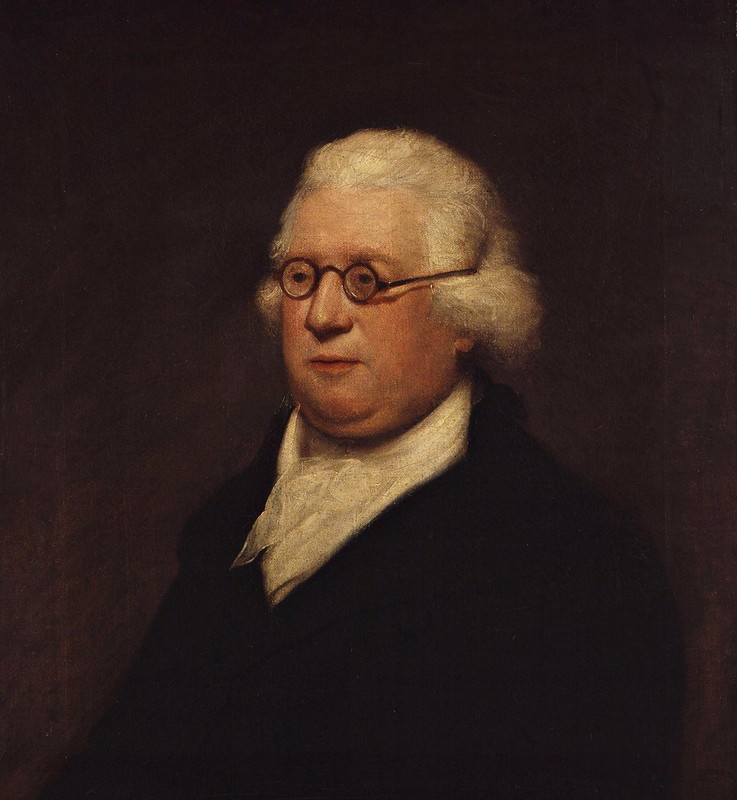
Lemuel Francis Abbott (1760-1803) - James Hook


James Hook (1746-1827) - Concerto (in D) for the Organ, No.5 Op.1 (1771)
Performers: Stеphеn Fаrr (organ); London Bаch Consort

---


English composer. He was born in the parish of St John, Maddermarket, the son of James Hook, razor-grinder and cutler. He was born with a club foot; early surgical operations improved the condition and, according to Parke, ‘he could walk in a limping manner tolerably well’. Hook showed remarkable musical talent at an early age, being able to play the harpsichord at the age of four and performing concertos in public at six. For a time he was taught by Thomas Garland, the Cathedral organist, and before he was eight he had composed songs and his first opera. This was considered by connoisseurs as an ‘extraordinary instance of infantine genius’, but the music is lost. Hook’s father died in 1758 and his mother carried on the cutlery business. From 13 November 1756 fairly regular advertisments appeared in the Norwich Mercury for concerts at which Hook performed concertos, many of which were benefit concerts. Hook employed his talents in various ways at this time, including teaching, composing, transcribing music and tuning keyboard instruments. At some time between June 1763 and February 1764 Hook moved to London. His first position was that of organist at White Conduit House, Pentonville, one of the many tea gardens that abounded in 18th-century London. He began to make a name for himself as an organist, teacher and composer of light, attractive music, particularly songs. On 29 May 1766 Hook married Elizabeth Jane Madden at St Pancras Old Church. His wife was both talented and artistic. She was a painter, provided the libretto for Hook’s opera The Double Disguise (1784) and the verses for some Vauxhall songs, and produced the designs and floral decorations for the pillars in the orchestra at Vauxhall’s Jubilee celebrations in 1786. Hook’s songs began to be regularly performed at the main London pleasure gardens and the first of his many song collections for the gardens at Marylebone and Vauxhall was published in 1767.

In May 1767 he had applied unsuccessfully for the post of organist for the united parishes of St Matthew Friday Street and St Peter Westcheap, but before 6 September 1772 he had been appointed organist of St Johns Horselydown, Bermondsey. In 1768 he was appointed organist and composer to Marylebone Gardens. He was also in demand to open new organs, both in London and in nearby counties. Contemporary Norwich newspapers show him to have been still performing in concerts around Norwich, frequently playing many of his own compositions. He continued his keyboard teaching and it is said that his income from this source alone amounted to over £600 per annum. Hook remained at Marylebone Gardens until the end of the 1773 season and in 1774 was engaged in a similar capacity at Vauxhall Gardens, a position he retained until 1820... Throughout this time he composed operas, the majority of which were produced at Drury Lane and Covent Garden Theatres. His son James Hook (1772-1828) provided the librettos for Jack of Newbury (1795) and Diamond Cut Diamond (1797). On 20 March 1776 Hook’s only oratorio, The Ascension, was performed at Covent Garden. His second son, Theodore Edward Hook (1788-1841), wrote the words for many of Hook’s songs and between 1805 and 1809 provided the librettos for eight of Hook’s operas. He later became the ghost writer for Michael Kelly’s Reminiscences (1826). On 18 October 1805 Hook’s wife died, and a year later, on 4 November 1806, he married his second wife, Harriet Horncastle James. It is not known why Hook left his position at Vauxhall after almost a half century of service there; his departure was sudden and surprising: ‘so little was his abrupt retirement expected or understood, that the proprietor of the [gardens] kept his station in the band open for him, during one entire season’. He died in Boulogne in 1827 and his music library was sold at Puttick & Simpson’s on 30 January 1874. 

dimecres, 1 de juny del 2022

FIORILLO, Federigo (1753-1823) - Simphonie concertante en Fa majeur

Alexandre-Jean Noël (1752-1834) - Le Pont de la Tournelle, l’île Saint-Louis, l’île Louviers (1780)


Federigo Fiorillo (1753-1823) - Simphonie concertante en Fa majeur
Performers: Julia Girdwood (oboe); City of London Sinfonia; Nicholas Ward (conductor)

---


Italian violinist, viola player and composer, son of Ignazio Fiorillo (1715-1787). He reportedly first became proficient on the mandolin and only later turned to the violin. He had probably been touring for some time before his first recorded appearance as a violinist in St Petersburg in 1777. He was in Poland from 1780 to 1781, playing both the violin and the mandolin, and from 1782 to 1784 he was conductor at Riga. In 1785 he played with considerable success at the Concert Spirituel in Paris, and the first of his numerous published works appeared shortly thereafter. He apparently remained in Paris for three years and then went to London, where in 1788 he began to play regularly as viola player in Salomon’s quartet. According to Fétis his last public appearance was as soloist in a viola concerto in 1794, but the title-page of his op.29 (trios for flute, violin and viola), published some time between 1802 and 1811, indicates that he continued to play at some public occasions. His works continued to appear from various publishers throughout Europe until about 1817. According to one report, he left London in 1815, and Pohl stated that he spent some time in Amsterdam. It is possible, however, that he remained in London until 1823, when he went to Paris to undergo an operation. Fétis learnt from Fiorillo’s publisher Sieber that he returned to London after his treatment. Fiorillo’s works appear to be both conservative and conventional. His violin compositions reflect a virtuoso’s technique, but he chose to direct a large part of his prolific creativity (more than 70 opus numbers and some 200 works) towards current fashions, such as light piano pieces, divertimentos and arrangements of popular songs. Unquestionably, he succeeded with the public; his publications appeared in multiple editions throughout most of Europe. As a result, conflicting opus numbers are common, and his total output is in need of bibliographic clarification. Although great surprises are not likely to emerge, it is not possible to judge Fiorillo’s achievement based on our present knowledge. Such present-day fame as he has rests almost entirely on one work, his 36 caprices for violin. These are études of good musical quality, and they have taken their place in the violinist’s pedagogical repertory beside those of Rode and Kreutzer.